


John Oliver Prediction Markets: Is War Trading Wrong?
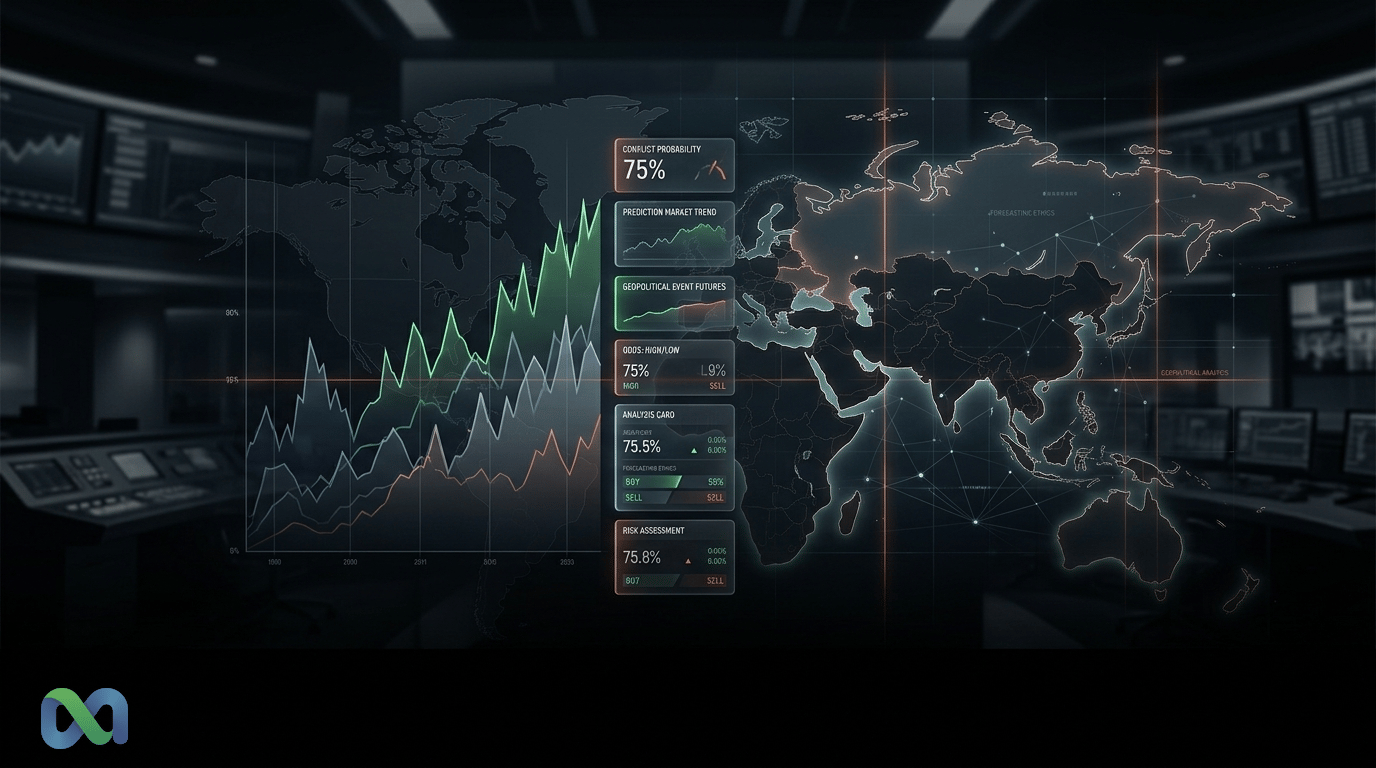
John Oliver prediction markets criticism captured in one line the discomfort many people feel when they look at certain prediction markets: trading on war is grim. The criticism landed because it touches the industry's most sensitive point. Prediction markets promise to organize scattered information and turn opinion into price. That promise becomes much less elegant when the traded event involves death, armed conflict, or human disaster.
This debate matters because prediction markets have moved back into pop culture, politics, and digital finance. They now appear as analysis tools, speculative products, and even election thermometers. At the same time, they expose a contradiction. The more tragic the event, the more public attention it tends to attract. And the more attention it attracts, the greater the risk of turning real suffering into a tradable asset.
Last reviewed: May 2026.
In this article, we will examine why John Oliver's criticism resonated, how prediction markets work in practice, where manipulation risk lives, and why markets on war, crime, and catastrophe create a different ethical problem from markets on elections, interest rates, or sports.
Why John Oliver Put Prediction Markets in the Spotlight
John Oliver's criticism did not come out of nowhere. It arrived at a moment when prediction markets were gaining visibility beyond crypto and finance circles. Platforms like these started appearing in television segments, trader communities, and debates about politics, regulation, and media. When Oliver says trading on war is grim, he is not only reacting to bad taste. He is pointing to the gap between neutral market language and the human reality behind the contract.
That gap is often hidden by the interface. Instead of victims, displacement, and destruction, the user sees a chart, a probability, and a buy button. The contract looks abstract. The tragedy becomes a ticker. That abstraction is exactly what makes the model efficient at processing information and, at the same time, so uncomfortable in extreme topics.
The reaction also grew because the critique met an audience already suspicious of digital incentives. Social networks reward engagement. Online casinos reward screen time. Prediction markets, when poorly designed, can reward attention around events nobody should want to see happen. That changes the debate. The question is no longer only whether the price aggregates information. The question becomes whether some markets should exist at all.
How Prediction Markets Work in Practice
Prediction markets turn a future question into a tradable asset. In general, the contract pays if an event happens and loses value if it does not. If a market trades at 70 cents, the common reading is that the outcome has about a 70% implied probability. The appeal is simple. In theory, whoever has better information, better analysis, or a better read on incentives can buy or sell before the consensus adjusts.
In practice, this creates a powerful price discovery mechanism. Instead of relying on one poll, one commentator, or one research desk, the market concentrates competing views. Each participant puts capital behind a conviction. That detail matters. Cost-free opinion is cheap. A position with financial risk tends to carry more discipline.
However, the system works well only when there is enough liquidity, clear resolution rules, and real participant diversity. Without liquidity, a few traders can move the price too easily. Without good resolution, the contract becomes an interpretive dispute. Without a diverse participant base, the market may reflect one narrow community's obsession instead of robust information.
That is why not every prediction market is equal. Some markets help readers understand election probabilities, monetary policy expectations, or sports chances in a useful way. Others are shallow, noisy, and vulnerable to manipulation. The format is the same. The informational quality is not.
When the Wisdom of Crowds Fails
The classic defense of prediction markets appeals to the wisdom of crowds. If many people with different incentives participate, the final price tends to incorporate dispersed information better than isolated guesses. The problem is that this idea depends on conditions that are not always present. In small markets, the crowd sometimes does not exist. What exists is a limited group of accounts, thin depth, and strong sensitivity to headlines.
Shallow markets distort easily. A relatively small order can move the implied probability a lot. That does not mean the new price reveals a new truth. Often, it only reveals structural fragility. In highly politicized or emotionally charged niches, the risk increases. Participants may trade to signal ideology, provoke reactions, or manufacture a narrative on social media.
Manipulation is another central issue. Industry defenders often argue that attempts to manipulate prices create opportunities for arbitrageurs to correct the market. In some cases, that is true. If someone pushes the price far away from fair value, rational traders can exploit the distortion and bring the contract back. But that correction requires capital, time, confidence, and liquidity. In fragile environments, noise can last for a long time.
Also, even when manipulation fails economically, it can still work as propaganda. A distorted price circulates in screenshots, posts, and headlines. The image of a market pointing to imminent war or institutional collapse can shape public conversation before the market corrects itself. In that sense, reputational and informational damage can happen even without profit for the manipulator.
The Ethical Problem With Trading on War, Crime, and Disaster
This is where John Oliver's critique hits the target. Markets on war, terrorism, assassination, or humanitarian tragedy are not just heavier versions of markets on inflation or elections. They create a different moral conflict. When financial gain is tied to extreme suffering, the system has to live with incentives that society sees as degrading, even if most participants are only speculating on probability.
Defenders of these markets say information about grave events has public value. In theory, a market price could signal geopolitical risk before traditional institutions do. That argument is not trivial. Markets can capture scattered signals quickly. The problem is that information and exploitation are not the same thing. A society may want to estimate war risk without accepting that individuals profit directly from escalation.
There is also a symbolic alignment problem. By turning war into a contract, the platform communicates that the event is a tradable opportunity like any other. That normalization affects reputation, regulatory trust, and public perception. Even if the market is small, the message is large. It suggests that the line between analysis and exploitation can be erased by product design.
The wrong incentive becomes stronger in extreme human events because the object of the trade is not only uncertain. It is socially destructive. A trader does not need to cause the event for the discomfort to exist. It is enough to have an ecosystem where people can root, even passively, for worse outcomes because they are positioned for them. That kind of incentive already looks bad on social media. In gamified financial markets, the problem becomes even more explicit.
What This Debate Means for the Future of Prediction Markets
John Oliver's comments amplify a question the industry already needed to face. Prediction markets can keep growing, but they are unlikely to win mainstream adoption if they insist on markets that look cynically detached from any moral boundary. The challenge is not only regulatory. In the United States, agencies such as the CFTC already shape the policy debate around event contracts. It is reputational. Platforms that want to be seen as serious information infrastructure need to show that they understand the difference between measuring risk and monetizing tragedy.
This will probably push the sector toward clearer segmentation. Markets on elections, central banks, macro indicators, technology, and sports are easier to defend publicly. They deal with relevant uncertainty without depending directly on the commodification of extreme suffering. Markets on war, attacks, and disasters can attract much stronger political reaction, legal scrutiny, and public rejection.
There is also a strategic effect. The more the sector wants to speak with media, academia, regulators, and ordinary users, the more it will need to prove market quality and listing responsibility. That means better liquidity standards, transparency around resolution, protection against manipulation, and clear limits on which events deserve contracts and which events cross a line.
In the end, John Oliver may have simplified a complex industry, but he identified the core discomfort. Prediction markets are most interesting when they help interpret the world. They become much harder to defend when they turn human suffering into a trading instrument. If the sector wants maturity, it must choose between the logic of any possible market and the discipline of listing only markets that still make public sense.
How Macro Markets Evaluates These Markets
Our experience reviewing event contracts is simple: a market can be useful and still be a bad listing. We look for three signals before treating a price as credible: enough liquidity, clear resolution rules, and a participant base that is not just one online faction. If one of those three signals is missing, the price deserves caution.
This is especially important in 2026, as media attention around prediction markets keeps growing. A 70% price in a deep election market is not the same as a 70% price in a thin war contract. The number may look identical, but the incentives behind it are not. That difference is why listing discipline matters as much as market design.
Related Macro Markets reads: Prediction Markets Glossary, prediction market accuracy, and Polymarket military action bets.
Conclusion
The controversy shows that the future of prediction markets does not depend only on technology, liquidity, or speculative appetite. It depends on legitimacy. Markets can be useful for aggregating information, revealing implied consensus, and improving the reading of complex events. But that usefulness does not erase the fact that some contracts carry incentives and symbols the public considers unacceptable.
John Oliver prediction markets criticism matters because it forces the industry to answer a simple and uncomfortable question: is there a moral limit to what can become a market? The answer should shape the next phase of the sector, especially as politics, geopolitics, and media pay more attention to the format. To track this collision between forecasting, regulation, and reputation, watch not only the prices, but also which markets still deserve to exist.
