


Prediction Markets in Brazil: Government Block Fallout
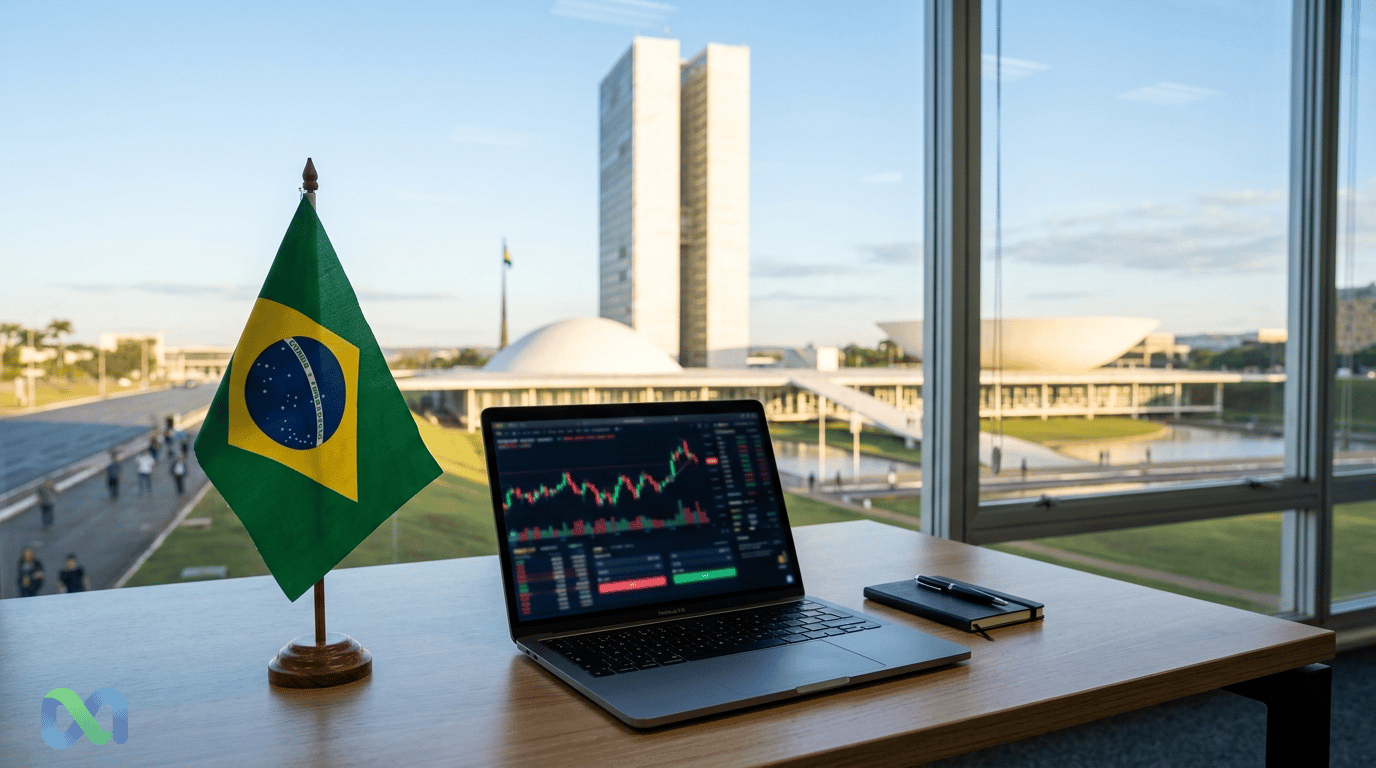
Brazil’s federal government has moved to block dozens of sites treated as illegal betting operations. The action hit platforms linked to prediction markets, revived the debate over the line between forecasting, investing, and gambling, and put Anatel at the center of enforcement. For anyone following crypto, Polymarket, and similar products, the message is direct: Brazil is likely to treat this sector with much less regulatory tolerance.
The key issue is not only the technical block. The move shows that Brasília now views prediction markets through the same lens it uses against unauthorized betting sites. That raises operating risk, changes market-entry plans, and narrows the space for models that depend on a legal gray zone.
This article explains what happened, why the government acted now, and what the decision means for users, operators, and the future of prediction markets in Brazil.
What did the government actually block?
Reports on the case point to the blocking of 27 or 28 platforms, depending on the version of each published list. The common point is that these platforms were treated as unauthorized operations offering products framed as bets to Brazilian users.
In practice, the government used the same regulatory structure already applied against illegal betting sites. That includes communication with internet providers and an order for Anatel to make the domain blocks operational. The target was not an abstract debate about collective forecasting. The target was the real offer of contracts and wagers available to Brazilian users.
That distinction matters. In many markets, prediction market platforms present themselves as tools for information, hedging, or price discovery. In Brazil, the current regulatory reading appears simpler. If a user puts money at risk with an expected payoff linked to a future event, the similarity to gambling weighs more than the technology wrapper.
Why prediction markets entered the betting regulation radar
The advance of betting regulation in Brazil created an unavoidable test for hybrid models. Prediction market platforms often offer contracts linked to elections, economic indicators, sports, and geopolitical events. For readers comparing formats, our prediction markets glossary explains the core mechanics. In theory, that makes them look like information instruments. In practice, the average user sees a bet on a future outcome.
That is the regulatory friction point. When the product experience looks like a betting site, the regulator tends to push the activity into the stricter regime. That is what increased pressure on companies that tried to operate in the country without a local license or a clear legal framework.
The problem grows when crypto, international settlement, or a simple retail interface sits behind the product. These features reduce friction for users, but they also increase regulatory discomfort. In a politically sensitive environment, it is hard to expect the government to tolerate a gray zone for long.
For sector watchers, the move confirms an old thesis. Prediction markets can create useful signals, but that does not erase conflict with local regulation. The product’s usefulness does not neutralize its legal classification.
Anatel’s role and the tougher enforcement phase
Anatel’s presence shows that the conceptual debate has moved into an enforcement phase. When the telecom agency is brought in to execute blocks, the government signals that enforcement now matters more than regulatory experimentation.
That detail reduces the room to treat the action as an informal warning. Infrastructure-level blocking tends to raise user acquisition costs, reduce direct traffic, and create reputational risk for any operation that still tries to serve Brazil from abroad.
There is also an important second-order effect. Even when technical blocks are imperfect, they work as a regulatory intimidation tool. Ordinary users leave the platform. Local partners become more cautious. Service providers reassess exposure. The result is a much less favorable environment for organic growth.
In other words, the government does not need to eliminate 100% of access to win the dispute. It only needs to make the operation unstable, legally toxic, and commercially expensive.
What changes for platforms like Polymarket
The case reinforces that international platforms cannot assume Brazil will automatically accept the financial innovation argument. If the business thesis depends on broad retail access in Brazil, there will be pressure for a license, a local structure, and a stronger legal narrative.
This affects products inspired by names such as Polymarket, which helped popularize global prediction markets. The appeal is easy to understand. The same debate appears in our coverage of Prediction Markets and Polymarket. Prices aggregate distributed opinions, create real-time metrics, and turn news into tradable probability. However, this format also shortens the distance between analysis and gambling.
In Brazil, the political threshold for betting has become stricter. In that context, any platform that monetizes contracts on public events may face the same question: is this an informational market or a disguised bet?
The practical answer, at least for now, seems to lean toward the second option. That does not mean every model is doomed. It means that operating without regulatory alignment has become a much clearer risk.
Impact on Brazilian users
For users, the immediate effect is simple: less access, more uncertainty, and greater interruption risk. Anyone already using these platforms may face domain blocks, difficulty moving funds, and less predictability around support and service continuity. Access questions also overlap with the risks covered in our Prediction Markets VPN guide.
There is also an information asymmetry problem. Some users enter prediction markets believing they are using a sophisticated probability tool. Others treat the experience as pure betting. When the regulator tightens the perimeter, both groups discover that the legal interpretation matters more than the product narrative.
This also affects content creators, traders, and communities that track odds in real time. Analysis based on these markets may lose local depth. For an ecosystem trying to mature the conversation about probability and incentives, this block is a clear brake. It also increases pressure on adjacent platforms, including regulated betting sites and products focused on odds or informational arbitrage.
What this says about the sector’s future in Brazil
The block suggests that Brazil is moving toward a prior-permission model, not a tolerance-first model. That pattern is consistent with how the country has handled online betting more broadly. It first demands authorization, then punishes operators outside the official design.
For prediction markets, that creates three possible paths. The first is adaptation, with companies seeking licenses and redesigning their offers. The second is retreat, with platforms avoiding Brazil until there is more clarity. The third is prolonged conflict, with products trying to survive in a gray zone that is becoming more hostile.
From a business perspective, the most plausible scenario today is regulatory consolidation, not opening. The government wants to reduce legal arbitrage. Therefore, the message is clear: new technology does not create an automatic exception.
At the same time, the topic will not disappear. Prediction markets remain relevant in debates about elections, macroeconomics, and aggregate sentiment. The question is not whether they have informational value. The question is under which legal framework that value can be explored in Brazil.
The public policy blind spot
There is a risk in treating every prediction market as a simple extension of gambling. That approach simplifies enforcement, but it can erase real differences between speculative products, hedging tools, expectation research, and information aggregation mechanisms.
In other countries, this debate already appears in more sophisticated regulatory arenas. The Commodity Futures Trading Commission in the United States, for example, has had to discuss the limits between event derivatives, forecasting, and public interest. Brazil still appears far from that finer distinction.
That can create an innovation cost. If every experiment is pushed into the same illegal betting box, the country risks closing the door on models that could be useful for research, political coverage, and risk analysis. Still, this argument only gains strength when there is user protection, governance, and credible supervision.
Conclusion
The blocking of prediction market platforms in Brazil marks an important shift in regulatory tone. The government chose to frame the sector through the stricter betting lens, use Anatel as an enforcement arm, and reduce operating room for companies without licenses or a robust legal thesis.
For users, that means more unstable access. For operators, it means much higher risk. For the market, it means the debate is no longer just about innovation. It is first about regulatory classification.
Last reviewed: May 2026. Our experience tracking prediction markets in Brazil is that enforcement risk now matters as much as product design. The practical test is simple: if a platform cannot explain licensing, custody, and user protection in local terms, access can change fast.
Anyone watching this space should pay less attention to platform marketing and more attention to the next enforcement moves. In the short term, the key question is not which market will grow fastest. It is which model can exist in Brazil without colliding with the new regulatory threshold.
