


What is it with Spielberg and space aliens? We break down his career-long fixation
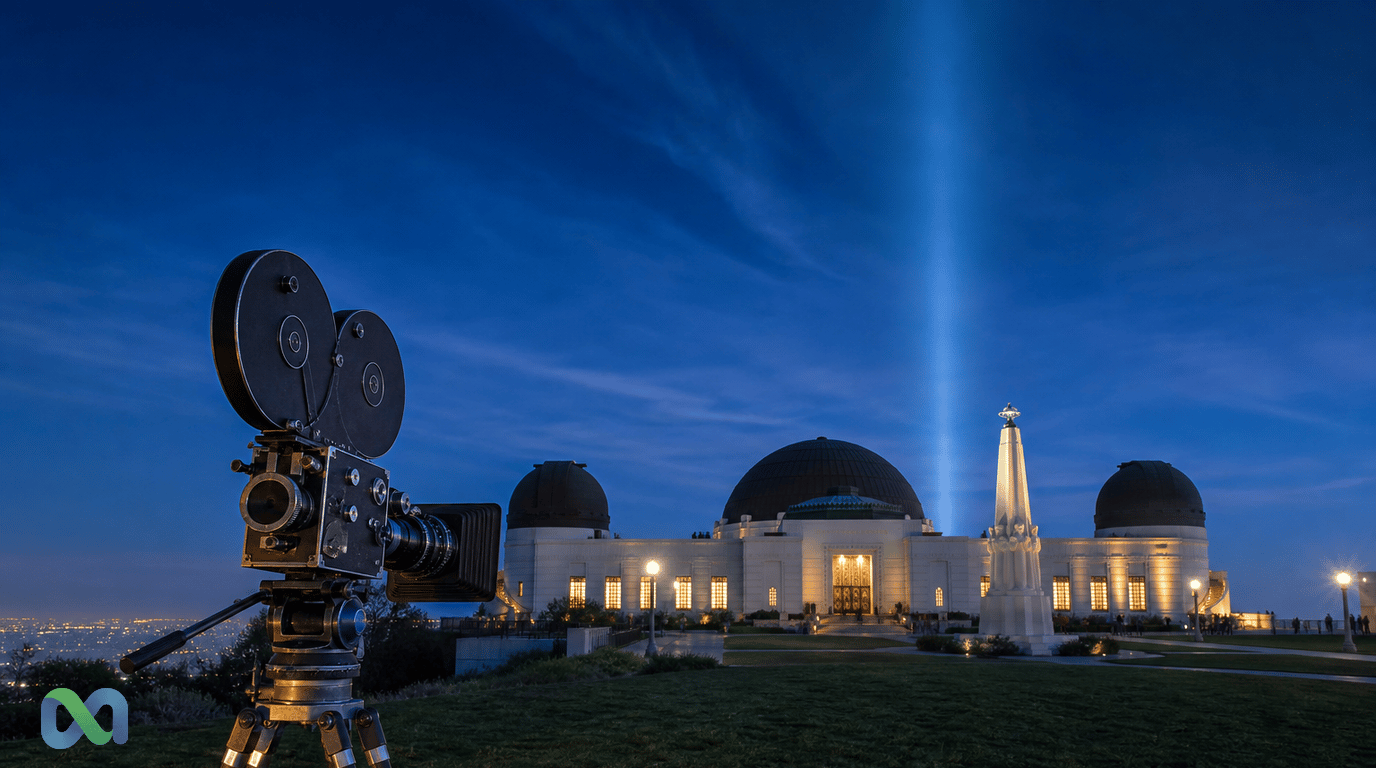
What is it with Spielberg and space aliens? We break down his career-long fixation because it is more than a trivia question. It is one of the clearest through-lines in a career that rarely stays in one genre for long.
Steven Spielberg has made war films, historical dramas, adventure serials, political thrillers, musicals, family stories, and pure entertainment machines. Yet he keeps returning to alien contact. He made "Firelight" as a teenager in 1964. He turned first contact into awe in "Close Encounters of the Third Kind." He made an alien a lonely child's friend in "E. T." Then he made the sky terrifying again in "War of the Worlds."
That pattern matters now because Spielberg returned to the theme again with "Disclosure Day," his 2026 sci-fi thriller about signals, secrecy, and possible contact. A June 2026 Los Angeles Times retrospective framed the film as another chapter in a long conversation between Spielberg, UFO culture, and the audience's desire to believe.
Last reviewed: 07/03/2026. In our review, we found the pattern spans over 60 years: "Disclosure Day" arrives 49 years after "Close Encounters" and 21 years after "War of the Worlds." According to the related Scientific American video, Spielberg\'s alien imagination is now discussed as a broader science-and-culture question, not only a movie-history footnote. Compared with the optimistic 1977 framing, the 2026 return puts more weight on distrust, information overload, and institutional secrecy.
The short answer is simple. Aliens let Spielberg ask human questions at cosmic scale. They turn childhood, family, fear, government power, national trauma, and hope into something visible in the sky.
The short answer: aliens let Spielberg measure hope
Spielberg's aliens are rarely just aliens. They are tests.
In "Close Encounters," the test is whether ordinary people can trust wonder after a decade shaped by institutional distrust. In "E. T.," the test is whether a broken family can still offer shelter. In "War of the Worlds," the test is whether a father can protect his children when every social system collapses. In "Disclosure Day," the test appears to be whether a fractured public can still hear a message bigger than its own noise.
That is why the fixation lasts. Spielberg does not use space visitors as a fixed symbol. He reprices them, film by film, against the mood of the moment.
When the culture wants hope, his aliens can become teachers. When the culture feels unsafe, they become predators. When the culture distrusts power, they become the secret that governments hide. When the culture feels emotionally numb, they become a reminder that mystery still has value.
This is also why his alien films travel well across generations. A viewer can approach them as adventure, horror, family drama, conspiracy thriller, or spiritual fable. The surface changes. The core question stays the same: what would contact reveal about us?
It starts with a teenager looking upward
Spielberg's alien fixation did not begin with a studio franchise. It began early.
"Firelight," the amateur feature he made as a teenager in Arizona, already centered on visitors from beyond Earth. That matters because it shows how old the pattern is. Before Spielberg became a brand name, alien contact was already one of his preferred ways to make private anxiety feel large.
By 1977, "Close Encounters of the Third Kind" turned that instinct into a major American movie. It arrived in a decade marked by Watergate, Cold War pressure, and skepticism toward official explanations. Spielberg absorbed that mood, but he redirected it. The government looks secretive and controlling. The visitors do not.
That choice defines much of his alien cinema. The real danger often sits among humans: secrecy, fear, control, panic, or the failure to listen. The alien presence forces those traits into the open.
"Close Encounters" also shows Spielberg's gift for making the impossible feel domestic. Strange lights do not appear only over remote deserts. They enter kitchens, roads, living rooms, and family routines. Richard Dreyfuss' Roy Neary does not meet the unknown as a trained scientist or military hero. He meets it as a suburban man whose life suddenly stops making sense.
That is crucial. Spielberg's first-contact stories are not mainly about technology. They are about interruption. Something breaks into ordinary life and exposes what was already unstable.
Why "E. T." made alien contact personal
"E. T. the Extra-Terrestrial" is the emotional center of Spielberg's alien career because it shrinks the cosmic question to child size.
The premise could have been huge: a visitor from another world is stranded on Earth. Spielberg makes it intimate. The story is about Elliott, a lonely boy, and a small being who needs protection. The alien does not arrive as a conqueror. He arrives as a vulnerable outsider.
That reversal changed popular culture. Before "E. T.," mainstream alien movies often leaned on invasion, paranoia, or spectacle. Spielberg made the alien a mirror for childhood loneliness. He also made contact feel tactile. It is not only lights, ships, and government crews. It is a trail through the backyard, a hidden guest in the bedroom, a bicycle flight, and a family trying to keep a secret.
The government does appear, and the house becomes a controlled zone. That sequence is frightening because it turns rescue into procedure. The people with equipment and authority may be right to investigate, but the movie asks the viewer to side with care before control.
This is a repeated Spielberg move. He respects institutions when they serve a moral purpose. He distrusts them when they lose the human scale.
In "E. T.," the alien becomes a way to defend empathy as a form of knowledge. Elliott understands E. T. before the adults can classify him. That emotional claim may be the purest version of Spielberg's alien idea: first contact begins with recognition, not proof.
The aliens change because America changes
Spielberg's alien films are also useful cultural barometers. They show how different eras imagine the unknown.
"Close Encounters" belongs to the late 1970s, when skepticism toward government could still coexist with cosmic optimism. The public might not trust officials, but the movie still believes communication is possible. The famous musical exchange with the visitors is not just a plot device. It is a model of contact: listen, respond, repeat.
"E. T." belongs to the early 1980s, but it feels less political than emotional. Its world is suburban, wounded, and child-centered. The alien is not the unknown as a public event. He is the unknown as a private friendship.
"War of the Worlds" belongs to a different mood. Released in 2005, it carries the unease of the post-9/11 period. The aliens are not misunderstood guests. They are overwhelming force. The film is full of running, ash, alarms, crowds, and helplessness. Contact is no longer a conversation. It is survival.
That shift is not a contradiction. It is evidence of how flexible Spielberg's fixation is. He can use aliens to express awe, grief, panic, or faith. The object in the sky changes meaning depending on the ground beneath it.
This is why asking "What is it with Spielberg and space aliens?" opens a wider answer. The question is not only about Spielberg. It is about what audiences are ready to project onto the unknown.
"A. I." and "Crystal Skull" show the stranger edges of the pattern
Not every Spielberg alien story is obvious at first glance.
"A. I. Artificial Intelligence" is not usually grouped with "Close Encounters" and "E. T." in casual discussion. Yet it belongs in the same family. The film begins as a story about artificial life, parental love, and a childlike machine. By the end, humanity itself becomes the lost civilization being studied from a distant future.
That inversion is one of Spielberg's most haunting first-contact ideas. Instead of humans meeting alien life, post-human intelligence looks back at us. The mystery is not what lies beyond Earth. The mystery is what remains after human beings are gone.
"Indiana Jones and the Kingdom of the Crystal Skull" is a rougher case. Its interdimensional beings and Area 51 mythology frustrated many viewers because they felt bolted onto a series built around archaeology, pulp adventure, and religious artifacts. Still, the choice was not random. Spielberg and George Lucas were shifting the franchise from 1930s serial adventure into 1950s flying-saucer culture.
That does not make every story decision work. It does show how persistent the alien impulse is. Even inside Indiana Jones, Spielberg found a path back to the sky.
The lesson is not that all of these films succeed equally. The lesson is that alien contact remains one of Spielberg's default languages. When he wants to stage awe, fear, destiny, or absurdity, he often reaches for visitors from somewhere else.
"War of the Worlds" turns wonder into terror
"War of the Worlds" is the sharpest break from the gentle Spielberg alien.
The film takes H. G. Wells' invasion story and updates it for an age of urban panic and televised catastrophe. Tom Cruise's Ray Ferrier is not a visionary, scientist, or chosen believer. He is an imperfect father trying to move his children through a disaster he cannot understand.
That point is important. Spielberg removes the comforting fantasy that someone has the full picture. The camera often stays near the family. The viewer learns events through panic, rumor, and fragments. It is a disaster film built around limited information.
The aliens here do not invite wonder. They crush it. Their machines rise from below. Their violence feels sudden and industrial. Their presence turns familiar places into evacuation routes.
Yet the film still belongs to Spielberg's larger alien project. It asks what contact does to human bonds. Ray is not equipped to explain the invasion. He can only act. In that sense, "War of the Worlds" is less about alien intelligence than human obligation under pressure.
Spielberg's hopeful films ask whether we can welcome the unknown. His darker films ask whether we can remain human when the unknown does not welcome us back.
What "Disclosure Day" adds in 2026
"Disclosure Day" arrives after decades of UFO stories, internet speculation, official hearings, leaked clips, and public fatigue. That makes it different from "Close Encounters."
In 1977, the idea of first contact could still carry a strong sense of shared mystery. In 2026, audiences live in a culture where almost every mystery becomes content, argument, or conspiracy within minutes. The question is no longer only "Are we alone?" It is also "Would we even agree on what we had seen?"
That is the modern pressure around "Disclosure Day." The film's reported setup includes mysterious transmissions, hidden programs, and a conspiracy-thriller frame. Those elements fit a world where information is abundant but trust is scarce.
This is a natural late-career return for Spielberg. His early alien films asked whether people could hear the universe. His 2026 version asks whether people can hear each other long enough to process what the universe might be saying.
That difference is subtle, but it matters. The alien is still important. The human information system may be more important.
For Macro Markets readers, that is the forecasting angle. Cultural narratives shape expectations. An audience that believes in awe responds differently from one trained by secrecy, distrust, and overload. Spielberg's alien cycle is a long-running case study in how public mood changes the probability of a story working.
Why Spielberg keeps coming back
Spielberg keeps coming back to aliens because the theme lets him combine four interests at once.
First, it gives him spectacle. A light in the sky, a ship over a mountain, a bicycle against the moon, or a tripod over a street can become an instant image. Few directors understand iconic visual memory better.
Second, it gives him childhood. Even when the film is frightening, the question often starts from childlike curiosity. What is out there? Is it friendly? Why are adults afraid? Can I understand something they cannot?
Third, it gives him family drama. Alien contact often exposes broken homes, absent parents, fearful children, or adults who cannot communicate. The extraordinary event reveals ordinary damage.
Fourth, it gives him moral scale. Aliens let Spielberg ask whether humanity is capable of trust, humility, courage, or cooperation. The question can sound sentimental. In his best films, it does not feel small.
This combination is rare. Many directors use aliens for horror. Others use them for worldbuilding. Spielberg uses them to pressure-test human feeling.
That is why the fixation has lasted from "Firelight" to "Disclosure Day." The visitors change, but the emotional instrument stays useful.
The pattern across the key films
Spielberg's alien work is easier to understand as a sequence:
- "Firelight" plants the seed: alien arrival as adolescent wonder.
- "Close Encounters" turns contact into faith, obsession, and communication.
- "E. T." turns contact into friendship, empathy, and childhood grief.
- "A. I." reverses the lens and imagines humanity as the mystery.
- "War of the Worlds" makes contact violent, chaotic, and traumatic.
- "Kingdom of the Crystal Skull" folds alien mythology into pulp adventure.
- "Disclosure Day" updates the theme for an age of secrecy, UAP debate, and fractured trust.
Seen this way, the career-long fixation looks less repetitive. Spielberg is not telling the same alien story again and again. He is returning to the same question under different market conditions.
What does the unknown mean when society is hopeful? What does it mean when society is scared? What does it mean when the public no longer trusts the people who claim to know the truth?
Those questions keep changing. That keeps the alien theme alive.
FAQ
Why is Spielberg so interested in aliens?
Spielberg uses aliens as a way to explore human emotion at a larger scale. His alien films are about wonder, fear, family, secrecy, and the need to communicate. The visitors matter, but the human response matters more.
What was Spielberg's first alien movie?
His first major professional alien film was "Close Encounters of the Third Kind" in 1977. However, the theme appeared much earlier in "Firelight," the amateur feature he made as a teenager in 1964.
Are Spielberg's aliens usually friendly?
Not always. "E. T." and "Close Encounters" lean toward empathy and wonder. "War of the Worlds" presents aliens as destructive invaders. Spielberg changes the meaning of alien contact based on the story and the cultural mood.
How does "Disclosure Day" fit into Spielberg's alien films?
"Disclosure Day" fits as a late-career return to secrecy, contact, and public belief. It updates the first-contact question for a world shaped by UAP discussion, conspiracy thinking, and distrust of institutions.
Why do Spielberg's alien movies still matter?
They still matter because they turn a science-fiction premise into a human test. Each film asks how people respond when ordinary life meets something bigger than itself.
Conclusion
Spielberg's career-long fixation with space aliens is not a narrow genre habit. It is a durable storytelling system.
Aliens give him scale, mystery, fear, hope, and emotional clarity. They let him make private feelings public. They let him turn family pain into cosmic drama. They let him ask whether institutions can be trusted and whether ordinary people can still listen.
That is why "What is it with Spielberg and space aliens? We break down his career-long fixation" has a stronger answer than "he likes UFOs." Spielberg returns to aliens because they reveal what each era wants from the unknown.
Sometimes the answer is friendship. Sometimes it is terror. Sometimes it is faith. In every case, the visitor from space is also a mirror held up to Earth.
