


Sports Bets Prediction, Why Courts Are Treating Some Bets Like Swaps
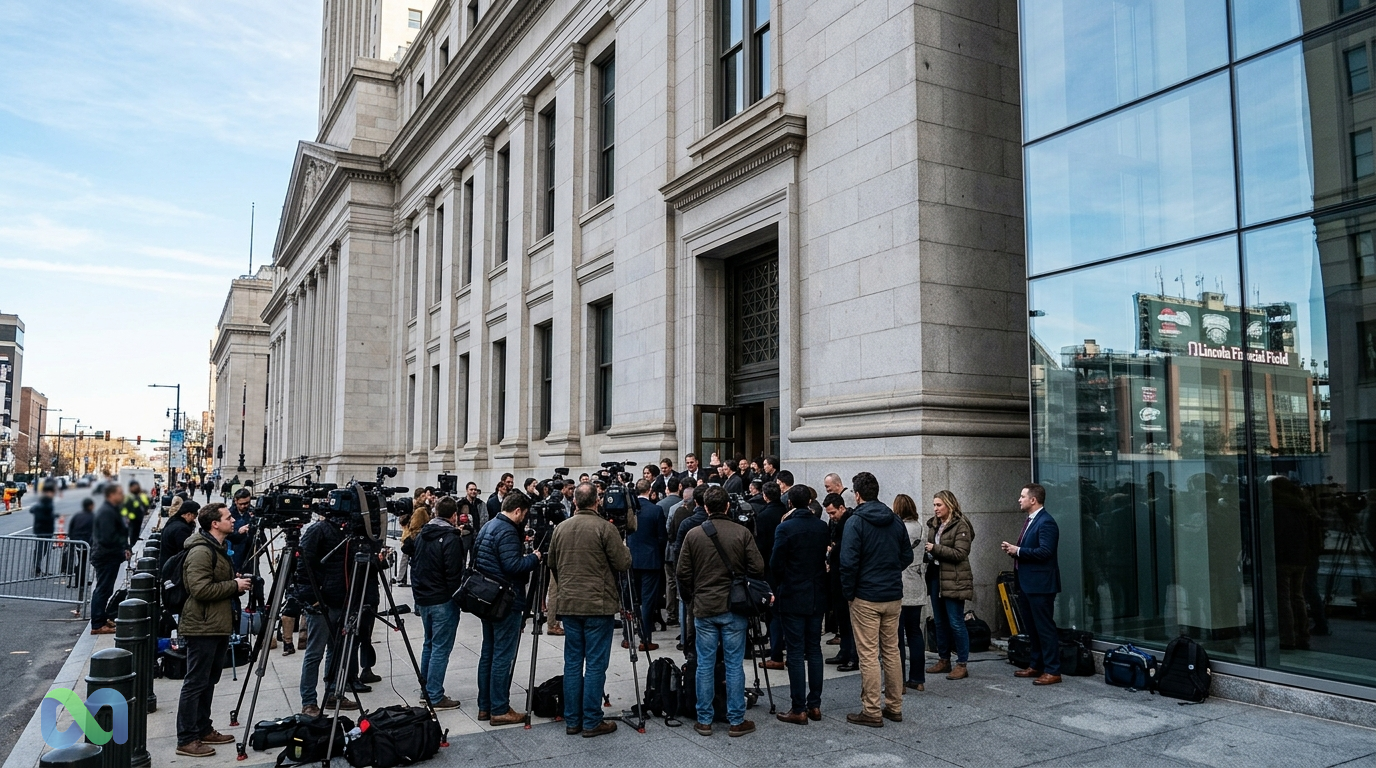
Sports bets prediction markets now sit at the center of one of the most important legal fights in US gaming and financial regulation. A recent federal appeals ruling backed the idea that some sports event contracts can be treated as swaps under federal commodities law, not as standard sportsbook wagers under state law. That shift matters because it changes who gets to regulate the product, who can offer it, and how users should think about risk.
Most search results for sports bets prediction queries still focus on picks, tips, and model-driven forecasts. They do not explain why a contract that looks like a bet to most users may be treated as a federally supervised financial instrument. They also skip the practical question. If a platform can list sports event contracts under Commodity Futures Trading Commission oversight, what happens to state regulators, legacy sportsbooks, tribal operators, and users?
This article explains what sports prediction markets are, why courts are treating some of them like swaps, and what the Kalshi dispute means for the broader industry. It also covers the limits of the ruling, the consumer risks that remain, and why this legal battle is far from over. This article is for informational purposes only and is not legal, investment, or trading advice.
What are sports prediction markets?
Sports prediction markets are marketplaces where users buy and sell contracts tied to a sports outcome. Each contract usually settles at a fixed value, often $1, if a specific event happens, and at $0 if it does not. The market price reflects the collective probability that traders assign to the outcome. If a contract trades at 62 cents, the market is roughly saying there is a 62% chance the event will happen.
In practice, this feels close to a sportsbook. A user can take a view on whether a team will win, whether a player will hit a target, or whether a title contender will lift a trophy. The difference is structural. In a sportsbook, the house sets the lines and manages exposure. In a prediction market, price discovery comes from market participants and platform mechanics. If you need a primer on how these venues function, this guide on how prediction markets work is a useful starting point.
Another difference is that prediction market contracts can trade before resolution. That means a user may open a position at one implied probability and close it later as the market moves. This makes the product look less like a one-way wager and more like a tradable event-linked instrument. For sports contracts, that distinction has become central to the legal fight.
How event contracts work
A sports event contract starts with a defined question and a settlement rule. For example, the market might ask whether a named team will win a championship before a stated deadline. Traders buy yes or no exposure based on the probability they see in the current market price. When the event resolves, the contract cash settles according to the posted rules.
That mechanics resembles other event contracts already common in prediction markets. Users are not only expressing fandom. They are also trading a probability that updates in real time as injuries, lineup news, and market sentiment change. This is one reason prediction market operators argue that sports contracts fit more naturally inside a market structure framework than a traditional gambling framework.
How they resemble sportsbook bets
The user experience still overlaps with sportsbook behavior in obvious ways. The underlying event is often the same. The payout is tied to a binary sports outcome. The audience may include users who are not thinking about market microstructure, but simply want exposure to the game.
That is why state regulators and tribal stakeholders argue that sports prediction contracts should not escape the same restrictions that apply to sports wagering. From their perspective, changing the packaging should not erase the substance. Courts now have to weigh that intuition against the federal statutory framework that governs derivatives and designated contract markets.
Why the court ruled these sports bets are swaps
The legal issue is not whether the contracts look like bets in plain English. The issue is whether they fit inside a federal commodities law framework that gives the CFTC primary authority over the venue and the product. In the Kalshi litigation, the court focused on that statutory design rather than on the cultural meaning of sports betting.
The core takeaway is simple. If a federally approved exchange lists event contracts that satisfy the relevant legal definitions, state law may have much less power than states expected. That is the part of the ruling that has shocked gaming regulators.
CFTC jurisdiction over designated contract markets
Kalshi operates as a designated contract market under federal law. That status matters because Congress gave the CFTC authority to oversee certain derivatives venues and the contracts they list. The exchange argued that once the federal framework applies, states cannot use local gambling law to block those contracts in the same way they would block a sportsbook operator.
The court largely accepted that structure. It treated federal oversight as the controlling framework for the exchange's listed contracts, even when those contracts referenced sports outcomes. In other words, the product's connection to sports did not automatically pull it back into state gaming control. The venue's federal status did a great deal of legal work.
How the Commodity Exchange Act defines swaps
Under the Commodity Exchange Act, the definitions around swaps and event-linked contracts are technical, but the practical logic is clear. The law looks at how a contract is structured, how it settles, and where it trades. It does not simply ask whether the average person would call it a bet.
That matters because sports event contracts can be framed as binary financial instruments with clear settlement terms, standardized listing rules, and exchange-based trading. The court did not say every sports contract is automatically lawful. It said that within this federal market structure, the contracts at issue could fall under the commodities regime rather than state-by-state betting law.
Why New Jersey's argument lost in the majority opinion
New Jersey argued that sports event contracts are gambling in substance and should remain subject to state sports wagering rules. That argument has intuitive appeal. States license sportsbooks, collect tax revenue, and police consumer protections. They also worry that a federal workaround could undermine decades of political and legal bargaining around gambling expansion.
But the majority opinion appears to have viewed the case through a preemption lens. Once Congress creates a federal regulatory path and gives an agency authority over designated markets, state objections become harder to sustain unless the statute clearly preserves them. The state may dislike the outcome, but disliking the product is not enough if the federal framework already covers it.
Prediction markets vs sportsbooks, what's actually different?
For users, this is where the debate becomes practical. Prediction markets and sportsbooks may reference the same game, but they do not operate the same way. The strongest version of the prediction market case is that the market is a price discovery venue under federal oversight. The strongest version of the sportsbook case is that ordinary users still experience the product as a sports wager. Both descriptions can be true at once.
Here is the simplest comparison.
| Category | Prediction market sports contracts | Traditional sportsbooks |
|---|---|---|
| Primary regulator | CFTC, if listed on a designated contract market | State gaming regulator |
| Product structure | Tradable event contracts, usually binary | House-set wagers and odds |
| Price formation | Market participants plus exchange mechanics | Operator sets and moves lines |
| Access logic | Potential federal pathway | State-by-state licensing |
| Consumer framework | Financial market style oversight | Gaming law and sportsbook rules |
| Open question | Whether sports contracts should be allowed at all | How far state models can expand |
Licensing and regulators
A sportsbook typically needs approval in each state where it operates. That means local licensing, local tax rules, local integrity controls, and often local commercial partnerships. A prediction market listed on a designated contract market argues from a different base. It says the federal license and the federal agency relationship matter most.
That difference is why the ruling could matter beyond one company. If the federal pathway remains open, operators may see sports contracts as a route around one of the industry's hardest distribution problems. State-by-state expansion is slow and expensive. A national model under one regulator is commercially attractive even if the legal fight remains unsettled.
Product design and market mechanics
Sportsbooks act as the house. They publish prices, manage exposure, limit users, and decide which markets to offer. Prediction markets lean on trading, order flow, and pricing signals from participants. Some also rely on automated liquidity design. If you want to understand the mechanics behind those systems, this explainer on automated market makers helps connect the product design to price formation.
That design can change user behavior. A trader may care less about locking in one final ticket and more about entering and exiting based on market moves. In that sense, sports contracts can look like event-driven financial positions. That does not eliminate gambling risk, but it does support the argument that the instrument belongs in a different regulatory bucket.
Consumer protections and open questions
State-regulated sportsbooks usually come with a familiar package of controls. Those include geolocation enforcement, responsible gaming disclosures, state complaint channels, and tax structures that fund public programs. By contrast, prediction markets under federal supervision may offer a different protection model, but not necessarily the same one users expect from gaming law.
This is one reason critics are uneasy. A federally supervised market may still be lawful, but that does not answer whether it is socially optimal, whether safeguards are sufficient, or whether the same harm controls will exist in practice. Legal status and policy quality are not the same question.
What the Kalshi case means for bettors, states, and operators
The case matters because it tests whether sports exposure can migrate from state gaming channels into a federal market structure channel. If that migration continues, the business map of sports wagering could change quickly. It could also trigger a much larger political backlash.
For users, the immediate impact is more choice and more confusion. For operators, it is a possible strategic opening. For states and tribes, it may look like a direct challenge to existing deals, tax bases, and sovereignty claims.
Implications for state gambling enforcement
State enforcement becomes harder when an operator can argue that federal law preempts local restrictions. That does not mean states become powerless overnight. They still have political influence, litigation options, and the ability to pressure Congress and federal agencies. However, the ruling weakens the simple argument that sports exposure automatically belongs to state gambling law.
That shift could produce a long period of mixed signals. Some states may keep pushing back. Others may wait for more federal guidance. Users should not assume the legal map is settled just because one major ruling favored a prediction market operator.
Potential impact on DraftKings, FanDuel, and new entrants
Large incumbents now have to think about competition from outside the classic sportsbook stack. If event contracts can reach users under a federal model, the barriers that protected state incumbents may matter less. That could pressure margins, change lobbying strategies, and create incentives for hybrid products.
It could also influence content and acquisition. Sportsbooks compete heavily on promotions and market depth. Prediction markets compete on transparency, tradability, and probability discovery. Macro Markets has made a similar distinction in its own positioning around prediction markets work, emphasizing market-based probabilities rather than house-set odds. Even so, the consumer audience may overlap more than the legal categories suggest.
Why Congress and the CFTC may still change the rules
A court win is not the same as permanent certainty. Congress can revise the law. The CFTC can tighten its approach to gaming-style event contracts. Future cases can narrow the reach of the reasoning. Political pressure can also reshape agency behavior, especially if states and tribal groups frame the issue as a threat to revenue, local control, and responsible gaming policy.
This is why the ruling should be read as a major development, not as the final word. The battleground has moved, but it has not disappeared.
The unresolved risks behind sports event contracts
The legal novelty of sports event contracts should not hide the core risk profile. Users are still taking financial exposure to uncertain outcomes. Fast-moving markets can amplify impulsive behavior. Sports-linked products may also attract users who would never open a traditional derivatives account but are very comfortable with game-day speculation.
That mix creates policy tension. A product can be innovative, liquid, and federally supervised while still raising questions about harm, fairness, and market integrity.
Addiction, access, and youth exposure concerns
Critics worry that sports event contracts may expand access to highly familiar forms of speculative behavior without importing the full responsible gaming toolkit used in state betting markets. If a product is marketed or perceived as trading rather than wagering, users may underestimate the behavioral risk. That concern becomes sharper when sports fandom and finance language blend together.
Youth exposure is another sensitive issue. Sports content already dominates major digital platforms. If event contracts become easier to access or easier to frame as mainstream market participation, policymakers may push for stronger age-gating, advertising controls, and platform design restrictions.
Tribal sovereignty and public revenue debates
In many states, sports wagering frameworks emerged from negotiations involving tribes, commercial operators, and public revenue commitments. A federal route for sports event contracts could disrupt those deals. Tribal groups may argue that prediction markets are functionally competing with products subject to sovereign agreements and local political compromise.
That means the conflict is not only about legal definitions. It is also about who gets the economic upside, who controls market access, and who bears the social costs. Those pressures could shape the next legislative response as much as any court opinion.
Regulatory uncertainty for users and platforms
Users should be careful about assuming that today's access conditions will remain stable. A market may be available now and face new restrictions later. Settlement rules, eligibility, reporting obligations, and product scope could all change as the legal environment evolves.
Platforms face similar uncertainty. A business model built around sports contracts may look strong after a favorable ruling, but still depend on agency posture, future litigation, and congressional tolerance. That is a fragile base for long-term planning.
FAQ on sports bets prediction markets
Are sports prediction markets legal in all 50 states?
Not necessarily. A favorable federal ruling can strengthen the case for national access through a federally supervised market structure, but legal certainty is still evolving. State resistance, new lawsuits, or federal rule changes could alter availability.
Is Kalshi a sportsbook?
Kalshi argues that it is not a sportsbook. It operates as a federally regulated exchange listing event contracts. Critics respond that sports contracts still function like wagers for many users, even if the legal wrapper is different.
What is the difference between a swap and a bet?
A bet is usually governed through gambling law and sportsbook rules. A swap or similar event-linked contract is analyzed through financial market law, contract structure, and federal oversight. The distinction matters because it changes who regulates the product and what legal rules apply.
Can states ban federally regulated prediction market contracts?
That is the central dispute. The recent ruling suggests state authority may be limited when the contract is listed within a federal commodities framework, but the issue is still politically and legally contested.
Conclusion
The sports bets prediction fight is really a fight over regulatory category. The court did not erase the resemblance between sports event contracts and sportsbook wagers. Instead, it said that resemblance may not be enough to override a federal commodities framework. That is a major shift for states, operators, and users.
The result is not a settled national rulebook. It is a new phase in the battle over who controls sports-linked event trading in the US. Expect more pressure from states, more scrutiny from the CFTC, and more debate over whether this market structure expands useful price discovery or simply rebrands gambling risk. Therefore, the smartest way to follow the sector is to start with the underlying market design, then watch what lawmakers and regulators do next.
