


US Iran Permanent Peace Deal Prediction Market: How $479M Called the Timeline
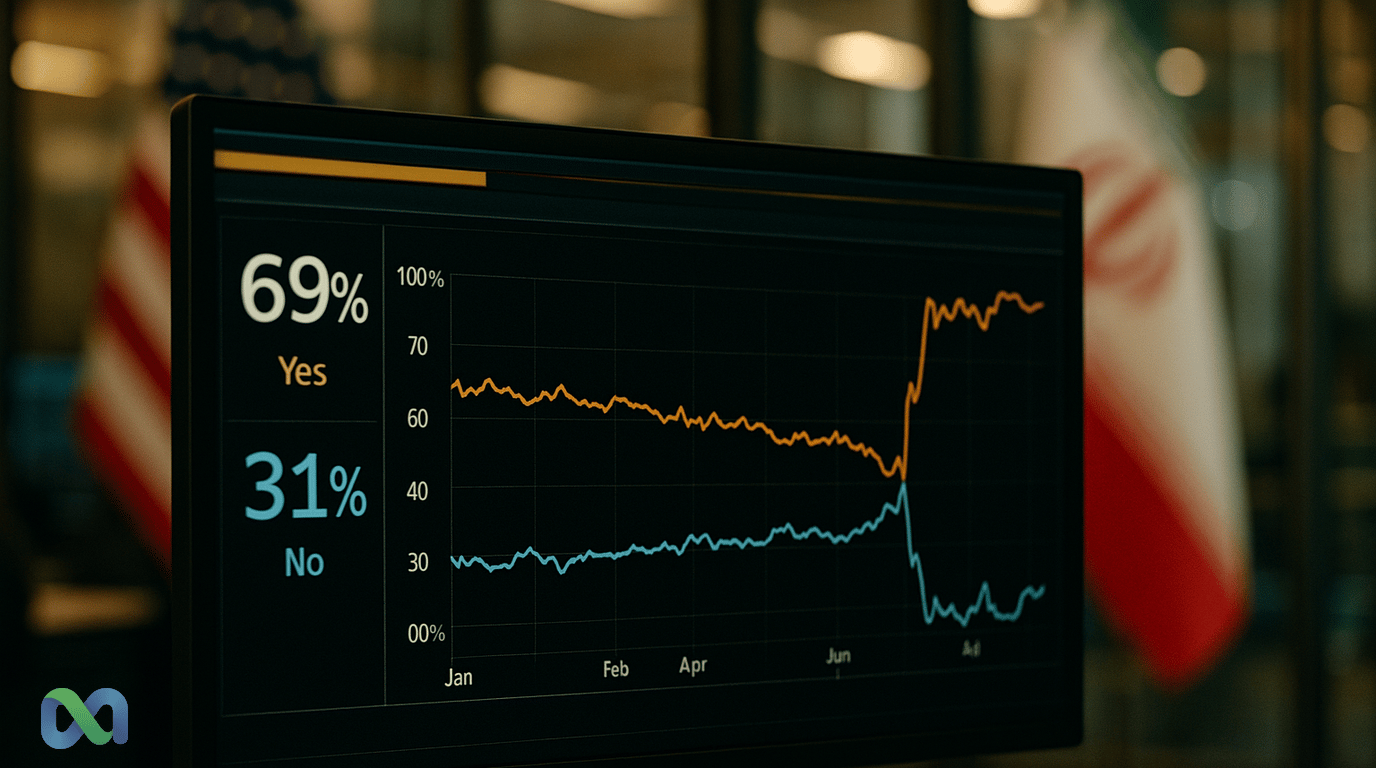
The US Iran permanent peace deal prediction market made history on June 15, 2026. One of the biggest markets on Polymarket ever closed "Yes." Nearly half a billion dollars had traded on one question.
The market got it right. And it did so months before the deal was signed.
Polymarket ran a market called "US x Iran permanent peace deal by...?" It drew $478.91 million in total volume. It tracked 17 different deadline dates, from April through December 2026. Each date asked: will the US and Iran sign a peace deal by then?
This article explains how the market worked, how odds shifted as talks moved forward, and what the result tells us about using prediction markets to track global events.
The Market Structure: 17 Deadlines, One Question
Most prediction markets ask a simple yes or no question. The US-Iran market went further. It offered 17 separate contracts, each tied to a different deadline date.
Dates ran from April 22 through December 31, 2026. Traders could buy Yes or No shares on any deadline. Each share price showed the implied odds.
A $0.60 Yes share on a June date meant a 60% market chance the deal would close by then. A $0.10 Yes share on an April date meant traders saw only a 10% chance by that early date.
How the Result Was Defined
Not every deal would count. The rules were clear. A permanent peace deal required formal ties, an end to fighting, and a framework that could be checked and verified.
A ceasefire alone did not count. An interim deal did not count either. Traders who read and understood these rules had a real edge over those just reacting to headlines. Al Jazeera and other international outlets tracked the US-Iran diplomatic timeline as events unfolded.
Single-Date vs. Multi-Date Markets
A standard yes/no market collapses all timing into one question. A multi-date market keeps timing open. Traders show not just whether they expect an outcome but when.
This structure made the US-Iran market more useful. By watching which dates drew the most volume and highest Yes prices, analysts could read the implied timeline from market prices alone.
The Timeline of Odds: From Doubt to June 15
The odds told a story as news arrived. At the start of 2026, few traders expected a fast deal.
April and May: All Dates Resolved No
Every April and early May date resolved "No." The market was not surprised. Volume on these short-term dates was thin from the start.
The long history of US-Iran talks made traders cautious. Decades of failed deals and broken talks had shaped the market. Early dates priced in a low chance from day one.
The Turning Point: Signals from Late April
Things changed in late April 2026. Reports of back-channel talks gained weight. Mediators from Oman and Qatar signaled real progress. US officials stopped ruling out a deal.
The June date markets reacted fast. Yes prices on June 15 climbed as signals grew. Traders who had waited on the sidelines entered with bigger positions. Volume shot up across June contracts.
This is one of the clearest strengths of prediction markets. They pool views from thousands of traders watching different signals. No single analyst sees the full picture. But as a group, the market processed news faster than most outlets.
Why June 15 and Not Earlier?
June 7 resolved "No." June 15 resolved "Yes." That 8-day window pinpointed the deal date with striking precision.
This shows the market correctly picked June as the most likely month, well in advance. Yes volume clustered on mid-June, not late June or July. That reflected real judgment about how fast talks were moving.
$478.91 Million in Volume: What Drove Record Trading
The scale of this market sets it apart. $478.91 million in total volume with $109.06 million in open interest at final sync on June 18, 2026 placed it among the largest geopolitical markets Polymarket had ever hosted.
Why Did So Much Money Flow In?
Clarity about a global event drives liquidity. As talks moved forward, traders on both sides entered with bigger bets. Yes buyers expected a win if the deal closed. No buyers hedged in case talks broke down.
The multi-date structure also multiplied total volume. Instead of one contract, there were 17. Each drew its own traders and its own capital.
Beyond that, the US-Iran relationship carries global weight. Oil markets, sanctions, and regional security all depend on this diplomatic tie. Traders with exposure in these adjacent markets had strong reasons to use the prediction market as a hedge.
Institutional vs. Retail Traders
High-volume global markets attract more experienced traders than niche markets. The US-Iran market likely drew analysts, quant traders, and people with direct ties to diplomatic channels.
When experts put real money behind their views, prices become more accurate. This is why high-volume markets tend to forecast better than thin ones.
Comparison to Other Major Markets
US election markets on Polymarket have crossed $1 billion in volume. The $479 million US-Iran market sits well below that level. However, for a non-election global market, tracking a diplomatic event rather than a set vote, this volume is exceptional.
It shows growing interest from serious traders in using prediction markets for global risk tracking. The US-Iran market has become a key data point in that shift.
Prediction Markets as Global Barometers: What the US Iran Peace Deal Shows
The market resolved correctly. But was it truly predictive, or did it get lucky?
Reading the Result Pattern
The result pattern shows real information at work. The market priced all April dates near zero from the start. It marked May dates as unlikely but not impossible. It pushed Yes prices high on mid-June contracts. And it tracked the actual deal date closely.
This is more than a coin flip. Traders processed real signals about talks. The $479 million in volume shows serious research went into each trade.
Why Markets Outperform Polls
Polls ask questions. Markets demand real money. A trader who buys a Yes share at $0.65 is not just saying the deal is likely, they are betting $65 on it. Real stakes create a need to research carefully and update fast.
Opinion polls on global questions capture what people think. Prediction markets capture what people believe enough to bet on.
Markets also update all the time. As new facts arrive, a summit, a failed round, a key statement, prices adjust right away. Polls capture one moment. Markets track the whole flow.
What Markets Cannot Predict
The US-Iran market performed well. But prediction markets have limits this case also shows.
First, thin contracts can be distorted. Low-volume date markets are more exposed to price moves from single large traders. Early April dates, with low volume, may carry less signal weight than the high-volume June contracts.
Second, sudden shocks can break even well-set markets. A military strike could have broken the deal at any point. Markets cannot price what no one can see coming.
Third, markets work best when traders have access to real data. Closed talks and private signals are invisible to most traders. Well-connected insiders may hold a real edge.
What This Means for Prediction Market Traders
The US-Iran market offers practical lessons for anyone who trades in global prediction markets.
Read Volume, Not Just Price
A 65% Yes price tells you the combined odds. But high volume at that price signals that many well-funded traders agree. Low volume at 65% means a thin group that could shift fast. BBC News and financial media tracked this market as a real-time signal for geopolitical risk pricing.
For the US-Iran market, volume on June dates gave a confirming signal beyond the raw price level.
Track the Implied Timeline
Multi-date markets reveal more than single yes/no markets. When one date trades at 80% Yes while the next trades at 40%, the market is saying: likely before date one, unlikely before date two. This tells you when, not just whether.
Know the Rules Before You Buy
Traders who understood exactly what counted as a "permanent peace deal" were better placed than those reacting to news flow alone. Reading the rules carefully is a basic step. It sets informed traders apart from those guessing on headlines.
Global Markets Attract Informed Traders
Unlike sports markets, where most data is public, global political markets involve private signals. The data is not spread evenly. Some traders know more than others.
This makes these markets both more useful and more risky. Prices reflect signals from well-sourced traders. But most retail traders lack access to the same private data that pros use.
The Bigger Picture: Prediction Markets and Global Risk
The US-Iran peace deal market reflects a broader shift. Prediction markets are more and more used for global risk tracking alongside standard analysis tools.
For traders, investors, and policy analysts, markets like this one offer real-time odds that pool data from many sources. They are not perfect. But as the US-Iran case shows, they can be highly accurate when volume is high, traders are informed, and rules are clear.
The $479 million that flowed through this market was not just a bet on diplomacy. It was a group forecast, and ultimately, it got the answer right.
Disclaimer: This article describes a closed prediction market. Past market performance does not guarantee future results. Prediction markets involve real financial risk. Only experienced traders who understand these risks should participate.
Frequently Asked Questions
What was the US Iran peace deal Polymarket result?
The market resolved Yes for June 15, 2026. The US and Iran reached a permanent peace deal between June 7 and June 15, 2026. The market drew $478.91M in total volume across 17 deadline dates.
How much did the US Iran Polymarket trade?
$478.91 million in total volume with $109.06 million in open interest at final sync on June 18, 2026. This placed it among the largest geopolitical markets in Polymarket's history.
What are multi-date prediction markets?
Multi-date markets offer separate yes/no contracts for different deadlines on the same event. The US-Iran deal market had 17 dates from April 22 through December 31, 2026. Each was its own binary contract.
Were prediction markets right about US-Iran?
Yes. The market correctly picked June as the most likely resolution window. June 15 and later dates resolved Yes. April and May dates resolved No. The pattern confirmed collective market judgment backed by $479 million in volume.
How do prediction markets work for global events?
Traders buy Yes or No shares on specific outcomes. Share prices reflect implied odds. A $0.65 Yes share means the market sees a 65% chance of that outcome. For global events, prices pool news signals, expert views, and private data into one number.
