


What Are Prediction Markets Doing Right Now?
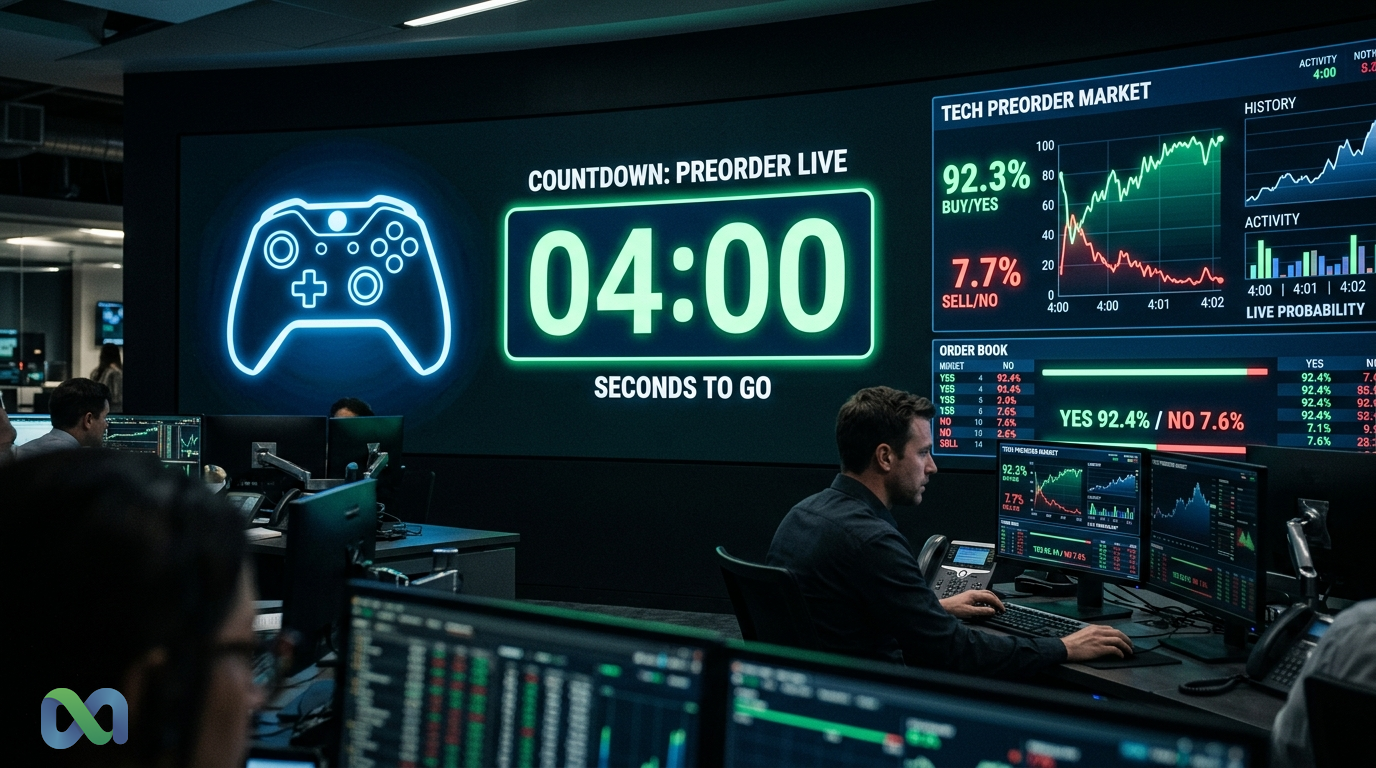
Prediction markets are doing more than pricing elections or sports finals. Right now, they are turning internet chatter, regulatory risk, and fast-moving headlines into live probability signals. A viral post joking about Steam Controller preorders going live in four minutes may sound trivial. However, it shows the exact instinct behind prediction markets. People see a moment of uncertainty, compare what others know, and try to price what happens next.
That is why prediction markets matter in 2026. They are becoming real-time tools for reading attention, conviction, and shifting expectations. They are also becoming a legal and cultural battleground. Platforms want to look more like financial infrastructure. Critics still think of them as gambling. Meanwhile, traders use them to turn breaking events into market implied probabilities.
This article explains what prediction markets do, why they are suddenly everywhere, what the Steam Controller preorder signal reveals, and how regulation could reshape the category. It also shows where prediction markets work well, where they fail, and why their role now goes far beyond pure speculation.
What Do Prediction Markets Do?
Prediction markets let traders buy and sell contracts tied to future events. The price of each contract works like a live probability estimate. If a yes contract trades at 0.62, the market is pricing a 62% chance that the event happens. In short, prediction markets turn uncertainty into numbers that move as information changes.
That function sounds simple. However, it is powerful because prices update faster than most polls, explainers, or editorials. A poll tells you what people said when they were asked. A prediction market tells you what participants are willing to back with capital right now. That difference creates a stronger filter for noise.
Prices become probabilities through trading pressure. When more people want exposure to one outcome, the implied probability rises. When fresh information weakens confidence, price falls. Therefore, a prediction market becomes a live scoreboard for changing belief.
This is also why prediction markets can aggregate information faster than many public narratives. Traders react to data releases, legal filings, social signals, and platform momentum in real time. They do not wait for a weekly summary. They position as events unfold. For a broader primer on this logic, Macro Markets already breaks down how prediction markets work.
Why Prediction Markets Are Suddenly Everywhere in 2026
Prediction markets are everywhere in 2026 because three forces are converging at once. First, crypto-native platforms proved there is real global demand for event contracts. Second, regulated players pushed prediction markets closer to mainstream financial coverage. Third, social media keeps producing viral moments that people immediately want to quantify.
Media coverage has widened the audience. Regulation stories, lawsuit coverage, election cycles, and product launches all keep prediction markets in the news. That matters because every headline acts like free education for new users. People may arrive because of a controversy. Still, many stay because the product gives them a clearer way to track uncertainty than a normal news feed does.
Additionally, the category now sits at the crossroads of finance, media, and internet culture. A trader watching a macro event, a sports fan tracking a title race, and a tech user reacting to a launch rumor all use the same core behavior. They look for a market price that captures what the crowd believes.
The regulation and lawsuit backdrop adds even more attention. Debates over whether prediction markets are financial tools or gambling products are no longer niche. They shape how platforms can grow, what contracts they can list, and who gets access. As a result, regulation is not just a legal side story. It is a core part of why the entire sector feels urgent right now.
What the Steam Controller Preorder Signal Reveals
The Steam Controller preorder post is useful because it looks small, fast, and almost unserious. That is exactly why it matters. Prediction market culture has always been obsessed with moments when the internet starts pricing a possibility before formal reporting catches up. A launch window, a supply rumor, or a last-minute preorder scramble can become a tiny case study in collective forecasting.
From social post to market signal, the gap can now be just minutes. Someone posts that preorders go live in four minutes. Others immediately ask what the crowd knows, what the platform will do, whether demand is real, and how fast expectations will shift. Even if no major contract exists for that exact event, the instinct is the same one prediction markets train. Watch attention. Watch reaction speed. Watch conviction.
That matters because niche events still shape prediction market behavior. The category is no longer only about elections or central bank decisions. It also reflects how online communities think through uncertainty in public. A sudden preorder window may not be high finance. However, it is a clean example of how people turn fragmented information into a tradable mental model.
In that sense, the Steam Controller signal reveals that prediction markets now function as part market, part media habit, and part internet reflex. People do not just consume news. They want to price it.
How Effective Are Prediction Markets?
Prediction markets can be very effective when liquidity is strong and incentives are aligned. In those conditions, they often aggregate dispersed information better than individual experts or poll-based commentary. A trader who risks capital has a reason to update quickly, correct mistakes, and search for overlooked facts. That process can produce sharper probability signals than passive observation.
They work especially well when the event is widely watched, resolution rules are clear, and enough participants care about being right. Elections, sports futures, and major policy decisions fit that pattern. Therefore, prices in active markets can become useful shorthand for collective expectation.
However, prediction markets are not magic. Thin liquidity can distort prices. Small groups can push weak markets around. Incentives can reward momentum chasing instead of genuine information discovery. Moreover, a probability is not a guarantee. A market trading at 70% still implies the lower-probability outcome can happen 30% of the time.
That is why the best way to read prediction markets is with discipline. Use them as one input, not the only input. Compare market prices with reporting, data, and context. When markets outperform experts and polls, it is usually because they react faster and weigh conviction more honestly. When they fail, it is often because the market was too shallow or the event was too noisy.
The Top Prediction Markets and What Makes Them Different
The top prediction markets now follow different models, and those differences matter. Polymarket represents the fast-moving crypto-native path. It benefits from global online attention, broad market menus, and the ability to react quickly to cultural and political moments. Kalshi represents the regulated event-contract path. It aims for institutional credibility, clearer compliance, and a framing closer to financial markets than to gaming.
Emerging regional platforms matter too because local knowledge can beat global scale in specific categories. A platform that understands regional politics, sports culture, or local regulation may serve users better than a giant marketplace that treats every country the same way. That is part of the long-term opportunity for products built around local events and local audience behavior.
Users should watch more than headline volume. They should look at liquidity depth, contract clarity, settlement trust, legal access, and how quickly markets update when facts change. A market with loud social buzz but weak liquidity may be less informative than a quieter market with better depth and stronger rules.
For readers tracking sports-style forecasting, Macro Markets has already shown how market framing works in event coverage like who will win the 2026 World Cup. The same core logic applies outside sports too.
Why Regulation Could Reshape the Entire Category
Regulation could reshape prediction markets more than any product feature. If regulators treat event contracts as legitimate financial instruments, the category gets more trust, more distribution, and more mainstream participation. If regulators tighten oversight aggressively, platforms may lose flexibility, reduce market variety, or face local access barriers.
That is why lawsuits and compliance debates matter so much. They affect who can list contracts, which events are acceptable, how platforms describe their products, and whether users see prediction markets as trustworthy. In practical terms, regulation determines whether the next stage of growth looks institutional or remains internet-native and fragmented.
What changes if oversight tightens? Regulated platforms may gain an advantage in credibility, but they may also move slower. Offshore platforms may keep speed and cultural relevance, but they could face recurring legal pressure. Therefore, the future of prediction markets may split between trusted regulated venues and flexible but riskier global ones.
For users, this means the big question is not only which market has the most buzz today. It is which model can survive scrutiny, keep liquidity, and stay useful over time.
Final Take
Prediction markets are doing three things right now. They are pricing uncertainty faster than many traditional formats. They are absorbing social and cultural moments, not just classic finance or election stories. And they are forcing regulators, platforms, and users to decide what kind of product this category really is.
The Steam Controller preorder joke captures the shift perfectly. Even a tiny internet event can trigger the same behavior that powers larger markets. People want to turn ambiguity into a live number. That instinct is spreading.
So, what are prediction markets doing right now? They are becoming a real-time layer for interpreting attention, conviction, and future outcomes. If liquidity and regulation improve, that role could grow much larger. If not, the category will stay influential, but more fragmented and more fragile than its loudest supporters expect.
