


Aether Summon TCG: The 8-Year Gamble on Skill Over Luck
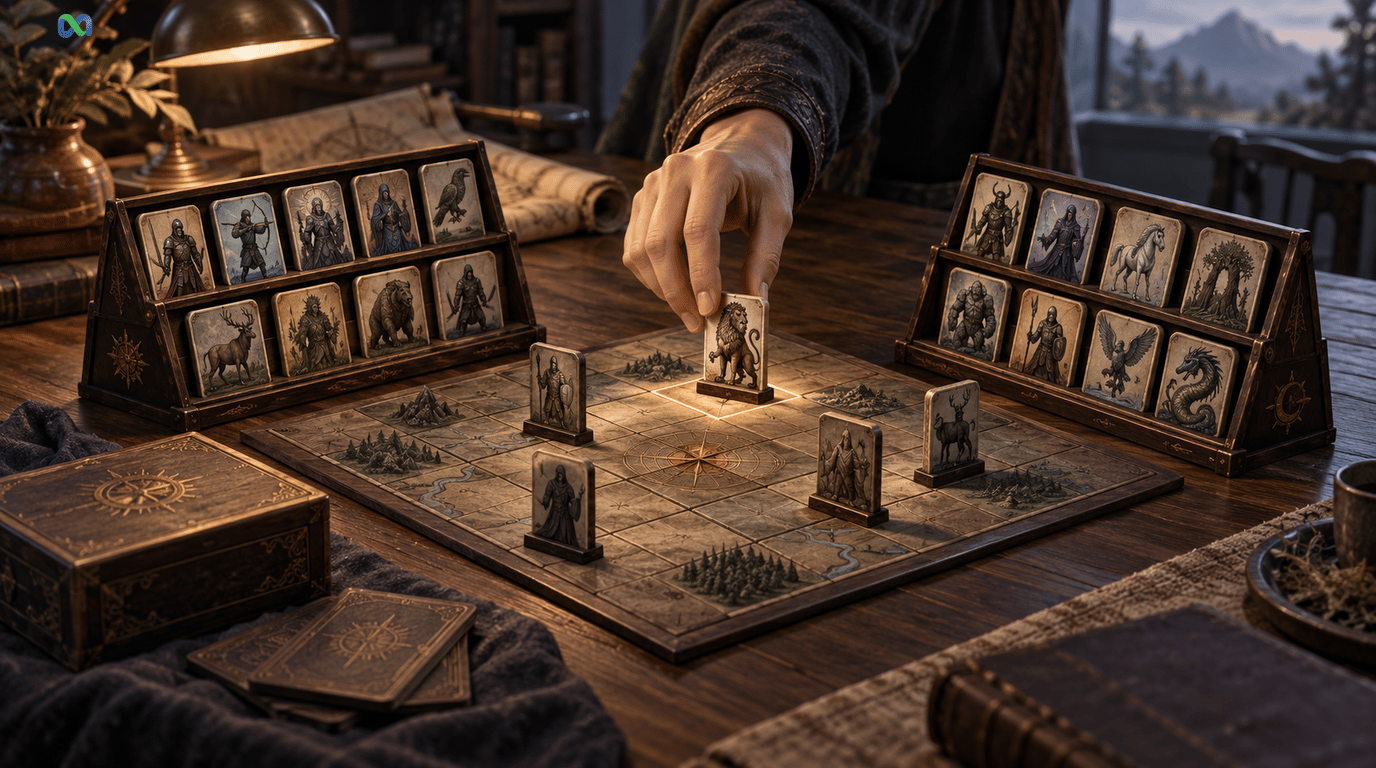
What if you could play a trading card game and never blame your draws again? That is the idea behind Aether Summon, a browser-based TCG built over eight years. The goal was simple: remove card draw luck from the game.
Every player starts with full access to their cards. No shuffles. No lucky draws. No mana screw. Just strategy.
The developer posted the project on HackerNews on September 26, 2026. The response was quiet, four points and two comments. But the project raises a real question. Is there a market for a skill-based TCG where decision-making beats luck?
For prediction market fans, that question has a measurable form. Crowdfunding campaigns are public bets on product demand. This one is worth examining closely.
What Is the Aether Summon TCG?
Aether Summon is a turn-based card game for two players. Players take turns using resources to power magical scrolls, creatures, and hexes. The first player to drive the opponent's life total to zero wins.
The official site describes the game as sitting between chess and a traditional TCG. Like chess, players always have access to their full set of pieces. Like a TCG, they still face imperfect information. In draft mode, neither player knows the other's full strategy before the match.
The game runs in a browser and works on desktop, tablet, and mobile. A Gmail sign-in gives access to the current beta. Turns are time-restrained. This adds pressure and keeps the game moving. Time limits replace the tension that normally comes from uncertain draws.
The project is open-source under the AGPL-v3 license, if its Gamefound campaign reaches its funding goal. That license commitment defines what the campaign is really asking backers to support.
The Randomness Problem in TCGs
Randomness has defined the trading card game genre for decades. Every major commercial TCG uses it as a core design element.
Traditional card games are built on variance. In Magic: The Gathering or Hearthstone, you draw cards from a shuffled deck each turn. Some draws are great. Others leave you stuck without the resources you need.
This draw randomness can be a feature for casual players. It creates drama. It lets weaker players beat stronger ones on lucky days. It keeps games uncertain.
But competitive players often see it as a problem. A skilled player can lose to a lucky opponent. Long game runs can be decided by who drew better, not who played better. The competitive TCG community calls this variance. Players love it and hate it at the same time.
Aether Summon's designer calls the existing model "casino-like randomness." In the HackerNews post, the developer said existing TCGs stopped feeling competitive. Chess does not work that way. Every piece is always on the board. Aether Summon applies that same logic to cards.
However, removing draw randomness does not remove all uncertainty. Draft mode still creates pre-game strategic variance. You do not know your opponent's codex at draft time. Skill competition shifts to deck building, resource use, and in-game decisions.
How Aether Summon Works: Codex vs. Deck
In most TCGs, you build a deck and shuffle it before each game. You draw one or more cards per turn. You plan around probabilities. You hope your draws cooperate.
In Aether Summon, the deck is called a codex. Every card in your codex is available from the first turn. You choose which scrolls, creatures, or hexes to play based on your current resources and board state. No drawing, no shuffling.
This changes the game's depth in a key way. Traditional TCG skill includes probability tracking. You watch which cards are left in your deck. You plan around likely draws. That layer is gone in Aether Summon.
What replaces it is pure decision making. With every option visible, the game becomes about finding the best sequence of plays from your full set of tools. The challenge shifts from adapting to a random hand to optimizing from a known one.
Time-restrained turns add a second pressure layer. Players cannot think for too long. The timer forces commitment. This creates tension even when both players know their own full options.
Draft mode keeps one form of imperfect information alive. Before the match, players draft from a shared card pool. Neither player sees the other's final codex. You know your plan. You do not know your opponent's counter.
The result favors skilled players far more than traditional TCGs. If you build a better codex and execute better turns, you win more often. Luck plays a smaller role.
Eight Years Solo: The Development Story
Building a game alone over eight years is unusual. Most independent game projects take a year or two, or they stop entirely. Aether Summon kept going.
The developer spent eight years building Aether Summon. The project began as a hobby. It grew during free time alongside full-time and part-time work.
The core motivation was personal frustration with existing TCGs. The designer was an experienced card game player who found draw-based randomness unsatisfying. Key influences included chess, Warhammer tabletop games, and interactive book formats like "Build Your Own Adventure."
The game is browser-based with responsive design across devices. The developer launched a beta, then took it offline. The reason was straightforward: server costs grew, and there was no clear path to revenue.
Rather than stopping the project, the developer turned to Gamefound. The crowdfunding campaign is framed as a way to fund open-sourcing under AGPL-v3. If the community backs it, the source code becomes public. Development can then continue with community support behind it.
One detail from the HackerNews post stands out: the developer stated they had no plan, no network, and no marketing. The HN post was the launch. Most crowdfunding campaigns arrive with mailing lists, demo videos, and press coverage. This one launched with a single forum post.
That context matters when thinking about the campaign's chances.
The Gamefound Campaign: Betting on Open Source
Gamefound is a crowdfunding platform focused on tabletop and game projects. It is a major alternative to Kickstarter in the games category. The Aether Summon campaign asks backers to fund open-sourcing the project under AGPL-v3.
The AGPL-v3 is a strong copyleft license. Any modified version of the software that runs as a network service must also be open-sourced. For a browser game, this means any server running a changed version of Aether Summon must publish those changes publicly.
This framing makes the campaign feel different from a typical pre-order. Backers are not paying for a physical product or early access. They are voting on whether the conditions for open development should exist.
The actual funding target and campaign deadline were not readable from public sources at research time. The Gamefound campaign page returned a 403 error during research. The project page exists on Gamefound.
The core risk is clear. Browser-based games without physical rewards have a smaller target market on crowdfunding platforms. Many backers on these platforms prefer something they can hold. Digital-only campaigns depend on community momentum. This campaign started with almost none.
What Are the Odds? A Prediction Market View
No prediction market currently offers a contract on whether Aether Summon reaches its Gamefound funding goal. Polymarket does not list it. Macro Markets does not list it. The following section uses a hypothetical framing to analyze the underlying probability.
Crowdfunding campaigns for games succeed at roughly 30 to 40 percent overall. That base rate hides a lot of variation. Campaigns with large communities, press coverage, or established brands succeed far more often. Campaigns without those advantages fail more often than the base rate suggests.
Aether Summon has some real strengths. The core mechanic is genuinely different from any major TCG on the market. Skill-based card games have a real audience. Competitive players who are tired of variance have few places to go. The browser-based format removes the need to buy physical cards.
But the weaknesses are clear. The campaign launched with no marketing, no mailing list, and no prior community. The HN post got minimal engagement. There is no verified media coverage.
Hypothetical prediction market analysis, illustrative only. No actual market exists.
Key factors affect the implied probability:
- Base rate for browser-game crowdfunding with no prior audience: around 20–25%.
- Novel mechanic in an underserved niche: adds roughly +5%.
- No marketing, network, or press coverage: subtracts roughly -5%.
- Open-source AGPL-v3 framing: neutral effect.
- Estimated implied probability: roughly 25–30%.
Assume a hypothetical YES contract priced at $0.28 for every $100 of notional value. That implies roughly a 28 percent chance of success.
A $100 YES position costs $28. If the campaign funds, it resolves to $100. That is a +$72 profit, or +257% ROI on the position. If the campaign fails, the position goes to zero. That is a -$28 loss.
These numbers are editorial analysis only. The 30% base rate is estimated from general crowdfunding data. It is not verified against a specific platform dataset. No actual market exists. These figures are illustrative and should not guide any actual investment decision.
What would change the probability? Coverage from a TCG-focused site, a community rally on Reddit or Discord, or a viral demo would all push the implied probability higher. A small, specific funding goal would also reduce uncertainty and make success more visible as a target.
Is Skill-Based TCG Design the Future?
The question behind Aether Summon is bigger than one campaign. Is the TCG genre ready for a non-random variant?
The commercial record is mixed. Chess is the most successful skill-pure strategy game in history. But it has not replaced poker. Both games exist because they serve different needs. Randomness is not a flaw waiting to be fixed. For many players, it is the point.
The TCG market is dominated by games that mix skill and luck. Magic: The Gathering has run for over 30 years on draw variance as a core mechanic. Hearthstone built a major business on the same model. Randomness keeps casual players coming back. It gives everyone a chance.
The real question is whether there is an underserved group of competitive TCG players who want skill-pure play. Aether Summon is betting there is. Eight years of solo development suggests the designer believes it enough to build the game without external support.
The Gamefound campaign is the test of that belief. If the community agrees, the project gets open-sourced. If not, the developer faces the same challenge as most independent game studios: finding an audience without commercial validation.
For prediction market users, this is exactly the kind of measurable bet that makes crowdfunding worth following. The outcome will arrive before the end of 2026.
Conclusion
The Aether Summon TCG represents one developer's long-term bet that the card game genre can work without draw randomness. That is a testable claim. The Gamefound campaign turns it into a market outcome.
Aether Summon is a focused attempt to remove luck from the trading card game format. After eight years of solo development, it is asking the crowd to decide its future through a Gamefound campaign.
The mechanics are clear. Full codex access removes draw luck. Draft mode keeps pre-game strategic uncertainty. Time-restrained turns add pressure without adding randomness. The design philosophy is consistent throughout.
The crowdfunding challenge is equally clear. No marketing, no community, and a low-engagement launch are real obstacles. The implied probability of success, roughly 25 to 30 percent based on general crowdfunding base rates, reflects those obstacles honestly.
Whether Aether Summon finds its audience depends on whether the community that wants skill-pure card games is large enough and organized enough to fund it. That answer will come before the year ends.
Visit the Aether Summon campaign on Gamefound to follow progress or back the project directly.
The indie game market regularly produces projects that succeed against long odds. It also regularly produces projects that do not. Aether Summon sits at the start of that journey, with the mechanics in place and the funding campaign underway.
