


AI Bubble Market Model: Reading the Chaos
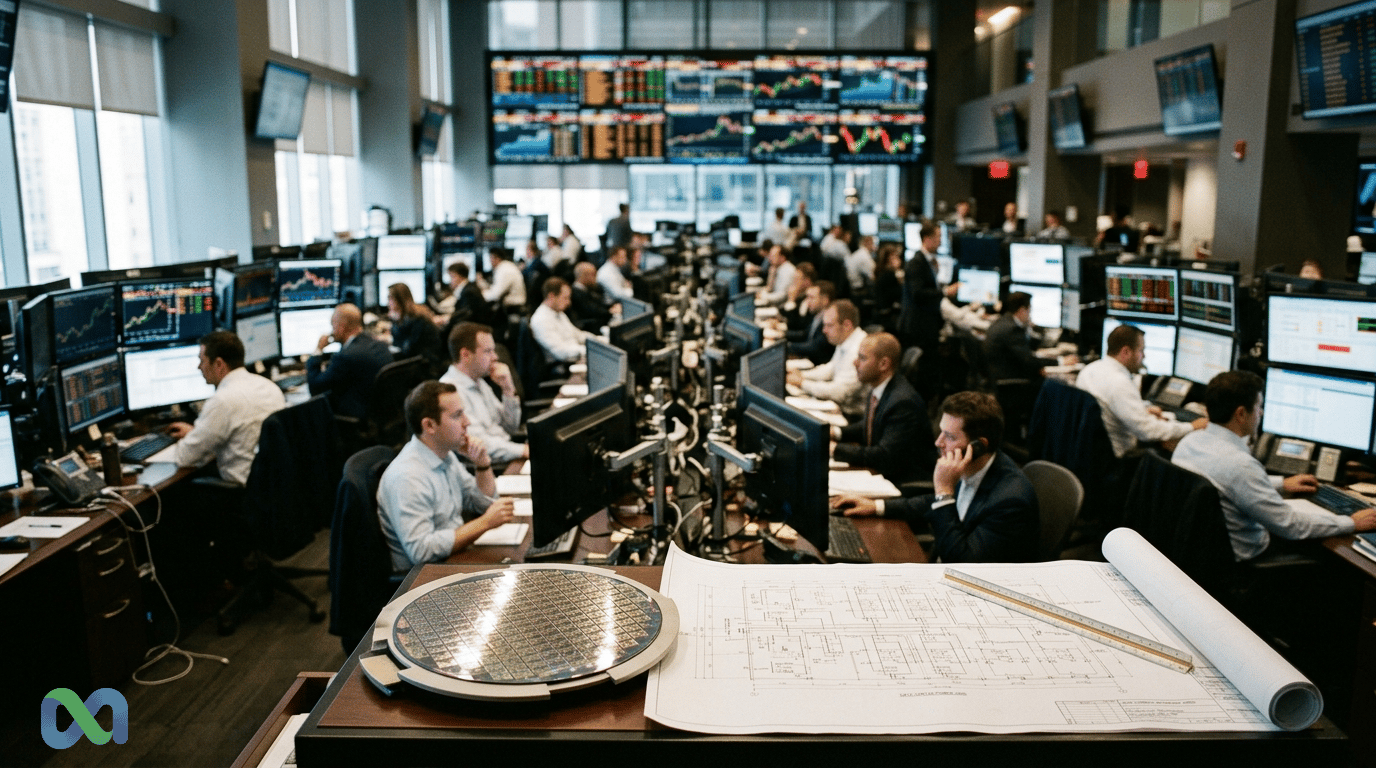
An AI bubble market model starts with a simple question: which parts of the current chaos should change prices, and which parts are just noise? The feed now mixes Xbox layoffs, Chinese model releases, AI-driven engineering debates, stock-market bubble explainers, UFO clips, and stray political posts. That looks like a mess. For traders, the job is more disciplined. Separate evidence that can affect revenue, margins, regulation, or capital spending from posts that only show attention.
The phrase that triggered this scan was blunt: "what a shitshow." It is useful because it captures the mood around AI and tech markets. It is not useful as a forecast by itself. Markets need claims that can be priced, watched, and settled.
This article uses the noisy cluster as a signal map. It explains what an AI bubble signal looks like, what should be ignored, and how prediction markets can turn vague narrative pressure into explicit probabilities. Last reviewed: 07/24/2026. This is market analysis, not investment advice.
An AI bubble signal is a development that can change expectations about future cash flows, competitive moats, funding conditions, or regulation. It is stronger when it links to measurable outcomes, such as capex growth, margin compression, layoffs, new model launches, customer adoption, policy action, or earnings guidance. It is weaker when it only shows anger, jokes, or viral attention.
The Signal Behind the Noise
The research brief behind this article found a strange mix of references. A Kotaku-linked Bluesky post reacted to Xbox layoffs and studio pressure. A Reddit thread asked what AI-driven engineering is like at frontier labs. A TikTok explainer asked whether the stock market is in an AI bubble. Google News references pointed to Chinese AI models such as GLM-5.2 and Kimi K3. Other posts drifted into UAP content and unrelated politics.
Those items do not belong to one clean story. That is the point. The AI market narrative has become broad enough to absorb job cuts, software workflows, model competition, retail stock videos, and geopolitical anxiety. The same feed can suggest that AI is overhyped, underpriced, job-killing, strategically decisive, and culturally exhausting.
A trader should not treat that mixture as proof of a bubble. However, the mixture does show narrative density. More topics now get pulled into the AI frame. When a theme becomes that broad, it can shape expectations before the underlying data is clear.
That matters because market prices do not wait for perfect information. Investors update from earnings calls, social attention, policy speeches, model demos, hiring freezes, and competitor releases. Some updates are rational. Some are emotional. A useful AI bubble market model has to sort them before they become one vague trade.
What Actually Looks Like an AI Bubble Signal
An AI bubble is not defined by people saying the word bubble. It is defined by prices and expectations running ahead of durable returns. The relevant question is whether capital is chasing future AI cash flows faster than those cash flows can appear.
There are several stronger signals to watch.
| Signal | Why it matters | What would confirm it |
|---|---|---|
| Capex acceleration | AI infrastructure requires chips, power, data centers, cooling, and networking | Guidance keeps rising faster than AI revenue visibility |
| Margin pressure | Expensive inference and model training can reduce profits | Firms report higher AI costs without matching revenue growth |
| Model commoditization | Open-weight models can pressure paid API pricing and moats | New releases match frontier performance at lower cost |
| Labor disruption | AI-driven engineering can change hiring, productivity, and software budgets | Layoffs or slower hiring appear alongside automation claims |
| Retail amplification | Viral AI stock content can show late-cycle risk appetite | Narratives focus more on price targets than business quality |
| Policy backlash | Safety, copyright, and national-security concerns can raise costs | Agencies, courts, or lawmakers move from talk to action |
Capex is the clearest market signal. If large tech firms spend heavily on AI infrastructure, investors need to know whether those assets will earn enough return. Spending can be bullish when demand is real. It can also become bubble fuel if the market assumes every dollar of AI capex will produce high-margin revenue.
Model commoditization is another serious signal. Chinese open-weight models matter because they challenge the idea that a small group of US labs can keep a durable lead. The Indian Express reference in the brief asked why GLM-5.2 was turning heads in Silicon Valley. The TradingView reference asked why Kimi K3 had Wall Street talking. Those are not just model headlines. They point to pricing power, moat durability, and chip demand assumptions.
Labor-market signals also deserve attention. The Reddit discussion about AI-driven engineering at frontier labs is not a formal dataset. Still, it captures a question that affects valuations: how much software work can AI compress? If AI increases output per engineer, margins may improve. If it creates chaotic workflows or lowers trust in code quality, the effect may be weaker.
Layoffs are harder to read. The Kotaku-linked Xbox layoffs reaction shows how tech-sector cuts become social flashpoints. Layoffs can mean a company is protecting margins. They can also mean management overbuilt for a growth story that is slowing. The market impact depends on context, not outrage alone.
What Is Just Noise
The noisy parts of the cluster still matter, but they answer a different question. UAP clips, generic "what if" narratives, dictionary-style usage of a phrase, and unrelated political headlines do not tell traders much about AI revenue or valuation. They do show that the feed is crowded and emotionally charged.
That distinction protects analysis from becoming a social recap. A viral post can be useful evidence of attention. It is weak evidence of business value. A joke can show fatigue. It does not prove that AI capex is mispriced.
The same applies to profanity and mood. "What a shitshow" is an attention signal. It says the public sees disorder. It may indicate that trust is falling. However, it does not identify which company, sector, or market event should reprice.
This is where many AI bubble debates fail. They collapse every signal into one conclusion. Supporters say AI is transforming everything. Skeptics say the whole trade is a bubble. Both claims are too broad. Some AI spending may be rational. Some stocks may be overextended. Some model releases may matter. Some posts may be noise.
A better model ranks evidence by transmission channel. Does this event change revenue? Does it change margins? Does it change regulation? Does it change competition? Does it change capital costs? If the answer is no, the story may be culturally loud but financially weak.
How Traders Should Read the Chaos
Traders need a checklist for AI narratives because the news cycle now moves faster than due diligence. The goal is not to ignore messy signals. The goal is to size them.
First, define the claim. "AI is a bubble" is not a tradable claim. "AI capex will outpace AI revenue growth for the next four quarters" is closer. "A Chinese open-weight model will pressure paid API prices" is closer still. A claim becomes useful when it can be tracked against evidence.
Second, identify the source. A company filing deserves more weight than a short video. A reported model release deserves more weight than a rumor. A Reddit thread can reveal workflow sentiment, but it should not be treated like audited data.
Third, map the channel. Capex affects free cash flow. Competition affects pricing power. Layoffs affect cost structure and morale. Regulation affects compliance and launch timing. Social virality affects attention, but only becomes market relevant when it pushes one of those channels.
Fourth, ask what would change the probability next. For AI infrastructure, that may be updated capex guidance, power availability, backlog quality, or customer concentration. For AI labs, it may be enterprise adoption, API pricing, safety reviews, or policy action. For software firms, it may be hiring trends and margin guidance.
Finally, compare the signal with current expectations. A powerful AI model release is not automatically bullish if the market already assumes rapid model progress. A layoff announcement is not automatically bearish if investors wanted cost discipline. Prices move when reality differs from expectations.
This is the core of an AI bubble market model. It is not a slogan. It is a way to decide which facts deserve a probability update.
Where Chinese AI Models Fit
Chinese AI model releases are among the cleaner signals in the cluster because they affect competition directly. If GLM-5.2 or Kimi K3 narrows perceived performance gaps, the market has to revisit several assumptions.
The first assumption is scarcity. If frontier-level capability becomes easier to reproduce, paid model access may face pricing pressure. Developers and enterprises may gain more substitutes. That can weaken the moat around leading labs.
The second assumption is capex intensity. Cheaper or more efficient models can reduce the need for extreme compute in some use cases. However, they can also increase total demand by making AI cheaper to deploy. The direction is not obvious. Traders should watch whether efficiency lowers spending or expands usage.
The third assumption is geopolitics. AI model competition between the US and China can feed export controls, procurement rules, sanctions, and national-security reviews. Those policy channels can affect chips, cloud providers, enterprise software, and cross-border partnerships.
This is why a Chinese AI model headline can matter more than a generic bubble post. It has a route into margins, competition, and policy. It still needs evidence, but it has a clear market channel.
AI-Driven Engineering and the Labor Signal
AI-driven engineering is another signal worth separating from the noise. The market has priced a broad productivity story into many AI narratives. If engineers can ship more with AI tools, software firms may do more work with smaller teams. That could support margins.
However, productivity gains are not automatic. AI-assisted code can create review overhead, security concerns, integration problems, and maintenance risk. Teams may move faster in some areas and slower in others. The strongest signal would be company-level data showing better output, lower costs, and stable quality.
Layoffs complicate this story. A company may cut staff because AI made teams more productive. It may also cut staff because revenue disappointed. Without details, layoffs are ambiguous. That is why the Xbox reaction should be treated as a labor and sentiment signal, not direct proof of AI productivity.
For markets, the useful question is not whether AI will replace workers in a broad sense. The useful question is which firms can convert AI tools into measurable operating leverage. That requires evidence from margins, release cycles, support costs, and customer retention.
Where Prediction Markets Help
Prediction markets are useful because they force vague narratives into measurable questions. Instead of arguing whether AI is a bubble, traders can price specific events: whether a company cuts guidance, whether a regulator opens an investigation, whether an AI model release changes market share, or whether a major firm slows capex.
That structure matters in chaotic periods. Social feeds reward strong claims. Markets reward correct calibration. A prediction market does not remove uncertainty, but it makes the uncertainty explicit.
For example, the TikTok question "are we in an AI bubble right now?" is too broad to settle cleanly. A better market would ask whether a basket of AI infrastructure names underperforms a benchmark by a certain date, whether AI capex guidance rises again, or whether a named company reports AI revenue above expectations.
The same applies to model competition. A broad claim that Chinese AI is catching up is hard to price. A sharper question might track whether a Chinese open-weight model reaches a benchmark threshold, whether a US policy response appears, or whether a leading lab cuts API prices.
This is the advantage of probability-based analysis. It turns the feed from a wall of mood into a set of testable outcomes.
A Practical AI Bubble Checklist
Use this checklist before reacting to the next AI bubble headline.
- Is the claim about price, profits, technology, policy, or social mood?
- Is the source a filing, earnings call, credible report, model paper, forum thread, or short video?
- What company, sector, or event should the claim affect?
- Does the event change revenue, margins, capex, regulation, or competition?
- Is the market already pricing that outcome?
- What new fact would confirm or weaken the thesis?
- Can the claim become a clear probability with a deadline?
If a story cannot pass this test, it may still be interesting. It may even be culturally important. But it should receive a smaller trading update than a signal tied to cash flows or policy.
FAQ
Are we in an AI bubble right now?
Parts of the AI trade show bubble-like behavior, especially where prices assume years of high returns from uncertain capex. That does not mean all AI spending is irrational. Traders should separate infrastructure demand, model competition, software productivity, and retail hype.
What is a stock market bubble?
A stock market bubble happens when prices rise far beyond what future cash flows can justify. Bubbles often include strong narratives, easy capital, retail excitement, and resistance to negative evidence. They usually become clear only after expectations reset.
Why do AI model releases affect tech stocks?
AI model releases affect tech stocks because they change expectations about demand, margins, and moats. A stronger model can boost adoption. A cheaper open model can pressure pricing. A foreign model can also change policy risk.
How can traders tell if an AI narrative is priced in?
Compare the new information with current expectations. If investors already expect rapid model progress, another strong release may not move prices much. If guidance, margins, or regulation surprise the market, the update is stronger.
Do prediction markets prove what will happen?
No. Prediction markets quantify expectations. They do not create certainty. Their value is that they force traders to define outcomes, deadlines, and probabilities instead of relying on broad narratives.
Bottom Line
The current AI story looks chaotic because it really is fragmented. Model releases, layoffs, capex, engineering workflows, social videos, and geopolitical tension now move through the same narrative channel. That does not prove a bubble. It does prove that traders need a stricter filter.
The best AI bubble market model starts with evidence, not mood. It asks whether a story changes revenue, margins, capital spending, competition, or regulation. Then it compares that change with what the market already expects.
That discipline matters most when the feed feels like a shitshow. Noise can move attention. Only durable signals should move probabilities.
