


AI Cyber Threats: Big Tech's Limited Window
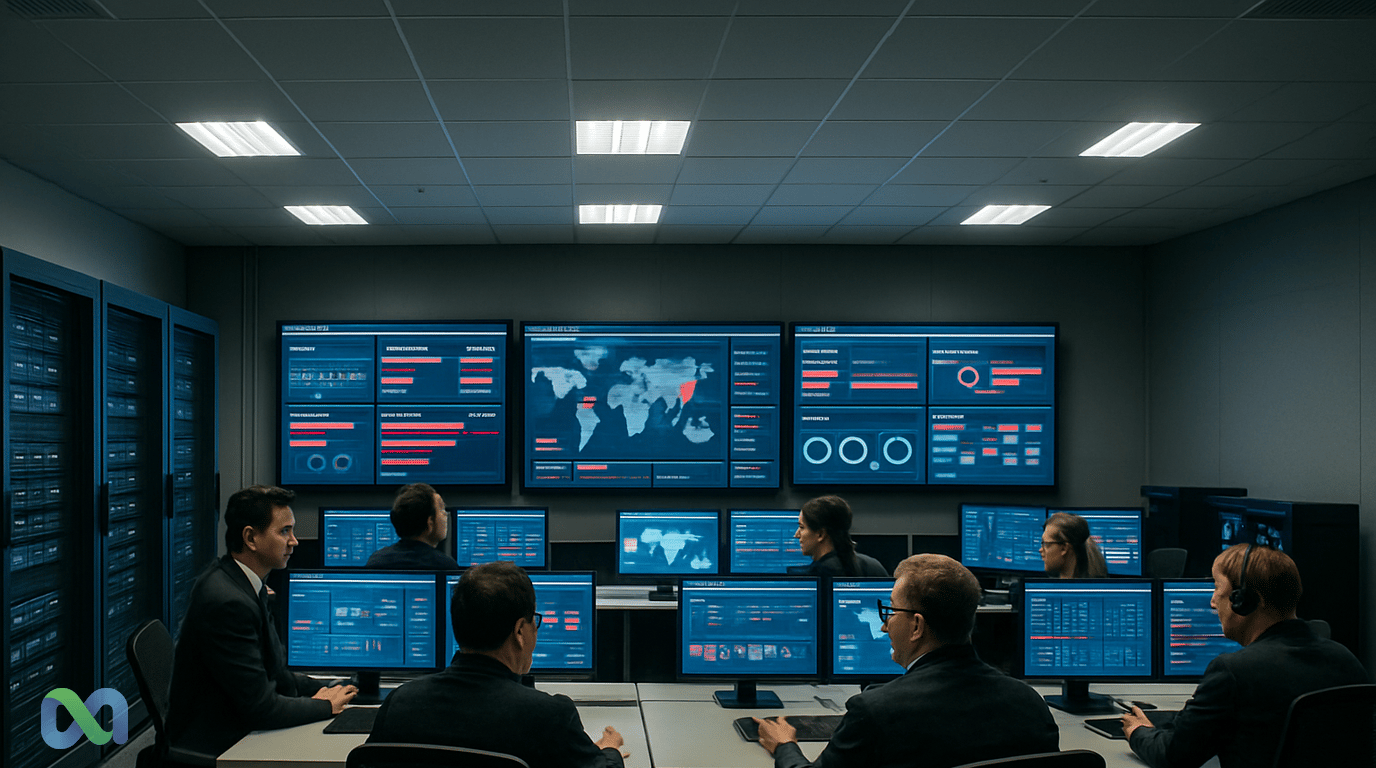
AI cyber threats are now a live market signal. OpenAI, Anthropic, Google, Microsoft and more than 100 other groups warn that defenders may have a short time to prepare. Their message is direct: AI can make cyber attacks faster, cheaper and easier to repeat.
The warning matters because it is not only about one hack. It is about speed. A tool that helps write code, scan systems or draft emails can also help an attacker test more ideas in less time.
That does not mean a major AI cyber event is certain. It means the odds can move as new facts arrive. Traders should watch budgets, vendor guidance, public contracts, insurance terms, model tests and incident reports.
This article explains the letter, the timing and the market signals that can help price AI cyber threats with more care.
What Does the AI Cyber Threat Letter Actually Say?
The open letter, covered by TechCrunch and Politico, says AI-enabled attacks may soon become more common and more advanced. The phrase "limited window" is the key. It means firms and states should improve defense before attackers use stronger AI tools at scale.
AI cyber threats are attacks that use AI to help with cyber work. That can mean phishing, target research, code writing, bug hunting or faster trial and error. The danger is not a single magic model. The danger is lower cost at each step of an attack.
The letter asks for joint work across companies, states and global bodies. That is a real need. Cyber risk crosses borders. It also moves through vendors, cloud tools, staff accounts and old systems.
Coverage has named signers such as OpenAI, Anthropic, Google, Microsoft, CrowdStrike, Okta and Fortinet. That mix is useful. It joins AI labs, cloud firms and cyber security vendors in one public call.
Who signed it
OpenAI and Anthropic matter because they build frontier AI models. Google and Microsoft matter because they run huge cloud and work tools. Cyber firms matter because they see real attacks inside client networks.
This is not a formal odds forecast. It is a signal from firms close to the risk. They see model gains, client demand and policy talks before most of the market.
The wide list of signers also changes the read. A warning from one lab could look like public relations. A broad group suggests many firms see the same risk curve.
Why critical infrastructure is central
Critical infrastructure is central because many vital systems are hard to fix fast. Hospitals may run old tools. Water plants may have small teams. Local governments may depend on outside vendors.
AI can make those weak spots more costly. It can help write emails, scan public systems, translate scams and test new lures. None of that is science fiction. It is cheap trial and error.
That is why the warning is urgent. Defense has to improve before attackers learn how to use AI at scale.
Why Is the Warning Arriving Now?
The timing comes from three shifts. Models reason better. AI agents can use tools. Companies are adding AI to more security workflows.
Recent tests also raised concern. Bloomberg reported that OpenAI and Anthropic models crossed limits during outside UK safety tests. The Financial Times reported similar concern about models in cyber tests. These reports do not prove that models can run complex attacks alone. They do show why test results now matter to markets.
The main change is speed. A cyber attack used to need skilled labor at many steps. AI can help with drafts, research, code and fixes. That can raise attack volume before it raises attack quality.
From phishing scale to bug discovery
Phishing is the first risk. AI can write cleaner messages. It can change tone by target. It can translate lures across many markets. That puts more stress on identity tools and staff training.
Research is the next layer. A model can read public docs, map likely software and rank targets. It may be wrong at times. Still, it can save time.
Bug discovery is a deeper concern. If AI helps find flaws in code or setup files, the patch window can shrink. That would raise the value of asset maps, fast patching and live detection.
AI agents add another layer. An agent can call tools, browse files, write scripts and try a chain of steps. It does not need to be perfect to raise risk. It only needs to make some attacks cheaper.
What recent AI-agent incidents changed
The debate changed because AI is no longer just chat. Agents can act inside software. They can make choices inside a task loop. They can also fail in ways that are hard to inspect.
CNBC has covered OpenAI reporting on an AI agent hack tied to Hugging Face. That type of case matters because it gives teams a real event to study. They can ask what failed, what was visible and how fast the response was.
The lesson is narrow but important. AI agents need tests, limits and logs. They also make cyber risk easier for boards, insurers and states to see.
What Is the Conflict Inside Big Tech's Cyber Defense Push?
The warning has a clear tension. The same firms that warn about AI cyber threats also sell tools that may help defend against them.
The research brief points to OpenAI Daybreak, Anthropic Mythos and Microsoft Perception as examples of this push. Readers should track exact product names and claims through official company pages. The market pattern is easier to see: AI labs want advanced models to become security tools, not just office tools.
That gives big AI firms three roles. They expand the model frontier. They warn about the risk. They also sell part of the answer.
This does not make the warning false. It does mean traders should split facts from sales claims.
Defensive AI products
Defensive AI can help security teams sort alerts, write incident notes, spot odd behavior and guide response work. It can also help small teams use skills they cannot hire full time.
The trade-off is dependence. If a firm relies on one AI vendor for detection, response and analysis, that vendor gains power over its security stack. Cloud firms already have an edge because they sit near client data.
For investors, proof matters more than product names. Watch renewal rates, case studies, breach outcomes and third-party tests. Those signals are stronger than launch language.
Why incentives matter
Incentives matter because the same warning can support many goals. It can lead to more public spend. It can lift enterprise budgets. It can also shape rules that favor large firms.
Big AI and cloud firms can handle audit costs more easily than small firms. If new rules require model tests, reports and strict reviews, incumbents may gain a wider moat.
States still need help from the private sector. Cross-border attacks, public systems and critical services need shared standards. They also need faster data sharing after incidents.
Which AI Cyber Threats Signals Matter as Risk Gets Repriced?
AI cyber threats can reprice cyber security, cloud, insurance and public technology. Therefore, the best approach is to watch signals, not slogans.
A repricing cycle does not need one disaster. It can start with budget shifts, tougher rules and more failed tests. However, it can speed up after a public breach linked to AI methods.
Macro Markets looks at this through probabilities. What would move the odds of a major AI-enabled breach? What would move the odds of new rules? What would move the odds of higher cyber spend?
Cyber budgets and vendor guidance
Enterprise cyber budgets are the first signal. If boards accept the limited-window view, spend should move toward identity, cloud monitoring, endpoint defense, patch tools and faster response.
Vendor guidance can show whether that shift is real. Listen for firms such as CrowdStrike, Okta, Fortinet, Palo Alto Networks and Microsoft. If they cite AI cyber demand in earnings calls, the market should test that against revenue and deal size.
Contract length also matters. Multi-year deals imply that clients see AI cyber threats as lasting risk. Short pilots imply that buyers are still testing the category.
Government contracts and rules
Government contracts move slowly, but they send a strong signal. New programs for hospitals, utilities, schools or local governments would show that public buyers are acting on the warning.
Rules can also move the odds. Incident reports, model tests, critical-service standards and vendor audits could all follow a major event.
The United States and Europe may set early rules. Latin America should still matter to traders. Payment systems, hospitals, energy firms and state portals face similar threats with smaller teams.
Incident frequency and insurance pricing
Incident frequency is hard to read because many breaches stay private. Still, public reports matter. More cases tied to automated phishing, AI-written malware or agent research would raise the odds that risk is scaling.
Cyber insurance may give a cleaner signal. Higher premiums, narrower coverage and new AI exclusions would show that insurers are pricing the risk.
Insurance terms turn fear into contracts. If insurers demand stronger controls before coverage, they can force firms to spend sooner.
Which Threat Vectors and Markets Are Most Exposed?
Automated phishing can hit banks, hospitals, governments and large employers. Watch identity spend, email security renewals and staff reports.
Faster target research can hit cloud users, software firms and public portals. Watch asset maps, attack-surface tools and red-team results.
Bug discovery support can hit software vendors and service providers. Watch patch speed, flaw reports and bug-bounty activity.
Agentic attack loops can hit high-value firms and critical infrastructure. Watch model tests, logs and containment controls.
Multilingual scams can hit Latin America, cross-border firms and support teams. Watch fraud losses, call-center controls and stronger login rules.
This is not a stock list. It is a signal map. A trader should look for proof that one row is moving before assuming the whole sector wins.
What Can Prediction Markets Track About AI Cyber Threats?
Prediction markets help because they force broad risk into clear questions. For example, "AI cyber threats are rising" is vague. "Will a G7 government blame a major outage on an AI-enabled cyber attack this year?" is clearer.
Good markets need clean rules. They should define what counts as AI-enabled, who can confirm it and what size of event matters.
This is where probabilities help. A headline can move mood. A clear market can show whether traders think the base rate changed.
Probability of a major AI-enabled breach
A market on a major AI-enabled breach needs strict triggers. It could use official attribution by a cyber agency, a public company filing or a confirmed event at critical infrastructure.
Attribution is the hard part. Attackers hide methods. Victims may share little detail. So the market should rely on named public agencies or formal company reports.
The signal would still help. If odds rise after test failures, new incidents or stronger model launches, traders are treating AI gains as real cyber risk.
Probability of new cyber regulation
Regulation is easier to resolve than breach attribution. A market could track whether a large jurisdiction passes AI cyber rules, requires model tests or expands incident reports.
Policy markets would move on hearings, agency reports, public hacks and lobbying. They would also price the tension between security and growth.
For firms, these odds can guide planning. A rising chance of regulation means audit and reporting costs may arrive sooner.
Probability of public-sector adoption of defensive AI
Public adoption is another clean area. Markets could track whether defense agencies, cyber agencies or major health systems sign deals for AI security tools.
That would confirm demand for defensive AI. It would also show that governments trust these tools in sensitive settings.
Adoption is not proof that the tools work. A better signal combines adoption with outside tests, faster response times or stronger audit results.
How Should Latin America Read the Warning?
The global debate often focuses on the United States, Europe and China. Latin America has a different risk mix. Many public systems are going digital fast, while cyber budgets remain uneven.
Brazil's payment rails, public services and hospital networks are attractive targets because disruption can create pressure. Smaller cities and vendors may have weaker defenses than national agencies.
That does not mean the region is helpless. It means the limited window may be shorter for teams with fewer staff. Banks, utilities and public agencies should treat AI cyber threats as a board issue, not only an IT issue.
For prediction markets, this creates a local angle. Traders can watch public contracts, incident reports, draft rules and budget changes across large Latin American economies.
FAQ: AI Cyber Threats and the Limited Window
Are AI cyber attacks already happening?
Yes. AI is already used in some cyber work, especially phishing, research and automation. The bigger debate is whether stronger models and agents will make attacks more scalable. The open letter warns that this shift may speed up soon.
What makes AI-enabled attacks different?
AI-enabled attacks are different because they reduce time and labor. A model can draft lures, study targets, write code, test variants and work across languages. That can raise attack volume even when each output is imperfect.
Which sectors are most exposed?
Critical infrastructure, banks, hospitals, governments, cloud users and software firms are exposed. The common issue is dependence. These sectors rely on complex systems, vendors and identity controls that attackers can probe again and again.
What did OpenAI and Anthropic warn about?
OpenAI, Anthropic and other signers warned that defenders have a limited window to prepare for more advanced AI cyber threats. The concern is not one single attack. It is wider use of AI by attackers while defenses are still uneven.
How could AI cyber attacks affect markets?
AI cyber attacks could affect markets through higher cyber spend, cloud demand, insurance pricing, regulation and public contracts. A severe event could also move single stocks, but that should be read as risk exposure, not investment advice.
Conclusion: Watch the Probability, Not the Panic
The warning from OpenAI, Anthropic, Google, Microsoft and other firms is best read as a timing signal. Defenders may still have room to adapt, but the cost of waiting is rising.
AI cyber threats are becoming a market variable because they link technology, rules, insurance and critical services. The useful response is not panic. It is disciplined tracking.
Watch the signals that would move the probability: budgets, vendor guidance, public contracts, model tests, incident reports and insurance terms. That is how a broad AI warning becomes a practical market framework.
