


AMD Anthropic AI Infrastructure Deal: $5B Compute Bet
Last reviewed: July 23, 2026. This analysis is not financial advice.
The AMD Anthropic AI infrastructure deal is not just another chip headline. It is a signal about the new AI race. Frontier models no longer depend only on better code. They also depend on GPUs, power, networks, land, cloud capacity and capital.
The brief points to two core facts. AMD could invest up to $5 billion in Anthropic. At the same time, Anthropic plans to use up to 2 gigawatts of AMD Instinct MI450 GPUs from 2027.
That scale changes the read-through. This is not a normal purchase order. It is a multi-year plan to secure compute. For AMD, it is a test against Nvidia. For Anthropic, it gives Claude a deeper infrastructure base.
For traders, the headline is not enough. The useful signals are measurable. Firm orders, delivery dates, MI450 benchmarks, energy contracts and AMD guidance will matter more than the first news cycle.
What the AMD Anthropic AI infrastructure deal includes
The agreement has three parts. First, AMD could invest up to $5 billion in Anthropic. Second, Anthropic plans to deploy AMD Instinct MI450 GPUs. Third, both companies are expected to work together on technical adaptation.
Coverage from Tecnoblog and InvestNews highlights the size of the announcement. The market should still read it carefully. A possible investment is not the same as cash already paid. A deployment plan is not the same as live capacity.
That difference matters. A stock can react to the number. Real value arrives only through delivery, usage and margin. In AI, promised chips are worth less than a data center that works.
Up to $5 billion in potential investment
The $5 billion figure is a signal. AMD does not want to be only a component supplier. It wants to sit close to a lab that competes at the front of AI.
For Anthropic, more capital helps. Training and serving Claude is expensive. The company needs equipment, power, cloud capacity, talent and room to execute. That is why money and compute often arrive together.
The market read should stay simple. The maximum amount is relevant, but it does not prove immediate revenue. The real catalysts will be orders, dates, deliveries and comments from AMD itself.
Up to 2 GW of AMD Instinct MI450 GPUs from 2027
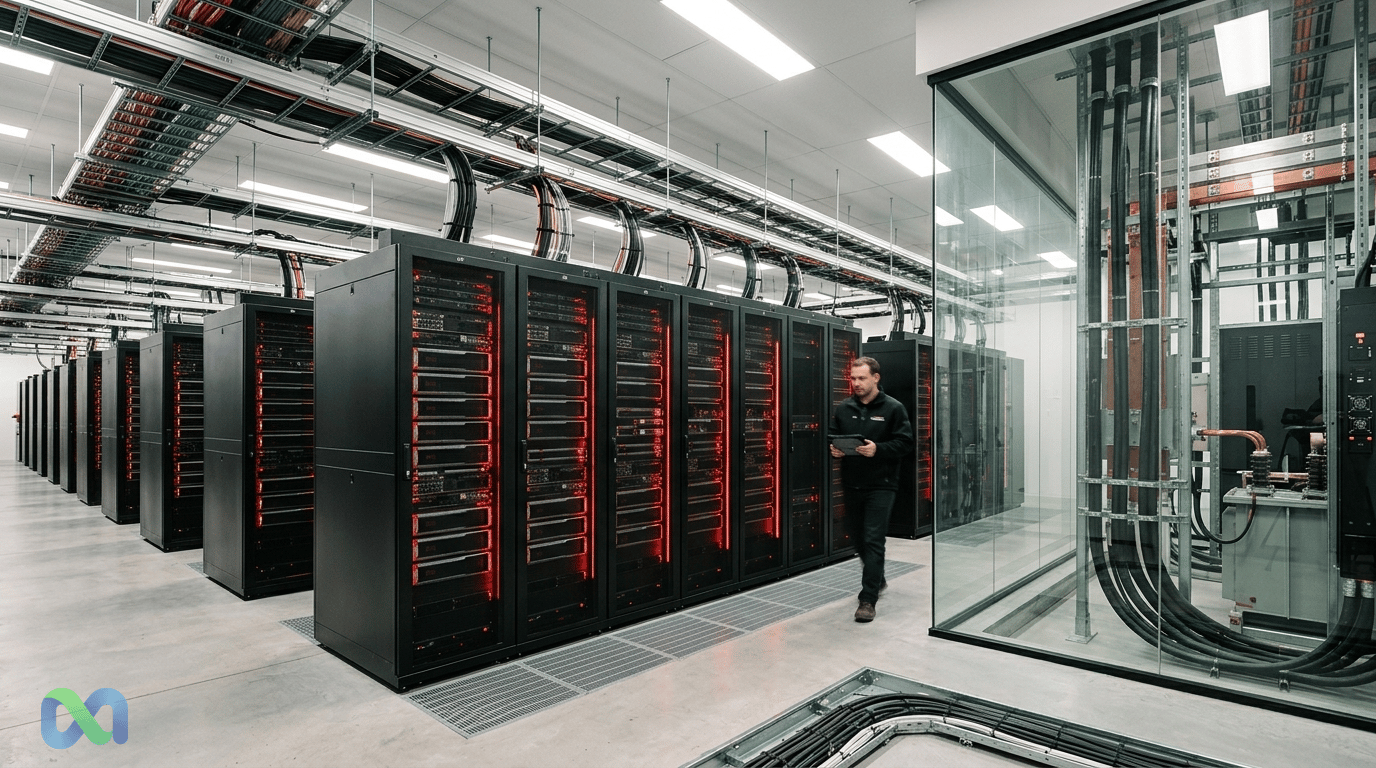
The 2 gigawatt figure may matter more than the investment number. That level of power shows that AI is now an industrial story. It is not just chips in a room. It is data centers, networks, cooling and electricity contracts.
The 2027 start date also limits the short-term impact. Still, it creates a clear timeline. From now to 2027, the market can track MI450 tests, data center agreements and demand signals for Claude.
If MI450 performs well, AMD gains a powerful reference customer. If software, energy or delivery problems appear, the deal may take longer to affect results.
Why Anthropic needs so much capacity
Anthropic competes in a market where compute sets the pace. Every improvement in Claude requires more training, more testing and more production usage. That costs money every day.
Demand does not come only from building the model. It also comes from serving it. When a company uses Claude for support, coding or analysis, every query consumes compute. If millions of users rely on it, the load rises fast.
That is why Anthropic needs several routes. It should not depend on one cloud, one chip or one partner. Variety reduces risk and improves negotiating power.
Compute already defines the AI race
During the first wave of generative AI, the debate focused on models. Now the bottleneck is physical infrastructure. Chips, power, memory and networks decide which model can scale.
A lab can have a strong technical team. Without enough capacity, it loses speed. It can also pay more for each response it delivers to customers.
Anthropic needs compute to train and serve Claude. AMD needs a demanding customer to prove its platform. The deal connects those two needs.
How Anthropic's other partners fit in
The brief places this agreement inside a larger network of relationships. Anthropic has stayed close to major partners in cloud, capital and capacity. Times Brasil shows that compute scarcity already shapes many AI alliances.
Not all agreements are the same. Some involve investment. Others involve cloud, data, power or compute. The pattern is clear: Anthropic wants more options.
That network helps the company. If one route is delayed, another can cover part of demand. For large enterprise customers, that resilience has real value.
What AMD gains against Nvidia
AMD gains a public, high-level test. Nvidia dominates AI because it sells more than chips. It sells hardware, software, support and a broad user base.
To compete, AMD needs more than a fast GPU. It must show that its chips work well in real workloads. It also must prove that its tools are usable for AI teams.
Anthropic can become a key reference for that test. If Claude uses MI450 at scale, other buyers will pay attention. If usage is small or slow, the market impact will be weaker.
MI450 as an institutional proof point
MI450 arrives as a next-generation bet. AMD must prove performance, efficiency and stability. It also must show that software can keep up with the hardware.
Anthropic can help with real usage data. That feedback can improve the platform before larger deployments. It can also expose weaknesses early.
For the market, that proof matters more than a press release. An AI lab does not choose a chip only on price. It chooses a platform that can run under pressure.
Turning orders into real market share
The bigger challenge is turning the announcement into market share. AMD must manufacture, deliver and integrate. Anthropic must have data centers ready. Both sides depend on power and technical teams.
Software risk remains important. Nvidia still has an ecosystem advantage. If teams face friction with AMD tools, cheaper hardware may not be enough.
That is why the strong signal will come from production. Benchmarks, customer comments and quarterly results will say more than the initial number.
Signals from the AMD Anthropic AI infrastructure deal
The agreement leaves a list of events that can be measured. That is the useful part for prediction markets. Good analysis does not try to guess everything today. It defines which data will change the probability.
| Signal | Why it matters | Market read |
|---|---|---|
| AMD AI guidance | Shows whether the deal enters expected revenue | Better if visibility rises without hurting margin |
| MI450 tests | Measure performance against alternatives | Better if it performs well in real workloads |
| Energy contracts | Confirm whether 2 GW is viable | Better if they reduce delay risk |
| Data centers ready | Turn chips into useful capacity | Better if dates and partners are clear |
| Claude demand | Justifies more inference capacity | Better if enterprise usage grows |
This table separates signal from noise. A press release can move price for a day. A delivered milestone can change the thesis.
Catalysts in stocks and guidance
AMD can benefit if the deal improves future revenue. The market will look for backlog, margin and management commentary. It will also watch whether other customers follow the same path.
Nvidia remains part of the read-through. If more customers diversify suppliers, the market may adjust expectations. Still, one alliance does not erase Nvidia's lead.
Anthropic is private, but it moves stocks through its suppliers. Each funding round, cloud alliance or product launch can change expected compute demand.
Energy, data center and timeline risks
The 2027 timeline creates risk. Building data centers takes time. It also requires power, permits, electrical equipment, networks and cooling.
The 2 GW scale could face local pressure. Many regions already compete for power. If costs rise, AI margins can change.
That is why the agreement should be viewed as a strong option, not a guaranteed outcome. It has potential, but it still needs proof.
What changes for AI infrastructure
The news shows a larger shift. AI no longer grows only through software. It grows through a physical chain: chips, power, cloud capacity, land, capital and talent.
AMD wants to move deeper into that chain. Anthropic wants more capacity and more options. Investors want to know who controls the scarce resource.
Today, the scarce resource is not only the model. It is useful compute. It must be connected, powered and ready for real workloads.
This also affects sectors beyond technology. More data centers can move power, private credit, construction and networks. That is why AI has become a macro story.
The capital stack also changes. AI labs need long-term partners because infrastructure spending arrives before revenue is fully visible. Suppliers need anchor customers because new accelerators require real workloads to prove demand. Power providers need credible schedules before they reserve capacity. Each side is trying to reduce a different risk.
That is why the AMD Anthropic AI infrastructure deal should be read as an ecosystem agreement. It links semiconductor roadmaps, cloud deployment, energy planning and model demand. If one part slips, the whole schedule can move. If the parts line up, the agreement can become a template for other AI infrastructure deals.
For prediction markets, the topic works well because it leaves clear milestones. Deployment either happens or it does not. Tests either pass or miss. Guidance either rises or fails to move.
How to read the AMD Anthropic AI infrastructure deal
The AMD Anthropic AI infrastructure deal should be read in three layers. The first layer is financial. AMD can use capital to move closer to a key customer. Anthropic can use that support to sustain its compute plan.
The second layer is technical. MI450 must prove that it can serve real AI workloads. A product sheet is not enough. Anthropic's teams will need to measure speed, cost, memory, networking and stability.
The third layer is market structure. Nvidia remains strong, but its customers want options. If AMD proves a viable route, the AI GPU market becomes less closed. If it does not, Nvidia keeps a wider advantage.
The AMD Anthropic AI infrastructure deal also helps organize the right questions. Are there firm orders? Are data centers ready? Is power contracted? Are there public tests? Is there a Claude improvement that comes from this capacity?
These questions are more useful than a binary call. The point is not to say AMD has won or lost the market. The point is to measure whether each milestone raises or lowers the probability of real adoption.
For a Macro Markets reader, that framework matters. A corporate event becomes tradable when it has dates and conditions. In this case, 2027, MI450, 2 GW and $5 billion are the checkpoints.
Frequently asked questions
What deal did AMD and Anthropic sign?
AMD and Anthropic signed an alliance to expand AI capacity. According to the brief, AMD could invest up to $5 billion. Anthropic plans to use up to 2 GW of AMD Instinct MI450 GPUs from 2027.
Who finances Anthropic?
Anthropic has several partners and investors. The brief mentions relationships with Amazon, Google, SpaceX/xAI, Meta and AMD. They are not all the same. Some are investments. Others involve cloud, capacity or technical work.
Is Google going to buy Anthropic?
The brief does not support a claim that Google will buy Anthropic. The accurate statement is that Google is a relevant partner or investor. Any acquisition would need official confirmation.
What is Anthropic's most powerful model?
Anthropic develops the Claude family of models. The most advanced model can change with new launches. The key point here is that frontier models such as Claude need large amounts of compute to train and operate.
Does this deal threaten Nvidia's AI dominance?
It can pressure Nvidia's narrative, but it does not change it alone. AMD must prove performance, software and delivery. Anthropic must use the capacity in production. Only then will the market have strong evidence.
Conclusion: a compute bet, not just a chip bet
The AMD Anthropic AI infrastructure deal shows that the AI race is moving toward heavy infrastructure. The $5 billion figure attracts attention. Execution is the real issue.
The 2 GW of MI450 capacity from 2027 must become real capacity. That requires chips, power, data centers and software. It also requires enough demand for Claude.
For AMD, Anthropic can become a key reference against Nvidia. For Anthropic, AMD can open another compute route. For traders, the path is to track tests, guidance, power and dates.
Our read is direct. The AMD Anthropic AI infrastructure deal should be measured by deliveries, not promises. Review date: July 23, 2026. If the alliance delivers, AMD gains validation and Anthropic gains capacity. If it slips, the market will remember that AI depends on infrastructure that works, not just ambitious announcements.