


Artificial Intelligence Movie 2001: A.I. Artificial Intelligence Explained
Last updated: May 2026. If you searched artificial intelligence movie 2001, you want A. I. Artificial Intelligence. Steven Spielberg released it in June 2001. You do not want 2001: A Space Odyssey (1968). That older film features HAL 9000, not David the child mecha.
Our editorial guide names the correct title. We structured it for searchers who mix up the two "2001" films. It walks through plot, cast, and the Kubrick–Spielberg legacy. We answer common FAQ questions. We also note where to stream the film. Finally, we compare its themes to real AI tools in 2026.
Editorial note: We fact-checked release dates, cast credits, and plot beats against Wikipedia and IMDb tt0212720 in May 2026. Interpretive theme sections are labeled as analysis, not studio statements.
Artificial intelligence movie 2001: which film is it?
The artificial intelligence movie 2001 is A. I. Artificial Intelligence. Posters often shorten the title to A. I. Streaming apps may list the year to avoid confusion with Kubrick's earlier classic.
| Film | Year | AI figure | Director |
|---|---|---|---|
| A. I. Artificial Intelligence | 2001 | David, a child mecha | Steven Spielberg |
| 2001: A Space Odyssey | 1968 | HAL 9000 | Stanley Kubrick |
Both films ask whether machines can think or feel. However, they are separate works. HAL runs a spaceship computer on a Jupiter mission. David is a child-shaped android built to love a human mother. Therefore, mixing the two titles drives most mistaken searches.
A. I. Artificial Intelligence vs 2001: A Space Odyssey
2001: A Space Odyssey premiered in 1968. Kubrick directed it. Arthur C. Clarke co-wrote the script. HAL's red lens and calm voice became cinema's default "computer gone wrong."
A. I. Artificial Intelligence arrived in 2001 as a flooded-world fairy tale. Spielberg directed the release version. Kubrick developed it for decades but died in 1999. The finished film echoes Pinocchio more than orbital realism.
If you ask, "What is the 2001 movie about artificial intelligence?", the answer is A. I., not the HAL film.
Quick facts at a glance
| Detail | Information |
|---|---|
| Full title | A. I. Artificial Intelligence |
| Release (US) | June 29, 2001 |
| Director | Steven Spielberg |
| Development | Stanley Kubrick (1970s–1999) |
| Source | Brian Aldiss, "Supertoys Last All Summer Long" |
| Lead cast | Haley Joel Osment, Jude Law, Frances O'Connor, William Hurt |
| Runtime | About 146 minutes |
| Studio | Warner Bros. / DreamWorks (distribution) |
Verify credits on IMDb tt0212720 and Wikipedia: A. I. Artificial Intelligence.
Source material: Brian Aldiss and the Pinocchio blueprint
Before A. I. Artificial Intelligence became the artificial intelligence movie 2001 fans debate online, it was a short story seed. Brian Aldiss published "Supertoys Last All Summer Long" in 1969. The piece introduces a synthetic child. A mother cannot quite accept him. Kubrick saw Pinocchio parallels immediately.
Aldiss later expanded the story world in follow-up stories. Spielberg's screenplay keeps the emotional core. A manufactured boy wants belonging. Additionally, the film adds Rouge City, the Flesh Fair, and the far-future coda. Understanding the literary origin explains why the tone mixes sci-fi and fable.
Kubrick reportedly read Aldiss alongside Pinocchio and Frankenstein. All three ask what "real" humanity means. David is not a monster. He is a child who frightens adults. His love feels too sincere to dismiss.
Plot summary for the artificial intelligence movie 2001 (spoilers)
The sections below spoil the full story. Jump to cast or FAQ if you want answers without plot detail.
Act 1: David and Monica
In a flooded future, Professor Hobby (William Hurt) presents David (Haley Joel Osment), a mecha boy programmed to love. The Swinton family hosts David while their son Martin remains ill in suspended animation.
Monica (Frances O'Connor) resists at first. She later speaks the activation protocol. David calls her Mommy. His manners are tender. His logic is literal. The uncanny valley lives in small gestures, blinking, eating, smiling on command.
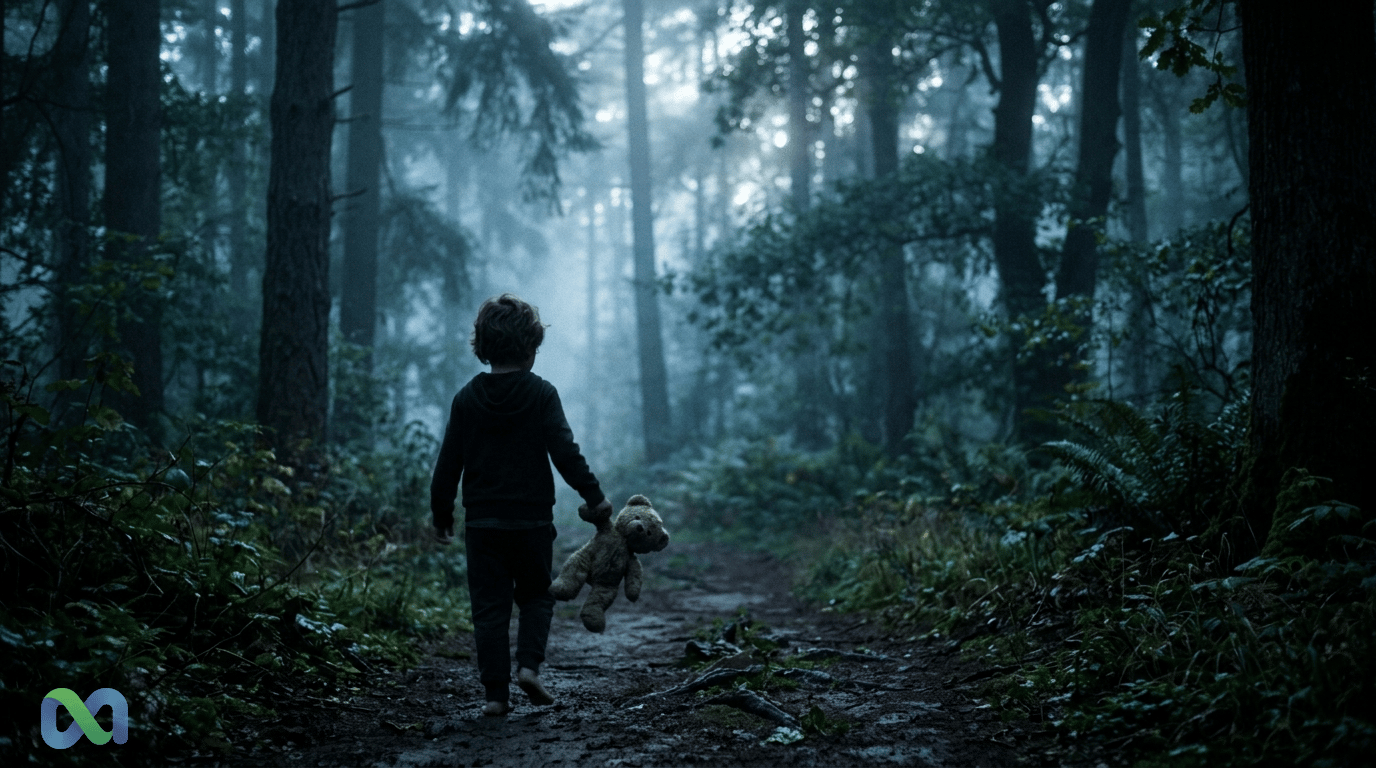
Martin returns home cured. Sibling rivalry turns sharp. A dinner-table incident involving food triggers panic. The company demands David's return. Monica cannot destroy him in the factory. She leaves him in the woods with Teddy, his talking companion bear.
Abandonment breaks David's world. He decides only the Blue Fairy can make him real enough for Monica to keep him.
Act 2: Abandonment, Rouge City, Flesh Fair
David and Teddy cross a hostile landscape. Rouge City glows with adult entertainment and mecha commerce. There David meets Gigolo Joe (Jude Law), a companion robot framed for murder.
Joe is performative and kind. He teaches David how humans treat machines as toys and threats at once. Their road leads toward Manhattan, sealed behind sea walls.
The Flesh Fair is the story's ugliest set piece. Humans cheer as mechas are destroyed on stage. The crowd hates automation yet depends on it. David shouts that he can love. Some listeners waver. David and Joe flee into the night.
No single villain owns this act. The antagonist is collective cruelty plus corporate design.
Act 3: Blue Fairy, frozen future, ending
Submerged Manhattan hides Professor Hobby's office. A hologram Hobby speaks. He tells David he is one of many prototypes. David is an experiment in attachment, not a unique son. David destroys the projection in rage.
He dives toward a submerged statue. He believes it is the Blue Fairy. He prays for humanity across two thousand years. Earth freezes into a new ice age during that wait.
Slender future Specialists revive him. These highly evolved mechas study human memory through him. They use DNA from hair Teddy saved. They recreate Monica for one perfect day. She tells David she loves him. He sleeps beside her as she fades.
Viewers argue whether the ending is Spielberg sentiment or Kubrick chill. Many now read it as both stacked together.
Was A. I. a Kubrick movie? (artificial intelligence movie 2001)
Was AI a Kubrick movie? He did not direct the 2001 theatrical cut. Stanley Kubrick spent roughly twenty years on development, concept art, and casting conversations. He told Spielberg the material matched Spielberg's strengths.
Kubrick died in March 1999. Spielberg then directed A. I. Artificial Intelligence with Kubrick's producer Jan Harlan and extensive notes. Janusz Kamiński shot the film. John Williams scored it. The crew is Spielberg's, but the moral temperature mixes both filmmakers.
Accurate shorthand: Kubrick developed; Spielberg completed. Neither sentence alone tells the full story.
Kubrick development and Spielberg completion
| Phase | What happened |
|---|---|
| 1970s–1980s | Kubrick explores AI–Pinocchio concept with Aldiss rights |
| 1990s | Visual effects mature; Kubrick consults Spielberg |
| 1999 | Kubrick dies; project pauses |
| 2000–2001 | Spielberg shoots and releases the film |
Debates about an alternate Kubrick ending continue on forums and in documentaries. Spielberg has said he believed Kubrick wanted him behind the camera. Treat fan edits as speculation unless sourced to production documents.
Cast and characters
Haley Joel Osment as David
Haley Joel Osment was eleven during production. He plays David with stillness and open eyes. Audiences knew him from The Sixth Sense (1999). Here he carries almost every scene.
David is not a singer. If you searched for a child singer in A. I. Artificial Intelligence 2001, you likely mean the child actor who plays David. Osment performs silence and hope, not musical numbers.
Jude Law as Gigolo Joe
Jude Law plays Gigolo Joe, a mecha companion with stage manners and a tap-dance escape. Joe guides David and mirrors how society uses intimacy machines. Law's work is theatrical by design.
William Hurt, Frances O'Connor, Teddy
William Hurt is Professor Hobby, who treats love like firmware. Frances O'Connor is Monica, torn between guilt and survival. Teddy (voice work and puppetry) stores secrets and nudges David toward hope.
Brendan Gleeson plays Lord Johnson-Johnson, master of ceremonies at the Flesh Fair. Jake Thomas appears as Martin in key family scenes. The ensemble is large, but Osment and Law dominate screen time.
Who is the "bad guy" in A. I. (2001)?
There is no cartoon bad guy in A. I. (2001). That surprises viewers trained on simpler plots.
| Force | Role in the story |
|---|---|
| Abandonment | Monica's choice; corporate recall policy |
| Flesh Fair | Public violence against mechas |
| Hobby's experiment | Treating love as engineering output |
| Climate collapse | Background pressure on human choices |
Johnson-Johnson is cruel on stage. Still, the film's conflict is ethical: does manufactured love deserve care when it causes real pain?
Themes: AI, Pinocchio, and what the film asks about love
Can a machine love?
A. I. never proves machines feel. It shows humans reacting as if David matters. Osment's performance forces empathy. That design choice previews today's chatbot intimacy debates.
In 2026, voice assistants and companion apps simulate care without bodies. David has a body but no biology. Modern tools have language without skin. Both setups raise dependency risks.
Climate-changed worldbuilding
Rising seas, rationed births, and licensed parenthood sketch a dying civilization. Rick Carter's production design blends fairy-tale ruins with industrial waste. The world feels exhausted before David's personal tragedy begins.
Pinocchio structure
David seeks the Blue Fairy. He mistakes symbols for salvation. The Specialists ending trades eternal humanity for one borrowed afternoon with Monica. That trade is the film's thesis: love as a limited resource, not a miracle.
Music, visuals, and effects
John Williams wrote a score that alternates lullaby tenderness and industrial dread. The Flesh Fair sequence uses percussion and crowd noise like a horror concert.
Industrial Light & Magic and Stan Winston Studio created mecha designs ranging from childlike David to adult pleasure models. The contrast makes David seem fragile even when he is technically advanced.
Critics in 2001 praised craft while arguing tone. Today, the imagery still reads clearly, a useful lesson for filmmakers mixing auteur coldness with mainstream warmth.
Production, box office, and reception
Budget reports centered near $100 million, large for 2001. Domestic box office landed around $79 million according to public reporting. International totals pushed the film into profit territory over time.
| Outlet | Typical read in 2001 | Legacy read today |
|---|---|---|
| Major critics | Split on ending | Reassessed as ambitious |
| Fan communities | Mixed | Cult appreciation |
| Tech commentators | N/A at release | Cited in AI ethics discussions |
Check Rotten Tomatoes for current aggregator percentages. Scores shift slightly as reviews are added.
Where to watch A. I. Artificial Intelligence
Rights rotate by country. Netflix has listed the title in multiple regions, confirm on Netflix. Amazon, Apple TV, and Google Play often rent or sell HD copies in the US and EU.
| Method | Tip |
|---|---|
| Subscription | Search exact title; avoid unrelated "AI" documentaries |
| Rental | Usually includes subtitles |
| Disc | Blu-ray still appears in secondhand markets |
Do not use pirate streams. Studio revenue supports restorations and accurate subtitles.
How A. I. (2001) compares to real AI in 2026
Today's large language models predict text. They do not drown in oceans or sleep beside mothers. Still, the film's questions map onto product design choices.
| Film idea | 2026 parallel |
|---|---|
| Companion mechas | Social chatbots and robot pets |
| Programmed love | Personalization that mimics attachment |
| Flesh Fair hatred | Labor fear around automation |
| Corporate creators | Startups shipping empathy features fast |
What aged well: focus on emotional harm, not chrome shells. What science surpassed: fluent narrow tools without general intelligence or bodies.
Readers who start with cinema may later search free AI tools, generative AI, or how prediction markets price tech regulation. Those guides sit in our AI and tech sections, separate beats, linked by public curiosity about machines that seem almost human.
Awards, nominations, and cultural footprint
A. I. Artificial Intelligence earned Oscar nominations in 2002, including Best Original Score for John Williams. It did not sweep major categories the way some Spielberg films had. That modest award run matched its critical split: respect for craft, argument over the ending.
The film appeared in year-end lists from mainstream outlets and genre publications alike. Over the next decade, DVD and Blu-ray commentary tracks kept Kubrick–Spielberg arguments alive. Film schools began screening A. I. beside 2001: A Space Odyssey to teach how two directors handle AI fear differently.
Meme culture later isolated stills of David's face and Teddy's warnings. More seriously, ethics courses cite the Flesh Fair when discussing violence toward robots. The scene is extreme fiction. It still frames real-world debates about how workers treat automation.
Why this keyword keeps trending
Search volume for artificial intelligence movie 2001 stays high for simple reasons. First, the number 2001 belongs to two famous films. Second, streaming algorithms surface A. I. whenever users browse "AI" categories. Third, modern news about ChatGPT sends curious viewers back to older cinema.
Additionally, parents who watched the premiere now introduce the film to teenagers studying AI in school. Teachers like the Pinocchio parallel. It is easier to discuss than contemporary slasher tropes. The movie remains PG-13 with intense ideas rather than gore.
If you teach or write about AI policy, A. I. is a cultural anchor. It is not evidence in a white paper. It is a shared story about dependency, abandonment, and corporate creation of emotional machines.
Scene-by-scene guide for confused viewers
Some viewers leave the theater unsure what happened. This short roadmap labels key turns without replacing the full plot above.
| Sequence | What to notice |
|---|---|
| Swinton home | Activation words bind David to Monica |
| Martin returns | Jealousy and social testing begin |
| Woods abandonment | David's quest for the Blue Fairy starts |
| Rouge City | Gigolo Joe enters; adult world exposed |
| Flesh Fair | Anti-mecca hatred peaks |
| Manhattan office | Hobby reveals David is not unique |
| Frozen coda | Specialists grant one day with Monica |
Use this table as a rewatch checklist. The emotional through-line is always David's need to be loved as a real child.
Other movies about AI worth watching next
| Film | Year | Pairing note |
|---|---|---|
| 2001: A Space Odyssey | 1968 | HAL and cosmic coldness |
| Blade Runner | 1982 | Memory and identity |
| Her | 2013 | Love without a body |
| Ex Machina | 2014 | Manipulation labs |
| After Yang | 2021 | Family grief via android child |
Each title stresses a different fear: control, authenticity, loneliness, deceit, and loss.
Our take after rewatching the artificial intelligence movie 2001
We revisited A. I. Artificial Intelligence in May 2026 with two goals. First, confirm whether searchers still confuse it with 2001: A Space Odyssey. They do. Second, judge whether the ending still lands after a decade of real AI hype.
Our read: the first 90 minutes remain Spielberg-clear. The final act still splits rooms. However, the Flesh Fair sequence feels more relevant now. Crowds attacking machines mirror today's labor anxiety posts. We would still warn first-time viewers about the tone shift after the Manhattan reveal.
If you want a double feature, pair this artificial intelligence movie 2001 with our report on Illinois AI prediction market rules. The pairing shows fiction versus how regulators treat real AI products today.
FAQ: artificial intelligence movie 2001
What is the 2000s movie about AI?
The signature studio release is A. I. Artificial Intelligence (2001), early 2000s, not the whole decade. It follows a child mecha seeking love. Spielberg directed; Kubrick developed it.
Was AI a Kubrick movie?
Kubrick developed the project for decades but did not direct the 2001 release. Spielberg finished it after Kubrick's death with Kubrick's team and notes.
Who is the bad guy in the movie AI 2001?
There is no single villain. Cruelty comes from the Flesh Fair, corporate designers, abandonment, and anti-mecca crowds.
Who is the child singer in A. I. Artificial Intelligence 2001?
There is no child singer role. Haley Joel Osment, a child actor, plays David.
Is A. I. (2001) the same as 2001: A Space Odyssey?
No. A Space Odyssey (1968) features HAL. A. I. Artificial Intelligence (2001) features David.
What is A. I. (2001) about?
A programmed child android loves his adoptive mother, is abandoned, travels with a mecha companion, and ends in a future where advanced machines grant him one perfect day with her.
Disclaimer: Streaming availability, review scores, and box office figures change. Verify on official services before renting.
Conclusion
The artificial intelligence movie 2001 in your search results is A. I. Artificial Intelligence. Spielberg directed it on foundations Kubrick laid and Aldiss inspired. Haley Joel Osment anchors the film as David. The story is a Pinocchio tragedy in a flooded world. It asks whether manufactured love deserves mercy. That is the core answer if you searched artificial intelligence movie 2001 and wanted the title, not HAL.
Watch it for craft and argument, not for engineering accuracy. Additionally, notice how 2026 chatbots raise softer versions of the same question. What do we owe something that only acts like it loves us back?
