


Bengaluru Rs 60000 Rent Apartment View: Is It Really Worth It?
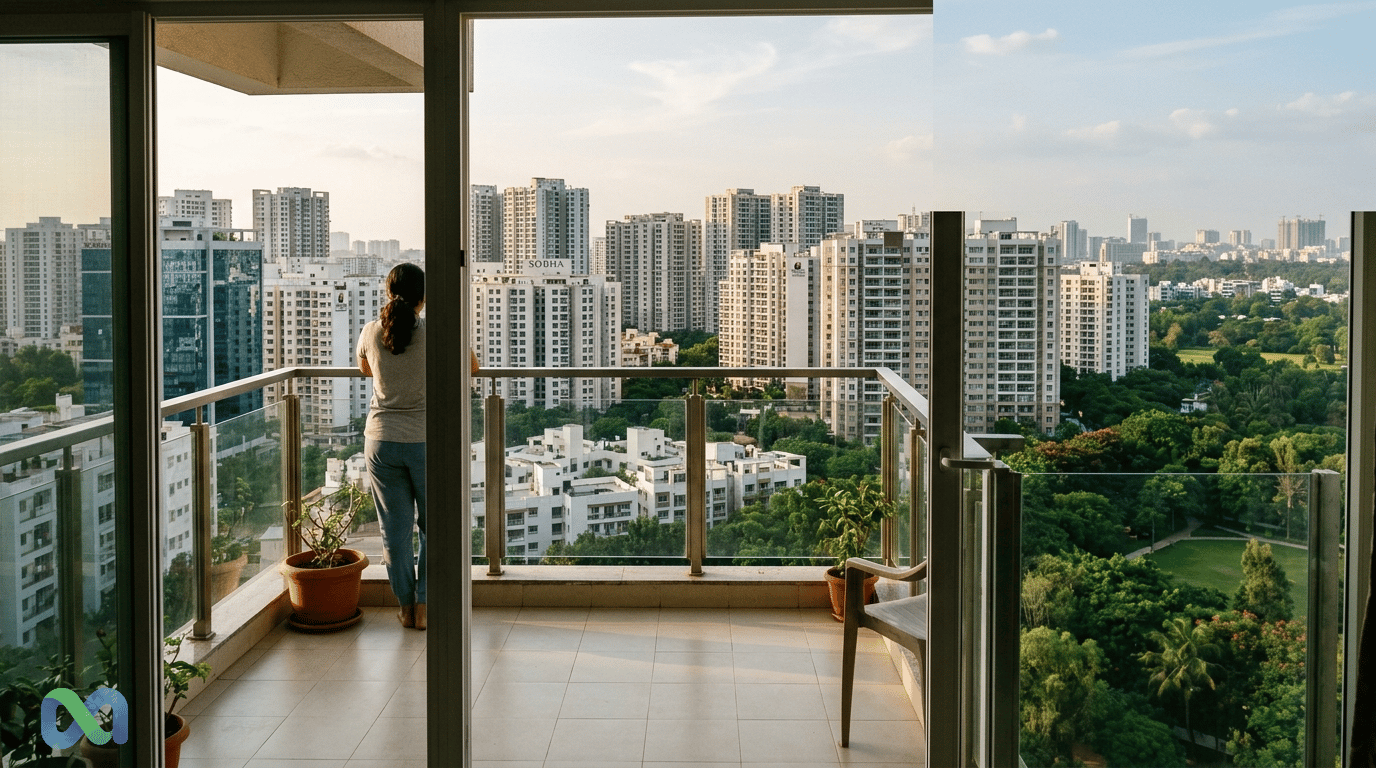
A Bengaluru Rs 60000 rent apartment view turned into a national argument because the number feels both specific and symbolic. A tenant showed the view from her rental home and asked whether paying Rs 60,000 a month was too much. The internet split almost immediately.
Some users saw a premium lifestyle choice. Others saw a city where normal housing math has broken down. The better answer sits between those reactions.
A view can have real value. So can sunlight, safety, shorter commutes, cleaner air, and a quieter neighborhood. However, a rent premium is only rational when those benefits improve daily life enough to justify the opportunity cost.
This article uses the viral Bengaluru Rs 60000 rent apartment view story as a pricing case study. The goal is not to judge one renter's budget. It is to separate sticker shock from market logic, and to show how renters can think about housing costs in probabilistic terms.
Last reviewed: 07/26/2026. Disclaimer: This is a market analysis framework, not personal financial advice. We found that the viral rent number matters because it exposes a broader expectations problem: tenants and landlords are pricing future scarcity before official affordability data catches up. Our experience shows that housing stories become more useful when the rent premium is tested against alternatives, income, and time saved.
What Happened in the Bengaluru Rs 60000 Rent Apartment View Story
The story began as a simple social media question. According to Hindustan Times, a Bengaluru woman shared the view from a home costing Rs 60,000 a month and asked whether she was paying too much. The original report is available from Hindustan Times.
News18 framed the same question around the line, "Batao kaisa laga view." The phrase means, "Tell me how the view looks." NDTV reported that the post left users divided.
These reports are useful as source material because they show the same fact pattern from different editorial desks.
For an official reference on housing-cost burden, the U. S. Census Bureau uses housing costs as a share of income to study affordability pressure. That framework does not set Bengaluru rents, but it explains why the 30% rent-to-income rule remains a useful stress test.
The exact apartment details matter less than the reaction. A rent number became a referendum on Bengaluru's housing pressure. People were not only evaluating a window view. They were debating whether India's major tech cities are pricing normal comfort as a luxury good.
The Claim: A Scenic View Attached to a High Monthly Rent
Rs 60,000 a month is not a neutral number. For some households, it can be a manageable rent in a premium location. For many others, it can consume too much income and reduce savings power.
That is why the story traveled fast. The view gave people a visual object to judge. The rent gave them a financial trigger.
However, rent is rarely priced by one feature. It usually bundles location, building quality, floor level, access, amenities, deposit terms, and tenant urgency. The view is the visible part of a larger price.
Why Social Reactions Split Between Value and Absurdity
The split came from different assumptions. One group assumed the apartment sits in a strong location and saves time. If it cuts a daily commute, offers good ventilation, and reduces stress, the premium may be rational for a high-income household.
The other group assumed the view was being used to justify an inflated market. From that angle, Rs 60,000 looks less like a fair price and more like evidence of scarcity.
Both views can be true in different cases. A feature can be valuable and still overpriced. A rent can be high and still rational for a specific tenant.
The question is not whether a Bengaluru Rs 60000 rent apartment view can ever be justified. It is what the tenant gets in return, and what else that money could buy.
What Actually Drives Bengaluru Apartment Rents
Bengaluru rent pressure is not just about views. The city combines high-skilled employment, office clusters, traffic costs, limited desirable inventory, and fast-moving landlord expectations. That creates a market where convenience can command a large premium.
In simple terms, renters do not only pay for square footage. They pay to reduce friction.
A home near work can save hours each week. A stable building can reduce repair risk. A gated community can offer security, parking, power backup, and better maintenance. A higher floor or open view can add light, air, and noise reduction.
Each feature becomes a small claim on the monthly rent. The hard part is knowing which claims are worth paying for.
Location, Office Access, and Commute Savings
Location is usually the biggest rent driver in a tech city. In Bengaluru, the value of being near an office corridor is not only distance. It is time saved in traffic, lower transport stress, and more predictable weekdays.
A rent premium can be rational if it buys back time. For example, a tenant who saves 90 minutes a day may recover more than 30 hours a month. For a high-income worker, those hours may be worth more than the rent difference.
However, this logic has limits. If the same tenant works remotely, travels rarely, or can live near a metro corridor for less, the premium weakens. Commute savings must be real, recurring, and hard to replicate elsewhere.
The better question is: how many hours does this rent buy back each month? If the answer is low, the view has to carry too much of the price.
Inventory Scarcity, Deposits, Amenities, and Neighborhood Premiums
Scarcity changes the negotiation. When desirable flats are limited, landlords do not price only the current unit. They price the tenant's lack of alternatives.
That is why rental debates often include deposits, brokerage, furnishings, and lease terms. A monthly rent can look tolerable until the upfront cash demand is included. A high deposit also raises the true cost because it locks capital that could sit in savings or investments.
Amenities add another layer. A gym, security desk, parking slot, reliable lift, and power backup have value. Still, renters should compare them with outside substitutes. If a building gym saves a separate membership and commute, it has measurable value. If it is rarely used, it becomes decoration.
Neighborhood prestige is similar. It can improve safety, access, and resale perception for owners. For renters, it should be judged by daily utility, not status alone.
How to Decide Whether a Bengaluru Rs 60000 Rent Apartment View Premium Is Rational
A rational rent decision starts by separating essential utility from lifestyle premium. Essential utility is what materially improves life or work. Lifestyle premium is what feels good but is easier to give up.
Neither category is wrong. People are allowed to pay for beauty, quiet, and comfort. The issue is whether the premium crowds out savings, mobility, and resilience.
For the Bengaluru Rs 60000 rent apartment view, the key is to estimate how much of the rent is paid for practical utility and how much is paid for the visible feature. The view may be part of the value. It should not be the whole explanation.
Separate Essential Utility From Lifestyle Premium
Use this table as a practical framework:
| Rent Driver | Essential Utility | Lifestyle Premium | Test |
|---|---|---|---|
| Location near office | High | Medium | Does it save real commute time every week? |
| Safety and building quality | High | Low | Does it reduce meaningful risk or hassle? |
| Ventilation and sunlight | Medium | Medium | Does it improve health, comfort, or energy use? |
| Scenic view | Low to medium | High | Would you still choose the flat without the view? |
| Amenities | Medium | Medium | Do you use them enough to replace outside costs? |
| Neighborhood status | Low | High | Does it add utility beyond image and convenience? |
This framework avoids a common mistake. It does not ask whether Rs 60,000 is expensive in isolation. It asks what share of the rent pays for durable value.
If most of the premium comes from commute savings, safety, and quality, the rent may be defensible. If most comes from a view and status, the decision needs more scrutiny.
Compare the View Premium Against Income, Savings Rate, and Alternatives
The rent-to-income ratio is the first guardrail. Many personal finance frameworks treat 30% of gross income as a rough ceiling for housing. That rule is imperfect, but it gives a starting point.
If Rs 60,000 is less than 25% to 30% of stable household income, the rent may be manageable. If it is 40% or more, the apartment needs to deliver exceptional practical value. Otherwise, it can quietly weaken savings.
Next, compare alternatives. If a similar flat without the view costs Rs 45,000, the view and related premium cost Rs 15,000 a month. That is Rs 180,000 a year before deposits and moving costs.
Ask three questions:
- Would I rather have the view or Rs 180,000 in annual savings?
- Does this apartment reduce commute time, safety risk, or health costs enough to justify the gap?
- If income fell for three months, would this rent still be comfortable?
A rent premium is rational when the answer stays strong under stress. If the math only works in the best case, the tenant is paying for fragility.
What This Viral Rent Debate Says About Urban Affordability
Viral rent debates become popular because they turn a broad affordability problem into a single image. People can argue about one flat more easily than they can parse years of migration, office demand, construction constraints, and wage dispersion.
Bengaluru is a natural setting for this tension. It attracts talent and capital. It also produces uneven bargaining power between workers, landlords, and neighborhoods near major employment centers.
A high rent may signal prosperity in one reading. It may signal stress in another. The same number can represent income growth, limited supply, lifestyle inflation, and household vulnerability at once.
Why Tech-City Rents Become Social Flashpoints
Tech-city rent stories travel because they compress inequality into a shareable format. A scenic view looks desirable. The rent attached to it can look unreal. That contrast creates the outrage.
However, the deeper issue is not one tenant or one landlord. It is the gap between high-earning households and everyone else competing in the same urban space. When a city pulls in global work and local supply stays tight, landlords can test higher prices.
That does not mean every tenant should accept the price. It means each tenant faces a market shaped by other people's income, office mandates, relocation flows, and expectations.
A city can have rising wages and worsening affordability at the same time. That is why housing debates often feel emotional even when the facts are local and specific.
What Renters, Landlords, and Investors Are Implicitly Forecasting
Every lease contains a forecast. A tenant signing at Rs 60,000 is forecasting that the home will justify the cost over the lease period. A landlord asking that price is forecasting that demand will remain strong enough to fill the unit.
Investors make a related forecast. They ask whether rent growth can support asset prices, whether office-return policies will hold, and whether supply will catch up.
These forecasts can be wrong. If hiring slows, remote work rises, or new supply opens in nearby neighborhoods, rent pressure may cool. If office demand strengthens and inventory stays tight, high rents may persist.
This is why viral housing stories are not only personal finance stories. They are market expectation stories.
The Prediction-Market Angle: Pricing Housing Expectations
Prediction markets are useful because they force vague narratives into measurable probabilities. Housing debates often stay vague. People say rents are "insane," "normal," or "about to crash." Those words hide forecasts.
A better question is more precise: what is the probability that prime Bengaluru rents rise over 12 months? What is the chance that tech hiring weakens? What is the likelihood that office-return mandates increase demand near major corridors?
Those questions turn emotion into a pricing exercise. Therefore, a Bengaluru Rs 60000 rent apartment view becomes more than a viral clip. It becomes a signal about what tenants believe future scarcity will cost.
Rent Inflation as an Expectations Market
Rent inflation depends on several signals. Office attendance matters. Hiring trends matter. New supply matters. Interest rates, infrastructure, and household income also matter.
A prediction-market lens does not guarantee the right answer. It improves the question. Instead of asking whether a view is "worth it," we ask what future conditions would make the rent look cheap or expensive in hindsight.
For example, Rs 60,000 may look high today. It could look normal if comparable units rise to Rs 70,000 next year. It could look excessive if similar flats fall to Rs 50,000 or remain vacant.
That framing is more useful than social media certainty. It gives renters and investors a way to update their view as conditions change.
Signals That Could Change the Probability of Further Rent Increases
The probability of further rent increases would rise if several conditions appear together:
- Strong hiring in Bengaluru's technology and services sectors.
- More office-return mandates in major employment corridors.
- Limited new rental supply in desirable neighborhoods.
- Higher willingness to pay for gated communities and premium amenities.
- Infrastructure changes that make certain locations more attractive.
The probability would fall if the opposite happens. Slower hiring, remote work flexibility, new supply, or weaker tenant budgets can all reduce pricing power.
That is the core Macro Markets lesson. A viral rent story is not only about whether people like a view. It is about the market's belief that future demand will support today's premium.
A Practical Checklist for Renters
Before paying a premium rent, renters should run a simple test. The goal is not to remove emotion from housing. The goal is to know what the emotion costs.
Use this checklist before signing:
- Estimate the rent-to-income ratio after tax.
- Compare at least three similar homes in nearby areas.
- Separate the monthly premium into commute, safety, amenities, and lifestyle value.
- Add the cost of deposit, brokerage, moving, furniture, and lost interest.
- Stress-test the rent against income loss or delayed salary growth.
- Ask whether the same quality of life can be bought for less.
- Decide which features you would still pay for after the first month.
This last point matters. Here is what we learned from the reaction cycle: a scenic view creates strong first-day value. Daily housing satisfaction often comes from quieter things: shorter travel, fewer repairs, better sleep, and predictable costs.
A beautiful view can improve life. It should still compete against savings, flexibility, and other uses of money.
Bottom Line: The Bengaluru Rs 60000 Rent Apartment View Needs Math
The Bengaluru Rs 60000 rent apartment view debate is not a clean yes-or-no story. A view can be worth paying for. So can sunlight, calm, safety, and location. Yet the full rent must be judged against income, alternatives, and future uncertainty.
The strongest answer is conditional. Rs 60,000 can be justified if the apartment saves time, improves daily life, sits in a scarce location, and stays within a healthy budget. It is harder to justify if the view is the main benefit and the rent weakens savings.
That is the larger point. Viral outrage tells us what people feel about a price. Market analysis asks what conditions would make the price rational.
For renters, the useful move is to convert the view into a premium and compare it with alternatives. For landlords and investors, the question is whether demand can keep supporting that premium. For anyone watching urban affordability, the Bengaluru Rs 60000 rent apartment view story is another signal that housing costs are becoming a live expectations market.
