


Corpus Christi Power Outage: Downtown Risk Signals
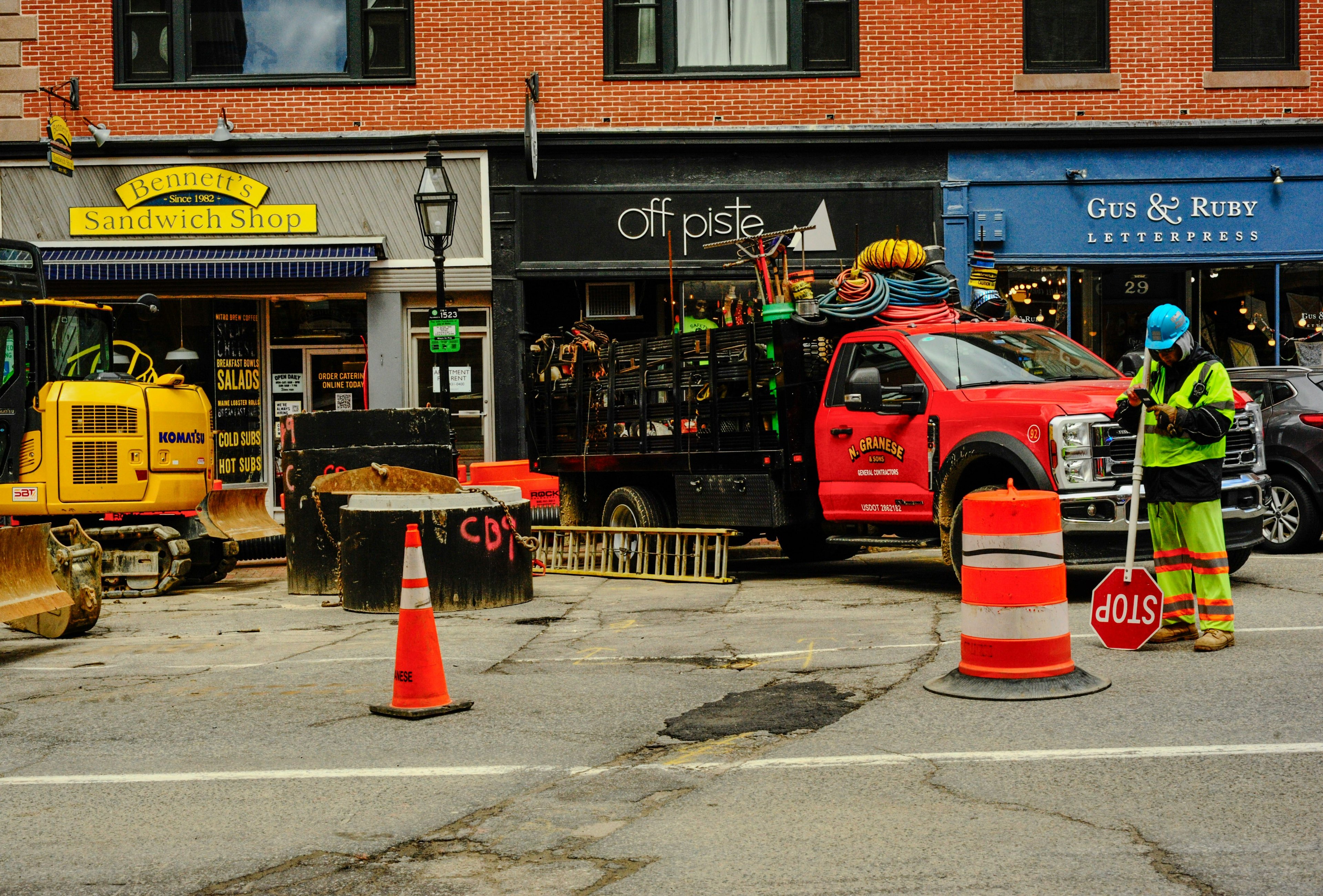
The Corpus Christi power outage reported in downtown Corpus Christi is more than a local service outage. It is a clear reminder that grid risk is measurable, time sensitive, and wider than a utility map.
KIII reported through Google News that a major power outage affected thousands of customers in downtown Corpus Christi. The public headline does not settle every detail. It does not confirm the root cause, the full restoration time, or whether every customer lost service for the same reason.
That distinction matters. A power outage is often covered as a quick local news update. However, the real impact can spread through businesses, traffic systems, payment terminals, elevators, cooling systems, and emergency communications. In a downtown area, a single outage can touch people who never appear inside the outage boundary.
For Macro Markets readers, the useful question is not only what happened. The better question is what the outage shows about grid risk. Power, fiber, and mobile networks fail in different ways. They also depend on each other more than most people notice.
This article separates confirmed facts from open questions. It also explains how to read outage updates like an analyst, why customer counts can understate the impact, and how prediction markets could price similar event risk.
Reviewed on August 16, 2026. We checked the supplied brief, separated confirmed facts from open claims, and used a 3-step test: source, scope, and time window.
Quick answer: The Corpus Christi power outage was a major downtown power disruption. KIII reported that it affected thousands of customers. The public headline confirms the broad event, but it does not confirm the cause.
In simple terms, this means readers should be careful with early outage news. A customer count can show scale, but it does not show full harm. A short outage can still hurt shops, offices, traffic lights, card payments, and home cooling.
The key facts to watch are easy to list. First, check how many customers are still without power. Next, check the affected area. Then, check the latest service estimate. Finally, wait for an official cause.
Wi-Fi calling can help during a mobile network outage. However, it only works if the user has working internet and enough power for the router. During a power outage, that backup may fail unless the home or business has a battery.
Therefore, the best lesson is practical. Residents need backup power for phones. Businesses need a clear outage plan. Analysts need to treat each new update as a data point, not as a full final report.
Put more simply: lights, phones, cards, doors, and roads can all be part of the same story. If one part fails, the next part can fail too. That is why a local outage can feel larger than it looks on a map.
The best response is calm and basic. Check trusted updates. Keep your phone charged. Help people nearby who need power for health or access. Do not guess the cause before officials confirm it.
What Happened in the Corpus Christi Power Outage
The verified local anchor is straightforward. KIII's Google News listing described a major power outage that affected thousands of customers in downtown Corpus Christi. That is enough to establish the event and the geographic focus.
It is not enough to establish cause. The available brief notes that KIII direct access was blocked during research, so the article should not claim a specific equipment failure, weather trigger, crash, fire, or grid problem. Until a utility, city agency, or emergency official confirms a cause, the right stance is narrow.
The safe summary is this: downtown Corpus Christi experienced a significant power outage, and the reported customer impact reached into the thousands. The affected area was local, but the operational effect may have been broader than the outage map suggested.
Outage reports often change quickly. A map can show a high number at one moment and a lower number minutes later. Restoration estimates can also move as crews inspect equipment. That is why timestamps matter when reading any outage update.
The first update usually answers three questions. How many customers are affected? Which area is affected? Has the utility issued a service estimate? It rarely answers the deeper question: what part of the system failed?
That deeper question often takes longer. Utilities may restore service before publishing a detailed cause. Local news may update the story with customer counts first because those numbers are visible to residents and businesses. Root-cause analysis is slower.
For readers, the discipline is simple. Treat the customer count as a live indicator, not a final report. Treat the restoration time as an estimate, not a guarantee. Treat the cause as unknown unless an official source names it.
Why Customer Counts Can Understate the Real Impact
A customer count is useful, but it is not the same as economic impact. One downtown commercial meter can represent a restaurant, office floor, clinic, or hotel. One affected building can hold dozens of workers and customers.
That makes downtown outages different from scattered home outages. A compact outage can still hit dense activity. It can interrupt card payments, checkout systems, elevators, fridges, HVAC, traffic lights, security systems, and building access controls.
For small businesses, even a short outage can be expensive. Restaurants can lose food inventory if refrigeration fails. Retailers can lose sales if payment systems go down. Offices can lose productive hours if broadband routers, badge systems, or building systems lose power.
For residents, the risk is more practical. Phones may lose charge. Medical devices may need backup power. Apartment elevators may stop. Cooling systems may fail during hot weather. A customer count does not capture those home-level effects.
Traffic is another multiplier. If a downtown outage affects signals, the disruption can move beyond the electrical footprint. Drivers, buses, emergency vehicles, and delivery routes may all feel the delay.
There is also a calls-and-alerts layer. Many people assume mobile phones solve outage problems. In practice, phones depend on charged batteries, working cell sites, and network backhaul. If local power fails, telecom sites may rely on backup batteries or generators.
That backup is not infinite. Some sites keep running. Others degrade. Meanwhile, users may overload nearby network capacity as they search for updates, call family, or switch from Wi-Fi to mobile data.
This is why analysts look beyond the headline count. An outage affecting 3,000 customers in a dense downtown district may matter more than a larger number spread across lower-density areas. The location, duration, and affected services shape the true impact.
Corpus Christi Power Outage vs Telecom Outages
The Corpus Christi power outage should not be treated as the same event as the separate T-Mobile outage signal in the brief. The research notes a Mashable report about a major T-Mobile outage and user confusion around SOS mode. It also includes a Bluesky post reminding users that Wi-Fi calling can help during a carrier outage.
Those telecom references are useful context, not proof of a connection. A power outage and a mobile carrier outage can happen at the same time without sharing a cause. They also create different problems.
Other outage reports in the brief point to the same pattern. KVOE reported on a restored Evergy outage, which shows why restoration status and elevated counts must be read separately.
A power outage starts with electricity. It can shut down lights, appliances, business equipment, routers, and charging points. A telecom outage starts with network service. It can leave powered devices unable to call, text, or use mobile data through the affected carrier.
Wi-Fi calling sits between those two systems. It can help when a mobile network has trouble, but only if the user has working internet access. That usually means the home or business router has power, the broadband connection is online, and the device is connected to that network.
During a pure carrier outage, Wi-Fi calling can be a strong fallback. During a local power outage, it may not help unless the router and modem have backup power. If the broadband provider also loses power or backhaul, Wi-Fi calling may fail too.
This is the main backup lesson. Backup plans work best when the backup depends on a different failure path. A phone with mobile data is useful if broadband fails. Wi-Fi calling is useful if the carrier network fails. A battery pack is useful if local outlets go dead.
However, each backup has a limit. A phone battery drains. A router battery runs out. A cell site battery has a set duration. A generator depends on fuel and maintenance. The public sees an outage as a single event, but operators see a chain of dependencies.
That chain matters for public safety. If a phone shows SOS, it may still be able to reach emergency services through another available network. But users should not treat that as a normal calling channel. For safety-critical updates, official utility, city, and emergency channels remain the best source.
How to Read Corpus Christi Power Outage Updates
Outage updates are data points. They are not full explanations. The first mistake is treating every number as exact. The second mistake is assuming a lower customer count means the incident is fully resolved.
Start with the affected-customer number. This number usually refers to service accounts, not people. One account can be one apartment, one small business, or a large building. That makes population impact hard to infer.
Next, look at geography. A downtown outage has a different risk profile than a scattered rural outage. Downtown areas concentrate commerce, traffic, offices, public buildings, restaurants, and hotels. Therefore, the same customer count can carry different weight.
Then review service estimates. A clear estimate suggests the utility has narrowed the problem. A broad or moving estimate suggests uncertainty. No estimate often means crews are still checking the fault or waiting for access.
After that, separate reported events from confirmed root cause. Residents may report sounds, flashes, crashes, or equipment issues. Those reports can be useful, but they are not proof. Official language usually arrives later.
Finally, check whether the outage touches other systems. Are traffic lights affected? Are water, internet, or mobile services affected? Are emergency facilities involved? Cross-system effects raise the importance of the event.
This is the same discipline investors use when reading business-risk news. The first report defines the event. The second report narrows scope. Later updates reveal duration, cause, and second-order impact.
For a Corpus Christi power outage, the most important open variables are cause, duration, exact footprint, and whether critical services were affected. Those variables decide whether the event is a brief local interruption or a broader grid warning.
The customer count alone cannot answer that. A short outage affecting thousands may be inconvenient but contained. A longer outage affecting fewer downtown accounts can still create bigger business losses.
What Residents and Businesses Can Do
Residents should focus on information, power, and communications. Keep a charged battery pack. Save utility outage-map links before an emergency. Know how to receive city alerts. Keep important medical or mobility needs in mind before the next outage starts.
Businesses need a more formal plan. The plan should identify which systems stop when power fails. It should also define who decides whether to close, how staff communicate, and how customer payments are handled.
A small business checklist can be simple:
- Keep backup batteries for routers, phones, and payment devices.
- Document manual payment or closure procedures.
- Test emergency lighting and building access plans.
- Know which refrigeration or inventory items are most exposed.
- Keep customer and staff communication templates ready.
The goal is not to predict every outage. The goal is to reduce surprise. If an outage hits during business hours, the first ten minutes decide whether staff improvise or follow a plan.
Residents can use the same mindset. A backup charger, a flashlight, a few stored numbers, and a known information source can reduce confusion. That is especially important when mobile networks are crowded or when phone batteries are already low.
There is also a behavioral point. Do not overload emergency lines for general restoration updates. Use utility, local media, and city channels for information. Keep emergency channels for emergencies.
For health and safety guidance during outages, use official public-health sources such as CDC, especially when power loss affects medicine, cooling, or food storage.
Common Questions on Power Outage Risk
What caused the Corpus Christi power outage?
The cause was not confirmed in the research brief. Treat the cause as unknown until the utility, city, or another official source names it.
How many people lost power?
The public report said thousands of customers were affected. A customer is usually a service account, not one person. Therefore, the number of people affected can be higher than the account count.
Does Wi-Fi calling work during a power outage?
It can work, but only in the right setup. Your phone needs Wi-Fi. Your router needs power. Your broadband service also needs to be online.
What should residents do first?
Check official updates. Charge phones if power is still available. Save battery life. Use emergency lines only for real emergencies.
What should small businesses do first?
Protect staff and customers first. Then check payment systems, fridges, doors, elevators, and backup lights. If the outage continues, use a clear closure plan.
Why does this matter for markets?
Outages have numbers and time windows. Analysts can track affected accounts, service estimates, and final outcomes. Those facts can help markets price event risk when the rules are clear.
The idea is simple. A market needs a clear question, a clear clock, and a trusted source. Without those three things, the price tells readers less.
The Macro Markets Angle: Outages as Tradable Risk Signals
Grid and network outages are not only service events. They are measurable risk signals. They have start times, affected areas, customer counts, service estimates, and final outcomes. Those features make them easier to quantify than many vague news stories.
We use a simple framework: define the event, name the source, set the time window, and separate live reports from final cause. That helps readers avoid trading on rumors or stale counts.
The Corpus Christi power outage also belongs in a wider grid-risk pattern. Earlier coverage, Almaty Power Outage: What the Regional Blackout Reports Mean, showed the same basic lesson: local power failures can become market signals when they reveal stress in backup systems, public services, and business routines.
Prediction markets can, in theory, turn that structure into clear questions. Will power be restored to most affected customers by a certain time? Will an outage exceed a threshold number of customers? Will a utility report equipment failure as the cause? Will a city issue a traffic or emergency advisory?
Those questions need careful design. A market should not rely on rumors or unclear screenshots. It should name the source of resolution, define the threshold, and use a time window. Without those rules, the market can become a debate about wording.
Good grid-risk markets would also avoid sensational framing. The point is not to turn a local outage into entertainment. The point is to quantify expectations about real-world operating risk.
That is where prediction markets can add value. Traditional news tells people what has happened. Outage maps show live status. Markets can show how informed participants price the next update, the likely restoration window, or the chance of wider impact.
The same framework applies beyond electricity. Fiber cuts, mobile carrier outages, cloud platform incidents, airport delays, and payment-network failures all have measurable states. Each one affects commerce and public behavior in different ways.
For Macro Markets, this is a natural extension of event analysis. A Corpus Christi power outage is local, but the pattern is broad. Grid backup is becoming a repeated economic theme.
It affects local businesses. It affects consumer confidence. It affects emergency planning. It also gives analysts a live example of how fragile some backup assumptions can be.
Bottom line: The Corpus Christi power outage should be read with discipline. The confirmed local fact is that a major outage affected thousands of downtown customers, according to KIII's Google News listing. The unconfirmed details are just as important: cause, full duration, final footprint, and any cross-system effects.
The wider lesson is clear. Customer counts are only the first layer of outage analysis. Location, duration, density, and dependency chains can matter more than the headline number.
Power outages, fiber cuts, and mobile network failures are different events. Yet they often meet in the same user experience: lights go out, phones lose charge, routers fail, payments stop, and people search for updates.
That makes outages useful signals for anyone who studies business risk. They show where backup plans work, where they fail, and how quickly public expectations change.
Prediction markets are not a substitute for official emergency channels. However, they can help quantify real-world infrastructure questions when the rules are precise and the data source is clear. A Corpus Christi power outage market would need that same discipline before its price could mean anything.
For readers tracking the Corpus Christi power outage, the best approach is simple. Follow official updates, separate confirmed facts from speculation, and watch the second-order effects that the first customer count does not show.
