


Cristiano Ronaldo WHOOP Podcast: The Source Behind His Discipline
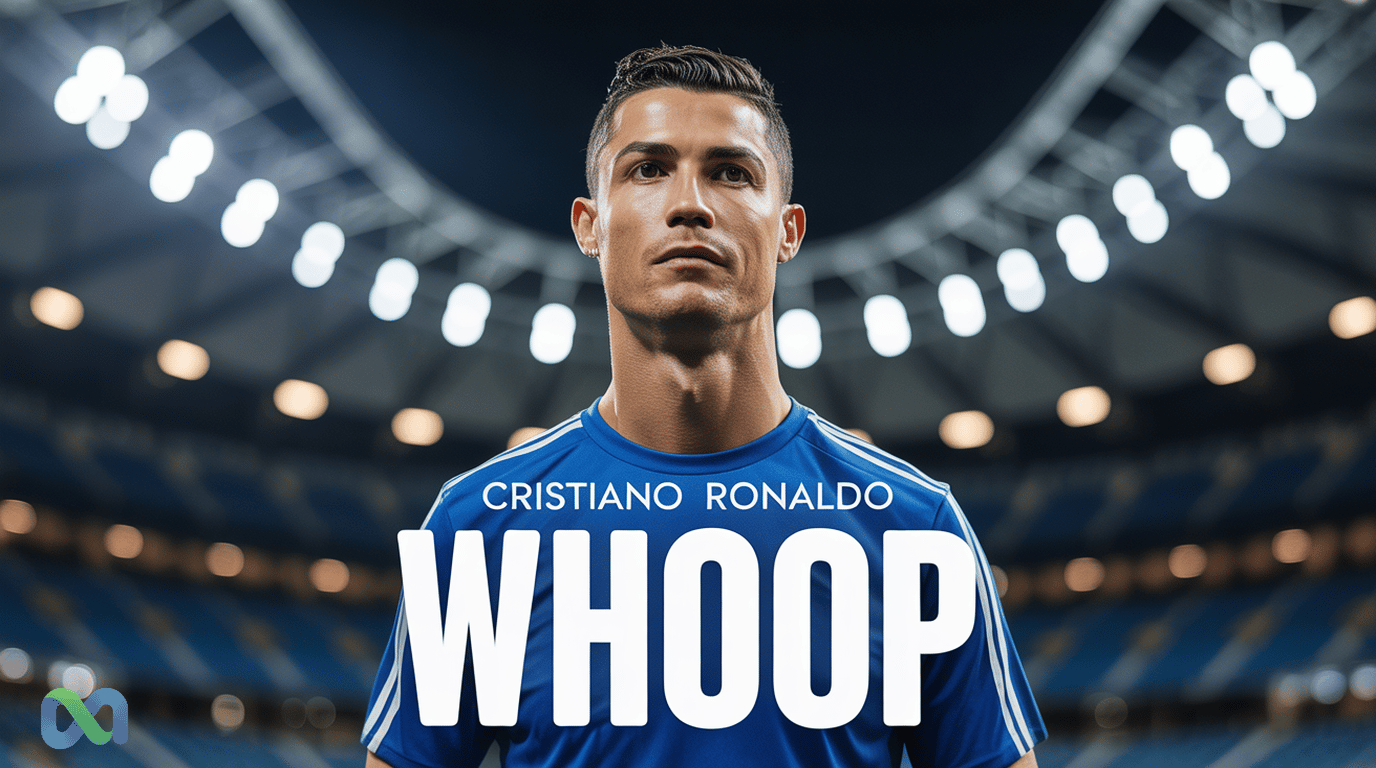
The best way to read Cristiano Ronaldo today is not through the caricature of an unshakable super-athlete. It is through the primary source. On the Cristiano Ronaldo WHOOP Podcast, his conversation with Will Ahmed, founder of WHOOP, shows a more human, more concrete side that helps anyone trying to understand his longevity. The center of the story is not talent alone. It is the combination of talent, discipline, routine, sacrifice, and an obsession with sustaining performance for decades.
That point matters because most content about Cristiano recycles the same surface: goals, records, titles, comparisons, and sound bites. The podcast episode adds depth where highlight clips only repeat the myth. The podcast does something else. It lets Cristiano himself explain how childhood, an early move to Lisbon, family ties, daily motivation, and physical recovery shaped his career. When the source is explicit, analysis improves. Ready-made mythology fades. Process enters the picture.
For anyone following football, performance, and legacy building, this angle is valuable. The episode does not try to prove Cristiano is a supernatural character. On the contrary. It shows how an extraordinary career was built through hard decisions, repeated habits, and the ability to stay competitive even against much younger athletes.
Primary source for this article: Cristiano Ronaldo on the WHOOP Podcast with Will Ahmed, used here as the explicit basis for interpretation.
Why the explicit source changes how you read Cristiano Ronaldo
There is a clear gain when the text starts from the episode itself rather than loose social media summaries. On the WHOOP Podcast, Cristiano Ronaldo speaks in the first person about childhood, the joy of playing, changing environments, discipline, and recovery. That moves analysis off speculation and onto firmer ground.
The difference seems small, but it is not. When the athlete himself explains how he left Madeira, how he saw his own game evolve, and how he thinks about longevity, the narrative becomes less generic. Instead of repeating that he "always had a winning mentality," the episode shows where that mentality was built step by step.
This is also the strongest human angle in the content. Cristiano does not appear only as a global brand. He appears as someone who left home early, dealt with distance from family, handled pressure, and built a routine almost no one can sustain for this long.
Where the story really begins
One of the strongest segments of the podcast comes early, when Cristiano talks about his first memories with the ball. He describes the street, friends, and fun as the foundation of everything. There is no pose of a predestined genius. There is pleasure in the game. According to his account on the episode, that is where the first real bond with football was born.
That detail reframes the career. Before the global athlete, there was a child who played because he enjoyed it. That emotional origin helps explain why motivation stayed alive for so long. When he talks about continuing to compete, work, and deliver joy, the words fit that beginning, not only a carefully built public image.
Another important point comes when Cristiano downplays the idea of inevitable destiny. On the podcast, he suggests he did not know as a child that he would become a worldwide phenomenon. That would be false to claim. The sense that something different was in his level came later, near the end of adolescence. That humanizes the path. Instead of a ready-made script, we see a process of discovery.
The sacrifice of leaving Madeira for Lisbon at age 11
If there is one clear emotional turning point in the episode, it appears when Cristiano talks about moving to Lisbon as a child. He treats that moment as one of the hardest parts of his career, professionally and personally. Leaving home early, entering a new context, and living far from family is not a biographical footnote. It is a formative wound.
This segment is central to the human angle of the article. Cristiano's discipline does not start only in the gym, diet, or invisible training. It starts in a rupture. It starts in the ability to accept discomfort early, endure loneliness, and keep betting on a distant goal.
When he says today he looks at his own son and is not sure he could let him leave that young, the words gain another layer. This is not the star speaking about overcoming in empty tones. It is a father revisiting a hard choice. That kind of passage is exactly what improves the text when the source stays explicit.
Family, formation, and the mental base of the career
The podcast also corrects another common simplification: the idea of a fully self-sufficient hero. Cristiano cites father, mother, and siblings as part of his mental and emotional formation. That reinforces something important for any serious reading of high performance. No one sustains excellence this long alone.
The family angle matters because it shows talent and ambition still needed affective structure, accountability, and reference points. Even in a career built on extreme individual merit, there is collective support. The episode does not turn family into decorative detail. It appears as part of the architecture that made staying at the top possible.
That is a useful antidote to shallow readings. Great trajectories are not born only from natural gift or individual will. They depend on environment, timing, sacrifice, and people who help hold the structure when almost nothing is guaranteed yet.
Talent and work, together, for a very long time
Perhaps the clearest thesis in the episode appears when Cristiano answers the debate between talent and work ethic. His answer on the Cristiano Ronaldo WHOOP Podcast is direct: both must move together. Talent without work is not enough. Work without talent is not enough either. The edge is in the combination.
That point matters because it corrects two common errors. The first is reducing his career to genetics, physical explosiveness, and natural gift alone. The second is turning everything into motivational narrative, as if anyone could reproduce the same result with effort alone. What Cristiano describes is a more demanding equation. Elite performance appears when rare ability meets rare discipline, and both stay aligned for many years.
Longevity works as proof of that argument. Staying at a high level for two decades would already be unusual in any field. In football, with physical wear, public pressure, and constant context change, it becomes even rarer. The podcast treats that outcome as the consequence of repeated standards, not miracle.
The daily problem of staying at the top
One of the most useful moments in the conversation comes when Cristiano talks about the cost of remaining at a high level. He says, in essence, that it is not easy to keep motivation, score goals, maintain the body, and compete against younger, faster players with more explosiveness. That answer is valuable because it pulls longevity out of abstraction.
Here, longevity is not a slogan. It is a daily problem to solve. The body demands constant care. The mind does too. For someone who has already won almost everything, perhaps the most impressive data point is not the past but the persistence of competitive hunger.
This is another place where the podcast greatly improves the public reading of Cristiano Ronaldo. Instead of showing him as someone trapped in past glory, the episode suggests an athlete still oriented to the present, still committed to standards, and still concerned with what he can deliver now.
WHOOP, recovery, and the logic of data
Because the interview sits inside the WHOOP universe, the conversation naturally moves into technology, recovery, and biometrics. But the most interesting aspect is not promotional. It is the logic of use. Cristiano describes the device as something close to a doctor on the wrist, useful for tracking sleep, recovery, and body signals. You can hear the full conversation on the WHOOP Podcast episode page.
This segment helps explain how elite sport has changed. Today, long-term performance does not depend only on training more. It depends on monitoring load, recovering better, sleeping better, and making sharper decisions about wear and tear. The tool matters less as an object and more as an extension of a detail-oriented mindset.
When he speaks naturally about that routine, the episode reinforces a simple thesis. The edge is not in using technology for its own sake. It is in turning data into habit. That reasoning fits everything else the conversation shows about discipline.
The discipline everyone admires and few repeat
In one of the most revealing segments, Cristiano suggests many people want the final result but do not want to execute the full process required to get there. He practically says he can show the path, but that does not mean others can follow the same standard. In his reading, the central difference is discipline.
That line summarizes the figure emerging from the WHOOP Podcast. Not only a player of enormous talent. Someone who organized life around maintaining standards. In sport, that means training, recovery, nutrition, sleep, and consistency. Outside it, that also means emotional control, ego management, and tolerance for the boredom of repetition.
That is exactly what makes the episode such a strong source. Instead of producing another vague celebration of Cristiano Ronaldo's greatness, the conversation reveals concrete mechanisms behind his competitive edge. They are hard to copy, but they are intelligible.
What this episode really reveals about Cristiano Ronaldo
The Cristiano Ronaldo WHOOP Podcast does not deliver a scandalous revelation. That is a positive. The value is in accumulated details that confirm a stronger thesis: Cristiano Ronaldo's career was built through initial passion for the game, family support, early sacrifice, work ethic, and continuous adaptation.
Talking about playing in the street helps explain the emotional origin. The move from Madeira to Lisbon helps explain mental resilience. Defending the combination of talent and work organizes a better reading of success. The conversation about competing with younger players shows the main battle today is sustaining standards. Interest in recovery and data helps explain why he still operates at such a high level.
If the goal is to understand Cristiano beyond slogans, this episode works well as a primary source. It is not content about empty controversy or legend comparisons. It is a study of competitive process, endurance, and the cost of excellence.
Conclusion
Cristiano Ronaldo remains one of the strongest cases of sporting longevity in the modern era. The Cristiano Ronaldo WHOOP podcast shows that staying at the top does not come from a single factor. It comes from the meeting of real talent, formative environment, sacrifice, discipline, and an almost scientific relationship with the body.
The main improvement in reading here comes from the explicit source. When Cristiano himself explains childhood, leaving home, motivation, and routine, analysis becomes better and more human. The flattened version of the icon fades. The concrete story of someone who sustained excellence for many years, paying a continuous price for it, enters view.
For anyone following football, high performance, or legacy building, this episode is a strong starting point to reread Cristiano Ronaldo with more depth. Less as an abstract symbol of greatness, more as a study of discipline, sacrifice, and longevity. The WHOOP conversation is especially useful when you want process and source, not recycled highlight reels.
External source: Wikipedia, Cristiano Ronaldo
