


Crypto. com Prediction Markets Senate Setback: Why Lobbying Was Not Enough
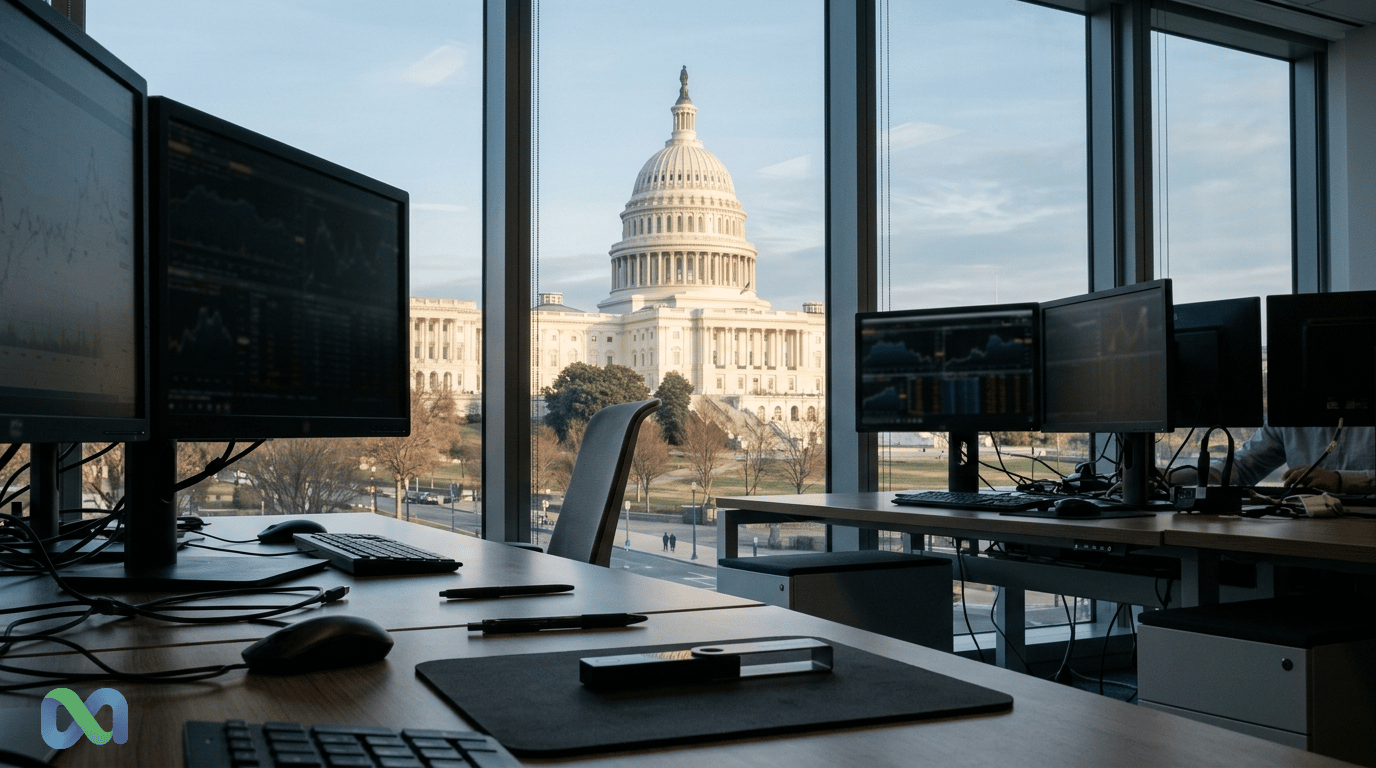
Crypto. com prediction markets Senate coverage shows a simple point with large consequences. Political spending can raise attention. It cannot settle the legal status of sports event contracts by itself.
The latest news cycle joins two threads. Forbes framed the Senate story as a high-roller crypto bet that came up empty. PlayUSA and SBC Americas focused on Crypto. com, Robinhood, and their push for Supreme Court clarity around prediction markets. Together, those reports show why the fight is bigger than one company or one bill.
At stake is the boundary between a regulated event contract, a sportsbook wager, and a crypto platform product. That boundary affects market access, liquidity, compliance cost, and trader trust. It also affects where sports-linked contracts can trade.
This is not only a U. S. legal story. It is a market-structure story. Prediction markets need clear rules because traders need confidence in listing standards, settlement, and platform continuity.
What Happened In The Senate
The Crypto. com prediction markets Senate setback refers to the gap between crypto-sector political ambition and actual legislative clarity. The reporting does not mean prediction markets are over. It means the industry did not get the clean federal answer it wanted from Congress.
That matters because the Senate is one possible path to clarity. A statute could define event contracts more directly. It could also draw a clearer line between federal markets and state sports betting. Without that clarity, platforms must keep fighting through agencies, courts, and product reviews.
The Senate angle is also a reminder about political limits. Crypto companies can fund campaigns, lobby lawmakers, and build coalitions. However, a market category still needs legal durability. Spending can open doors, but it cannot replace a workable regulatory perimeter.
The political bet behind the lobbying push
Crypto firms entered Washington with more money and more urgency after a series of enforcement fights. Prediction markets added a new reason to lobby. The product category sits close to exchanges, trading apps, crypto wallets, sports media, and state gambling law.
For Crypto. com, the appeal is clear. Event contracts can turn a crypto app into a broader retail trading venue. Sports contracts are especially powerful because demand is obvious, repeatable, and easy for users to understand.
Robinhood has similar incentives, though from a different starting point. It already owns a large retail finance relationship. Prediction markets can extend that relationship beyond stocks, options, and crypto into real-world outcomes.
The Senate setback shows that these incentives do not guarantee a legislative win. Lawmakers may like innovation. They may also worry about consumer protection, state authority, gambling exposure, and the political optics of sports-linked trading.
What remains unresolved
The unresolved question is not whether people want to trade on events. They do. The harder question is who gets to regulate the contract.
If a product is treated as a commodity event contract, federal market rules become central. That points toward disclosure, exchange oversight, clearing, surveillance, and settlement standards. If the product is treated as sports betting, state gaming rules become central. That points toward licenses, location checks, responsible gaming rules, and operator limits.
Sports contracts create the sharpest conflict because they look familiar to both sides. A contract on a game outcome can be priced like a market. It can also feel like a sportsbook line to regulators and consumers.
That is why the Senate story should not be read as a narrow lobbying story. It is a signal that the industry still lacks the political consensus needed to define these products cleanly.
Why Crypto. com And Robinhood Want Supreme Court Clarity
Crypto. com and Robinhood want Supreme Court clarity because the current legal path is split. Platforms can face one view from federal market law and another view from state gaming regulators. That uncertainty is expensive, slow, and hard to scale.
The Supreme Court question is about the boundary between federal authority and state authority. In plain English, the issue is whether a federally regulated event contract can be blocked as illegal gambling by a state regulator. If the answer is yes, national product design becomes much harder. If the answer is no, platforms gain a stronger path to nationwide listings.
That does not mean the Court would approve every sports-linked contract. It means the industry wants a clearer legal test. Platforms need to know which contracts can list, under what terms, and which regulator has the final word.
Federal commodities law vs state gaming rules
Federal commodities law focuses on market integrity. It asks whether contracts trade on a regulated venue. It also asks whether prices form fairly, whether settlement is defined, and whether users get accurate information. The focus is market conduct.
State gaming law starts from a different place. It asks whether users stake money on uncertain outcomes. It also asks whether an operator needs a license, and whether a product fits state definitions of wagering. The focus is gambling control.
Prediction markets can sit between those frameworks. A contract on inflation, elections, or a Federal Reserve decision looks closer to information markets. A contract on a team winning a game looks closer to sports betting. Yet both may use similar trading mechanics.
This is the legal tension that Crypto. com and Robinhood want resolved. They do not only want permission to launch products. They want a stable rulebook that tells them how far the category can go.
Why sports contracts are the flashpoint
Sports are the flashpoint because they offer scale. Political, economic, and weather markets can be valuable. However, sports bring daily liquidity, mainstream attention, and existing user habits.
That scale is also why regulators care. Sports betting is already a large regulated industry in the U. S. States collect tax revenue and control licenses. A federal event-contract path could compete with that system if it allows similar exposure without the same state rules.
For platforms, the distinction is not cosmetic. If sports event contracts stay inside a federal market structure, rollout can be broader and faster. If they are treated as state gaming products, access becomes split across state lines.
Traders should watch this point closely. Legal classification can affect whether a market appears, disappears, limits trading, changes settlement terms, or loses liquidity.
Crypto. com Prediction Markets Senate: Why Markets Are Not Sportsbooks
Prediction markets are not just crypto sportsbooks. The best version of the category uses transparent prices, defined settlement, and market-driven probabilities. That structure is different from bookmaker-set odds, even when the event is familiar.
The distinction matters because credibility is the core product. A prediction market only works if users trust the contract, the settlement source, and the trading venue. Without that trust, a market price is only a number on a screen.
The comparison is easier in plain terms:
- A prediction market trades event contracts.
- Traders set prices through supply and demand.
- A sportsbook offers wagers.
- The operator posts lines and manages risk.
- A crypto exchange lists digital assets.
- A sports event contract can look like more than one category.
The sportsbook comparison breaks down when the venue acts like a market rather than a bookmaker. In a market model, users trade with other users or through a market mechanism. Prices update as traders express beliefs. Platform credibility depends on rules and transparency.
However, the comparison returns when the event is a sporting outcome. Regulators may care less about the matching engine. They may care more about what the user is effectively doing. That is why the same product can look like market innovation to one regulator and gambling arbitrage to another.
Event contracts, settlement, and market transparency
Event contracts need clear settlement. A contract should name the exact event, the source used to resolve it, and the timing of resolution. Traders should not have to guess how the platform will interpret the result.
Transparency also means users can understand price movement. A market price can show the crowd’s implied chance. But that signal only has value when the market has enough liquidity and reliable participation.
This is where regulated prediction markets can make a serious case. They can provide public prices, audit trails, and defined outcomes. They can also give analysts a live signal that updates faster than polls, forecasts, or commentary.
That case gets weaker if the category looks like a workaround for sports betting rules. Platforms therefore need more than aggressive growth. They need restraint, documentation, and settlement discipline.
Where the sportsbook comparison breaks down
A sportsbook usually controls the line and manages risk against customers. A prediction market should let prices emerge from trading. That difference can change incentives, transparency, and user interpretation.
Still, the legal label does not follow the product pitch automatically. Regulators look at substance. If a sports contract draws the same audience, same event, and same economic exposure as a sports bet, state regulators may challenge it.
That is why the Supreme Court angle matters. Platforms want a national answer because state-by-state disputes can drain momentum. A single product can become viable in one place, blocked in another, and uncertain in a third.
For users, the lesson is practical. Do not assume that a listed market is permanent. Product access can change as regulators, courts, and platforms react.
What The Crypto. com Prediction Markets Senate Fight Means For Traders
For traders, the immediate impact is uncertainty. Legal uncertainty can affect which markets list, how much size they attract, and whether a platform can keep a contract open through settlement. It can also change how users compare platforms.
For platforms, the impact is strategic. A company can chase attention by listing popular contracts. Or it can build credibility by showing conservative standards, transparent settlement, and strong compliance controls.
The second path is slower. It may also be more durable.
Liquidity and product availability
Liquidity depends on confidence. If traders fear a market could be halted, challenged, or delisted, they may trade smaller. Market makers may demand wider spreads. Casual users may wait until the legal picture improves.
Product availability also becomes uneven. A platform might list political contracts, economic indicators, or entertainment outcomes while avoiding sports contracts. Another platform might test sports exposure and accept more legal risk.
This creates a split user experience. Two platforms can both claim to offer prediction markets while listing very different contracts. The legal perimeter shapes the product menu.
That is why traders should monitor more than headlines. Watch state enforcement actions, CFTC statements, court filings, and platform rule changes. Also watch liquidity. If depth falls or spreads widen, the market is already pricing legal risk.
Compliance credibility as a competitive advantage
Compliance is often treated as a cost. In prediction markets, it can become a competitive advantage. The platform that earns trust with regulators and users can attract more stable liquidity.
This is especially true for finance, politics, and crypto. Users are not only reading entertainment content. They may make trading decisions based on market prices. That raises the bar for accuracy and disclosure.
Platforms should therefore explain contract terms in plain language. They should publish settlement logic before trading starts. They should also separate market prices from promises.
The same standard applies to content. Articles about these markets should not imply guaranteed outcomes. They should distinguish confirmed reporting from interpretation. They should also warn that regulatory decisions can move faster than market narratives.
What To Watch Next
The first item to watch is court action. If the Supreme Court takes up a relevant question, the market will focus on the scope of review. A narrow procedural ruling would be different from a broad statement about federal preemption.
The second item is the CFTC’s posture toward event contracts. Agency comments, enforcement choices, and exchange approvals can shape the category even without a new law. Traders should read these signals because they affect listing risk.
The third item is state regulator response. States with mature sports betting markets may defend their authority aggressively. If they do, platforms could face injunctions, access limits, or product redesigns.
The fourth item is congressional movement. The Senate setback does not close the legislative path. It only shows that crypto-backed lobbying has not yet delivered the clean outcome platforms want.
The fifth item is platform behavior. Crypto. com, Robinhood, and other venues may adjust which contracts they promote, where they offer them, and how they describe them. Those choices will reveal how much legal risk they are willing to carry.
For traders, the core lesson is simple. Treat regulatory clarity as part of the market price. A contract can have a compelling thesis and still carry access risk, settlement risk, and liquidity risk.
Crypto. com Prediction Markets Senate FAQ
What is the Crypto. com prediction markets Senate story?
The Crypto. com prediction markets Senate story is about a failed push for clearer rules. Crypto firms wanted more help from Congress. They did not get the clean result they wanted.
That does not end the market. It means the fight moves to courts, agencies, and product rules. The key issue is still simple. Is a sports event contract a market product, a bet, or both?
Are prediction markets the same as sports betting?
No. A prediction market lets traders buy and sell event contracts. The market price moves as traders act.
A sportsbook works in a different way. The operator posts the line and manages the book. The user is betting against terms set by that operator.
The hard case is sports. A sports contract can trade like a market. It can also look like a bet. That is why the Crypto. com prediction markets Senate fight matters.
Why does Supreme Court clarity matter?
Supreme Court clarity could tell platforms which rules control the product. If federal market law wins, platforms may have a clearer national path. If state gaming law wins, access may stay split by state.
Traders should not guess the outcome. Courts move slowly. Rules can change. Markets can also change before the final ruling.
What should traders watch next?
Watch court filings, CFTC signals, state action, and platform updates. Also watch liquidity. Thin markets can show that traders are nervous.
The Crypto. com prediction markets Senate setback is not the final word. It is a warning. Legal clarity is part of the trade.
The Plain-English Takeaway
The Crypto. com prediction markets Senate story is not hard to read. A firm wants to list more event markets. Some of those markets touch sports. Sports rules are strict. State rules are strict too.
So the fight comes down to one clean question. Who gets to say yes or no?
If federal market rules lead, platforms may get one main path. If state gaming rules lead, the path stays split. That split can make markets smaller, slower, and less clear for users.
For traders, this means one thing. A price is not the only risk. The rulebook is part of the risk too.
For platforms, the lesson is also plain. Trust beats hype. Clear terms beat fast launches. Good settlement rules beat bold claims.
The Crypto. com prediction markets Senate setback shows why this matters now. A company can spend money and still lose time. A platform can have demand and still lack a clean legal path.
That is why this issue will not fade. Sports contracts are popular. Prediction markets are growing. Crypto apps want new products. Regulators want control. Courts may need to draw the line.
Until that happens, traders should stay careful. Read the rules. Watch market depth. Check how a contract settles. Treat each legal update as part of the market story.
In short, the Crypto. com prediction markets Senate debate is a rulebook test, not just a crypto headline.
Source and Risk Notes
Last reviewed: September 16, 2026.
This analysis is based on reporting from Forbes, PlayUSA, and SBC Americas cited in research brief 2256. Those reports point to a Senate setback for crypto-backed market policy and a separate push by Crypto. com and Robinhood for Supreme Court clarity.
For regional context, Brazil securities regulator CVM shows how financial-market conduct rules can differ from gaming rules in another jurisdiction.\n\nThis article does not give legal or financial advice. Rules can change through courts, the CFTC, Congress, or state agencies. Traders should check platform terms, market depth, and settlement rules before trading any event contract.
The Crypto. com prediction markets Senate fight is therefore a live test for market rules. Traders should treat the Crypto. com prediction markets Senate debate as a signal about access risk. Platforms should treat the Crypto. com prediction markets Senate setback as a prompt to prove trust, not just demand.\n\n## Bottom Line
Crypto. com’s Senate setback shows that prediction markets need more than lobbying. They need durable legal recognition, transparent product design, and user trust. Sports event contracts will remain the hardest test because they sit directly on the boundary between market trading and regulated wagering.
The Supreme Court push from Crypto. com and Robinhood matters because it could clarify that boundary. Yet the outcome is uncertain, and no trader should treat legal clarity as guaranteed.
The serious path for prediction markets is not to become crypto sportsbooks with better branding. It is to prove that event contracts can operate as transparent markets with clear rules, credible settlement, and responsible access.
That is the standard that will matter after the headlines fade.
