


DXY Forecast Above 101.00: Dollar Bias Stays Bullish
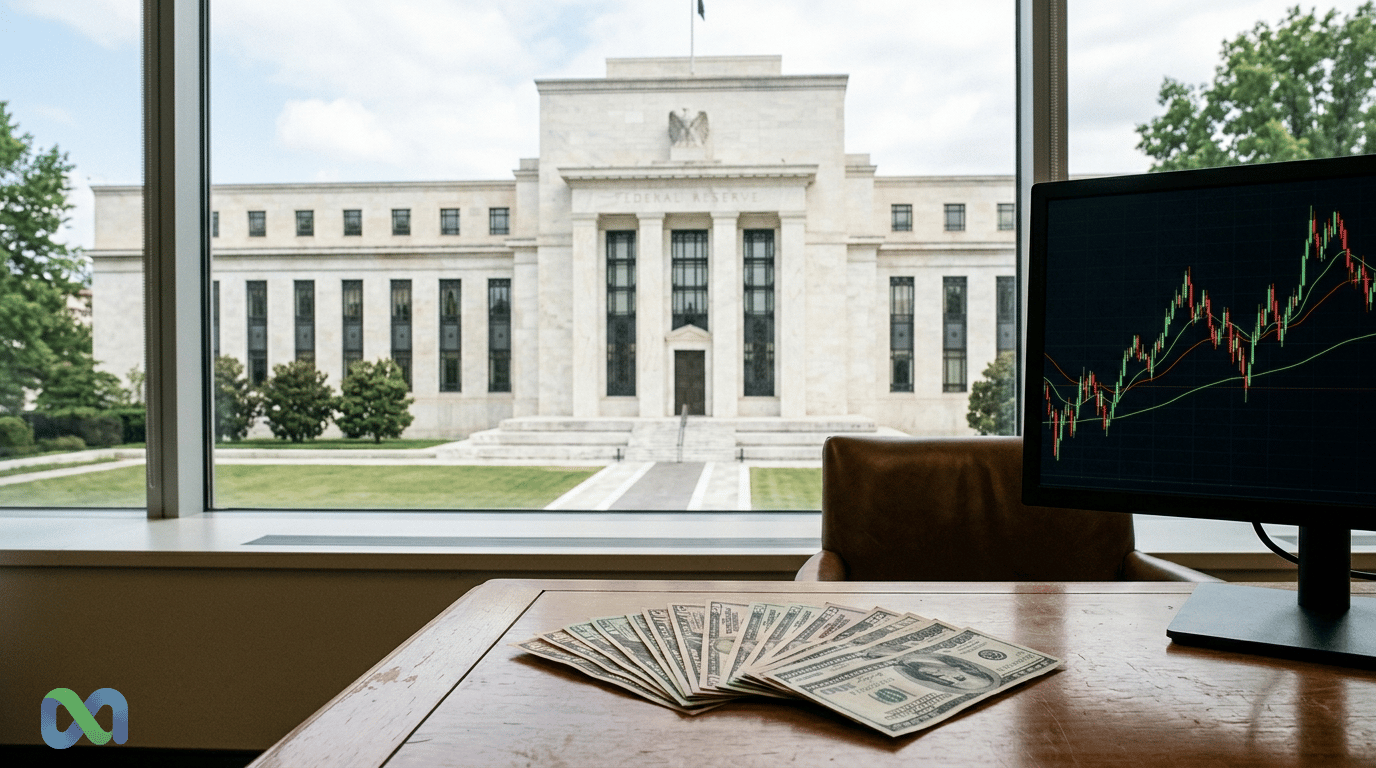
Updated: 22/07/2026. A serious DXY forecast needs more than one headline. The U. S. Dollar Index is measured against a basket of major currencies, so it gives a broader signal than EUR/USD alone. This article uses a 24-hour review window, a 2-day confirmation window, and a 1-week follow-up window to separate noise from a real change in trend.
Important note: this content is informational and is not financial advice.
The DXY forecast depends on one simple zone: 101.00. As long as the U. S. Dollar Index holds that level as support, the short-term bullish bias remains alive. However, that reading is not an automatic buy signal.
DXY tracks the strength of the U. S. dollar against a basket of major currencies. A move above 101.00 therefore compresses several forces into one number: U. S. data, Federal Reserve expectations, haven demand, global risk appetite, and weakness in other currencies.
The current signal matters because the market is sensitive to each macro release. Retail sales, inflation, jobs data, and Fed comments can change the tone within hours. EUR/USD, GBP/USD, and Latin American currencies often react quickly when the dollar gains strength.
This analysis separates the technical signal from the macro catalysts. It also maps the scenarios that could confirm, pause, or invalidate the bullish DXY bias. The goal is not to promise one direction. It is to organize the evidence so analysts can evaluate probabilities with more discipline.
The quick read is simple. Price leads. Data confirms. The Fed sets the pace. If all three point in the same direction, the signal gets stronger. If they conflict, the market usually pauses.
For readers, the practical point is clear. It is not enough to see DXY above 101.00. You need to see how it reached that level. You also need to see whether it can stay there. A daily close matters more than a short candle. A reaction after data matters more than a headline.
The dollar also does not trade in isolation. If the euro is weak, DXY can rise with less effort. If Latin American currencies lose demand, the dollar may look stronger. If global risk appetite improves, that advantage can fade quickly.
So it helps to think in steps. First, locate the key level. Then review the macro data. Next, watch the major currency pairs. Finally, measure whether market expectations changed. That order reduces the risk of confusing noise with trend.
Quick Read for Tracking DXY
The base map is short. DXY above 101.00 favors the dollar. DXY below 101.00 raises doubt. DXY below 100.50 changes the tone. This map does not predict by itself. It gives structure to the data.
There are three support signals. One is the daily close. Another is the reaction after a macro release. The third is EUR/USD. If all three move together, the dollar case improves. If one fails, the case becomes weaker.
There are also three risk signals. The first is a false breakout. The second is a candle that rises and then gives back the move. The third is a softer Fed tone. In that setup, the dollar can lose its base.
Jobs data carries heavy weight. A firm report supports the dollar. A weak report damages it. Inflation has the same influence. If inflation falls faster than expected, the market can price more rate cuts. If it stays firm, the Fed has more room to wait.
The euro gives another clue. If EUR/USD falls while DXY rises, the signal is clean. If EUR/USD resists, the dollar advance carries less weight. The pound adds one more clue. Weak GBP/USD reinforces the dollar tone.
In Latin America, a stronger dollar does not hit every country the same way. Mexico watches rates and U. S. trade. Chile watches copper and China. Brazil watches local risk, real rates, and global flows. DXY is a guide, not a fixed rule.
The healthier plan is simple. Watch the level. Watch the data. Watch the Fed. Watch the pairs. Then ask whether the story changed. If it did not, the bias can continue. If it did, the map needs to change too.
DXY Forecast Above 101.00: What the Market Is Signaling
A bullish DXY forecast above 101.00 means buyers are still defending a key zone. If the index rebounds from that area, the dollar keeps tactical support. If it loses the level on a sustained close, the bullish thesis weakens.
The 101.00 level is not magic. It works as a reference because it concentrates technical and psychological attention. Many traders treat it as the line between continuation and correction. Above it, the dollar can consolidate gains. Below it, the risk of a move toward 100.50 increases.
The 101.00 Level as Immediate Support
Immediate support is a zone where demand appears and slows selling pressure. For DXY, 101.00 serves that role because it sits at the center of the current debate. FXStreet highlighted that threshold in its update on the dollar index bias. TradingView also tracks DXY as a reference followed by technical traders.
Support becomes more useful when it lines up with price reaction. One touch is not enough. The market needs daily closes, intraday recovery, or rejection of selling below the zone. That sequence suggests participants still buy dollars when the index dips.
Context also matters. If 101.00 holds through a week of strong U. S. data, the bullish reading gets more weight. If support survives only because volume is thin, the signal is weaker. That is why price, calendar, and volatility should be read together.
The Difference Between Consolidation and a Bullish Breakout
Consolidation is not a breakout. A sideways DXY above 101.00 can mean pause, not impulse. The market absorbs data and waits for the next catalyst. That phase often creates false signals in both directions.
A bullish breakout requires more. The index needs to clear nearby resistance with a clean close and continuation. EUR/USD and GBP/USD should also show consistent pressure. If DXY rises but major pairs do not confirm, the move can lose strength.
The practical reading is straightforward. Above 101.00, the dollar keeps a tactical advantage. But bullish confirmation needs broken resistance, follow-through, and data that support relatively firm U. S. rates.
The Macro Catalysts Behind the Dollar
The dollar does not move only because of technical lines. DXY responds to growth, inflation, rates, and global risk. When those factors favor the United States over other economies, the dollar tends to gain support.
The source research showed that many SERP pieces focus on quick levels. The gap is explaining what supports those levels. For DXY, the main catalysts usually sit in three groups: U. S. data, global risk, and central bank differentials.
U. S. Data, Retail Sales, and Fed Expectations
U. S. data is the first driver. Strong retail sales suggest resilient consumption. Firm jobs data reduces the urgency for rate cuts. Sticky inflation limits the Fed's room to ease policy.
When the market expects rates to stay higher for longer, the dollar usually receives support. The logic is direct. Dollar-denominated assets keep relative appeal if U. S. yields remain high compared with Europe, Japan, or Latin America.
The risk appears when the data cools. A clear fall in consumption, employment, or inflation can change the narrative. In that case, the market starts to price a more flexible Fed. That expectation can pressure DXY, especially if it breaks 101.00.
That is why a DXY forecast should be read with the macro calendar. The chart is not enough. The next release can turn clean support into a failed breakout.
Geopolitical Risk, Oil, and Haven Demand
The dollar also works as a haven asset. During geopolitical stress, financial strain, or weaker risk appetite, many investors seek dollar liquidity. That demand can support DXY even when domestic data does not surprise.
Oil adds another layer. An energy shock can lift global inflation pressure. It can also hurt currencies of countries that import crude. In that environment, the dollar often benefits from liquidity, market depth, and perceived safety.
However, haven demand can change fast. If risk appetite returns, the dollar loses part of that defensive support. Cyclical and emerging-market currencies can then recover, provided their local fundamentals cooperate.
Differentials Against the ECB and Other Central Banks
DXY has heavy exposure to the euro. That makes the gap between the Fed and the European Central Bank important. If the Fed stays more restrictive than the ECB, the dollar gains support against the euro. If the ECB surprises with a tougher tone, EUR/USD can resist better.
The same logic applies to other central banks. The Bank of England, the Bank of Japan, and emerging-market authorities all shape the relative comparison. DXY does not measure only absolute dollar strength. It measures dollar strength against alternatives.
For Latin America, the key point is the real-rate differential. Currencies such as the Mexican peso or Chilean peso can resist the dollar if local rates and terms of trade offset risk. But when the dollar rises together with global risk aversion, pressure on Latin America usually increases.
Impact on EUR/USD, GBP/USD, and LatAm Currencies
A stronger DXY does not affect every pair in the same way. The most direct relationship appears in EUR/USD, because the euro has a high weight in the index. GBP/USD also reacts, although it includes U. K.-specific news. Latin American currencies add another layer: commodities, political risk, and flows into emerging markets.
The value of the analysis is translating DXY into specific pairs. An index above 101.00 says the dollar keeps a base. But each pair needs its own confirmation before analysts assume continuation.
EUR/USD: Pressure if the Dollar Keeps Support
A stronger DXY usually pressures EUR/USD lower. The relationship is not perfect, but it is structural. If the dollar gains against the main basket, the euro often faces resistance unless it receives its own catalysts.
Closes are the key. If DXY holds 101.00 and EUR/USD cannot recover relevant technical zones, the reading favors the dollar. If EUR/USD rises despite a firm DXY, the market may be anticipating positive news from Europe.
Investors should separate two questions. First, is the dollar rising on its own merits? Second, is the euro falling because of local weakness? When both answers are yes, pressure on EUR/USD tends to be clearer.
GBP/USD: Strong Dollar and Sensitivity to U. K. Data
GBP/USD also suffers when the dollar takes control. Still, the pound depends heavily on inflation, wages, and the Bank of England tone. If U. K. data forces a more restrictive policy path, sterling can absorb part of the dollar advance.
The most negative setup for GBP/USD appears when the United States surprises to the upside and the United Kingdom shows signs of cooling. In that combination, the differential favors the dollar. A fall in risk appetite also tends to hurt sterling.
To read the pair, watch the post-data reaction. The first move can be noise. Confirmation arrives when price holds direction after the market digests the release.
USD/MXN and USD/CLP: Global Risk and Commodity Sensitivity
Latin American currencies combine global and local factors. The Mexican peso often reacts to rate differentials, carry-trade flows, and its close link with the United States. The Chilean peso adds copper, China, and global risk appetite.
If DXY holds 101.00 because of strong U. S. data, USD/MXN and USD/CLP may rise due to external pressure. But the move will not always be linear. High local rates, commodity prices, and political news can slow or amplify the pressure.
In Latin America, a stronger dollar matters because it tightens financial conditions. It can also affect inflation expectations and central bank decisions. That gives a DXY forecast value beyond the major pairs.
Scenarios for the Next DXY Move
The central scenario remains a bullish bias while 101.00 works as support. Even so, the market needs a clear matrix. The table below summarizes the most relevant scenarios for the next DXY moves.
| Scenario | Technical signal | Likely catalysts | Practical reading |
|---|---|---|---|
| Bullish continuation | Sustained close above 101.00 and break of nearby resistance | Strong U. S. data, restrictive Fed, risk aversion | The dollar keeps control; EUR/USD and GBP/USD stay under pressure |
| Sideways range | Bounces above 101.00, but no resistance break | Mixed data, cautious central-bank messages | The market waits for confirmation; avoid extrapolating weak signals |
| Bearish invalidation | Loss of 101.00 and return toward 100.50 | Weak U. S. data, rate-cut expectations, risk appetite | The bullish bias loses force; cyclical currencies can recover |
Bullish Scenario: Breakout and Close Above Resistance
The bullish scenario requires 101.00 to become more than support. It needs to become a platform. For that to happen, DXY must break nearby resistance with firm closes. It also helps if major pairs confirm with declines against the dollar.
The clearest catalysts would be sticky inflation, solid jobs data, or strong retail sales. A restrictive Fed tone would reinforce the reading. In that case, the market could reduce bets on quick cuts and keep demand for dollars.
The risk in this scenario is chasing price late. If the breakout occurs without macro confirmation, it can reverse. Therefore, the reading should combine levels and calendar.
Sideways Scenario: Range Between Support and Resistance
The sideways scenario can be the most likely when catalysts are scarce. DXY stays above 101.00, but it cannot extend the advance. Traders buy dips, yet they sell near resistance.
This environment rewards patience. Technical signals tend to last less. One-off news also creates noise. In a range, the common mistake is treating every strong candle as the start of a trend.
To avoid that trap, watch daily closes and pair reactions. If EUR/USD and GBP/USD do not break their own levels, the DXY range remains intact.
Bearish Scenario: Loss of 101.00 and Return to 100.50
A sustained loss of 101.00 would change the tone. An intraday break would not be enough. The bearish signal gains weight if DXY closes below the level, fails to recover it, and moves toward 100.50.
The trigger could be weak jobs data, lower inflation, or soft retail sales. It could also come from a change in the Fed. If the market prices earlier cuts, the dollar loses part of its relative advantage.
In that case, EUR/USD could recover ground. Latin American currencies could also improve if risk appetite helps. However, the recovery would be fragile if local risks or external shocks emerge.
How to Read This Signal Through an Expectations Market
An expectations market turns news into probabilities. Instead of asking only whether DXY will rise, it is better to ask which events increase or reduce that probability. That approach is more disciplined than reacting to isolated headlines.
Macro Markets uses that logic for political and economic events. The value lies in quantifying collective expectations and updating the reading when data changes. In a topic like the dollar, that discipline helps separate narrative from evidence.
The Federal Reserve is central to that process because its communication shapes rate expectations. Market pricing can shift before a policy decision if traders believe the data changes the Fed's reaction function.
What Would Increase the Probability of a Stronger Dollar
The probability of a stronger dollar would rise with a clear combination. First, U. S. data above expectations. Second, a Fed that is less willing to cut rates. Third, weaker global risk appetite.
Divergence against Europe would also help. If the ECB sounds more flexible while the Fed stays cautious, the dollar gains a relative advantage. The same applies if China or commodities pressure emerging-market currencies.
In market terms, confirmation would come from several signals together. DXY holds 101.00, EUR/USD loses support, U. S. yields rise, and cyclical currencies retreat. That convergence matters more than one headline.
What Signals Reduce Confidence in the Bullish Bias
Confidence falls when price and data stop telling the same story. If DXY cannot hold 101.00 despite favorable data, dollar demand may be exhausted. If the data comes in weak, the technical signal loses its base.
A global risk rally also reduces confidence. Strong equities, calmer spreads, and firm emerging-market currencies usually reduce defensive demand for the dollar. In that environment, DXY can lose momentum even without one clear negative headline.
The final signal is the reaction after data. A dollar that rises for minutes and then gives back the move shows weak conviction. That pattern forces analysts to review the scenario, not defend it by inertia.
Frequently Asked Questions About the DXY Forecast
What Is the U. S. Dollar Index?
The U. S. Dollar Index, or DXY, measures the value of the U. S. dollar against a basket of major currencies. The euro has the largest weight. That is why EUR/USD moves strongly influence the index direction.
Why Does 101.00 Matter for DXY?
101.00 matters because it works as support and as a psychological reference. If DXY stays above it, the short-term bullish bias remains alive. If it loses the level on a sustained basis, the market can look back toward 100.50.
How Does DXY Affect EUR/USD?
A strong DXY usually pressures EUR/USD lower because the pair expresses the relationship between the euro and the dollar. Still, the euro can resist if it receives favorable local data or if the ECB surprises with a more restrictive tone.
What Data Can Move the U. S. Dollar Index?
The most important releases are inflation, jobs data, retail sales, activity data, and Fed communication. Geopolitical risk, oil, and rate differentials can also move DXY when they change global expectations.
Where Can Investors Follow the Chart and Recent Context?
The DXY chart can be followed on TradingView. For official policy context, investors should also track the Federal Reserve monetary policy page. The source brief also used market references from FXStreet and FXEmpire.
What Would Invalidate the Bullish Dollar Bias?
Invalidation would come with a sustained loss of 101.00, a return toward 100.50, and weak U. S. data. A more flexible Fed turn would also reduce dollar support. The signal would be stronger if EUR/USD and GBP/USD recover technical levels at the same time.
Conclusion
The DXY forecast keeps a bullish bias while 101.00 continues to work as support. That zone concentrates the short-term technical reading. But the thesis depends on U. S. data, Fed expectations, and global risk appetite.
The most constructive scenario requires a resistance breakout and macro confirmation. The sideways scenario requires patience. Invalidation appears if the index loses 101.00 and moves toward 100.50. For analysts, the key is watching which events change the probability of each path.
This content is informational and is not financial advice. Currency markets are volatile. Before making decisions, evaluate sources, the macro calendar, risk tolerance, and price confirmation.
