


Eurovision Winner 2026: Latest Result and Top Predictions
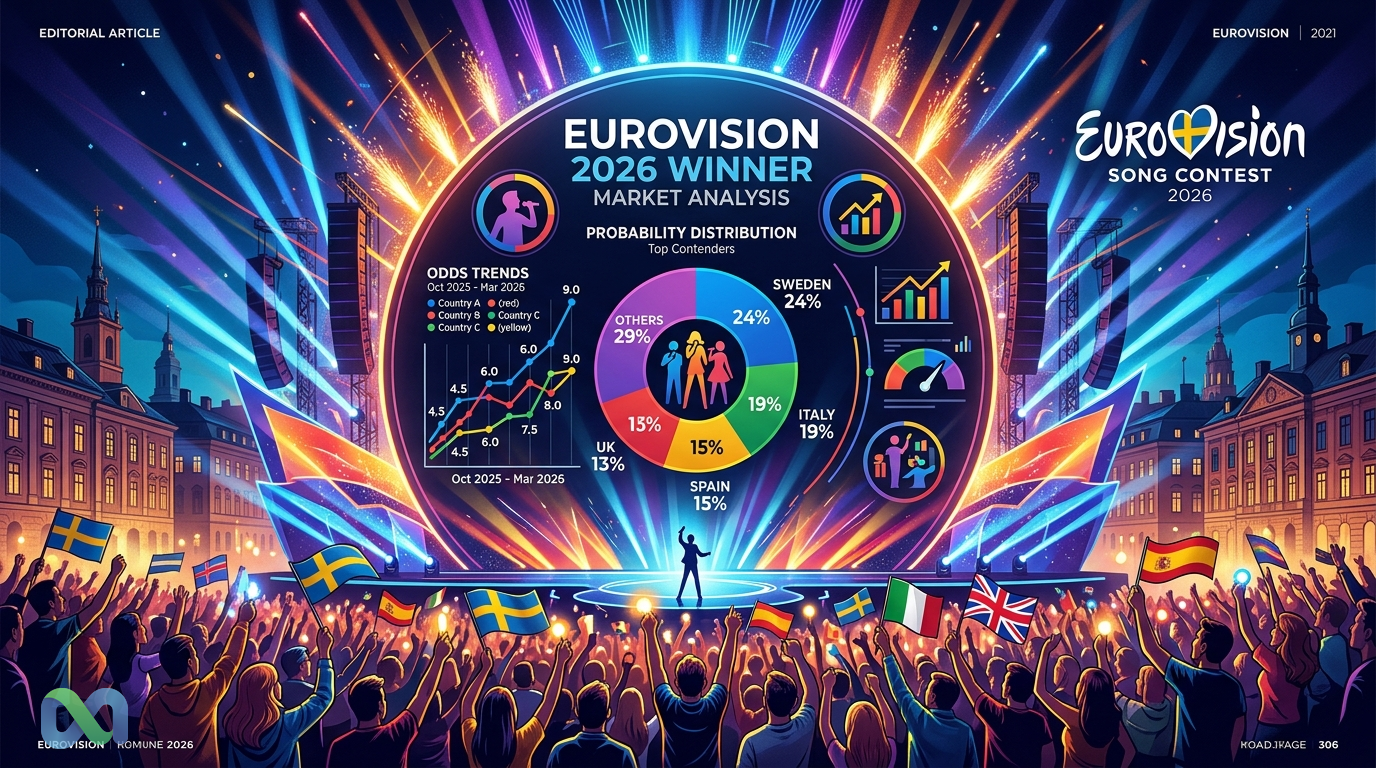
If you are searching for the Eurovision Winner 2026, the short answer is simple: no winner has been confirmed yet. Eurovision 2026 has not crowned a champion, so any answer today is a prediction, not a result. The most useful way to read this market is to separate the latest confirmed Eurovision winner from the leading 2026 favorites.
That distinction matters because search results still mix archive pages, general Eurovision hubs, and broad history lists. Readers usually want something more direct. They want to know who won most recently, who is predicted to win Eurovision 2026, and what signals actually matter before the final.
This guide does exactly that. First, it covers the latest confirmed result. Then it looks at the early Eurovision Winner 2026 prediction landscape, including what can move sentiment before the contest. Finally, it places the next edition in context by reviewing recent winners, voting dynamics, and the difference between public hype and stronger forecasting signals.
Who won the most recent Eurovision final?
The most recent confirmed Eurovision winner was Austria, which won the Eurovision Song Contest 2025 with JJ and the song Wasted Love. That is the latest official result, and it is the clearest answer for readers who are mixing up the last completed contest with the next one. Official result details are published by Eurovision and updated after each final.
Austria's victory matters for two reasons. First, it closes the book on the last completed edition and gives readers a factual baseline. Second, it reminds us how quickly the conversation shifts from confirmed results to speculative futures. The moment one final ends, attention turns to the next race and to who might become the Eurovision Winner 2026.
The winning country and song also shape expectations for the following season. Fans, bookmakers, and prediction markets often use the previous result as a mood setter, even though it does not decide the next contest. A strong winner can change genre trends, staging expectations, and the kind of entries that attract early attention.
Who is predicted to win Eurovision 2026?
Right now, any Eurovision Winner 2026 forecast should be treated as provisional. The field is not final, songs are not all released, and national selections can change the picture fast. Still, search demand clearly shows that readers want an early favorites list rather than a historical archive.
In practice, early predictions usually cluster around three types of contender. The first group includes countries with a recent track record of strong jury and televote performance. The second includes returning artists or delegations that already generate heavy fan buzz. The third includes entries that gain momentum once rehearsals reveal strong staging, clear hooks, or a broader crossover appeal.
That is why the smartest way to answer who is predicted to win Eurovision 2026 is not to lock in one name too early. It is to track the countries and artists that keep appearing near the top of expert boards, fan rankings, bookmaker lists, and any live forecast tools that emerge closer to the event. On a forecasting platform, that logic works much like other winner markets, where probability moves as new information reaches the public. If you already follow tournament-style futures, our guide to who will win the 2026 World Cup shows how fast sentiment can shift when the market absorbs fresh signals.
Current favorites
At this stage, a serious favorites list should be dynamic, not absolute. Countries such as Sweden, Italy, Ukraine, and France often attract early attention because they combine brand strength, strong selection ecosystems, and a history of competitive entries. That does not make them automatic leaders, but it does explain why they are frequently discussed first when people ask who is top to win Eurovision.
Sweden usually starts high in pre-season conversations because of its reliable production standards and deep national selection culture. Italy often carries weight because Sanremo can produce songs with broad emotional reach and jury appeal. Ukraine stays central because of its consistent Eurovision identity and strong televote connection. France becomes interesting whenever it sends an entry with strong visual direction and crossover potential.
None of those countries should be treated as a final answer yet. The real hierarchy only becomes clearer after songs are confirmed and live performances start to shape conviction. Until then, the best Eurovision Winner 2026 prediction is a watchlist rather than a verdict.
Why these acts or countries lead early
Early leaders usually stand out for reasons that are easy to explain. They may come from delegations that understand how to package a three-minute performance for both juries and televoters. They may also benefit from existing fan communities that amplify every rehearsal clip, national final rumor, and snippet release.
Another reason is signal density. Some countries simply give analysts more information earlier in the cycle. If a national final is transparent, if artists already have live footage, or if industry observers trust the delegation, confidence builds sooner. When information is sparse, the market stays softer and more reactive. That is one reason why entertainment futures can behave a bit like sports futures, where market conviction deepens only when the event structure becomes clearer. You can see a similar setup in our 2026 World Cup format explainer, where structure changes how people price outcomes.
How to evaluate Eurovision winner predictions
The best Eurovision Winner 2026 analysis does not rely on hype alone. It weighs several signals at once and asks which ones are actually predictive. A country can dominate social media chatter and still underperform with juries. Another can start quietly and surge once the full staging package is visible.
That is why a useful framework needs at least three layers. First, look at fan buzz and engagement. Second, compare odds boards, expert rankings, or prediction market sentiment when available. Third, keep a separate bucket for late-moving variables, such as running order, semifinal draw, rehearsal quality, and cross-border appeal.
Fan buzz and performance momentum
Fan buzz matters because it helps identify entries that already cut through. If a song spreads quickly on social media, performs well in reaction communities, or dominates fan polls, it has clearly captured attention. That does not guarantee victory, but it often flags entries worth watching before mainstream viewers catch up.
Performance momentum matters even more. Eurovision is a live television event, so vocals, camera work, and stage storytelling can change the race overnight. An entry that looks average on release day can jump into the top tier after one strong rehearsal. An overhyped song can fall back just as quickly if the live execution feels flat.
Odds, markets, or expert consensus
Odds and market sentiment are useful because they aggregate dispersed views into one moving probability. Bookmakers update quickly, while forecast platforms and expert boards can reveal where conviction is building. None of these sources are perfect, but they are often more informative than isolated fan enthusiasm.
The key is to use them carefully. A favorite with a short price is not guaranteed to become the Eurovision Winner 2026. It only means the market currently sees that outcome as more likely than the alternatives. If you want a broader primer on how live probability pricing works, our article on automated market makers is a useful companion.
What can still change before the final
A lot can change before the grand final. The running order can alter how memorable an entry feels. Rehearsal footage can reveal whether the concept works on a big stage. Vocal consistency can improve or collapse. Media narratives can also shift when one performance suddenly becomes the story of the week.
That is why readers should resist overconfidence. The Eurovision Winner 2026 is a moving target until the final votes are counted. Smart forecasting means updating your view as evidence changes, not defending an early guess long after the signal has moved.
Past Eurovision winners by year
Historical context helps, but it should support the prediction angle rather than replace it. Many search results focus almost entirely on the archive. That is useful for background, yet it does not fully answer modern search intent around the next winner.
A recent snapshot is more helpful. The latest edition was won by Austria in 2025. Before that, Switzerland won in 2024 with Nemo and The Code. Sweden won in 2023 with Loreen and Tattoo. Ukraine won in 2022 with Kalush Orchestra and Stefania. Italy won in 2021 with Måneskin and Zitti e buoni. For complete historical lists and official archives, readers can also check Wikipedia's Eurovision winners page.
This shortlist shows a useful pattern. Recent winners usually combine a memorable song, a clear performance identity, and enough crossover appeal to connect with both juries and televoters. That matters for 2026 because the eventual winner is likely to show the same balance rather than relying on one voting bloc alone.
Recent winners snapshot
Recent Eurovision winners have not all looked the same. Some won through exceptional vocals and jury strength. Others surged because they created a broad emotional moment that translated across borders. The lesson is simple: the winning path can differ, but the entry still needs a complete package.
For anyone trying to project the Eurovision Winner 2026, history is most useful when it helps you spot repeatable traits. Look for songs that are easy to remember after one listen, performances that communicate instantly on television, and entries that feel credible with both expert juries and mass audiences.
Notable repeat winners and trends
Certain countries return to the top conversation more often because they have robust song pipelines, strong broadcaster systems, or a polished understanding of Eurovision staging. Sweden is the obvious example, but it is not alone. Italy, Ukraine, and a few other delegations have built reputations for consistency.
That consistency does not guarantee the Eurovision Winner 2026 will come from one of those countries. It does mean they deserve attention earlier than countries with less stable competitive records. In forecasting terms, they start with a stronger prior, even if the final outcome still depends on the specific song and stage execution.
Eurovision winner FAQ
Who got 0 votes in Eurovision?
Several acts in Eurovision history have finished with zero points under older or newer voting systems. The exact list depends on the year and the scoring format in place at the time. For a current article focused on the Eurovision Winner 2026, the important point is that weak staging, limited diaspora support, and low jury appeal can all combine into a score collapse.
How is the winner decided?
The Eurovision winner is decided through a combined voting system that gives weight to national juries and the public televote. Each country awards points separately through both channels, and the highest combined total wins the contest. Because the system blends expert and public preferences, the strongest contenders are usually the ones that can travel well across both audiences.
Who is top to win Eurovision?
Before the final lineup is locked, the top contender is best described as the current market or consensus favorite rather than a confirmed leader. That favorite can change several times before the final. A useful answer should always mention that the race is live and that the Eurovision Winner 2026 remains unconfirmed.
Final take on the Eurovision Winner 2026
There is no confirmed Eurovision Winner 2026 yet, so any article claiming otherwise is getting ahead of the contest. The latest official champion is Austria, which won Eurovision 2025 with JJ and Wasted Love. For 2026, the smarter question is not only who leads today, but why they lead and whether those signals are strong enough to survive rehearsals, jury scrutiny, and the televote.
That is the lens worth keeping. Follow the latest song releases, national selections, rehearsal reports, and live odds movement as the contest approaches. As those signals sharpen, the early favorites list will become a more credible forecast of who could actually become the Eurovision Winner 2026.
