


Who Will Win the 2026 World Cup? Favorites and Odds
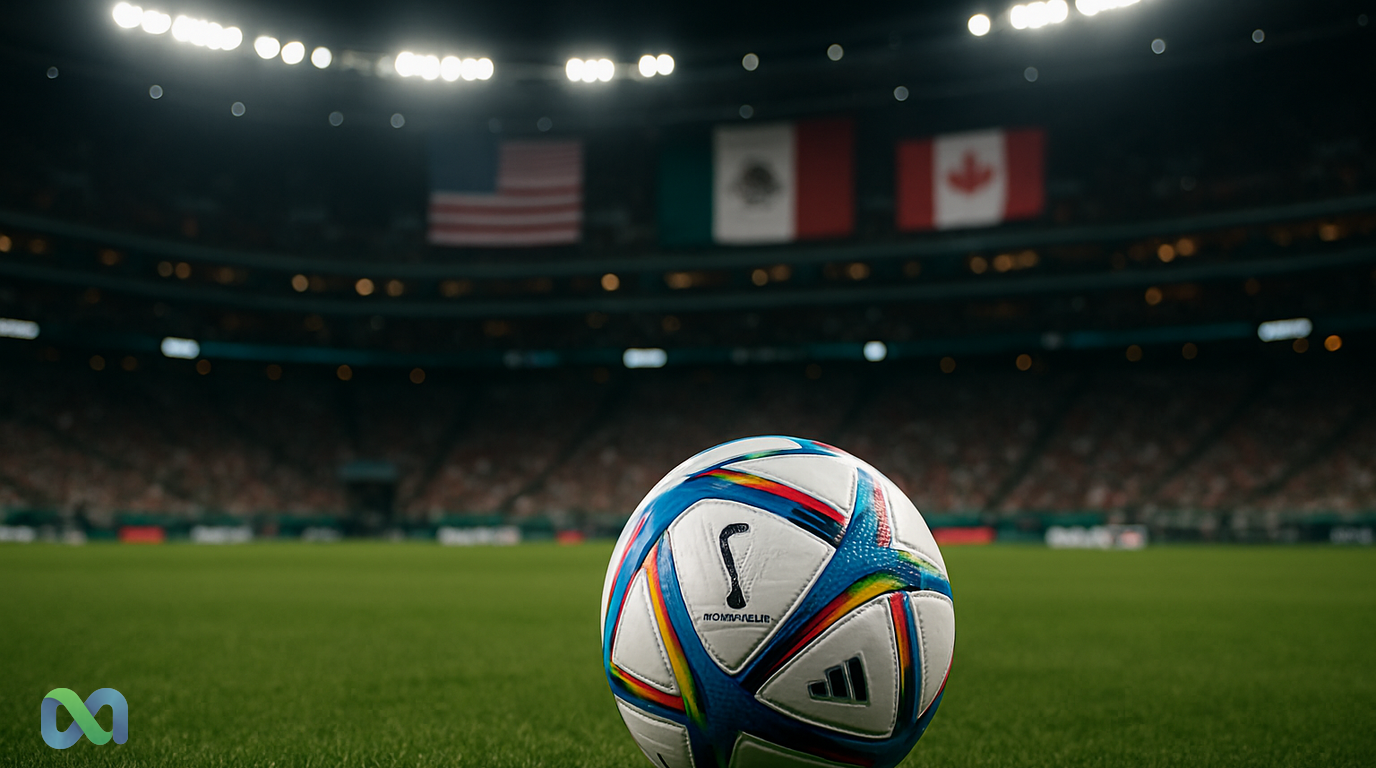
The 2026 World Cup is still a long way off. Even so, the market already points to favorites, dark horses, and the most likely scenarios. When someone asks who will win the 2026 World Cup, the honest answer is simple: nobody knows yet. But it is already possible to measure squad quality, recent form, depth, and consistency. In this guide, you will see which national teams start ahead, what could change before the tournament, and how to analyze this race with more discipline.
The core idea is straightforward. The World Cup almost never rewards only the most talented team. The champion needs to combine depth, organization, fitness, game management, and the ability to deliver under pressure. That is why looking only at star power or tradition can be misleading. A better approach is to combine recent performance, squad balance, and adaptation to the tournament format.
What matters most in the title race
The team that wins the 2026 FIFA World Cup will likely bring together five traits. It needs a strong squad, a reliable defense, a clear tactical plan, decisive players, and momentum in knockout matches. Having stars helps, but that alone is never enough. World Cup winners usually arrive with balance across the pitch. France, Argentina, England, Brazil, and Spain rank near the top for exactly that reason. Germany and Portugal also belong in the conversation, as long as they show more consistency before the tournament.
Another major factor is how each national team manages its cycle. Coaches who can test new options without losing structure usually arrive better prepared. Teams that rely too much on one superstar are also more vulnerable. Injuries, suspensions, and dips in form can change everything in a short tournament. That is why the market tends to value teams with multiple solutions and trustworthy depth.
It is also worth looking at the tournament context. The 2026 World Cup will be played across the United States, Mexico, and Canada, with different climates, long travel distances, and a demanding schedule. That detail could matter more than it seems. Squads with international experience and strong physical preparation should handle the marathon better.
France remains one of the leading favorites
France enters the 2026 FIFA World Cup odds discussion with good reason. The squad continues to produce elite players in every line, from defense to attack. Just as important, France has recent tournament pedigree. A team that reaches late stages repeatedly tends to earn respect in both betting markets and prediction markets.
The French case also stands out because of squad depth. Even when key names are missing, the team still has high-level replacements. That reduces volatility over a long cycle and makes France one of the safest picks among the favorites for World Cup 2026. The open question is whether the group will maintain the same hunger and tactical sharpness by the time the tournament begins.
Argentina still deserves serious respect
Argentina will arrive with extra attention after its recent success on the biggest stage. A team that knows how to handle pressure already holds an edge in a World Cup. The challenge is obvious: sustaining the same competitive level through the entire cycle. That is never automatic.
Even so, Argentina keeps several strengths that matter in this kind of event. The team is tactically organized, emotionally tough, and comfortable in tight matches. In a knockout format, that profile matters as much as raw talent. If the next generation integrates well and the core remains competitive, Argentina should stay among the favorites in the 2026 World Cup winner market.
England has talent, but needs a stronger big-game edge
England almost always appears near the top of World Cup odds boards because the talent level is undeniable. The squad is deep, the domestic league is intense, and the team usually arrives with options in every area. On paper, England has what it takes to win the 2026 World Cup.
The real issue is execution in defining moments. In recent tournaments, England has often looked strong until it meets an elite opponent under maximum pressure. To change that perception, the team needs to show more control, more ruthlessness, and a clearer tactical identity against top-tier competition. If that step happens, England could become one of the strongest bets among the World Cup 2026 favorites.
Brazil always carries upside, but also more volatility
Brazil never enters a World Cup cycle without title expectations. The talent pool remains enormous, and the country keeps producing attackers who can change a match in seconds. That alone guarantees a place in any serious discussion about who will win the 2026 World Cup.
At the same time, Brazil has shown more volatility than some of its rivals. Tactical instability, uneven balance between defense and attack, and heavy reliance on individual quality have all created problems in recent tournaments. If Brazil finds a more stable structure and arrives with a healthier collective identity, it can absolutely win the 2026 FIFA World Cup. But the margin for error is smaller than the name alone suggests.
Spain and Portugal could outperform expectations
Spain deserves attention because of its technical level and growing tactical maturity. When Spain controls possession well and manages transitions with authority, it becomes one of the hardest teams to play against. The question is whether that control will translate into enough goal threat against elite defenses.
Portugal, meanwhile, offers a different profile. The squad has enough talent to compete with anyone, but it still needs to prove it can sustain a collective standard over several big matches. If Portugal becomes more balanced and less dependent on isolated moments, it could become a very live contender in the 2026 World Cup odds market.
Dark horses can reshape the market quickly
Every World Cup cycle creates at least one surprise team. A so-called dark horse usually combines organization, strong transitions, defensive discipline, and one or two decisive players. These teams may not start as the top favorites for World Cup 2026, but they can change the bracket once the knockout phase begins.
That is why it helps to monitor countries such as the Netherlands, Croatia, Uruguay, or even a younger team that grows rapidly during qualifying. In a short event, well-drilled teams with clear roles can overperform. The market notices this quickly, especially when a side shows consistency against strong opposition.
How to read 2026 World Cup odds with more discipline
Odds should not be read as certainty. They are a live estimate of probability based on information available at a given moment. Injuries, coaching changes, qualifying results, and squad development can all move the market. For that reason, the best way to evaluate the 2026 World Cup winner market is to track direction, not just a single price.
It also helps to separate popularity from true strength. Some national teams attract more public money because of history or fan base, which can distort perception. A more disciplined view compares roster quality, tactical clarity, resilience in knockout matches, and the ability to adapt to different opponents. That method usually gives a cleaner read than hype alone.
For readers who want a broader framework, our guide to prediction markets explains how probability-based markets work. If you are newer to price formation, the article on market makers is also a useful starting point. And if you want to understand the model behind dynamic pricing, this breakdown of automated market makers adds more context.
So, who will win the 2026 World Cup?
Right now, France, Argentina, England, Brazil, and Spain look like the strongest answers to the question of who will win the 2026 World Cup. Portugal and Germany remain close enough to matter, while a dark horse could still emerge as the cycle develops. The smartest conclusion today is not to treat any one team as a lock. It is to recognize which teams combine depth, structure, form, and late-stage experience.
That is what makes the 2026 FIFA World Cup odds market so interesting. It is not only a debate about talent. It is a debate about preparation, balance, and how pressure changes performance. The closer the tournament gets, the more the market will separate real contenders from famous names living on reputation alone.
If you want to follow probability shifts more closely, keep an eye on how prediction markets evolve over time and compare them with traditional odds. The best edge usually comes from understanding why the market is moving, not simply noticing that it moved.
