


Germany at the 2026 World Cup
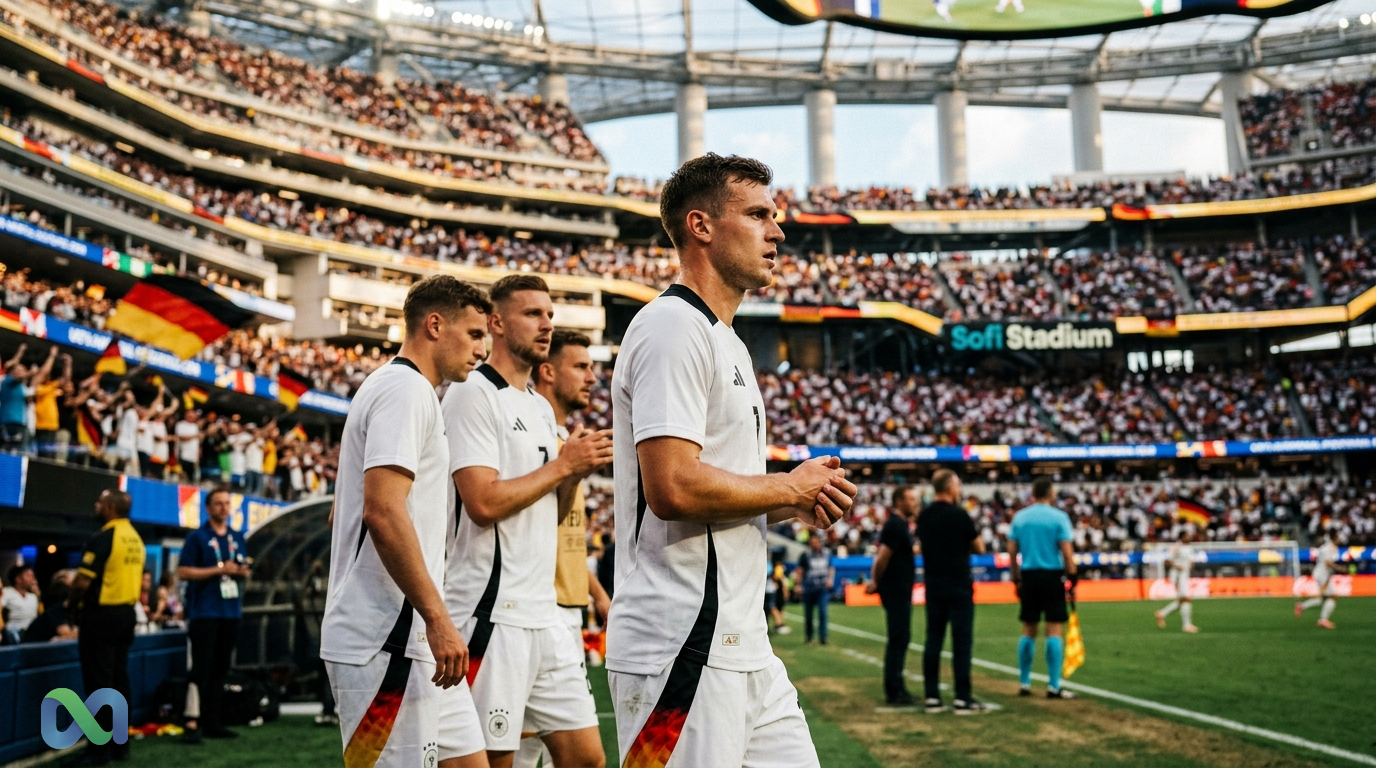
Germany enters the 2026 World Cup with tradition, pressure, and top-end talent. Even so, the market looks less at the shirt and more at execution. That is the core of any serious read on Germany at the 2026 World Cup. The squad has quality. The real question is whether it can deliver consistently against elite opponents.
Across recent cycles, Germany has mixed strong stretches with sharp drops in level. That is why the debate is not only about upside. The real issue is whether the team can turn technical depth into a stable tournament run. In a short competition, that difference separates true contenders from teams that are only respected on reputation.
In this guide, you will see where Germany's strengths are, which risks could limit the campaign, and how to think about the team for 2026 without drifting into either hype or excessive skepticism. For a broader tournament view, start with our 2026 World Cup favorites odds. If you are new to the platform, you can also read Macro Markets: The World Is Tradable to understand how market-based probability analysis works.
Why Germany remains among the relevant national teams
Germany stays in the conversation because few national teams combine this much tradition with such a strong club and development base. That does not guarantee a title. However, it keeps the team at a high competitive floor. At a World Cup, that floor matters.
Germany's shirt also still carries weight in high-pressure matches. The historical profile helps the team enter major games with less emotional noise. That does not win matches on its own. Still, it reduces the chance of collapse in tense moments.
Another factor is renewal capacity. German football continues to produce players for almost every line of the pitch. As a result, the national team usually arrives with options to adjust system, tempo, and game profile during the tournament.
What the Germany squad offers for 2026
The Germany squad for the 2026 World Cup should blend youth, experience, and depth. That mix matters in a long tournament. Younger players raise the intensity level. More mature players improve decision-making under pressure.
In midfield, Germany usually offers good ball circulation and spatial awareness. That helps the team control phases of the match and sustain territory. When the structure works, the side can dictate rhythm instead of reacting to it.
In attack, Germany often creates through movement and combination play rather than depending on one isolated star. That makes the team harder to defend when confidence is high. On the other hand, it also means attacking output can fall quickly if the collective structure breaks down.
Defensively, the issue is less about raw talent and more about balance. Germany has enough quality to defend well, but not always the same stability against transitions and fast counters. In a World Cup knockout match, those details can decide everything.
The biggest strengths behind Germany World Cup 2026 odds
One reason analysts keep tracking Germany World Cup 2026 odds is structural strength. The team usually arrives with a strong tactical base, good technical level, and players accustomed to major stages. Markets value that profile because it reduces uncertainty.
Another strength is adaptability. Germany can often change formation or game plan without losing all of its identity. That flexibility matters in a World Cup, where opponents vary widely from group stage to knockout rounds.
There is also the possibility of growth inside the tournament. Some teams peak early and fade. Germany has historically been more dangerous when it improves round by round. If that pattern returns, Germany 2026 World Cup odds could tighten quickly once the tournament starts.
The main risks around Germany at the 2026 World Cup
The first risk is inconsistency. Germany can produce one excellent performance and then struggle in the next match. In a tournament format, that volatility is expensive because there is little time to recover from one bad night.
The second risk is efficiency in the final third. Territorial control does not always become clean chances, and clean chances do not always become goals. When that gap opens, pressure rises quickly and the margin for error shrinks.
There is also the issue of defending against opponents that are more direct and physically aggressive. Germany tends to look more comfortable when matches follow a technical rhythm. Against teams that force chaos, the game can become harder to control.
How the market may price Germany in 2026
The market will probably place Germany below the very top tier but still inside the contender range. That position makes sense. The team has enough quality to beat almost anyone, but not enough certainty to justify a favorite label on name alone.
In practice, Germany 2026 World Cup odds should react heavily to two things: draw quality and early performances. A manageable group and one convincing win could improve the price quickly. A shaky start would have the opposite effect.
That is why this is a team to evaluate dynamically, not only before kickoff. For broader context on the title race, revisit 2026 World Cup favorites odds.
Germany squad 2026: what to watch before the tournament
If you are monitoring the Germany squad 2026 picture, focus on role clarity more than famous names. The team does not only need talent. It needs a working structure, especially in midfield balance and defensive protection.
It is also worth watching how the coaching staff defines the attacking setup. Germany becomes far more dangerous when movements are coordinated and the front line attacks space with conviction. When that timing disappears, possession can become sterile.
Finally, watch how the team performs in high-level tests before the tournament. Friendly matches do not decide anything, but they do show whether the collective mechanisms are improving or staying fragile.
Final verdict on Germany at the 2026 World Cup
Germany deserves respect heading into 2026, but respect is not the same as trust. The squad has enough quality to go deep and enough tradition to stay relevant in any bracket. Still, the campaign will depend on consistency, balance, and execution against elite opponents.
That is the cleanest way to read Germany at the 2026 World Cup. The ceiling is real. The risks are real too. For market participants, the edge will be in spotting whether Germany is becoming more stable before the crowd fully prices it in.
