


2026 World Cup Favorites: Who Will Win According to Odds and Markets
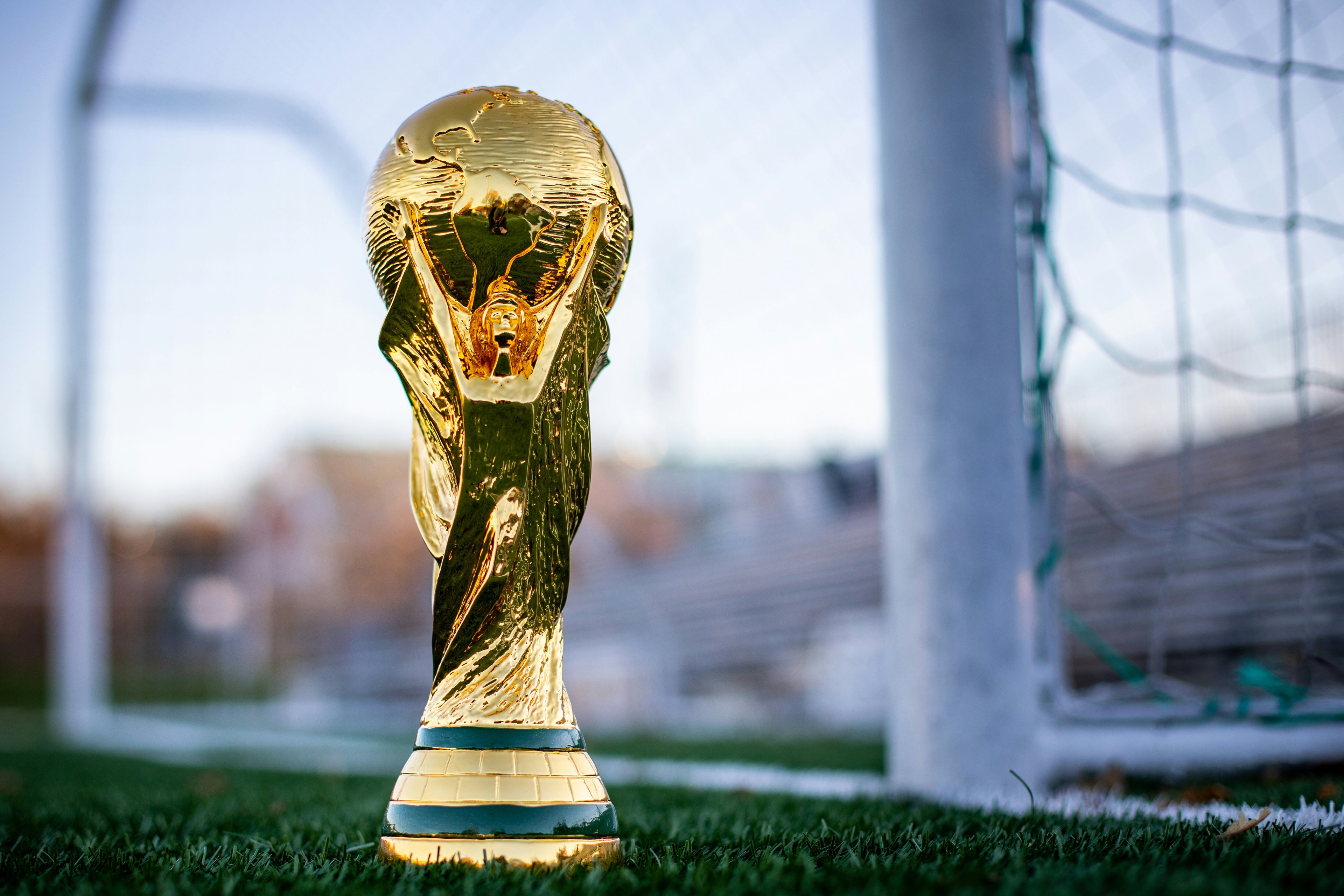
The 2026 World Cup is shaping up to be the most competitive in history. For the first time, 48 nations will compete for the trophy across three countries: the United States, Mexico, and Canada. And the world is already trading on who will be crowned champion.
More than $613 million has been traded on Polymarket on the 2026 World Cup winner. This is the largest sports market ever created on a prediction market platform. Spain leads among 2026 World Cup favorites with roughly 18% probability. Brazil, meanwhile, sits as the seventh-ranked contender with just 5 to 6%.
But what do these numbers really mean? And where might the market consensus on 2026 World Cup favorites be wrong?
In this article, we cross-reference data from prediction markets (Polymarket, Kalshi), Opta statistical models, and bookmakers. We break down who leads, where value asymmetries exist, and what the data says about Brazil's chances.
What Prediction Markets Say About the 2026 Champion
Prediction markets have become the most reliable source for identifying 2026 World Cup favorites and measuring expectations about future events. Unlike punditry or polls, they reflect the consensus of thousands of traders putting real capital behind their analysis.
Polymarket: $613 Million Traded and Counting
The "Who will win the 2026 FIFA World Cup?" market on Polymarket has surpassed $613 million in total volume. This figure is not just a record for football. It is the largest sports market in prediction market history.
Volume matters for a simple reason. The more capital flows in, the more probabilities adjust to real information. Traders with weak analysis lose money. Traders with strong analysis win. The result is a system that rewards those who are right, not those who are loudest.
As of April 2026, Spain leads at roughly 18% probability. France follows at 15%. England sits at 11%, followed by Argentina (9%) and Germany (8%). These numbers shift in real time as new information reaches the market.
How to Read Prediction Market Odds vs. Traditional Bookmakers
There is a key difference between prediction market probabilities and bookmaker odds. At bookmakers, prices include a profit margin (the "vig" or "overround"). This means implied probabilities add up to more than 100%.
On prediction markets like Polymarket, that does not happen. Probabilities reflect the true consensus of traders. If Spain is at 18%, it is because the collective market believes Spain has an 18% real chance of winning. There is no hidden margin.
This difference makes prediction markets more useful for analysis. They show real probabilities without distortion. For anyone who wants to understand each team's actual chances, prediction markets are the most accurate source available.
Where Prediction Markets and Bookmakers Diverge
The biggest divergences appear among mid-tier teams. Bookmakers tend to undervalue teams like Japan and Morocco. Prediction markets, on the other hand, price these squads with slightly higher probabilities.
This suggests that informed traders see more potential in these teams than the general public does. Divergences like these represent possible value asymmetries for those who know how to interpret them.
There are also divergences between Opta's statistical model and the markets. Opta gives less weight to subjective factors like team morale and crowd pressure. Prediction markets capture these factors because traders factor them into their analysis.
Ranking the Favorites: Odds Compared
The table below cross-references data from three sources to rank the 2026 World Cup favorites: Polymarket, Opta's statistical model, and the bookmaker average. Each source uses different methods, but the overall trends converge.
Top 10 Teams by Probability
| Team | Polymarket | Opta | Bookmakers (avg.) |
|---|---|---|---|
| Spain | 18% | 15.8% | 17% |
| France | 15% | 14.2% | 15% |
| England | 11% | 10.5% | 11% |
| Argentina | 9% | 8.8% | 9% |
| Germany | 8% | 7.5% | 8% |
| Portugal | 6% | 5.2% | 6% |
| Brazil | 6% | 5.6% | 5% |
| Netherlands | 4% | 3.8% | 4% |
| Italy | 3% | 2.9% | 3% |
| Belgium | 2% | 2.1% | 2% |
Among the 2026 World Cup favorites, the top ten teams account for roughly 82% of total probability. That leaves 18% spread across the remaining 38 squads. The expanded 48-team format distributes probability more widely than in previous editions.
Spain (17–18%): The Market's Top Pick
Spain is the clear favorite for the 2026 World Cup. And the data backs this up. The team won Euro 2024 with dominant football. They hold an unbeaten run of more than 20 matches. And they field the most talented generation since the 2008–2012 cycle.
Lamine Yamal, at just 18 years old, has already established himself as one of the best players in the world. Pedri controls the midfield with precision. Rodri provides tactical balance and defensive cover. Manager Luis de la Fuente has built a system that combines possession with speed in transition.
The market consensus reflects all of this. Across every source, Spain appears between 15% and 18% probability. The convergence across prediction markets, models, and bookmakers reinforces Spain's position as the leader.
France (14–16%): The Deepest Squad
France remains one of the top two favorites. The French squad is the deepest in the tournament. Mbappé leads the attack, but the team does not rely solely on him. Tchouaméni, Camavinga, and Saliba form a solid foundation. On the bench, players like Thuram and Kolo Muani provide tactical options.
What the data shows is that France has consistency. They reached the final in 2022. They were semifinalists at Euro 2024. And Opta's model places them at 14.2%, reflecting this track record in major tournaments.
The key question is their performance in finals and knockout games, where France has been inconsistent in recent tournaments. Against Argentina in the 2022 final, they were two goals away from losing. The reliance on individual moments from Mbappé, rather than consistent collective play, concerns analysts.
Argentina (8–10%): The Defending Champions
Among the 2026 World Cup favorites, Lionel Messi's Argentina arrives as reigning world champions and two-time Copa América winners. But the markets place them only fourth among the favorites.
The reason is straightforward. Messi will be 39 years old when the World Cup begins. The team's dependence on its greatest player is a risk that traders price in. Without Messi on the pitch, Argentina loses a significant part of its creativity and on-field leadership.
However, manager Scaloni has shown the ability to adapt the team. Players like Julián Álvarez and Enzo Fernández have matured since 2022. Mac Allister has gained experience at Liverpool. If Messi is in good physical condition, Argentina remains a genuine contender. The experience of winning a World Cup is an asset that no statistical model fully captures.
England and Germany: European Powerhouses
England (11%) and Germany (8%) round out the top five. England has accumulated recent finals and semifinals at Euros and World Cups but is still chasing its first title since 1966. The squad led by Bellingham and Saka has elite individual quality, but consistency in decisive moments is still lacking.
Germany, meanwhile, went through a renewal following their early elimination at Euro 2024 as hosts. Musiala and Wirtz lead a promising generation that combines technical skill with intensity. Playing part of the World Cup in North America, away from European pressure, could benefit the team. Opta's model rates Germany at 7.5%, slightly below the prediction market.
Brazil at the 2026 World Cup: What the Data Says
For any football fan analyzing the 2026 World Cup favorites, Brazil's numbers may come as a surprise. Brazil ranks as only the seventh favorite across most markets. With probability between 5% and 6%, the team sits behind six European nations. Understanding why requires looking at the data objectively.
Why Brazil Is Only the 7th Favorite
The data tells a clear story. Brazil has not reached a World Cup semifinal since 2014, when they were the hosts. In the last edition, in 2022, they were eliminated by Croatia in the quarterfinals on penalties. The team has faced coaching instability, with multiple manager changes in recent years.
Opta's model assigns Brazil a 5.6% probability. This number reflects not just the current squad but the recent track record in knockout tournaments. In the last three World Cups (2014, 2018, 2022), Brazil was eliminated in the quarterfinals twice and suffered the infamous 7–1 in the other.
For a five-time world champion, these results weigh heavily in trader analysis. Brazil holds five titles in history, more than any other nation. But distant past results carry limited weight in current probability assessments.
Group C: Morocco as the First Real Challenge
The draw placed Brazil in Group C alongside Morocco, Haiti, and Scotland. Qualification from the group stage seems likely. But Morocco, a semifinalist in 2022, will be the first genuine test.
The Moroccan squad is stronger than in 2022. Players like Hakimi, Amrabat, and Ezzalzouli play at the biggest clubs in Europe. Morocco's defense has been one of the toughest to break down in recent years.
The Brazil vs. Morocco match could determine who advances as group winner. And group position matters: the winner tends to face lower-ranked opponents in subsequent rounds.
Vini Jr., Estêvão, and the Individual Talent Factor
If anything can shift Brazil's odds, it is individual talent. Vini Jr. is a recurring Ballon d'Or finalist and capable of deciding games on his own. In big moments, few players in the world have the same impact.
Estêvão, the Palmeiras prodigy now shining at Chelsea, brings pace and unpredictability. Rodrygo, Raphinha, and Endrick complete an attack with elite offensive potential. On paper, this is one of the best attacks in the tournament.
The issue, according to the data, is not the attack. It is collective balance, particularly in midfield and defense. World Cups are won by teams that do not concede goals, not just by those that score plenty.
The Scenario Where Brazil Surprises
For Brazil to move from 5–6% to a genuine contender, several factors need to align. The coach needs to find a tactical system that maximizes offensive talent without compromising the defense. The midfield needs a reliable organizer who connects defense and attack.
The good news is that prediction markets adjust probabilities in real time. A strong run of results before the World Cup could lift Brazil's odds rapidly. If Brazil wins their warm-up matches and shows tactical improvement, traders will react.
In short, the individual talent is there. What is missing is the collective project. If that comes together, Brazil has the quality to beat any team in a knockout match.
Dark Horses: Teams Undervalued by the Market
The list of 2026 World Cup favorites does not tell the full story. Every World Cup delivers surprises. In 2022, Morocco reached the semifinal as an underdog. In 2018, Croatia made the final. Identifying undervalued teams is where prediction markets become valuable analytical tools.
Japan: Asia's Silent Powerhouse
Japan beat Spain and Germany in the group stage in 2022. Since then, the team has only gotten stronger. Players like Kubo, Mitoma, and Kamada play in major European leagues and have gained top-level experience.
Opta's model places Japan among the 12 teams with the highest title probability. The prediction market, however, still prices them below 2%. This divergence suggests a possible value asymmetry.
Japan combines tactical discipline, pace, and squad depth. In a 48-team format with more matches and more fatigue, these qualities become even more relevant. Japan does not depend on one or two stars. The collective is the differentiator.
Morocco: 2022 Semifinalists with a Stronger Squad
Morocco made history in 2022 by becoming the first African nation to reach a World Cup semifinal. They eliminated Spain and Portugal along the way. The difference now is that the squad has evolved further.
Morocco's defense, led by Hakimi, has been one of the best in the world over the past two years. The attack has gained options with players like Ezzalzouli and Diaz, who were not available in 2022. The market prices Morocco at around 1.5%, which may be too low for a team with this recent pedigree.
The psychological factor also counts. Morocco already knows what it takes to compete in the advanced stages of a World Cup. That experience has real value that numerical models do not always capture.
USA: The Home Advantage Factor
The United States are co-hosts of the 2026 World Cup. Historically, host nations outperform expectations at World Cups. South Korea reached the semifinals in 2002. Russia made the quarterfinals in 2018. South Africa competed creditably in 2010.
The American squad is the most talented in its history. Pulisic, McKennie, Reyna, and Musah play in Europe at top clubs. The advantage of home support, combined with the fatigue opponents face from travel and time zone changes, creates favorable conditions.
The market places the USA at around 3%. For a co-host with this squad and matches on home soil, there may be room for upward movement.
Norway: The Haaland–Ødegaard Effect
Norway depends on two world-class players: Erling Haaland and Martin Ødegaard. When both are fit and firing, the team can compete with anyone in the world. Haaland is the greatest goal scorer of his generation, and Ødegaard is one of the best midfielders in football today.
The problem is squad depth beyond those two names. The market prices Norway below 1%, reflecting this limitation. But at World Cups, decisive players can carry entire teams.
If Norway advances from the group stage, every knockout match becomes a real opportunity. One moment from Haaland can change a game, and one game can change the story of a World Cup.
The 48-Team Format Changes Everything
The 2026 World Cup will be the first with 48 teams. This new format reshapes the list of 2026 World Cup favorites in ways many analysts have not fully considered.
104 Matches and Longer Paths to the Title
The previous format had 64 matches spread over a month. The 2026 World Cup will feature 104 matches. To win the title, a team will need to win up to 8 games (3 in the group stage + 5 in the knockout rounds). That is more than in any previous edition.
More matches mean more physical wear for everyone. Teams with deep squads have a clear advantage. France, Spain, and England, with more quality options on the bench, can manage physical load better throughout the tournament.
Teams that rely on a small group of starters face additional risk. Injuries and suspensions have greater impact when there are no substitutes of similar quality.
More Matches, More Upsets: What Historical Data Shows
Data from previous World Cups reveals a clear pattern. The more matches in a knockout tournament, the greater the chance of unexpected results. In a single match, the gap between favorite and underdog can be minimal.
The 2022 World Cup illustrates this well. Saudi Arabia beat Argentina in the group stage. Japan beat Spain and Germany. Morocco eliminated Spain and Portugal. All of these results were improbable according to pre-tournament odds.
In 104 matches, the cumulative probability of upsets increases significantly. The question is not whether there will be surprises, but how many.
How the Format Affects the Favorites
The 48-team format has a mathematical effect on probabilities. With more teams and more matches, tournament variance increases. This means the favorites have lower probabilities than in previous editions.
That is why Spain, even as the clear favorite, has only 18% probability. In a 32-team World Cup, they would likely be above 22%. The expanded format distributes probability among more contenders.
For anyone analyzing 2026 World Cup favorites on prediction markets, this is important context. Seemingly low probabilities (like Brazil's 5–6%) do not mean the team is weak. They mean the tournament has more variance and more uncertainty.
For traders, this creates opportunities. When variance is high, pricing asymmetries appear more frequently. Teams that the market underestimates have more chances of surprising in formats with more matches.
How to Use Prediction Markets to Analyze the World Cup
When analyzing 2026 World Cup favorites, prediction markets are analytical tools, not entertainment. Understanding how they work allows you to interpret probabilities more accurately and identify where consensus might be wrong.
What Are Prediction Markets and How Do They Work
A prediction market allows traders to buy and sell contracts on future events. If you believe Spain will win, you can buy a contract for roughly 18 cents. If Spain wins, the contract pays $1. If they lose, it is worth zero.
The contract price reflects the market's estimated probability. Thousands of traders analyze data, form their views, and trade. The result is a dynamic consensus that updates in real time with every new piece of information.
Platforms like Polymarket and Kalshi operate this way. The volume traded ($613 million for the 2026 World Cup) indicates these are highly informed probabilities, based on real analysis from thousands of participants.
Advantages Over Traditional Bookmakers
Prediction markets differ from bookmakers in fundamental ways. At bookmakers, the house sets prices to ensure its own profit. On prediction markets, prices are set by supply and demand from traders.
This results in three clear advantages. First, probabilities are more accurate because they do not include the house edge. Second, prices adjust more quickly to new information. Third, trading volume serves as an indicator of market confidence.
The greater the volume, the more informed the probabilities. $613 million in trades on the 2026 World Cup means thousands of analysts and traders contributed to these numbers. That is the difference between a guess and a data-driven collective assessment.
How to Interpret Odds to Make Informed Decisions
Interpreting probabilities requires context. A team with 5% probability is not irrelevant. It means that if the World Cup were played 20 times, that team would win once.
The key is identifying asymmetries. If your analysis suggests Brazil has an 8% chance but the market prices them at 5%, a divergence exists. That divergence may represent an opportunity for those who trust their analysis.
Prediction markets also allow you to adjust your views over time. As the World Cup approaches and new information emerges (injuries, player form, friendly results), probabilities change. Tracking these changes is as valuable as the initial analysis.
Market probabilities are not absolute predictions. They are the best available consensus at a given moment. Those who identify errors in that consensus, before the market corrects, capture value.
Frequently Asked Questions
Who is the favorite to win the 2026 World Cup?
Spain leads the list of 2026 World Cup favorites with approximately 18% probability on prediction markets. This reflects their Euro 2024 triumph, an unbeaten run of more than 20 matches, and the generation led by Yamal and Pedri. France is second at 15%, followed by England (11%), Argentina (9%), and Germany (8%).
Can Brazil win the 2026 World Cup?
Among the 2026 World Cup favorites, Brazil holds between 5% and 6% probability according to prediction markets and Opta's model. This places them as the seventh favorite. Individual talent (Vini Jr., Estêvão, Rodrygo) is elite, but collective balance needs improvement. If the team resolves its tactical issues, odds could rise quickly.
How does the 48-team format work at the 2026 World Cup?
The 2026 World Cup will have 12 groups of 4 teams. The top two from each group advance, along with the 8 best third-placed teams, forming a 32-team knockout bracket. There will be 104 matches in total. To win the title, a team needs to win up to 8 games, which increases both fatigue and tournament variance.
Can Argentina defend their title?
Argentina has around 9% probability. The main question mark is Messi's physical condition, as he will be 39 years old. However, the experience of the squad that won in 2022 is a valuable asset. If Messi is fit and the collective holds together, Argentina is a genuine title contender.
Conclusion
In the analysis of 2026 World Cup favorites, prediction markets point to Spain at roughly 18% probability. But a 48-team World Cup is more unpredictable than any previous edition. The expanded format creates more variance, more matches, and more opportunities for surprises.
Brazil, at 5–6% probability, has the individual talent to surprise. Vini Jr. and Estêvão can decide games. But collective balance must improve for the data to support a genuine title bid.
For those studying the 2026 World Cup favorites, the biggest opportunities lie in asymmetries. Teams like Japan and Morocco may be undervalued by the market. Identifying these divergences is where data-driven analysis becomes more valuable than any pundit's guess.
Quantify your view on who will win the 2026 World Cup on Macro Markets prediction markets. Each probability reflects the collective wisdom of thousands of traders, and your analysis could be the edge.
The probabilities presented in this article are dynamic and reflect market data collected in April 2026. Prediction markets involve risk. Probabilities do not guarantee outcomes. Analyze the data and make informed decisions.
