


2026 World Cup Format: Groups, Knockout Stage and Matches
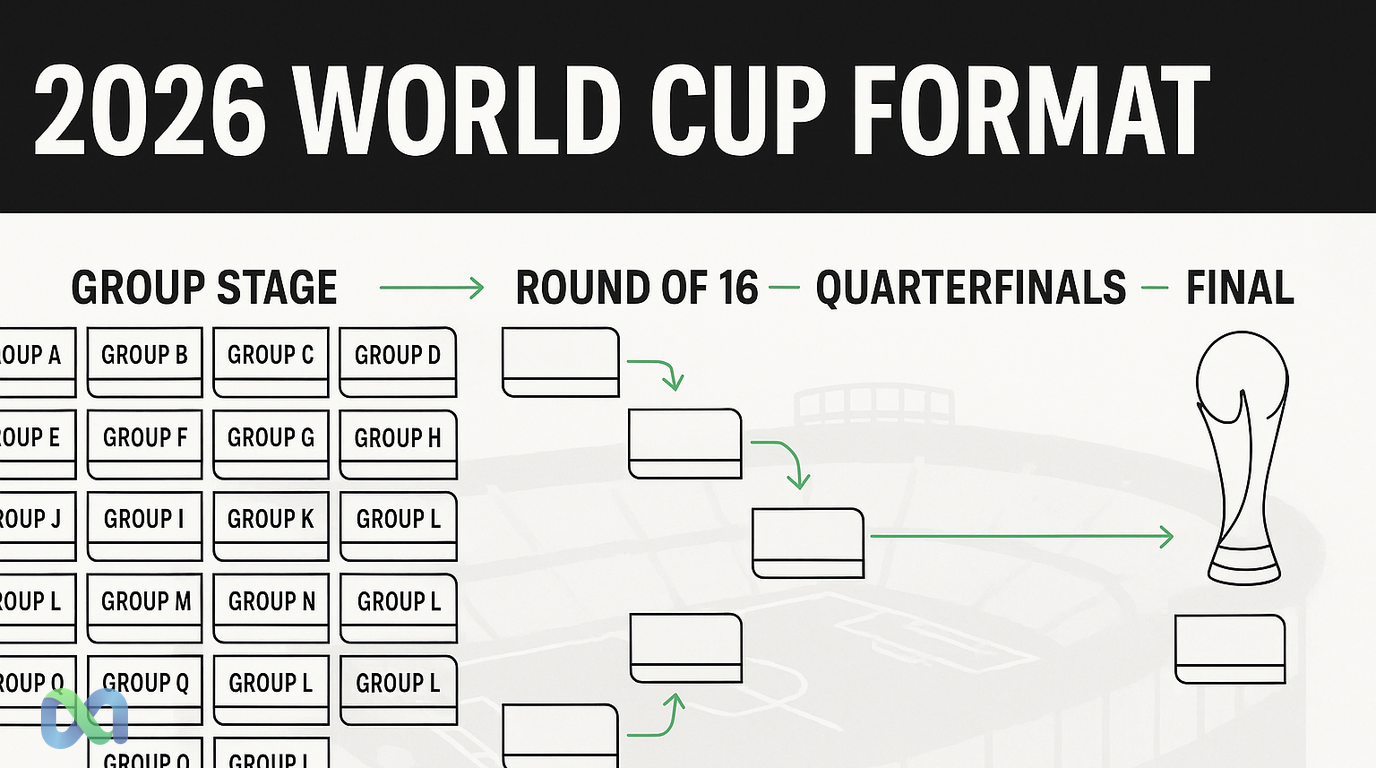
The 2026 World Cup format changes more than just the number of teams. The tournament will feature 48 national teams, more matches, and a different route to the final. If you follow football and want to understand how the new structure affects probabilities, this guide explains the world cup 2026 format in clear terms. You will see how the 2026 World Cup format works, how many teams qualify, how the group stage is organized, and why the new structure matters for pre-tournament analysis.
What changed in the 2026 World Cup format
The main change is straightforward. FIFA expanded the tournament from 32 to 48 teams. That makes the 2026 FIFA World Cup the biggest edition in history. The event will be hosted by the United States, Mexico, and Canada, with more host cities, more matches, and more room for surprises.
In practice, the new structure changes three central points:
- the number of groups in the opening stage
- the number of teams that advance to the knockout round
- the total number of matches on the road to the final
This is not just an organizational detail. When the format changes, the way you read favoritism changes too. Strong teams have more possible paths to recover from an early mistake. Mid-tier teams have a better chance to reach the tournament and survive the opening phase. In other words, one disappointing result does not always carry the same weight it did in previous editions.
How many teams will play in the 2026 World Cup
The 2026 tournament will include 48 national teams. From 1998 through 2022, the World Cup had 32 participants. The expansion creates a broader competition and opens space for countries that usually missed the final tournament.
The allocation of spots by confederation also increased. That matters most for regions with crowded qualification races, such as Africa, Asia, and North America. South America also benefits, because more national teams now have a realistic path to qualification.
From a sporting perspective, the larger field should bring more variety in playing styles. From an analytical perspective, it increases the number of teams in the middle probability range. In a World Cup with more participants, the top contenders still matter most, but the distribution of realistic outcomes becomes wider. That is one reason the 2026 World Cup favorites according to odds and markets become even more interesting before kickoff.
How the 2026 World Cup group stage will work
The current world cup 2026 format is based on 12 groups of 4 teams each. Every team plays 3 matches in the group stage. At the end of that stage, the top 2 teams in each group advance automatically. In addition, the 8 best third-placed teams also move on.
That means 32 teams reach the knockout phase. This is one of the biggest structural shifts in the history of the competition. Instead of a round of 16 immediately after the groups, the tournament now moves into a round of 32.
For analysis, this matters a lot. In a 4-team group with 3 qualification spots effectively available in many cases, the risk profile changes. Favorites may approach the first two matches with a different level of urgency. Underdogs can stay alive longer. Goal difference, tie-breakers, and draw scenarios may become even more relevant in the final matchday.
What the knockout stage looks like in the new format
After the group stage, the tournament goes to a round of 32. From there, the path is familiar: round of 16, quarterfinals, semifinals, and the final. Because one extra knockout round was added, the finalists will now have to play 8 matches instead of 7 to win the trophy.
That additional match changes planning. Squad depth becomes more valuable. Rotation decisions may matter more. Physical wear, suspensions, and minor injuries can have a stronger effect over a longer knockout path.
For markets and probabilities, that extra round also changes how often a favorite converts pre-tournament strength into a title. A stronger team may still be the most likely champion, but every extra elimination match creates another point of risk. That is why the world cup expanded format tends to make title probability more sensitive to bracket difficulty and squad depth.
How many matches the 2026 World Cup will have
The 2026 World Cup will feature 104 matches. That is a major increase compared with the 64 matches played under the 32-team model. The new total comes from the larger group stage and the addition of the round of 32.
More matches mean more data, more market movement, and more opportunities for repricing during the tournament. For fans, it means a busier calendar. For traders and analysts, it means a competition with more price adjustments, more momentum swings, and more chances for narratives to change over time.
This broader schedule also makes tournament timing more important. Rest periods, travel demands across host countries, and scheduling sequences can all affect team performance. In a long event, the format itself becomes part of the handicap.
Why the FIFA World Cup 2026 structure matters for probabilities and analysis
The FIFA World Cup 2026 structure does not just change logistics. It changes how probabilities should be interpreted before and during the event.
A bigger field means:
- more teams with non-trivial qualification chances
- more uncertainty in the middle tier of the tournament
- one extra knockout match for title contenders
- more importance for squad depth and bracket path
That combination can flatten some title probabilities while increasing uncertainty in early-stage markets. It also creates more room for market disagreement, especially when public narratives lag behind structural changes in the tournament.
If you want a broader framework for thinking about how tournament structure affects price discovery, the Macro Markets platform overview shows how event probability and market interpretation connect.
Final thoughts on the 2026 World Cup format
The 2026 World Cup format is bigger, longer, and strategically different from previous editions. With 48 teams, 12 groups, a round of 32, and 104 matches, the competition becomes more complex for both fans and analysts.
For casual viewers, the main takeaway is simple: more teams and more games. For anyone focused on probabilities, the bigger lesson is that tournament structure shapes the path to the trophy. The 2026 World Cup 48 teams model changes qualification dynamics, knockout risk, and the way pre-tournament expectations should be priced.
Understanding the world cup 2026 format early helps you read markets more clearly when the tournament approaches.
