


Fed Decision April: What to Expect From the Next FOMC Call
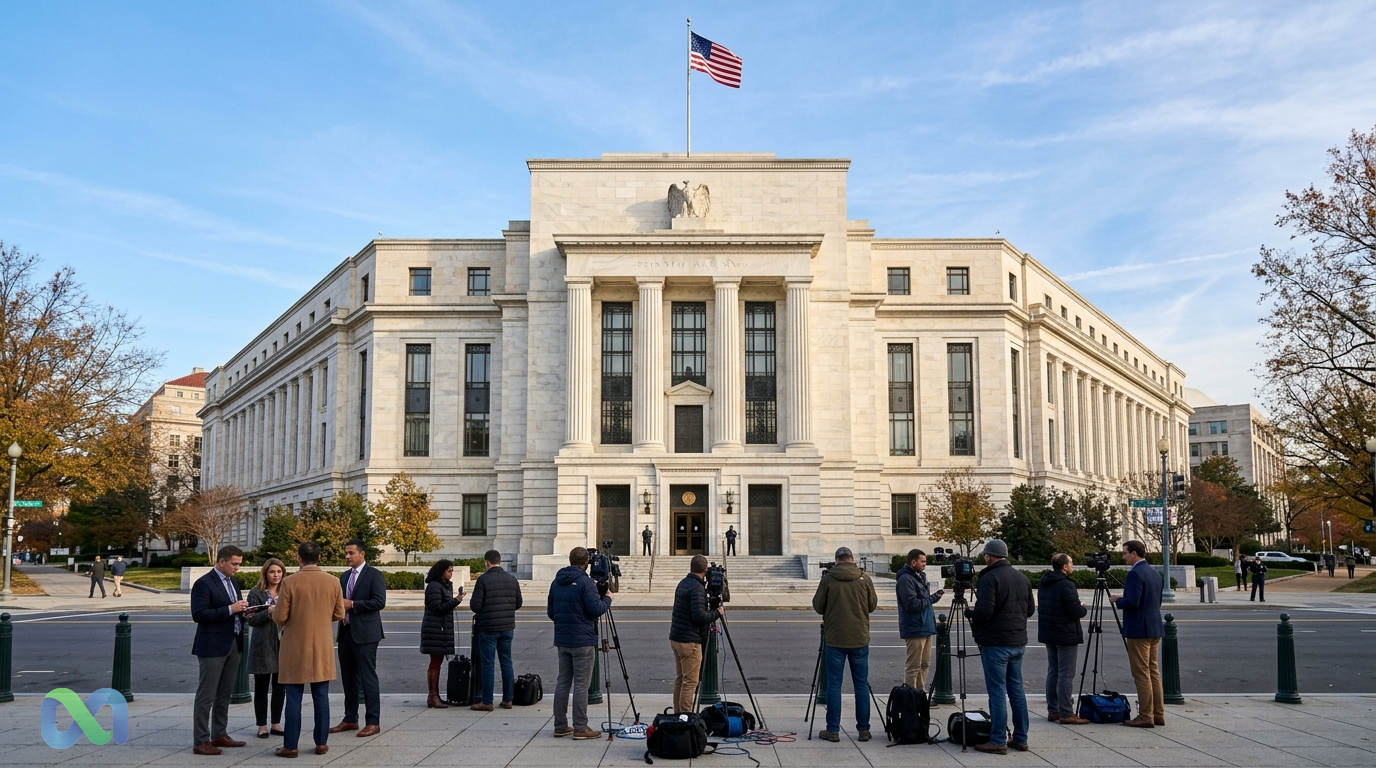
The Fed Decision April meeting matters for rates, bonds, stocks, and consumer borrowing costs. Most investors expect no rate change at the April Fed meeting. However, the real signal may come from the statement and from Jerome Powell's tone at the press conference.
That is why the best question is not only whether the Fed will hold, hike, or cut. It is also how the central bank explains the choice. A steady rate with hawkish language can still tighten financial conditions. By contrast, softer language can do the opposite.
In this guide, you will see when the April Fed meeting happens, what markets currently expect, what to watch beyond the headline, and how different outcomes could affect stocks, bonds, mortgages, and savings accounts. We will also look at how prediction markets and rate-watch tools can help frame the decision.
This article is for information only and is not personalized investment advice.
When Is the April Fed Decision and What Is Expected?
The April Fed decision is scheduled for the Federal Open Market Committee meeting on April 28 and April 29, 2026. The policy statement is typically released at 2:00 p. m. Eastern Time on the second day of the meeting. Jerome Powell's press conference usually starts about 30 minutes later.
Right now, the base case for the Fed Decision April meeting is a hold. That means the federal funds target range would stay where it is. Officials would still keep room to react later if inflation stays sticky or growth slows more than expected.
Why does the market lean toward no move? Three reasons stand out:
- Inflation has cooled from peak levels, but it has not fully settled.
- The labor market still looks resilient enough to avoid an emergency cut.
- The Fed usually prefers patience when the data sends mixed signals.
That makes the April Fed meeting less about a dramatic surprise and more about forward guidance. Readers who only watch the rate headline may miss the bigger story.
For the official schedule, the Federal Reserve publishes its meeting calendar and policy materials on its own site: Federal Reserve meeting calendars.
Why Markets Think the Fed Will Hold Rates Steady
The case for a hold starts with inflation. Price pressure is no longer at crisis levels, but the path back to target remains uneven. Energy can reaccelerate headline inflation fast. Shelter can stay sticky longer than many forecasts expect. In that setting, a cut can look premature.
At the same time, growth has not collapsed. The labor market has slowed from very hot levels, yet it still shows enough strength to keep the Fed cautious. If job creation remains decent and wage pressure stays firm, policymakers have little reason to rush.
Therefore, the current consensus around the April Fed meeting reflects a simple idea. The Fed has not won the inflation fight cleanly enough to cut. It also has not seen enough economic damage to justify a panic move.
This balance matters for traders in prediction markets work. When the macro picture is mixed, market prices often move less on the headline and more on subtle changes in tone. Therefore, that is especially true when most participants already expect no change.
Another factor is institutional caution. Central banks prefer optionality. A hold lets officials buy time and watch more data. It also helps them avoid locking into a path too early. However, that caution can still frustrate traders who want certainty.
What Matters More Than the Headline Rate Decision
If the Fed holds rates steady, many headlines will call the April Fed decision uneventful. That can be misleading. The more important clues often sit in the wording of the statement and in Powell's answers during the press conference.
Key Language Changes in the FOMC Statement
Start with the inflation language. If the statement says inflation remains elevated and progress has been uneven, markets may read that as hawkish. If the wording shifts toward balance or highlights softer demand, traders may see a more dovish hold.
Next, watch labor market language. If officials stress resilience, they may feel comfortable staying restrictive for longer. If they begin to emphasize downside risks to jobs, that can open the door to later cuts.
Finally, check whether the statement changes its view of uncertainty. A stronger warning about global risks, credit conditions, or slowing activity can alter the reaction even if the rate stays unchanged.
What to Listen for in Powell's Press Conference
Powell's tone can move markets more than the formal statement. He often clarifies how the committee sees tradeoffs. That includes whether inflation risk still dominates or whether growth risk is becoming harder to ignore.
Look for direct answers to four questions:
- Does Powell sound confident that inflation will keep easing?
- Does he signal that one or two hot data prints changed the committee's view?
- Does he describe policy as restrictive enough already?
- Does he leave the door open to a later cut without sounding eager?
The April Fed meeting can also matter because of leadership context and policy credibility. If investors think this is a transition phase or a credibility test, they may react sharply to small wording shifts.
In other words, the Fed Decision April story is not just about the number. It is about the message wrapped around the number.
How the April Fed Decision Could Affect Stocks, Bonds, and Consumers
The market reaction depends on both the decision and the tone. A hold with hawkish language is not the same as a hold with softer language. Therefore, it helps to think in scenarios.
Scenario Analysis for Investors
Here is a plain-English framework for the main outcomes:
| Scenario | What It Means | Likely Market Reaction |
|---|---|---|
| Hold, neutral tone | Rates stay unchanged and Powell avoids strong signals | Limited immediate moves, focus shifts to next data releases |
| Hold, hawkish tone | Fed emphasizes sticky inflation and patience | Treasury yields may rise, growth stocks may weaken, dollar may firm |
| Hold, dovish tone | Fed sounds more open to future cuts | Yields may fall, equities may rally, rate-sensitive sectors may outperform |
| Surprise hike or cut | Fed breaks consensus | Sharp cross-asset volatility and rapid repricing |
Bond traders usually react first because Treasury yields absorb policy shifts quickly. Stocks then follow. Sectors that depend heavily on financing conditions can move the most. Banks, tech, homebuilders, and consumer discretionary names all fit that group.
Prediction market traders should think in probabilities, not absolutes. A market that prices an 80 percent chance of a hold is not saying a hold is certain. It is saying that a hold is the most likely outcome based on current information.
If you want a better grasp of how liquidity and pricing work in these systems, this explainer on automated market makers helps connect market mechanics to probability moves. Additionally, our guide on market makers shows why pricing can move even before a headline hits.
Borrowing Costs, Mortgages, and Savings Accounts
Consumers feel the April Fed decision through borrowing costs more than through headlines. Credit cards tend to stay expensive when policy remains tight. Mortgage rates do not move one-for-one with the Fed. Still, they often respond to Treasury yields and market expectations about future easing.
A hawkish hold can keep pressure on mortgage rates even without a fresh hike. A dovish hold can ease that pressure if bond yields fall. Meanwhile, savers may continue to benefit from relatively attractive yields on cash products if the Fed keeps rates elevated.
That is why households should watch the path of policy, not just one meeting. The April Fed meeting may not change the target range. Yet it can still reshape expectations for the rest of the year.
What Prediction Markets and Rate-Watch Tools Imply
Prediction markets offer a useful lens for the Fed Decision April question because they turn expectations into prices. They can show whether traders lean toward a hold, a surprise move, or a specific tone-based interpretation. However, they are not crystal balls.
Reading Implied Odds Correctly
Implied odds should be read as probabilities under current market conditions. They are snapshots, not promises. If a market prices a hold at 78 percent, that still leaves meaningful room for other outcomes.
This is where many casual readers go wrong. They treat high probability as certainty. Professional traders do not. They ask what new data would force the market to reprice quickly.
That logic also applies to event-driven trading across the platform. For example, readers who follow our Macro Markets primer can see how market prices aggregate conviction before major catalysts. Meanwhile, our article on who will win the 2026 World Cup shows the same probability logic in a very different event market.
Limits of Market Probabilities Before the Announcement
Markets can be thin. They can overreact. They can anchor too heavily on recent data. They also reflect positioning, not pure truth. If too many traders share the same narrative, the market can underprice alternative outcomes.
So use market-implied probabilities as one tool, not the only tool. Pair them with official Fed materials, inflation data, labor readings, and cross-asset moves. Furthermore, that broader framework gives you a stronger read on the April Fed meeting than any single indicator can provide.
Quick FAQ on the April Fed Meeting
When will the Fed announce rates in April 2026?
The Fed is expected to release its April policy statement at 2:00 p. m. Eastern Time on April 29, 2026. Powell's press conference should follow about 30 minutes later.
Will the Fed hold rates in April?
The current consensus points to a hold. Markets see inflation as too sticky for an easy cut, while the labor market still looks firm enough to avoid an urgent policy shift.
Why does Powell's press conference matter so much?
Because the headline decision may already be priced in. Powell's language can change expectations for future meetings, which often matters more for bonds and stocks than the rate decision itself.
Final Take on the Fed Decision April Outlook
The most likely outcome for the Fed Decision April meeting is no change in rates. However, that does not mean the event is low impact. The real question is whether the Fed sounds more worried about inflation, more worried about growth, or carefully balanced between both.
That is why serious readers should track three things together: the policy statement, Powell's press conference, and market-implied probabilities. When you combine those signals, you get a clearer picture of what the April Fed meeting really means.
If you want to follow how markets price major macro events in real time, keep watching Macro Markets as expectations shift before and after the announcement.
