


Google's Gemini Delay Shows the Cost of AI Spending Pressure
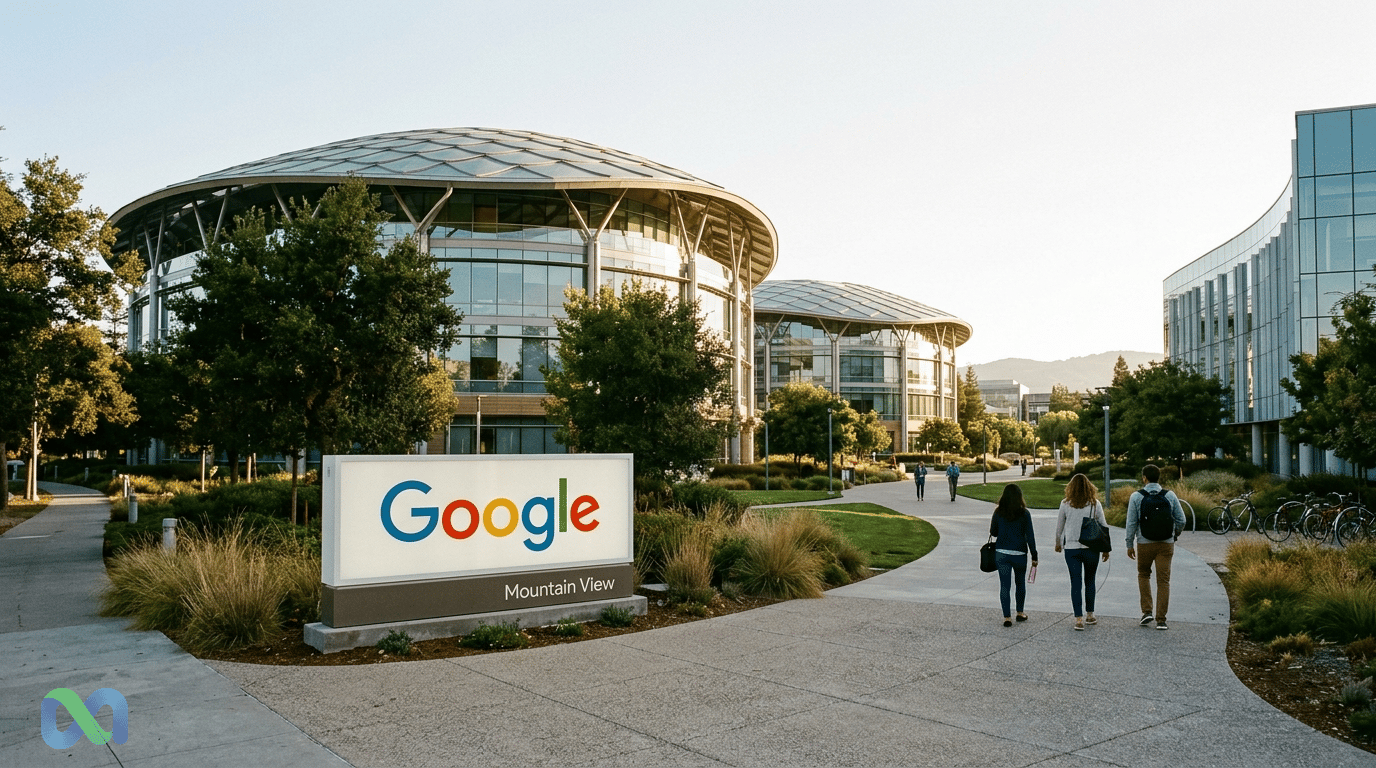
Google Gemini delay coverage is not only a story about a late model release. It is a stress test for how much investors will tolerate rising AI spending when internal execution signals weaken.
Axios and other outlets have reported frustration inside Google DeepMind as the next flagship Gemini model slips. At the same time, Alphabet is facing sharper questions about AI capex, free cash flow, and whether cloud growth can justify a larger infrastructure buildout.
That combination matters. A product delay can be manageable when capital is cheap and investor patience is high. It becomes more serious when spending plans keep rising and the market is asking for proof that AI investment will become durable revenue.
This article explains what happened, why employee frustration became a market signal, and what traders should watch next. It is market analysis, not investment advice. Alphabet's business, AI roadmap, and share price can change quickly as new information arrives.
What Happened With Google's Gemini Delay
The reported delay centers on Google's next major Gemini release, commonly discussed as Gemini 3.5 Pro. According to the research brief, coverage from Axios, Business Insider, TechCrunch, the LA Times, Yahoo Finance, and other outlets points to a similar pattern: smaller Gemini models shipped, while the flagship release took longer.
That is the basic news. The broader issue is the setting around the delay. Google is not a small lab with one product bet. It is a global platform company trying to defend search, grow cloud, improve developer tools, and keep pace with OpenAI and Anthropic.
The result is a release cycle with more stakeholders and more market pressure. Engineers need to improve model quality. Product teams need features that can ship across Google services. Safety teams need release confidence. Management needs a story that investors can underwrite.
When those parts move at different speeds, a model delay becomes more than a calendar issue.
Gemini 3.5 Pro slipped while smaller models shipped
Google has continued to release smaller Gemini models and product updates. That matters because the company is not standing still. Efficient models can serve cost-sensitive use cases, developer workflows, and enterprise products.
However, flagship models carry a different signal. They are the visible benchmark for whether a lab is pushing the frontier. When the flagship slips, rivals get more time to define the narrative.
The research brief notes that TechCrunch covered Google releasing three new Gemini models, but not the expected 3.5 Pro. Business Insider also tracked the delayed release, with coverage focused on tokens, agents, and model capabilities.
For investors, this is where product cadence becomes financial. A smaller model release can help the product suite. A delayed flagship can raise doubts about whether the biggest infrastructure spending is translating into frontier leadership.
Why morale became part of the story
Employee frustration matters because AI development depends on scarce talent. The best researchers and engineers have options at OpenAI, Anthropic, Meta, xAI, startups, and internal teams across big tech.
Axios framed the delay as a deeper morale issue. The LA Times coverage cited in the brief focused on coding stumbles, clashing teams, and frustrated engineers. Those are reported claims, not public operating metrics. Still, markets pay attention because morale can affect output.
A lab can recover from a late release. It is harder to recover if delays create a feedback loop. Missed milestones increase pressure. Pressure lowers morale. Low morale makes coordination harder. Coordination problems then create more delays.
That risk is hard to quantify, but it is not irrelevant. In AI, talent retention and model cadence are part of the same competitive system.
Why Investors Care About an Internal AI Delay
Investors do not care about every internal product delay. They care when the delay intersects with capital allocation, margin expectations, and competitive position.
That is why the Google Gemini delay is important. Alphabet is spending heavily on AI infrastructure. It is also trying to show that AI can strengthen Google Cloud, protect search, and create new product revenue.
If the company spends more while flagship releases slip, the market asks a simple question: is the spending cycle running ahead of visible proof?
AI capex is rising faster than proof of returns
Capital expenditure, or capex, is long-term spending on assets such as data centers, servers, chips, networking equipment, and power capacity. In AI, capex is the physical base of model training and inference.
Alphabet can afford large AI investment. Its core business still produces scale, cash, distribution, and technical depth. Google Cloud is also benefiting from enterprise demand for AI infrastructure and services.
However, affordability is not the same as investor approval. The market wants to know whether each additional dollar of AI buildout increases future revenue, protects margins, or only keeps Google from falling behind.
Reuters and Investing. com coverage cited in the scan focused on Google raising annual spending estimates as AI infrastructure buildout accelerates. The Financial Times and Investor's Business Daily highlighted pressure on free cash flow. Those stories explain why a model delay gets extra attention.
When the spending line rises and the flagship model timeline slips, investors start connecting the two.
Negative free cash flow changes the market narrative
Free cash flow is the cash a company has left after operating costs and capital spending. It matters because it funds buybacks, acquisitions, debt reduction, and reinvestment without outside capital.
A company can report strong revenue and still see free cash flow pressured by a heavy AI buildout. That is the market tension around Alphabet. Google Cloud can grow. Search can remain profitable. Yet AI infrastructure can still absorb enough cash to change the near-term financial profile.
Negative free cash flow is not automatically a crisis for Alphabet. The company has scale and balance-sheet strength. But it changes the narrative from effortless cash generation to investment payback.
That is why timing matters. If the next flagship Gemini release is delayed, investors have less product evidence to match against larger AI spending.
The Deeper Problem: Coordination Costs Inside Big AI Labs
The most useful read is not that Google is suddenly weak. It is that large AI labs face coordination costs that smaller rivals can exploit.
Google has advantages that few companies can match: research history, compute, search distribution, Android, YouTube, Workspace, cloud customers, and world-class engineering talent. Those advantages also create complexity.
A frontier model is not only a research artifact. It must pass internal tests, fit product needs, support enterprise use cases, manage safety concerns, and align with business goals. Each layer adds friction.
Safety, coding performance and stakeholder alignment
The brief points to reported concerns around coding performance and internal targets. Coding is strategically important because AI assistants, agents, and developer tools are among the clearest monetization paths for frontier models.
If a model underperforms internal coding goals, Google faces a hard choice. It can ship earlier and risk a weaker market reaction. Or it can delay and risk the perception that rivals are moving faster.
Safety and reliability add another layer. Large consumer and enterprise platforms face higher reputational cost when model behavior fails. Google cannot treat a flagship release like a small experimental feature.
That caution is rational. However, rational caution can still slow release cadence.
Why scale can slow flagship releases
Scale helps Google distribute AI quickly once products are ready. The same scale can slow decisions before launch.
Search teams may care about answer quality and ad economics. Cloud teams may care about enterprise reliability and developer adoption. DeepMind researchers may care about benchmarks and model architecture. Legal and safety teams may care about risk exposure.
None of those priorities is wrong. The challenge is that frontier AI rewards speed and iteration. A company that must coordinate across many high-stakes teams can move more slowly than a focused rival.
This is the deeper problem behind the Google Gemini delay. The issue is not only whether one model arrives in July or later. It is whether Google's structure can consistently turn technical depth into fast, market-visible releases.
Google's Counterweight: Cloud Demand and Model Breadth
The bearish read can go too far. Google is not out of the AI race because one flagship release slipped. The company still has major offsets.
Google Cloud demand remains strong in the scan. TechCrunch and other coverage noted that companies adopting AI and AI infrastructure services are helping the cloud business. That gives Alphabet a real monetization channel for AI spending.
The company also has model breadth. Smaller Gemini models can matter for cost, speed, and enterprise deployment. Not every customer needs the largest frontier model.
Cloud AI demand remains a real offset
Cloud is the cleanest argument for Alphabet's AI spending. If enterprises buy AI infrastructure, model access, and related services through Google Cloud, then capex can support revenue growth.
That makes the next few quarters important. Investors should watch cloud revenue growth, cloud operating margin, backlog, customer adoption, and management commentary on AI workloads.
A strong cloud result can soften concern over free cash flow. It shows the spending is tied to customer demand. A weak cloud result would make the same spending look more defensive.
The market does not need perfect proof immediately. It does need a credible path from compute investment to monetization.
Efficient models can matter even when the flagship slips
Smaller models can be economically important. They can run cheaper, respond faster, and serve high-volume tasks where frontier performance is not required.
That matters for products such as Workspace automation, customer support workflows, coding assistants, search features, and enterprise agents. A company can build a large AI business from efficient models if distribution is strong.
However, the flagship still matters for reputation. Frontier leadership shapes developer attention, enterprise confidence, and talent attraction.
So the balanced view is straightforward. Google's model breadth is a strength. The delayed flagship is still a signal investors should not ignore.
What Prediction Markets Would Watch Next
Prediction markets are useful because they turn broad narratives into explicit questions. Instead of asking whether Google is winning or losing AI, traders can ask what measurable events would confirm either view.
The Google Gemini delay is exactly the kind of story that benefits from this framing. It combines product timing, employee morale, capex, cloud demand, and stock-market reaction. Each piece can be tracked through observable events.
For Macro Markets readers, the lesson is not to make a single bold prediction. The better approach is to define the variables before the next headline.
Timing of the next flagship Gemini release
The first question is simple: when does Google ship the next flagship Gemini model, and how does the market judge it?
Release timing alone is not enough. Traders should watch benchmark reception, developer adoption, coding performance, enterprise integration, and whether the model narrows perceived gaps with OpenAI and Anthropic.
A strong release could reset morale and investor confidence. A further delay would strengthen the view that coordination costs are slowing Google's AI roadmap.
Alphabet capex revisions
The second question is whether Alphabet raises AI spending guidance again. This is where finance meets product execution.
If capex rises while the flagship model timeline remains uncertain, free-cash-flow concerns could intensify. If capex stabilizes and cloud AI revenue grows, investors may become more patient.
The key is not capex in isolation. It is the relationship between capex, cloud growth, margins, and product cadence.
Market share signals versus OpenAI and Anthropic
The third question is competitive share. Google competes against OpenAI, Anthropic, Meta, Microsoft-backed products, and specialized AI startups.
Useful signals include enterprise AI contracts, developer usage, benchmark leadership, app distribution, customer retention, and talent movement. Media narratives matter, but hard usage signals matter more.
If Google keeps winning cloud AI customers, the market may tolerate a slower flagship cadence. If rivals gain mindshare while Google spends more, the pressure grows.
A Market Read for Traders
Here is the clean read. The Google Gemini delay matters because it sits at the intersection of morale, model execution, investor patience, and AI infrastructure spending.
The delay alone does not prove Google is losing the AI race. Alphabet still has distribution, cloud demand, technical depth, and the cash to fund a long fight. It also has a portfolio of models, not just one release.
But the timing is uncomfortable. Investors are already focused on AI capex and free cash flow. Employee frustration adds a second concern: maybe the constraint is not only money, but organizational speed.
That combination changes how traders should read the next updates. A new model release, a cloud growth beat, or disciplined capex guidance could ease pressure. Another delay, another spending increase, or signs of talent loss could push the story in the other direction.
The market is not rejecting AI. It is asking for proof. In this phase of the AI trade, proof means release cadence, revenue, margins, cloud demand, and cash conversion.
FAQ
Why was Google's Gemini delayed?
The reported Google Gemini delay appears tied to model-performance targets, including coding capability, and coordination challenges inside Google's AI organization. Coverage from Axios and other outlets also points to employee frustration. Google has still shipped smaller Gemini models, but the flagship release reportedly slipped.
Why is Google's Gemini delay important?
The delay matters because it arrives while Alphabet is spending heavily on AI infrastructure. Investors are asking whether rising capex will produce strong AI products, cloud revenue, and free cash flow. A delayed flagship model makes the payback timeline less clear.
Is Google losing the AI race?
It is too early to say Google is losing the AI race. The company still has deep research talent, cloud demand, distribution, and model breadth. However, flagship delays increase execution risk and give rivals such as OpenAI and Anthropic more room to shape market perception.
How does AI capex affect Alphabet stock?
AI capex can pressure Alphabet stock when investors believe spending is rising faster than visible returns. Higher data-center and chip spending can reduce free cash flow in the near term. The market becomes more patient if cloud growth, product adoption, and margins show a clear return path.
What should traders watch next?
Traders should watch the timing and reception of the next flagship Gemini release, Alphabet's capex guidance, Google Cloud AI revenue, cloud margins, employee-retention signals, and competitive momentum versus OpenAI and Anthropic. These indicators are more useful than a single headline about the AI race.
Conclusion: The Gemini Delay Is a Spending-Pressure Signal
The Google Gemini delay is best read as a spending-pressure signal. It links product execution, employee morale, capital allocation, and investor patience in one story.
Alphabet can still turn AI spending into a major advantage. It has the infrastructure, distribution, cloud customers, and technical base to do it. Yet the burden of proof has risen.
For markets, the next phase is concrete. Watch whether Google ships a strong flagship model, whether cloud AI demand keeps growing, whether capex guidance stabilizes, and whether free cash flow improves.
The AI trade is not over. It is becoming more strict. Markets still reward credible AI leadership, but they now ask for dates, cash, and proof.
