


Is Polymarket Legit? What Users Should Check Before Trading
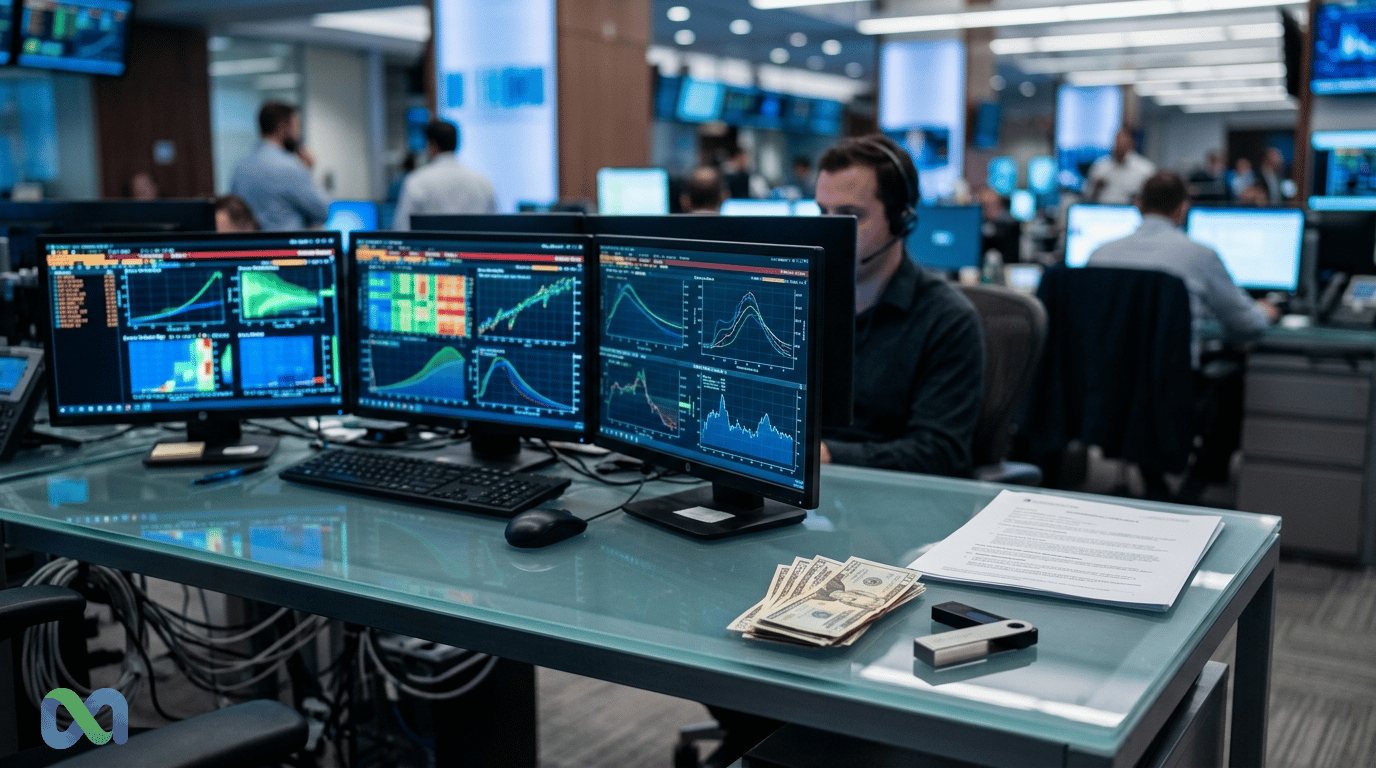
If you are asking, “is Polymarket legit?”, the honest answer is yes, with important limits. Polymarket is a real prediction market with active users, public markets, blockchain-based case deal, and a visible operating history. However, “legit” does not mean risk-free, legal for everyone, or guaranteed to protect you from bad trades.
This guide gives you a practical way to judge Polymarket before you deposit funds. It separates platform trust from trading risk, wallet risk, withdrawal risk, and legal risk. That split matters because a prediction market can be real and still be wrong for your location, risk tolerance, or skill level.
Use this as a due-diligence checklist, not as legal or financial advice. Laws change by location, markets can settle in unexpected ways, and users can lose money. Your goal is not to find a perfect yes or no answer. Your goal is to know what you are accepting before you trade.
What Is Polymarket and How Does It Work?
Polymarket is a crypto-based prediction market. Users trade contracts tied to future events, such as elections, economic data, sports outcomes, weather, or cultural events. Each contract price reflects the market’s implied probability of that outcome.
For example, if a “Yes” contract trades near 60 cents, the market is roughly implying a 60% chance. If the event settles as “Yes,” each winning share pays $1. If it settles as “No,” that share pays nothing. Traders can also sell before final result if there is enough liquidity.
This is the core idea behind how forecast markets work: people express forecasts with capital, not just opinions. Prices then move as new information arrives.
Forecast markets in plain English
A prediction market turns a question about the future into a tradable market. Instead of asking people what they think, it lets them buy and sell exposure to possible outcomes. That creates a live probability signal.
The signal is not magic. It can be wrong, noisy, or manipulated. However, it can still be useful because traders have a cost for being wrong. A casual social media opinion is free. A trade has consequences.
Polymarket uses crypto rails, mainly stablecoin-style funding and blockchain case deal. That helps users see market activity, but it also adds wallet, network, and location issues. So when people ask is Polymarket legit, they are often asking several questions at once.
They may mean: is the company real? Is the market data real? Are the contracts enforceable? Can I withdraw? Can I legally use it? Those questions need separate answers.
How traders buy and sell event outcomes
On Polymarket, users usually choose a market, read the result rules, and buy shares in an outcome. A market may have a simple yes/no structure or several possible outcomes. The price changes as traders buy and sell.
If you buy at 40 cents and the contract later trades at 55 cents, you may be able to sell for a gain before the event ends. If you hold until result, the final payout depends on the official outcome and the market rules.
That means Polymarket is not just a place to “pick winners.” It is also a place where traders manage timing, liquidity, information, and position size. This is why traders drive prediction market accuracy more than raw crowd size alone.
However, trading structure does not remove risk. You can be right about the broad story and still lose money if your entry price is bad. You can also be blocked by low liquidity if you need to exit quickly.
Is Polymarket Legit? The Short Answer
Is Polymarket legit? Yes, Polymarket is a real prediction-market platform with major public visibility, active markets, and a documented operating history. But users should treat it as a high-risk trading venue, not a guaranteed-safe savings account. Legitimacy depends on your location, funding method, market selection, and ability to handle losses.
That direct answer matters because many online reviews mix different claims together. A complaint about losing a trade is not proof that the platform is fake. At the same time, strong brand awareness is not proof that every user can trade safely or legally.
A better question is: which part of trust matters to you? For most users, the important checks are legal access, fund movement, market integrity, result rules, support, and liquidity.
Why many users consider it legitimate
Several factors support the view that Polymarket is legitimate as a platform. It has operated since 2020. It has become one of the best-known forecast markets. Its markets and prices are widely cited in public discussion. It also has an official web presence, public terms, help documents, and visible market activity.
There is also a legal history that is public rather than hidden. In 2022, the U. S. Commodity Futures Trading Commission announced a case deal with Polymarket’s operator for offering off-exchange event-based binary options contracts without the required registration. The CFTC order required a $1.4 million penalty and the wind-down of non-compliant markets.
That case deal is not a green flag by itself. However, it is useful context. It shows the issue was not whether Polymarket existed. The issue was how certain event contracts fit under U. S. derivatives law.
More recently, Polymarket’s U. S. path changed. A CFTC industry filing lists QCX LLC d/b/a Polymarket US as a designated contract market, with a designation date of July 9, 2025. The CFTC filing says QCX is operating under the assumed name Polymarket US.
Polymarket’s own terms page also says Polymarket US is operated by QCX LLC, a CFTC-watched by regulators designated contract market. It separately says the international platform is not watched by regulators by the CFTC. That split is central to any fair answer.
Why trust does not mean risk-free
The phrase “is Polymarket legit” can create a false sense of safety. A real platform can still expose users to real losses. A market can be clear and still settle against you. A watched by regulators venue in one country does not make every international product watched by regulators in the same way.
There are at least four separate risks.
First, there is trading risk. You can lose the money you put into a position. Forecast markets price doubt, not certainty.
Second, there is liquidity risk. You may not get the exit price you expect if market depth is thin.
Third, there is legal risk. Access rules can differ by country, state, and product.
Fourth, there is operations risk. Wallets, deposits, withdrawals, support time, and identity checks can affect your experience.
So, is Polymarket legit enough for everyone? No. It may be acceptable for some experienced users who understand crypto, event contracts, and location limits. It may be a poor fit for users who want insured deposits, simple consumer protection, or no legal ambiguity.
How Safe Is Your Money on Polymarket?
If your question is “is my money safe on Polymarket?”, the best answer is conditional. Your money is exposed to trading losses, wallet and stablecoin mechanics, market liquidity, and platform rules. Polymarket may be a real platform, but funds used for event trading should never be treated like bank deposits.
This is the part many beginners miss. The safety question is not only “will the platform disappear?” It is also “can I lose funds through normal use?” In forecast markets, the answer is yes.
Custody, wallets, and platform exposure
Polymarket’s international product has historically used crypto funding, including USDC on Polygon. That means users need to understand wallet flows, stablecoin transfers, network selection, and account access. A mistake in a crypto transfer can be hard to reverse.
Crypto funding can make activity easier to inspect, but it also shifts work to the user. If you send funds from the wrong network, lose a wallet, or miss a withdrawal step, support may not fix the problem quickly.
You should also separate platform exposure from trade exposure. Funds sitting idle are different from funds committed to a market. Once you buy a contract, the value of that position can move sharply. If the market turns against you, your account value can fall even when the platform works as designed.
A cautious user should start with a small amount, test deposit and withdrawal flows, read the help center, and avoid using funds needed for bills or emergencies. That is basic risk control.
Liquidity and cash-out considerations
Can I cash out on Polymarket? In many markets, users can sell before result if there are willing buyers and enough liquidity. However, cashing out is not the same as withdrawing at a fixed value.
If you buy a contract for 60 cents and the market later trades at 35 cents, you may be able to sell. But you are selling at the market price, not at your entry price. If the market is thin, your order may also move the price or fill slowly.
This makes liquidity one of the most important trust signals. High-volume markets usually offer easier entry and exit. Low-volume markets may look attractive, but they can trap users in positions.
Before trading, check the order book, recent activity, price spread, and market close date. A market with clear rules but weak liquidity can still be hard to exit. That is especially important when trading news-driven events.
Also remember that a “cash out” from a position and a withdrawal from the platform are different steps. One turns a contract back into account funds. The other moves funds out of the platform or connected wallet system.
Legal and Regulatory Risks You Should Understand
The legal side is where the answer to is Polymarket legit becomes most nuanced. Polymarket’s status depends on product, entity, and user location. A platform may have one watched by regulators U. S. route while a separate international route operates under different rules.
This article cannot tell you whether you personally may use Polymarket. That depends on your country, state, age, residency, and the exact product you access. If the amount matters to you, get legal advice before trading.
Where legality becomes complicated
Forecast markets sit close to several legal categories: derivatives, event contracts, gaming, commodities, and sometimes sports trading. Regulators may treat the same product differently across locations.
The 2022 CFTC case deal is a key example. The regulator said Polymarket offered event-based binary options contracts that counted as swaps under U. S. law. The issue was not whether the site was popular. The issue was registration and compliance.
Later, the CFTC filing for Polymarket US added another layer. It points to a watched by regulators U. S. entity for certain products. Yet Polymarket’s international terms note that the international platform is not CFTC-watched by regulators and operates independently.
That means users should avoid simple claims like “Polymarket is legal everywhere” or “Polymarket is banned everywhere.” Both statements are too broad. The practical answer is location-specific.
If you are in a restricted location, trying to bypass access controls may violate terms and create extra risk. It may also affect withdrawals, account access, and dispute handling.
Why location matters more than brand popularity
Brand popularity can make a platform feel safe. It should not replace legal checks. A large platform can still restrict users from certain places. It can also change access rules as regulations evolve.
Before using Polymarket, review the latest terms, restricted-location rules, and product availability. Do this from official pages, not only from social posts or affiliate guides. Screenshots and old blog posts can become stale quickly.
You should also check whether you are using Polymarket US or the international platform. The distinction matters because legal status, permitted users, and contract types may differ.
If that sounds tedious, that is the point. Legitimacy is not just a brand claim. It is a compliance fit between the product and the user.
How to Tell if a Prediction Market Is Trustworthy
A good answer to is Polymarket legit should also help you evaluate any prediction market. The platform name matters, but the checklist matters more. You want proof that the market can be understood, traded, settled, and exited without hidden surprises.
Here is a simple framework.
- Legal access: check the entity, location rules, age rules, and restricted countries. This tells you whether you should use the product at all.
- Market rules: check the source, close time, and edge cases. This lowers the chance of a surprise result.
- Liquidity: check volume, spread, recent trades, and market depth. This affects your entry and exit price.
- Fund flow: check deposits, withdrawals, and fees. This shows whether you can move money in and out.
- Transparency: check public prices, trade history, and market integrity pages. This helps you audit market behavior.
- Support: check help docs, response channels, and dispute steps. This matters when something breaks.
- Risk controls: set position size, avoid borrowed funds, and define loss limits. This protects you from normal trading losses.
As a result, this checklist gives a better answer than a one-word verdict. It also stops you from confusing fame with trust.
Transparency of rules and market result
Every market should have clear result criteria. Good criteria name the source of truth, define the deadline, and explain what happens in edge cases. Weak criteria leave too much room for interpretation.
For example, a market about an election should identify the official source. A market about economic data should specify the release, date, and revision policy. A market about a legal event should define what counts as an official decision.
If you cannot explain how a market will settle, you should not trade it. That rule applies even if the platform itself looks legitimate.
Market integrity also matters. Forecast markets can attract people with special information. They can also attract attempts to move prices or influence outcomes. That does not make every market invalid, but it means users must stay alert.
For more background, read Macro Markets’ guide to prediction market insider trading cases. Insider information is one of the core trust problems in event markets.
Reputation, liquidity, and user support
Reputation is useful, but it should be tested against facts. Look for long operating history, public documentation, known leadership, and coverage from credible sources. Then compare that with user complaints about withdrawals, blocked accounts, or unclear results.
User reviews can be noisy. Some complaints come from people who lost trades. Others may reveal real support or withdrawal friction. Read patterns, not single angry posts.
Liquidity is easier to measure. Check whether markets have real volume and recent activity. If a market has wide spreads and few trades, your practical risk is higher.
Support is harder to judge until you need it. That is why small test transfers matter. If a platform cannot support a small withdrawal, you should not assume it will handle a large one smoothly.
Polymarket Red Flags and Green Flags
Polymarket has both trust signals and caution signals. A balanced review should include both. The goal is not to defend or attack the platform. The goal is to help users decide whether the risks fit their situation.
Signals that improve trust
The first green flag is public visibility. Polymarket is not an unknown clone site. It has a large public footprint, a known founder, and broad media attention.
The second green flag is market clear rules. Users can observe prices, market activity, and result terms before taking a position. That is better than opaque pricing.
The third green flag is clear legal history. The 2022 CFTC case deal is not flattering, but it is public. The later Polymarket US designation path is also visible through CFTC records.
The fourth green flag is product maturity. Polymarket has operated through multiple news cycles and high-volume events. That does not guarantee future performance, but it is more meaningful than a brand-new site with no history.
Finally, the broader prediction-market category has become more mainstream. Macro Markets, Kalshi, and other platforms show that event trading is no longer a fringe idea. The serious question is not whether forecast markets exist. It is how each venue handles rules, compliance, liquidity, and user protection.
Signals that should make users more cautious
The first caution signal is legal hard parts. If you do not know which entity you are using, or whether your location is allowed, pause before depositing.
The second caution signal is crypto hard parts. Stablecoin funding, wallet flows, and network selection can confuse new users. A platform can be legitimate and still be unforgiving when users make transfer mistakes.
The third caution signal is market integrity risk. Event markets can attract informed traders, thin-liquidity moves, and disputes over ambiguous outcomes. If you trade controversial markets, expect noise.
The fourth caution signal is loss concentration. Public discussion around forecast markets often highlights big wins. It says less about ordinary users who lose money. Do not confuse stories of profit with evidence that the average user has an edge.
The fifth caution signal is support uncertainty. If your account is restricted, a market is disputed, or a withdrawal is delayed, your experience depends on support systems and terms. That is why you should test basic flows first.
Can You Make Money Off Polymarket?
Yes, some users can make money on Polymarket. That does not prove the platform is safe, and it does not mean you are likely to profit. Forecast markets reward information, timing, discipline, and liquidity awareness. They punish overconfidence.
The basic math is simple. If you buy a contract below its true probability, you may have positive expected value. If you buy above its true probability, you may be paying too much. The hard part is knowing the difference before the market moves.
Professional traders look for mispriced probabilities. They compare market prices with polls, official data, court calendars, weather models, campaign finance reports, or sports injury news. Beginners often trade headlines after the price already moved.
That is why profitability and trust are separate questions. A legitimate market can still be hard to beat. A trustworthy venue does not remove competition from better-informed traders.
If you are new, use forecast markets first as a learning tool. Track your forecasts. Write down why you entered a trade. Review whether your edge came from analysis or emotion. Small size teaches more than large losses.
Final Verdict: Should You Trust Polymarket?
So, is Polymarket legit? Yes, in the sense that it is a real, established prediction-market platform with public activity, known legal history, and a developing watched by regulators U. S. path through Polymarket US. But it is not automatically safe for every user, every country, or every financial goal.
The best verdict is conditional. Polymarket may be reasonable for experienced users who understand event trading, read market rules, verify legal access, test withdrawals, and accept the risk of losing money. It is not a good fit for users who want insured deposits, no crypto hard parts, or a simple guarantee that every market will be easy to exit.
Who may find the platform acceptable
Polymarket may fit users who already understand forecast markets and crypto transactions. It may also fit users who can separate probability signals from entertainment. These users usually know that a market price is not a promise.
It may also fit researchers, analysts, and traders who want to observe public expectations. Even if they do not trade, they can use prices as one input among many.
However, acceptable does not mean casual. You should still check location rules, start small, read result criteria, and avoid markets you cannot explain.
Who should avoid it
You should avoid Polymarket if you are in a restricted location, do not understand crypto transfers, or cannot afford to lose the funds. You should also avoid it if you are seeking guaranteed income.
You should be cautious if you plan to trade low-liquidity markets, controversial events, or markets with vague result terms. Those are the places where disputes and exit problems are more likely.
If your main concern is “is Polymarket safe?”, reframe the question. Ask whether you understand the platform, the product, the legal access rules, the market rules, and the exit path. If any answer is no, wait.
FAQ About Polymarket Legitimacy
Is Polymarket safe?
Polymarket can be safe enough for experienced users who understand the risks, but it is not risk-free. Users face trading losses, liquidity limits, crypto transfer mistakes, location rules, and possible support friction. Never treat event-trading funds like insured savings.
How trustworthy is Polymarket?
Polymarket has strong trust signals, including public visibility, real market activity, and documented legal history. It also has caution signals, including legal hard parts, crypto funding, and market integrity concerns. Trust should depend on your location, market choice, and risk controls.
Can I cash out on Polymarket?
You may be able to sell positions before result when liquidity exists. The exit price depends on the live market, not your original entry. Withdrawing funds from the platform or wallet system is a separate step, so test that process before moving larger amounts.
Is Polymarket legal in the United States?
The U. S. answer has changed over time and depends on the entity and product. The CFTC settled with Polymarket’s earlier operator in 2022. A later CFTC filing lists QCX LLC d/b/a Polymarket US as a designated contract market. Users should verify current access through official terms and legal guidance.
What should I check before depositing?
Check whether your location is allowed, which Polymarket entity you are using, how deposits and withdrawals work, whether the market has enough liquidity, and how the market settles. Then start small. The safest first trade is often a test of the full process, not a large position.
Bottom Line
The best answer to is Polymarket legit is not a slogan. Polymarket is real, visible, and important in the prediction-market industry. It also carries legal, trading, liquidity, and support risks that users should take seriously.
If you use it, treat every trade as risk capital. Read the rules. Check your location. Test withdrawals. Avoid markets you do not understand. Compare platforms by evidence, not hype.
That mindset will serve you better than any simple yes or no answer.
