


Israel Hezbollah ceasefire: terms, timeline, and what happens next
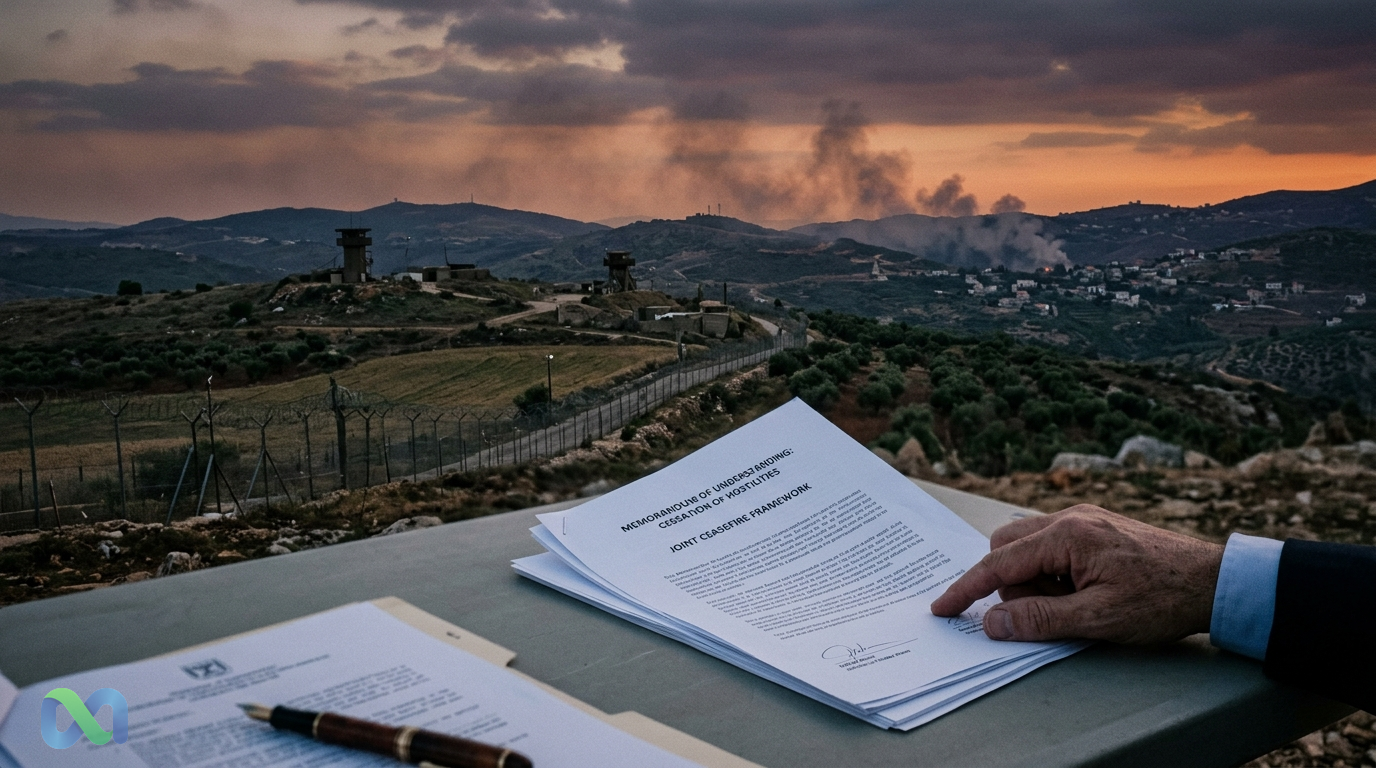
The Israel Hezbollah ceasefire is not just a diplomatic headline. It is a live test of pressure, mediation, and political limits.
In plain English, the current deal is an agreement to pause major hostilities between Israel and Hezbollah along the Israel-Lebanon front. However, the key question is not the announcement itself. The real question is whether both sides follow the terms on the ground.
This guide explains what the Israel Hezbollah ceasefire is, why it emerged now, what the reported terms mean, how the timeline developed, and what could break next. Because this is a fast-moving story, any new claim about violations or retaliation should be treated with caution until reliable sources confirm it.
What is the Israel Hezbollah ceasefire?
The Israel Hezbollah ceasefire is a negotiated pause in fighting between Israel and Hezbollah. It is usually brokered with US and international mediation. Its goal is to reduce cross-border attacks and create room for follow-up talks. In practice, it is less a final peace agreement and more a fragile operating framework.
That distinction matters. A ceasefire often implies a broader political commitment to stop fighting. A cessation of hostilities can be narrower and more temporary. An extension often means the parties still want to avoid full combat, but they are not yet ready for a durable settlement.
For readers trying to understand the current moment, the safest definition is simple. The Israel Hezbollah ceasefire is a temporary and conditional arrangement. It is meant to reduce attacks, set rules for military behavior, and give mediators time to prevent escalation.
Each side may present the arrangement in different language. Israel may frame it as a security mechanism tied to deterrence. Hezbollah and Lebanese officials may stress sovereignty, withdrawal, or limits on Israeli operations. Therefore, the label alone does not tell you whether both sides share the same understanding.
Why did Israel and Hezbollah agree to it now?
The simplest answer is pressure. Both sides faced rising costs, while outside powers had strong reasons to stop another prolonged regional war.
First, battlefield pressure and civilian harm made continued escalation more expensive. Border exchanges, airstrikes, rocket fire, evacuations, and infrastructure damage can create a point where military signaling stops producing clear gains. Instead, it raises the odds of miscalculation.
Second, US and international mediation likely mattered a great deal. Washington often acts as the main broker in these moments. Sometimes it has support from France, the UN, or regional partners. Mediators try to turn vague calls for restraint into a specific mechanism with timing, withdrawal steps, monitoring, and public commitments.
Third, domestic politics created incentives for a pause. Israeli leaders may want to show they restored deterrence without sliding into an open-ended northern war. Lebanese officials may want to reduce destruction and political strain inside Lebanon. Hezbollah, meanwhile, has to balance its military posture against the cost of sustained conflict.
There is also a timing issue. Ceasefires often happen not when trust exists, but when the alternatives look worse. Therefore, an agreement reached under pressure can still be real. Yet it can remain deeply unstable.
What are the terms of the Israel Hezbollah ceasefire?
The exact terms of any Israel Lebanon ceasefire can vary by announcement, draft, and later clarification. Still, most readers are looking for the same core points: what stops, who moves, who watches, and what happens if someone claims a breach.
Based on how these arrangements are usually structured, the main terms often include:
- a pause or reduction in cross-border rocket fire, missile launches, drone attacks, and airstrikes
- military restrictions in sensitive border areas
- possible withdrawal, redeployment, or stand-off provisions for forces and weapons
- a monitoring or verification role for outside actors
- a timeline for implementation, review, extension, or replacement with broader talks
That sounds straightforward. However, enforcement is the hard part.
Military restrictions and withdrawal provisions
A deal may call for one or both sides to reduce offensive operations in specific zones. It may also set conditions around heavy weapons, patrols, or proximity to the border. If the text is vague, each side can later argue that its own military action was defensive and therefore allowed.
This is one reason ceasefire reporting often feels confusing. The public hears about a breakthrough, but the operational language can leave major gaps. A true assessment depends on whether forces actually reposition, whether attacks drop in frequency, and whether civilians can return safely.
Monitoring, verification, and timelines
A stronger agreement has a monitoring mechanism. That can involve official reports, liaison channels, international forces, or diplomatic review points. Without some way to verify compliance, almost every incident becomes a competing narrative.
Timelines matter too. A 48-hour pause, a ten-day cessation, and an open-ended ceasefire do not mean the same thing. Furthermore, an extension may signal partial success. It may also show that the original deal was too weak to hold on its own.
What each side says the deal means
Public messaging is part of the deal. Israel may say the arrangement protects security while preserving the right to strike threats. Hezbollah may say resistance remains intact and that any pause is conditional. Lebanese officials may focus on sovereignty and civilian relief. US mediators may present the agreement as a step toward de-escalation, not a final settlement.
Readers should separate three things here: the formal text, the political spin, and the facts on the ground. Those are not always aligned.
Israel Hezbollah ceasefire timeline
The Israel Hezbollah ceasefire timeline matters because headlines can flatten a long sequence into one dramatic moment. In reality, these agreements usually emerge after weeks or months of pressure, signaling, talks, and partial reversals.
How the latest escalation began
The latest escalation followed the broader regional crisis that pushed the Israel-Lebanon border back into daily risk. As attacks, retaliatory strikes, and public warnings increased, the northern front became a major geopolitical fault line.
In this phase, each side tried to shape the deterrence balance without crossing into full war. That approach can work for a while. Yet it also creates constant danger because every exchange tests where the red lines really are.
Negotiation milestones
As the costs rose, mediators worked to move from informal restraint to a more explicit arrangement. That process usually includes private shuttle diplomacy, public pressure from allies, leaks to the press, and trial language around pauses, security guarantees, or implementation steps.
The important point is that negotiation is rarely a single event. It is a sequence. One side may reject early proposals, then accept a narrower version later. Additionally, another side may demand better monitoring, longer timelines, or different wording before it signs on.
Violations, extensions, and new flashpoints
Even after a ceasefire announcement, the story is rarely over. Reports of launches, strikes, overflights, or force movements can quickly test the agreement. Some incidents are clear violations. Others sit in gray areas where each side claims self-defense.
That is why the first days matter so much. If violations stay limited and mediators respond fast, the deal can survive. If each breach triggers a broader retaliation cycle, the ceasefire may become little more than a short pause before the next escalation.
Is the Israel Hezbollah ceasefire holding?
This is the practical question most readers care about. A ceasefire only matters if behavior changes on the ground.
To judge whether the Israel Hezbollah ceasefire is holding, look for a few concrete signs. Are cross-border strikes down sharply? Are civilians returning? Are mediators still issuing coordinated statements? Are military movements consistent with the reported terms? Are independent outlets able to confirm events beyond the claims of one side?
Claims of breaches should be handled carefully. Israel may accuse Hezbollah of violating the agreement through launches, positioning, or covert activity. Hezbollah or Lebanese sources may accuse Israel of strikes, surveillance, or failing to withdraw. Both kinds of claims can be politically useful, so confirmation matters.
This is also where the difference between official language and operational reality becomes clear. A ceasefire can be technically in place while still fraying. In that kind of scenario, the number of incidents may fall from wartime levels, but the risk of collapse remains high.
For context on how platforms frame uncertainty, readers can review how prediction markets work. Additionally, Macro Markets explains its broader thesis in Macro Markets: the world is tradeable. Readers who want a market-design primer can also look at the guide to market makers.
What happens next in the Israel Hezbollah ceasefire?
The next phase depends on whether the agreement becomes a bridge to a more stable arrangement or just a tactical pause.
Best-case, base-case, and breakdown scenarios
In a best-case scenario, both sides keep violations limited, mediators respond quickly to disputes, and the ceasefire evolves into a stronger security and diplomatic process. That does not mean peace. It means a lower immediate risk of major war.
In a base-case scenario, the ceasefire holds unevenly. There are accusations, small incidents, and political friction, but not enough to trigger a full collapse. This is often how fragile regional deals survive, at least for a time.
In a breakdown scenario, one serious incident changes the incentive structure. A deadly strike, a disputed withdrawal failure, or a public political ultimatum can push both sides back into escalation. Once that happens, the original agreement may matter less than the retaliation cycle it failed to stop.
Regional and market implications to watch
The broader stakes go beyond the border itself. A functioning ceasefire can reduce regional risk premiums, calm concerns about wider war, and affect how observers price political and security scenarios. A failing deal can do the opposite.
For readers who follow geopolitical uncertainty through a market lens, it helps to think in terms of probability shifts rather than absolute headlines. The same logic behind event pricing on Macro Markets also applies here. Every new verified development changes the odds distribution, not just the narrative.
That matters because ceasefires are not static objects. They are moving mechanisms. Therefore, the most important updates are usually not the first announcement, but the first compliance test, the first serious alleged breach, and the first signal that mediators still have leverage.
Bottom line
The Israel Hezbollah ceasefire is best understood as a fragile mechanism, not a final resolution. It exists to stop or reduce violence, create time for diplomacy, and manage risks that had become too costly to ignore.
Whether it holds depends on details that headlines often miss: the exact terms, the verification process, the response to alleged breaches, and the political incentives of the actors involved. That is why the real story starts after the announcement.
Readers should keep watching the same core questions. What was actually agreed? Who is verifying compliance? Are attacks truly down? And what happens after the next provocation? The answers to those questions will determine whether this ceasefire becomes a turning point or just another pause in a conflict that remains unresolved.
