


Marlboro County Internet Outage Shows the Risk of a Single Fiber Cut
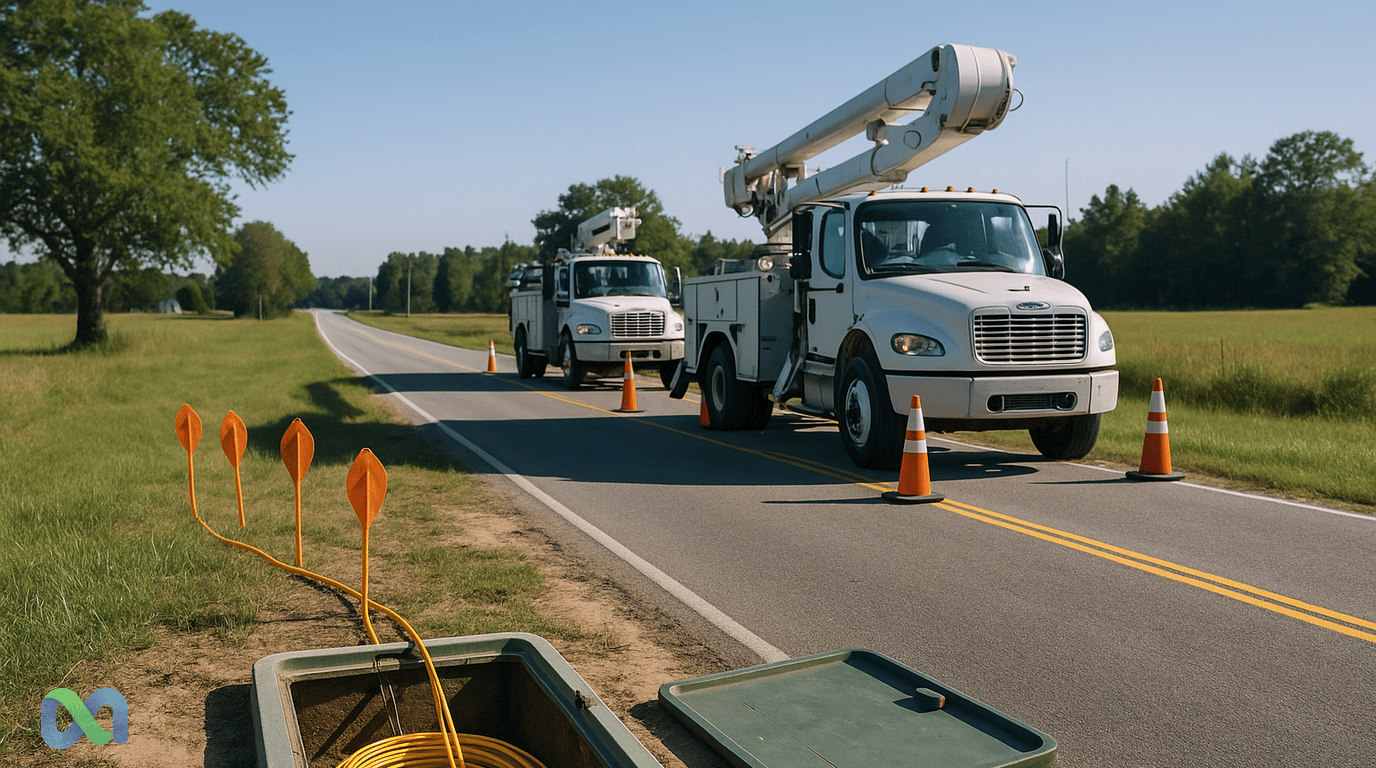
Updated: 08/13/2026. According to WPDE-linked snippets, the Sandhill Internet outage followed a fiber cut by an outside company. According to Mashable, a separate T-Mobile disruption drew more than 64,000 users reporting problems on Downdetector.
Note: this analysis separates confirmed outage facts from open questions. We found three practical lessons: one route can fail, one backup can be too narrow, and one status update can reduce confusion. We found that households should preserve battery during the first 1 hour. We found that businesses should test backup access within 2 hours of setup and review the plan every 90 days. Compared with a mobile outage, a fixed broadband fiber cut needs a different backup path.
A Marlboro County internet outage is not just a local service problem. It is a reminder that broadband still depends on real routes, buried cable, field crews, and backup paths that most customers never see.
The latest WPDE-linked coverage points to a major Sandhill Internet outage across Marlboro County after an outside company cut a fiber cable. The available snippets identify the provider, the broad area, and the stated cause. They do not confirm the full customer count, the repair timeline, or whether public agencies lost service.
That split matters. A fiber cut can be simple to explain and hard to fix. If one route carries too much traffic, a single damaged line can stop service for homes, schools, shops, remote workers, card machines, and local alerts.
The story also landed alongside chatter about a separate T-Mobile disruption and phones showing SOS mode. Those events should not be merged into one incident. However, together they show the same lesson: households and businesses need more than one way to stay online.
This article explains what is known about the Marlboro County internet outage. It also explains why fiber cuts can spread, how mobile outages fit the bigger picture, and what people can do before the next outage.
What the Marlboro County Internet Outage Confirmed
The confirmed core of the Marlboro County internet outage is narrow. WPDE-linked search results describe a major outage across Marlboro County involving Sandhill Internet. The snippets say an outside company cut a fiber cable.
That is enough to show the likely mechanism. It was not presented as a routine router reset or a minor home issue. It was a physical network problem that affected service beyond one address.
Still, the public record leaves several questions open. The available references do not give a verified number of customers affected. They also do not confirm how long each neighborhood stayed offline, whether traffic was rerouted, or how many repair crews were deployed.
Readers should treat those gaps carefully. When an outage is still new, early reports often describe the trigger before they can describe the full impact. That is normal. It means strong claims should wait for provider updates or local notices.
Therefore, the most useful reading is simple. Marlboro County saw a broadband outage tied to a cut fiber line. Sandhill Internet was the named provider in the available snippets. The broader lesson is about route dependence and outage readiness.
Why One Fiber Cut Can Create a Wide Outage
A fiber cut is physical damage to a fiber-optic cable that carries internet traffic. If that route lacks enough backup capacity, many customers can lose service until crews repair the line or move traffic to another path.
The Internet Engineering Task Force is a reminder that internet reliability rests on shared standards as well as physical networks. Fiber is often shared infrastructure. One cable may support many homes, shops, wireless towers, or local network nodes. Customers experience the outage as "my internet is down," but the failure may sit miles away from the router in their living room.
That is why a single construction mistake can have a large footprint. Digging, road work, utility maintenance, and contractor activity can all damage buried fiber. Even when crews follow marking rules, field conditions are messy.
The key question is not only whether a cable was cut. The deeper question is whether the network had route diversity. Route diversity means traffic can move through a second physical path when the first path fails.
If two backup routes share the same trench, bridge, or local node, they may fail together. A network can look redundant on a diagram and still have a practical single point of failure on the ground.
Rural and smaller-market broadband systems face a harder version of this problem. Building duplicate routes costs money. Fewer homes per mile can make backup paths harder to justify. As a result, one damaged line can matter more than it would in a dense city network.
That does not mean the provider did anything wrong in this case. The public snippets do not show enough detail to judge Sandhill Internet's network design. However, the Marlboro County internet outage shows why customers should ask practical questions about resilience, not just monthly speed.
The Marlboro County Internet Outage and T-Mobile Context
The scan that produced this article also included separate references to a T-Mobile outage. Mashable reported a national T-Mobile disruption with more than 64,000 Downdetector reports at one point, plus user searches about SOS mode. T-Mobile later said service had been restored.
That mobile story is separate from the Sandhill Internet incident. It should not be treated as proof that the same failure caused both outages. Instead, the link is about user experience, not cause. The Marlboro County internet outage is still best read as a fixed-broadband case.
When a phone shows SOS mode, it usually means the device cannot connect to the user's carrier network for normal service. In many places, the phone may still try to place emergency calls over any available network. Normal calls, texts, and mobile data may fail.
Wi-Fi calling can help during a mobile-network outage only if the Wi-Fi connection itself is working. It will not help if the home broadband connection is also down.
That is the important overlap. A household may plan to use Wi-Fi calling when a carrier has trouble. But if the fixed broadband line also fails, that backup disappears. The reverse is also true: a mobile hotspot can help during a home internet outage, but only if the mobile network still has service and enough capacity.
For residents, this means "backup internet" is not one product. It is a layered plan. The layers should use different providers, different physical routes where possible, and different power sources.
What Residents Should Do During a Broadband Outage
The first step during a broadband outage is to confirm whether the problem is inside the home or broader than one address. Check the provider's status page, app, phone line, or social feed if those channels work.
Next, avoid repeated router resets. One restart can help if the issue is inside the home. Rebooting the equipment every few minutes can slow checks and may interrupt service once the provider restores the line.
Preserve phone battery early. Outages often feel short at first, but repair windows can change. Lower screen brightness, pause downloads, and keep a power bank charged if one is available.
If mobile service works, use a hotspot for essential tasks only. Video streaming, cloud backups, and large downloads can burn through data. They can also overload a strained network. Prioritize messaging, work logins, banking, maps, and school portals.
Households should also save key information offline. That includes provider support numbers, school contact channels, workplace backup rules, two-factor authentication recovery codes, and emergency contacts.
For families with medical devices, remote monitoring, or home security systems, the plan should be more formal. Know which devices need a connection. Also know which devices can work offline and which need backup power.
The goal is not to build a perfect emergency system. The goal is to reduce the first hour of confusion. A short checklist can turn a stressful outage into a manageable problem.
What Small Businesses and Remote Workers Should Do
Small businesses feel broadband outages quickly. Card terminals, delivery apps, booking systems, stock software, payroll tools, and customer messages can all depend on one connection.
The first question for any business is practical. Which tasks must keep running if the main broadband line fails? The answer may be payments, customer support, shipping labels, security cameras, or access to cloud files.
Once that list is clear, the backup plan becomes easier. A business may need a dedicated mobile hotspot from a different carrier. It may need a failover router that switches automatically. It may also need paper receipts or a way to process payments later.
Remote workers need a similar plan. They should know whether their employer allows hotspot work. They should also test whether VPN tools work on mobile networks. Finally, they should check whether two-factor codes depend on a phone number that could also fail.
Carrier diversity matters. A mobile plan from the same network family as the backup hotspot may not give much protection. When possible, the backup should use a different carrier or a different access type.
Power is another weak point. A fiber cut is not a power outage. Still, many disruptions happen during storms, road work, or utility repairs. A router, modem, laptop, and phone all need battery planning.
Businesses should write down their outage plan before they need it. A one-page checklist is enough for many teams. It should name the backup connection, the person who owns it, the tools that get priority, and the customer message to send if service stops.
What to Watch Next
The next useful update after a Marlboro County internet outage should answer four questions. How many customers were affected? Which areas lost service? When did repair work begin and end? What steps will reduce the chance of a repeat outage?
Customers should also watch how the provider communicates. Clear outage communication should identify the affected area, the suspected cause, the current repair status, and the next update time. It should avoid vague language when specific facts are available.
Local officials may also have a role if public services were hit. Schools, libraries, emergency offices, and local agencies often depend on the same regional network. A broadband outage can become a public-service issue even when the damaged cable belongs to a private provider.
There is also a broader policy question. Rural broadband investment often focuses on availability and speed. Those metrics matter. However, resilience deserves more attention. A connection that is fast on normal days can still be fragile if it has limited backup routing.
For consumers, the most practical signal is whether providers discuss backup routes in plain terms. Customers do not need a full network map. They do need to know whether there are backup paths, what happens during contractor damage, and how the provider handles field repair.
For investors and analysts, outages like this can reveal operating risk. Internet access is part of the local economy. When it fails, the effects move through retail payments, remote work, logistics, schools, and public messages.
For Macro Markets readers, this is also a simple event-risk case. It sits near geopolitical risk because local infrastructure can affect business activity, public services, and market expectations. It also benefits from prediction markets core terms: define the event, source, timing, and resolution before reacting.
What This Means for Connectivity Risk
The Marlboro County internet outage should not be stretched beyond the facts. The public snippets point to a fiber cut, a Sandhill Internet disruption, and a broad county impact. They do not prove a permanent network weakness or a specific customer count.
Still, the case is useful because it shows how physical broadband risk works. The internet feels digital, but the failure mode can be a damaged cable in the ground. Repairs require location, access, splicing, testing, and sometimes a new traffic route.
That reality changes how households and businesses should plan. Speed is only one part of connectivity. Reliability, route diversity, clear updates, and backup access matter as much. Work, payments, school, and emergency information often depend on the same connection.
The separate T-Mobile outage context reinforces the point. Wi-Fi calling is useful when broadband is available. Mobile hotspots are useful when the mobile network is available. Neither option is a universal backup.
The best plan is layered and simple. Keep provider contact details offline. Maintain a charged power bank. Know how to use a hotspot. Keep one backup carrier option if the cost is justified. Decide which tasks matter most during the first few hours.
Marlboro County residents should follow official Sandhill Internet and local updates for specific restoration details. Everyone else can take the broader lesson now: outage readiness is part of modern infrastructure planning, not an afterthought.
FAQ
What caused the Marlboro County internet outage?
WPDE-linked snippets say a major Sandhill Internet outage across Marlboro County followed a fiber cable cut by an outside company. Public snippets do not confirm the full customer count, restoration timing, or detailed network impact.
Can one cut fiber cable affect an entire county?
Yes, it can. One fiber route can carry traffic for many homes, businesses, network nodes, or towers. If backup paths are limited, a single damaged line can create a wide outage.
Does Wi-Fi calling work during an internet outage?
Wi-Fi calling works only when the Wi-Fi connection has internet access. It can help during a mobile carrier outage, but it will not help if the home broadband connection is also down.
What should residents do first during an outage?
Check official provider updates, preserve phone battery, avoid repeated router resets, and use mobile data only for essential tasks. If mobile service also fails, keep the phone available for emergency calling and local alerts.
What should businesses prepare before the next outage?
Businesses should list critical tools, set up a backup connection, assign responsibility, and write a short customer communication plan. Payment systems, booking tools, and cloud documents should get priority.
