


Next Mayor Election in Brazil 2026: Real Dates Explained
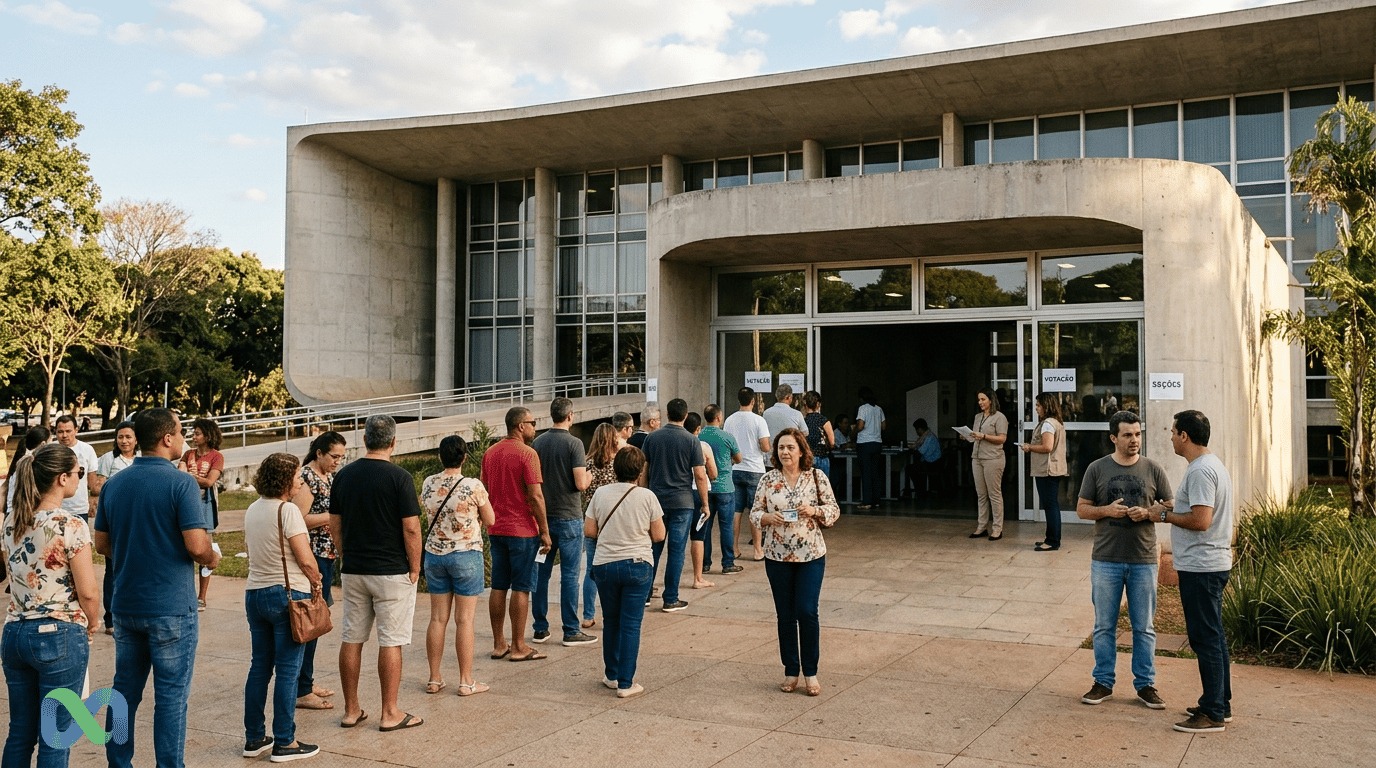
The search "next mayor election 2026" stems from a common doubt. However, the premise needs correction. Brazil will not have a regular mayor election in 2026. That year corresponds to the general election cycle, not the municipal cycle.
The next regular municipal election in Brazil will be in 2028. In that vote, mayors, vice-mayors, and city councilors will be elected in Brazilian municipalities. In 2026, however, voters will elect the president, governors, senators, federal deputies, state deputies, and district deputies in the Federal District.
The confusion makes sense. Brazil votes every two years. Many people remember there will be an election in 2026. However, the offices change from one cycle to another. One election year can be national and state-level. The next municipal cycle occurs two years later.
This article explains what it means to search for the next mayor election 2026. It clarifies when municipal elections return in Brazil. It also details which offices are on the ballot in 2026. Understanding this difference is crucial for interpreting polls, political news, and market probabilities.
Short Answer: No Regular Mayor Election in Brazil in 2026
The direct answer is no. Brazil does not have a regular mayor election in 2026. The Brazilian municipal cycle occurred in 2024. It returns in 2028, following the normal four-year calendar for municipal offices.
Therefore, the phrase "next mayor election 2026" mixes two distinct calendars. A national election exists in 2026. However, it is not for electing mayors. Mayor elections belong to the municipal level.
In 2026, the contest focuses on national, state, and legislative offices. Brazilian voters will decide who occupies the Presidency of the Republic, state governments, and part of the representation in Congress and state legislative assemblies.
This separation prevents a common mistake. News about the 2026 presidential campaign does not mean the municipality will change mayors. Similarly, a mayor's local strength can influence alliances. However, that mayor will not be on the ballot for their own office.
When is the Next Mayor Election in Brazil?
The next regular mayor election in Brazil will be in 2028. This is the scheduled cycle to renew municipal governments and city councils.
In a municipal election, voters elect the mayor, vice-mayor, and councilors. It is an election focused on the administration of each city. The agenda typically includes transportation, municipal health, schools, public works, urban sanitation, local security, and neighborhood management.
This type of debate differs from a general election. In 2026, discussions will be much more tied to the federal government, states, Congress, the national economy, party alliances, and the country's political direction.
There may be exceptional cases of supplementary elections in specific municipalities. These situations depend on Electoral Justice decisions. They do not change the national calendar. For the common voter, 2028 remains the main reference for the next regular municipal election.
A simple way to remember the cycle is this: 2024 was municipal, 2026 will be general, and 2028 will again be municipal. This alternation explains why searches for mayors in 2026 appear. It also shows why the correct answer is 2028.
What Offices Are Voted On in Brazil in 2026?
The Brazil 2026 elections are general elections. According to the Electoral Justice calendar and communications, the cycle includes the President of the Republic, governors, senators, federal deputies, state deputies, and district deputies in the Federal District.
The Superior Electoral Court (TSE) compiles the official calendar on its electoral calendar page. It also published a guide with the main dates for the 2026 elections in Brazil. This is useful for tracking deadlines, campaign stages, and voting.
The list of offices can be summarized as follows:
| Voted in 2026 | Not Voted in 2026 |
|---|---|
| President of the Republic | Mayor |
| Governor | Vice-Mayor |
| Senator | City Councilor |
| Federal Deputy | Regular Municipal Offices |
| State Deputy | |
| District Deputy in the Federal District |
This distinction is important because each office responds to different rules and territories. The presidential election is national. The governor election occurs by state. The Senate race is also state-level. Deputy races follow proportional rules.
Therefore, a presidential poll does not automatically measure a local race. A municipal poll also does not define a party's national strength. Each data point must be read within the correct office context.
Why Brazil Separates Municipal and General Elections
Brazil separates municipal elections from general elections. This better organizes mandates and public debate. Municipal offices have a local logic. National and state offices operate on a different scale.
In the municipal cycle, the discussion centers on the city. Voters evaluate local public services, urban management, and municipal problems. The mayor has direct responsibilities for policies felt in the daily life of each city.
In the general cycle, the agenda changes. The Presidency defines the direction of the federal government. Governors administer the states. Congress decides laws, budgets, and reforms. State assemblies address regional issues.
This separation does not eliminate the connection between government levels. Mayors, governors, parties, and national leaders continue to negotiate alliances. A popular mayor can help a presidential candidate or a governor's campaign. However, political support does not equate to a municipal election.
For prediction markets and electoral analysis, this difference is central. The event being traded or analyzed must be associated with the correct office. If the event is presidential, municipal data can provide context. If the event is for mayor, the normal calendar points to 2028.
Key Dates for the 2026 General Elections
Official dates should always be consulted with the Electoral Justice. The TSE maintains the electoral calendar and publishes specific communications for each cycle. For 2026, the court itself highlighted the main election dates in its calendar announcement. For more details, see Brazil 2026 Election Dates: First and Second Round.
The calendar concentrates deadlines for voter registration, electoral regularization, conventions, candidate registration, propaganda, voting, justification, and certification. Not all these deadlines are equally important for every reader. However, all are part of the electoral operation.
For most voters, the most visible dates will be the first round and, where applicable, the second round. TRE-SP explained that October holds the dates for both the first and second rounds in 2026. This is in accordance with the constitutional rule applied to the electoral calendar.
The first round includes all contested offices. The President and Governor can be decided there if a candidate achieves the required majority of valid votes. If that majority is not reached, the dispute may go to a second round.
The second round does not apply to all offices. It typically appears in majority races, such as president and governor. This happens when the first round does not define a winner. Deputies and senators follow different rules.
Therefore, it is advisable to separate the voting date from the type of office. The existence of a second round does not mean all offices return to the ballot. It means certain majority races require an additional decision.
What This Means for Those Who Searched "Next Mayor Election 2026"
Anyone who searched for "next mayor election 2026" likely wants a practical answer. That answer is: there will be no regular mayor election in 2026. The next regular municipal election will be in 2028.
The search may also indicate another question: whether the 2026 elections are municipal or presidential. In that case, the answer is they are presidential and general. The Presidency is on the ballot, but it will not be the only office. Governors, senators, and deputies will also be contested.
This precision avoids mistaken decisions. A reader looking for voting dates in their city should know the next municipal election is not in 2026. A reader following national politics should understand that 2026 will be a highly relevant cycle for the federal government and states.
It also prevents errors when interpreting news. If an article mentions a mayor's influence in the 2026 election, it refers to political influence, territorial base, or party alliance. It does not refer to a vote to elect that mayor.
Difference Between Mayor and Presidential Elections in Brazil
The mayor election decides who administers a municipality. The mayor executes the local budget, coordinates municipal services, and is responsible for areas like basic health, early childhood education, urban transport, and city works.
The presidential election decides who leads the federal government. The president defines ministries, proposes laws, executes national policies, negotiates with Congress, and represents the country in international relations.
The scale is different. A municipal dispute can depend on neighborhoods, local networks, councilors, city services, and well-known names in the territory. A presidential dispute depends on the economy, security, social programs, national coalitions, government evaluation, and presence in all states.
Polls also behave differently. A municipal poll measures a city. A national poll measures the country. A state poll measures a state. Mixing these levels can lead to fragile conclusions.
For an analyst, the first question should always be: what office is at stake? Then comes the second question: what territory decides that office? Only then is it valid to interpret polls, alliances, and probabilities.
Why Confusion is Common in Brazil
Confusion arises because Brazil maintains an intense electoral schedule. A significant election occurs every two years. This leads many readers to remember the year, but not necessarily the specific offices.
The recent calendar reinforces this confusion. In 2024, Brazilians voted for mayors and city councilors. In 2026, they will vote again, but for general offices. In 2028, the municipal cycle returns.
Furthermore, mayors do not disappear from the debate in 2026. Many will play a significant political role. They can support gubernatorial candidates, negotiate with parties, organize local events, and mobilize bases in their cities.
This role generates headlines. A mayor might appear in news about the 2026 cycle. This can give the impression that the municipal office is in contention. However, the mayor's political presence does not change the office being voted on.
The best way to understand the cycle is to separate the actor from the office. A mayor can be a political actor in 2026. The office of mayor, however, returns to the regular ballot in 2028.
How to Use Official Sources to Confirm the Calendar
The primary source for confirming election dates and rules in Brazil is the Electoral Justice system. The TSE publishes the national calendar. Regional electoral courts issue local guidelines.
The TSE's statement on the main dates of the 2026 electoral calendar is a direct reference to understand the cycle. The TRE-SP also explained the October dates for the first and second rounds.
Using official sources reduces the risk of following outdated information. In election years, screenshots, incomplete calendars, and partisan interpretations circulate. For practical deadlines, the official source should always come first.
After confirming the rules, readers can analyze scenarios. This includes polls, alliances, campaign signals, public statements, judicial decisions, and market probabilities. But the factual basis must be established before interpreting political noise.
This discipline is especially useful for those observing prediction markets. An event's price can move with news and incentives. However, the market does not replace the official calendar. First, define what event exists. Then, analyze how expectations change.
How to Read Polls and Market Probabilities in 2026
In 2026, reading polls will require separating levels. A presidential poll measures a national dispute. A gubernatorial poll measures a state. A Senate poll measures a state-level scenario. A municipal survey might show local influence, but it does not determine the 2026 calendar.
Market probabilities work best when the event is well-defined. A market on the presidential winner should be read with national data. A market on a governor needs state data. A market on a mayoral race does not belong to the regular 2026 cycle.
Furthermore, each office has its own incentives. The presidential race can shift with inflation, employment, government approval, national alliances, and debates. A gubernatorial race might depend on state political machines, public security, local parties, and vote transfers.
Congress operates with a different logic. Deputies are elected by proportional rules. Senators contest a majority race per state. Therefore, the probability of a party growing in Congress should not be confused with a candidate's chance of winning the Presidency.
For Spanish or Latin American readers following Brazil from abroad, the point is simple: 2026 will be decisive for national and state power. It will not be the regular mayoral cycle. This distinction clarifies the analysis.
What Voters Should Verify Before 2026
Before voting in 2026, voters must verify their electoral status, polling place, and accepted documents. This information is available on the official channels of the Electoral Justice.
Voters should also monitor regularization deadlines. Registration closing dates, electoral domicile transfers, and other services can affect the ability to vote. Therefore, the official calendar is not just a formality.
Another relevant point is the voting order. In general elections, the ballot can include several offices. Knowing the order helps reduce errors and voting time.
Voters should also compare proposals by office. President, governor, senator, and deputy do not serve the same function. A municipal program does not address the same questions as a federal program.
Finally, anyone thinking about a mayor should look to 2028. Local discussions will continue, but the regular renewal of municipal leadership does not happen in 2026.
Frequently Asked Questions About Mayors and Brazil 2026 Elections
Will there be a mayor election in Brazil in 2026?
No. Brazil will not have a regular mayor election in 2026. The 2026 cycle is general, including president, governors, senators, and deputies.
When is the next municipal election in Brazil?
The next regular municipal election in Brazil will be in 2028. Mayors, vice-mayors, and city councilors will be elected then.
What offices are voted on in Brazil in 2026?
In 2026, voters will elect the President of the Republic, governors, senators, federal deputies, state deputies, and district deputies in the Federal District.
Why do people search for 'mayor 2026' in Brazil?
Because Brazil holds elections every two years. Many people remember there will be voting in 2026. However, they confuse the general cycle with the municipal cycle.
Will mayors have influence in 2026?
Yes. Mayors can support candidates, mobilize bases, and negotiate alliances. But this does not mean the office of mayor is on the 2026 ballot.
Where can official dates be confirmed?
The main reference is the TSE calendar and communications from regional electoral courts. For practical decisions, it is advisable to consult the official source closer to the date.
Conclusion: The Correct Date for Mayor Elections is 2028, Not 2026
The search for 'next mayor election Brazil 2026' requires a clear correction. There is no regular municipal election for mayor in Brazil in 2026. The correct date for the next regular mayor election is 2028.
In 2026, Brazil will hold general elections. This cycle will define the president, governors, senators, and deputies. It will be an important political year, but not a year for regular mayoral renewals.
To follow the process without confusion, separate three things: calendar, office, and territory. The calendar states when voting occurs. The office indicates which function is in dispute. The territory specifies who decides.
This separation improves the reading of polls, news, and market probabilities. Mayors can be important actors in 2026. However, voters will not choose mayors that year. The municipal ballot returns in 2028.
