


Best Prediction Markets App: How to Choose the Right Platform
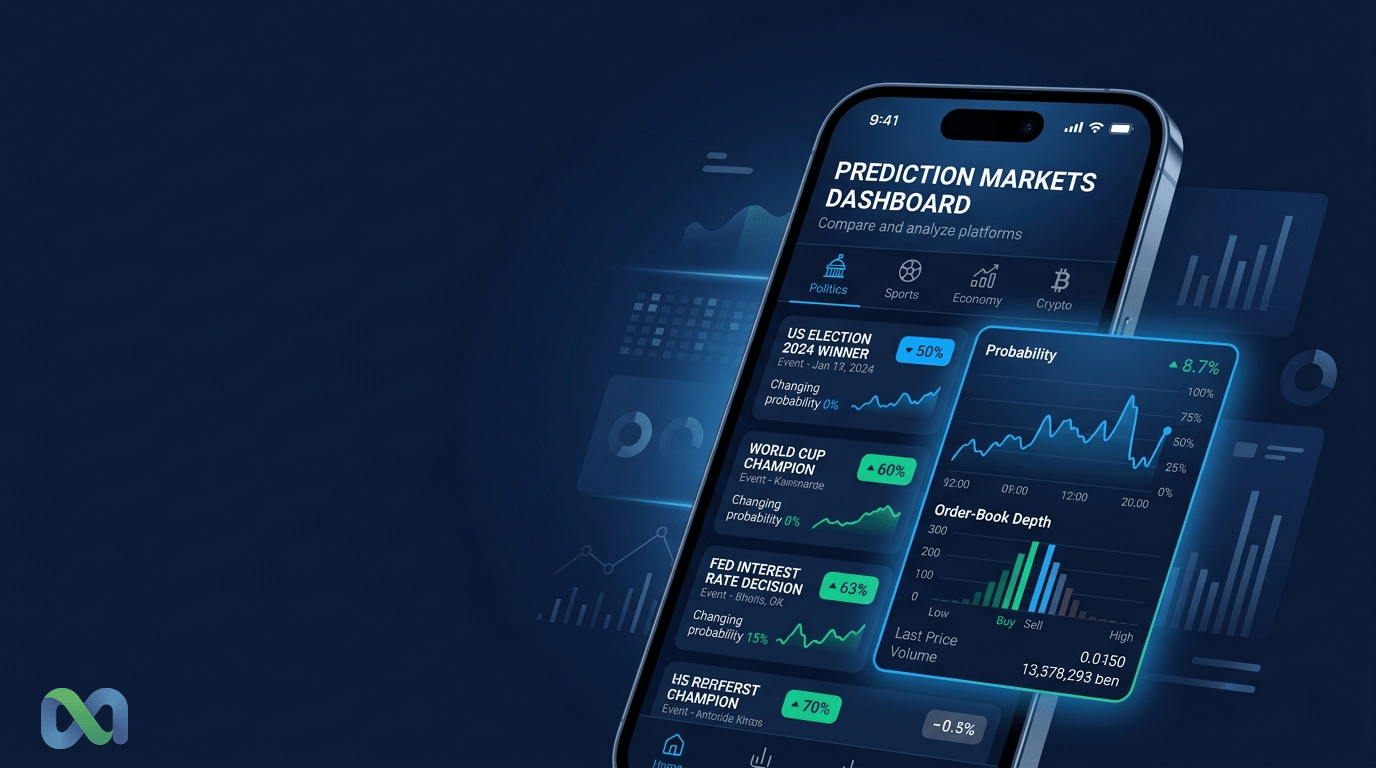
Searchers looking for a prediction markets app usually want more than a download link. They want to know which platform is real, legal, liquid, and worth funding. That is the right instinct. A prediction markets app can look simple on the surface, but the real quality shows up in market rules, funding rails, fees, settlement, and the way prices move under pressure.
The best prediction markets app is not the same for every trader. A politics analyst may care most about regulated event contracts. A crypto-native trader may care about global market breadth. A sports-focused user may want fast mobile execution and clear resolution rules. A beginner may need simple onboarding, small position sizes, and strong education before placing any capital at risk.
This guide compares the major options and gives you a practical framework. You will learn what a prediction markets app does, how apps differ from sportsbooks and investing apps, how to check legal availability, and what trust signals matter before you download. The goal is simple: choose a platform based on structure, not hype. Rules matter. Costs matter. Access matters. Risk matters.
Risk note: prediction markets involve financial risk. Availability, rules, and legal status vary by jurisdiction. Always read platform terms, market rules, fee schedules, and local requirements before you trade.
What Is a Prediction Markets App?
A prediction markets app is a mobile or web platform where users trade contracts tied to future events. Each price reflects the market’s implied probability of an outcome. Instead of only expressing an opinion, traders risk capital, update prices through trades, and create a live signal about what the crowd expects.
A good prediction markets app does four jobs well. First, it lists clear event markets. Second, it lets users buy and sell positions at visible prices. Third, it settles each market using stated rules. Finally, it shows enough data for users to judge whether the price is fair.
For example, a market might ask whether a candidate will win an election, whether a central bank will change rates, or whether a sports team will win a tournament. If a Yes contract trades at $0.62, the market is implying roughly a 62% chance before fees and market structure effects. That number is not a guarantee. It is a live price created by traders.
How Prediction Market Apps Work
Most prediction market apps use one of two structures. Some use an order book, where buyers and sellers post bids and offers. Others use an automated market maker, or AMM, where a pricing formula gives continuous liquidity. Some platforms combine both ideas.
The trading flow is usually simple. You create an account, check eligibility, fund your wallet, open a market, review the rules, and choose a side. Then you decide whether the price is attractive. If the market later moves in your favor, you may sell before final resolution. If you hold to the end, settlement depends on the official outcome source.
The most important point is that prices move. A prediction markets app is not only a place to pick winners. It is also a place to trade changing probabilities. New information can move prices before the final outcome becomes public. That is why liquidity, alerts, chart history, and execution speed matter.
A serious app should make these mechanics easy to inspect. You should see the current price, the spread, recent activity, volume, market rules, settlement source, and any fees. If those details are hidden, the app is asking you to trade blind.
How They Differ From Sportsbooks and Investing Apps
Prediction market apps are often compared with sportsbooks, but the mechanics are different. A sportsbook sets lines and manages its own exposure. A prediction market lets users trade contracts against a market price. The price can change as participants buy and sell.
They also differ from normal investing apps. A stock app lets you trade shares, funds, options, or other financial instruments. A prediction markets app focuses on event outcomes. The underlying question is not “What is this company worth?” It is “What probability should this future event have right now?”
That difference changes the skill set. In a prediction market, you need to understand information flow, incentives, liquidity, and resolution details. You are not only analyzing the event. You are also analyzing whether the current probability is mispriced.
This is why a prediction markets app can be useful for analysts. It turns fuzzy narratives into prices. However, it also creates risk. A market price can be wrong, thin, manipulated by low liquidity, or distorted by restrictions. Treat the app as a decision tool, not an oracle.
Best Prediction Markets Apps Right Now
The best prediction markets app depends on what you can legally access, what markets you want, and how you prefer to fund your account. No single app is best for every user. The strongest choice for one trader may be unusable or unsuitable for another.
Use the shortlist below as a first screen. Then read the full platform rules before you open an account.
- Kalshi: best for eligible U. S. event traders who want a regulated exchange model. The caveat is that product scope and access depend on rules.
- Polymarket: best for crypto-native users who want broad market selection. The caveat is that access rules and crypto custody matter.
- ProphetX: best for sports-focused users who want a mobile-first event trading flow. The caveat is that rules and availability need careful review.
- Macro Markets: best for traders who want transparent event markets, broad category discovery, and prediction market education. Users still need to verify jurisdiction and market rules.
- Emerging apps: best for early adopters who want to test new UX or niche markets. The caveat is higher platform and liquidity risk.
Kalshi
Kalshi is one of the best-known regulated event contract platforms in the United States. It positions itself as a way to trade future events through a formal exchange model. That structure makes Kalshi important for users who care about regulatory clarity.
Kalshi can be a strong choice for eligible users who want event contracts tied to economics, politics, weather, culture, and other topics. Its main advantage is not just the app experience. It is the institutional framing around event contracts and market rules.
However, users still need to check availability and product details. A regulated structure does not mean every market is available to every person. It also does not remove trading risk. Market prices can move against you, and settlement details still matter.
Before using Kalshi, review its official terms, contract rules, fees, and eligibility requirements. A prediction markets app is only useful if you can legally use it and understand how each contract resolves.
Polymarket
Polymarket is the most visible crypto-native prediction market brand. It often has broad market coverage and strong public attention. Many users watch Polymarket prices even when they do not trade there, because the platform has become a reference point for real-time event probabilities.
Polymarket’s strength is market breadth. You can often find markets on politics, global events, crypto, entertainment, sports-adjacent topics, and breaking news. The user experience also makes it easy to scan what the market is pricing.
The caveat is access and custody. Crypto-native platforms often require wallet use, stablecoins, and attention to regional restrictions. Users also need to understand how funds move, how positions settle, and what happens if a market is disputed.
If you are evaluating Polymarket as a prediction markets app, do not stop at the headline price. Check market volume, spread, rule wording, resolution source, and whether your location is allowed. A popular market is not always a safe or efficient market.
ProphetX
ProphetX is often discussed by users who want a sports-focused prediction market app. It has positioned itself around event trading with a strong mobile feel. For users who mainly care about sports markets, that focus can be attractive.
The key question is whether the app’s rules match your expectations. Sports markets can resolve quickly, but details matter. Injuries, schedule changes, official results, and settlement timing can affect the experience.
A sports-focused user should judge any prediction markets app on three practical items. First, are the markets deep enough to enter and exit cleanly? Second, are prices and spreads easy to read on mobile? Third, are settlement rules clear before the event starts?
If the answer is no, the app may still be interesting, but it should not be your default platform. Fast UX cannot compensate for unclear rules.
Macro Markets
Macro Markets is built around the idea that the world is tradeable through prediction markets. The platform focuses on event categories such as politics, sports, crypto, economy, culture, and global affairs. It also emphasizes transparency, market activity, and community discussion.
For users comparing a prediction markets app, Macro Markets is useful because it highlights several product details that matter in practice. Users can look at live probability movement, market activity, wallet flows, and category discovery. The platform also leans into education, which helps newer users understand how prediction markets work before they trade.
Macro Markets is not a shortcut around risk. Users still need to review local availability, terms, market rules, funding methods, and settlement criteria. But the platform’s strength is its focus on making event trading easier to inspect and discuss.
This matters because app choice is not only about downloads. It is about whether the platform helps you understand the price before you take a position. Good apps make hard choices feel clear.
Other Apps Worth Watching
The prediction market app category is moving fast. App-store listings, crypto-native tools, sports event platforms, and new exchange-style products continue to appear. Some may become serious competitors. Others may never reach meaningful liquidity.
When you evaluate a newer app, be more skeptical. New platforms often have better design than market depth. They may also have fewer resolved markets, weaker documentation, and less public history.
Look for signs of durability. Has the platform handled market disputes? Does it publish clear market rules? Does it show volume and activity? Can users exit positions, or are they stuck until resolution? Does support respond when funding or settlement issues appear?
A newer prediction markets app can be worth testing with small amounts. However, it should earn trust over time. Do not confuse novelty with quality.
How to Choose the Right Prediction Markets App
A smart app choice starts with a checklist. Do not begin with brand recognition alone. Start with legality, liquidity, fees, custody, mobile execution, and trust.
Here is the core framework:
- Can you legally access the app from your jurisdiction?
- Are the market rules clear enough to understand settlement?
- Is there enough liquidity to enter and exit without poor pricing?
- Are fees, spreads, deposits, and withdrawals transparent?
- Does the app show activity, charts, and price history?
- Does support have a track record of handling disputes?
- Does the platform explain risk in plain language?
If an app fails one of the first four checks, pause. A beautiful interface cannot fix legal uncertainty, thin liquidity, unclear rules, or opaque funds.
Legality and Regional Availability
Legality is the first filter for any prediction markets app. The rules vary by country, state, product type, platform structure, and user status. Some apps operate as regulated exchanges. Others use crypto-native structures. Some restrict users from specific jurisdictions.
Do not rely on social media claims for legal status. Check official platform terms, help pages, and regulator references. In the United States, agencies such as the Commodity Futures Trading Commission publish materials about derivatives and event contracts. In other regions, the answer may involve financial, consumer protection, or crypto rules.
Also remember that app-store availability does not equal legal approval. A mobile app may appear in the Apple App Store or Google Play while trading access is restricted. You need to check account eligibility, not just whether the app installs.
A practical rule: if the app cannot clearly explain who may use it, what products are offered, and what restrictions apply, treat that as a warning sign.
Liquidity and Market Depth
Liquidity is the second filter. A prediction markets app with thin liquidity can show prices that look attractive but are hard to trade. You may enter at a poor price, move the market with a small order, or struggle to exit before resolution.
Look at volume, open interest, spreads, and recent activity. If a market has wide spreads, the displayed probability may not be a reliable trading signal. It may be only a rough midpoint between buyers and sellers.
Market depth is especially important for short-term event traders. News can move prices quickly. If the app does not show enough depth, you may not know what your true execution price will be.
A good app helps users avoid this mistake. It should show price impact before you confirm a trade. It should also make recent trades and order flow easy to inspect.
Fees, Funding, and Withdrawals
Fees can change the real value of a trade. Some platforms charge explicit trading fees. Others embed cost through spreads, withdrawal fees, blockchain network fees, or funding rails. A prediction markets app should make these costs clear before you trade.
Funding matters too. Some users want bank transfers or cards. Others prefer stablecoins or crypto wallets. Some want fast withdrawals. Others need tax records or exportable history.
Before you fund any app, answer these questions:
- What deposit methods are supported?
- What withdrawal methods are supported?
- How long do withdrawals usually take?
- Are there minimums or extra fees?
- Who holds custody of funds?
- Can you export transaction history?
A strong app treats wallet and transaction history as core product features. A weak app hides cost details until after the user commits.
Mobile UX and Execution Speed
Mobile UX matters because event information moves quickly. A prediction markets app should help you move from news to market to order ticket without friction. But speed should not remove clarity.
The best mobile flows show the market question, current price, chart, rules, source, fees, and confirmation screen in a clean sequence. They also make it easy to cancel, adjust size, and understand price impact.
Push alerts can help, but they can also create bad habits. Alerts should help you monitor markets, not push you into rushed trades. A serious app gives users watchlists, price alerts, and clear notifications without making every move feel urgent.
For beginners, UX should slow down the right moments. It should make risk clear before order submission. It should also teach users what price, probability, settlement, and liquidity mean.
Are Prediction Market Apps Legal and Safe?
Prediction market apps can be real, but legality and safety depend on the platform, product, and user location. Some operate under formal regulatory frameworks. Others use crypto-native or offshore models. Always verify eligibility, custody, rules, and risk before funding an account.
This is the section to read before you download. A prediction markets app can be useful and still unsuitable for your jurisdiction or risk profile.
How Regulation Varies by Platform
Regulation varies because prediction markets sit between several categories. They can resemble derivatives, financial exchanges, research tools, gaming products, or crypto applications. The answer depends on how the contract is structured and where users live.
A regulated exchange model may offer more formal oversight. A crypto-native model may offer broader global participation, but it can also raise custody and access questions. A sports-focused model may face a different rule set again.
Users should avoid broad claims like “prediction markets are legal everywhere” or “prediction markets are always banned.” Both statements are too simple. The right question is narrower: can this specific user access this specific product on this specific platform from this specific location?
If you cannot answer that question from official sources, do not fund the app yet.
Trust Signals to Verify Before Downloading
A trustworthy prediction markets app should show clear information before asking for money. Start with the basics: company identity, terms of service, market rules, fee schedule, risk disclosures, privacy policy, and support channels.
Then check market-level trust signals. Does each market name a resolution source? Does it explain edge cases? Does it show when the market closes? Does it state how disputes work? Does it keep a history of resolved markets?
You should also check the funding path. If the app uses crypto, understand wallet custody and network fees. If it uses fiat, understand the payment processor and withdrawal timeline. If it uses both, understand how balances convert.
Finally, search for platform history. Look for resolved disputes, user complaints, security incidents, and public responses. No platform is perfect, but serious operators respond with details.
Who Should Use a Prediction Markets App?
A prediction markets app is best for people who want to turn event analysis into a priced view. It can help traders, analysts, journalists, and informed fans track what the market expects. It is not a fit for users who want guaranteed returns or casual entertainment without risk.
Different users should choose different apps. The right app depends on your market focus and skill level.
Beginners
Beginners should start with education and small position sizes. A good beginner app explains the market question, price, maximum loss, settlement source, and fees before the trade.
New users should avoid complex markets at first. Start with simple Yes or No questions where the resolution source is obvious. Read the rules before looking at the chart. Then decide whether the current probability is too high, too low, or fair.
Beginners should also keep a trading journal. Write down why you entered, what price you paid, what information could change your view, and when you would exit. This turns each trade into feedback, not just a result.
A prediction markets app is more useful when it teaches that process.
News and Politics Traders
News and politics traders need fast information, but they also need discipline. Political markets often move on polling, court decisions, debate moments, candidate statements, turnout data, and institutional signals.
The best app for this user type has clear charts, deep markets, reliable alerts, and detailed rules. It should also make source quality visible. A market about an election should not leave users guessing which official body decides the result.
Politics traders should be careful with narrative momentum. A headline can dominate social media while the market barely moves. That gap can be useful. It can also mean the market is waiting for better evidence.
Use the prediction markets app to compare stories with prices. If the two disagree, ask why before you trade.
Sports-Focused Users
Sports-focused users care about timing, injury news, lineups, schedules, and settlement speed. They may also care about tournament futures, award markets, and head-to-head events.
The app should show current probability, market depth, rules, and closing time clearly. If a market closes before key news, your strategy changes. If it stays open during live play, execution speed and price impact become more important.
Sports users should also distinguish prediction markets from traditional sportsbooks. The point is not only to pick a winner. The point is to trade probability as new information arrives.
That mindset changes how you use the app. You may enter early, sell after a favorable move, or avoid a market because the spread is too wide.
Prediction Markets App FAQ
Are Prediction Market Apps Real?
Yes, many prediction market apps are real platforms where users trade event contracts. However, quality varies widely. Verify company identity, legal access, market rules, custody, fees, support, and resolved market history before you fund an account.
Which Is the Most Accurate Prediction App?
No app is always the most accurate. Accuracy depends on liquidity, trader quality, information flow, market design, fees, and restrictions. A liquid market with informed traders often produces a better signal than a thin market with a polished interface.
What Are the Top 5 Prediction Markets?
Commonly watched platforms include Kalshi, Polymarket, ProphetX, Macro Markets, and newer niche apps. The right shortlist changes by jurisdiction and use case. Compare legal access, market selection, liquidity, fees, and settlement rules before choosing.
Are Prediction Markets Legal?
Prediction markets may be legal, restricted, or unavailable depending on where you live and how the platform operates. Check official terms and local rules. Do not assume a platform is available just because you can view its website or download its app.
Can You Make Money With a Prediction Markets App?
You can profit if your analysis is better than the market price after costs. You can also lose the capital you put at risk. Treat prediction markets as risk-based trading, not guaranteed income.
What Features Matter Most in a Prediction Markets App?
The most important features are clear rules, legal eligibility, strong liquidity, transparent fees, reliable funding, visible activity, fast execution, and useful alerts. Education and support also matter, especially for new users.
Should Beginners Use Prediction Markets Apps?
Beginners can use them if they start small and learn the mechanics first. They should avoid complex markets, read settlement rules, track results, and never trade money they cannot afford to lose.
Final Takeaway: Choose Structure Over Hype
The best prediction markets app is the one that matches your jurisdiction, goals, funding needs, and risk tolerance. Brand recognition helps, but it is not enough. You need legal access, clear rules, visible liquidity, transparent fees, and a mobile flow that helps you think before you trade.
If you remember one idea, make it this: a prediction markets app should make probability easier to inspect, not harder. The app should show how prices move, why markets resolve, what costs apply, and where your money sits.
For most users, the right path is to compare several platforms before funding one. Check Kalshi if you want a regulated U. S. event-contract model. Check Polymarket if you follow crypto-native global markets and understand wallet risk. Check ProphetX if sports event trading is your main focus. Watch Macro Markets if you want broad event categories, transparent market activity, and education around how prediction markets work.
Then start slowly. Review active markets, read the rules, watch price movement, and build a process before increasing size. A prediction markets app is only as good as the decisions it helps you make.
