


Romário on YouTube: The Enduring Stories of 'Baixinho'
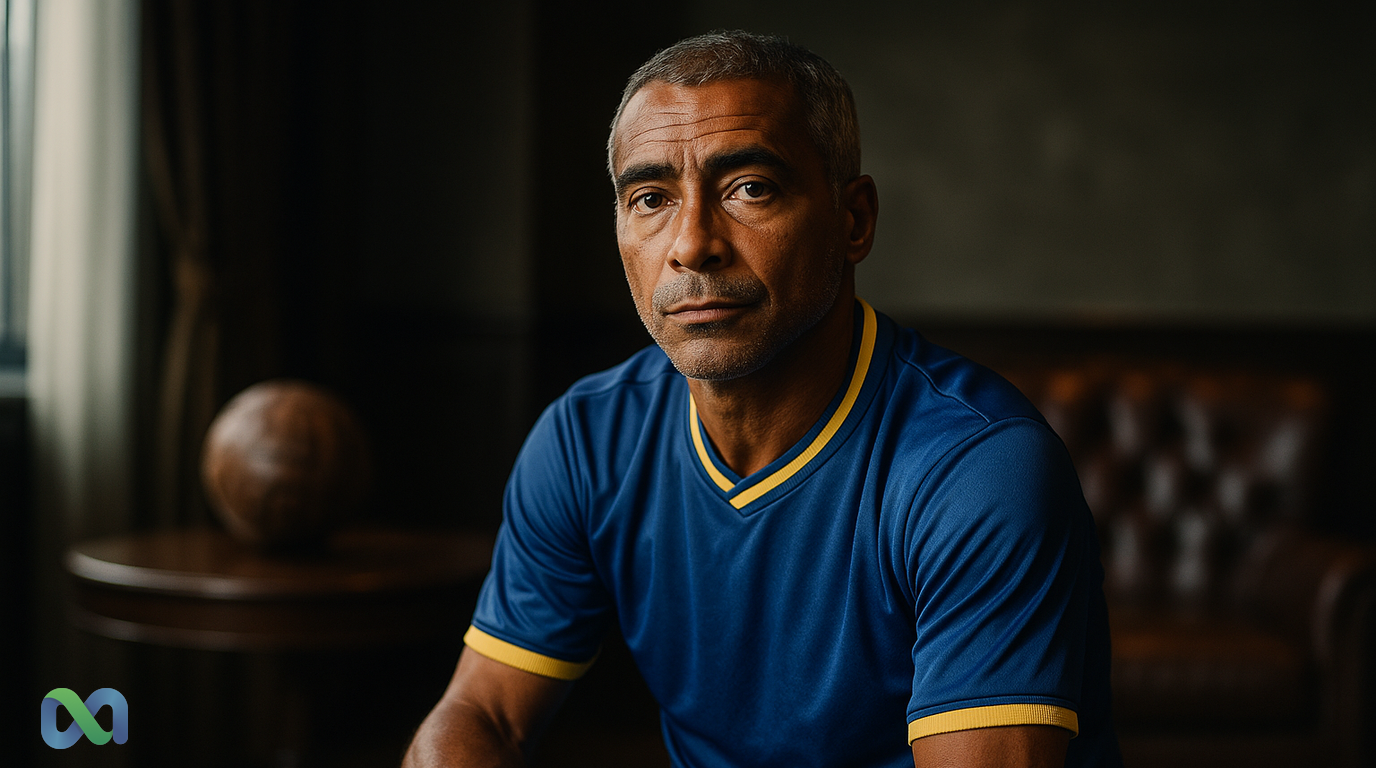
Romário remains one of the most impactful figures in Brazilian football, even decades past his prime. This is clearly evident on YouTube, where long interviews and recent podcasts still revolve around what made 'Baixinho' a benchmark. It's not just nostalgia. It's the rare combination of statistics, personality, and collective memory.
Two conversations help to better understand this. The first is the episode CHARLA #512 - Romário, published in 2025. The second is ROMÁRIO - 3rd season Podcast 10 & Faixa #11. Together, they illustrate why Romário still occupies a unique space in the debate about decisive strikers, the World Cup, and legacy building.
In this article, the focus is not on repeating folklore. The idea is to use these podcast-format sources to organize what truly underpins Romário's public image today. Ultimately, the portrait is simple. Few Brazilian players have managed to transform efficiency into myth with such force.
Why Romário Continues to Generate So Much Podcast Content
Long-form podcasts are a good test for historical figures. When a conversation extends beyond an hour, there's less room for slogans and more for context. With Romário, this works well because his career offers abundant material. There's the World Cup, rivalries, behind-the-scenes stories, controversies, and a very clear playing identity.
In the case of Charla, the format helps to revisit well-known stories in a more direct manner. Romário discusses his career, 1994, his interactions with other strong names in Brazilian football, and how he views his journey. In 10 & Faixa, the interview reinforces his persona, someone who never needed to appear neutral to be remembered as a giant.
This type of content works because Brazilian football still seeks narratives that combine results and personality. Romário delivers both. He doesn't rely on media training or sympathetic historical revision. The strength of his public figure comes precisely from the friction. He's an ex-player who continues to mobilize debate because the memory of him has never faded.
What These Episodes Reinforce About 'Baixinho's' Legacy
The first point is the immediate association between Romário and decisiveness. His career is remembered less for volume and more for impact. Instead of being treated as a player of continuous build-up, he often appears as a symbol of resolution. This explains why so much conversation about Romário returns to the same core: who decides, at a high level, with the fewest touches.
The second point is the 1994 World Cup. In any serious retrospective on Romário, the tournament in the United States remains central to the narrative. Not only because Brazil became champion again, but because the striker was a critical piece in that cycle. FIFA records Romário as the winner of the 1994 World Cup Golden Ball, a fact that helps separate emotional memory from objective evidence.
The third point is the contrast with current football. In podcasts, this appears recurrently, even when it's not the main topic. Romário becomes a benchmark for discussing number 9s, composure in the box, and the ability to resolve with low volume. In an era that values intensity, width, and off-the-ball pressing, he continues to be remembered for an almost brutally economical way of attacking.
The Myth's Strength Comes from Style, Not Just Goals
Romário wasn't just memorable because he scored a lot. Other strikers also accumulated numbers. The difference lies in the perception of inevitability he created on the field. His game seemed to reduce football to a few essential movements: short control, reading space, quick finishing, and almost no wasted energy.
This aesthetic matters more than it seems. In video content, especially podcasts, sports memory isn't organized solely by statistics. It's organized by mental images. In Romário's case, these images are easy to recall: the short touch in the box, the clinical finish, the composure in big moments, and the absolute conviction when speaking about himself.
This is why his figure resists the test of time so well. The public can discuss historical hierarchy, compare generations, or relativize physical context. Still, the feeling remains that Romário had his own language for scoring goals. This type of signature is what transforms a star into a permanent character.
How YouTube Changes the Way We Remember Former Players
Previously, the memory of a great striker relied more on TV archives, roundtables, and documentaries. Today, it also depends on long, indexable conversations. YouTube reorganizes legacies by allowing new audiences to discover the character through clips, full interviews, and viral moments.
With Romário, this is especially relevant. He works very well in short clips but also sustains long episodes. This expands the narrative's depth. Instead of just consuming a soundbite, the audience can observe how he strings together memories, ranks opponents, interprets teammates, and reaffirms his own greatness.
This format also helps keep the former player in editorial circulation. A strong podcast episode can become an article, a clip, a social media debate, and a new round of historical comparison. For a content brand, this ecosystem is valuable because it combines search, video, and text on the same agenda. This is exactly what has already appeared in content like World Cup 2026: complete guide, where great football narratives regain context and permanence.
How to Embed a Romário Video Without Turning the Article into Fan Service
A YouTube embed works best when it serves a clear editorial hypothesis. In this case, the hypothesis is that Romário remains relevant because he brings together three things that rarely appear together. First, an undeniable sporting peak. Second, an easily recognizable technical identity. Third, a public persona that never accepted disappearing.
Therefore, the video should not be a mere embellishment. It serves as living evidence that the character continues to trigger memory, comparison, and debate. The article gains more when the embed is accompanied by interpretation. The reader doesn't just need to watch. They need to understand why that conversation still matters.
A simple way to do this is to introduce the video with an objective question. What does Romário still represent when the topic is a decisive striker? From there, the embed ceases to be an accessory and becomes part of the argument. This improves retention, creates a bridge between text and video, and reduces the feeling of content assembled just to capture clicks.
Romário Still Functions as a Benchmark of Greatness in Brazilian Football
Every generation chooses its own benchmarks, but some measures survive changes in context. Romário is one of them. When discussions arise about who decides big games, who possesses rare composure in the box, or who deserves a higher place on historical lists, his name quickly resurfaces.
This happens because 'Baixinho's' legacy doesn't solely depend on emotional archives. It also rests on verifiable milestones, international recognition, and persistent collective memory. This combination appears in both institutional sources and popular conversations. That's why a podcast with Romário still doesn't feel like a museum piece. It feels like active material.
For content creators, this is the main lesson. Talking about Romário is still worthwhile because he continues to serve as a shortcut to discuss efficiency, ego, decisiveness, and greatness in Brazilian football. And few characters deliver so much density with so little narrative effort.
Watch the Main Episode Within the Article
The episode below is not an embellishment. It serves as a primary source for understanding Romário's legacy, especially when the topic is decisiveness, World Cup memories, and character building in Brazilian football.
As an editorial complement, it's also worth watching the episode ROMÁRIO - 3rd season Podcast 10 & Faixa #11, which expands the repertoire of stories and reinforces the character's permanence in the video ecosystem.
For publication, the important point is this: the embed above is already in real HTML within the article body, so the player should open directly on the page, rather than appearing as a code block.
Conclusion
Romário remains prominent on YouTube for the same reason he remains prominent in the memory of Brazilian football. He still represents a very specific way of dominating big games. Not through the aesthetic of continuous effort, but through the aesthetic of fatal execution.
Recent podcasts show that this legacy remains alive because it still organizes discussion. Romário is remembered as a champion, a goalscorer, and a symbol of decisiveness. But, above all, he is remembered as someone who transformed efficiency into identity. And that is the kind of mark that almost never ages.
