


Russia Shadow Fleet Sanctions: What Putin's Ship Threat Means
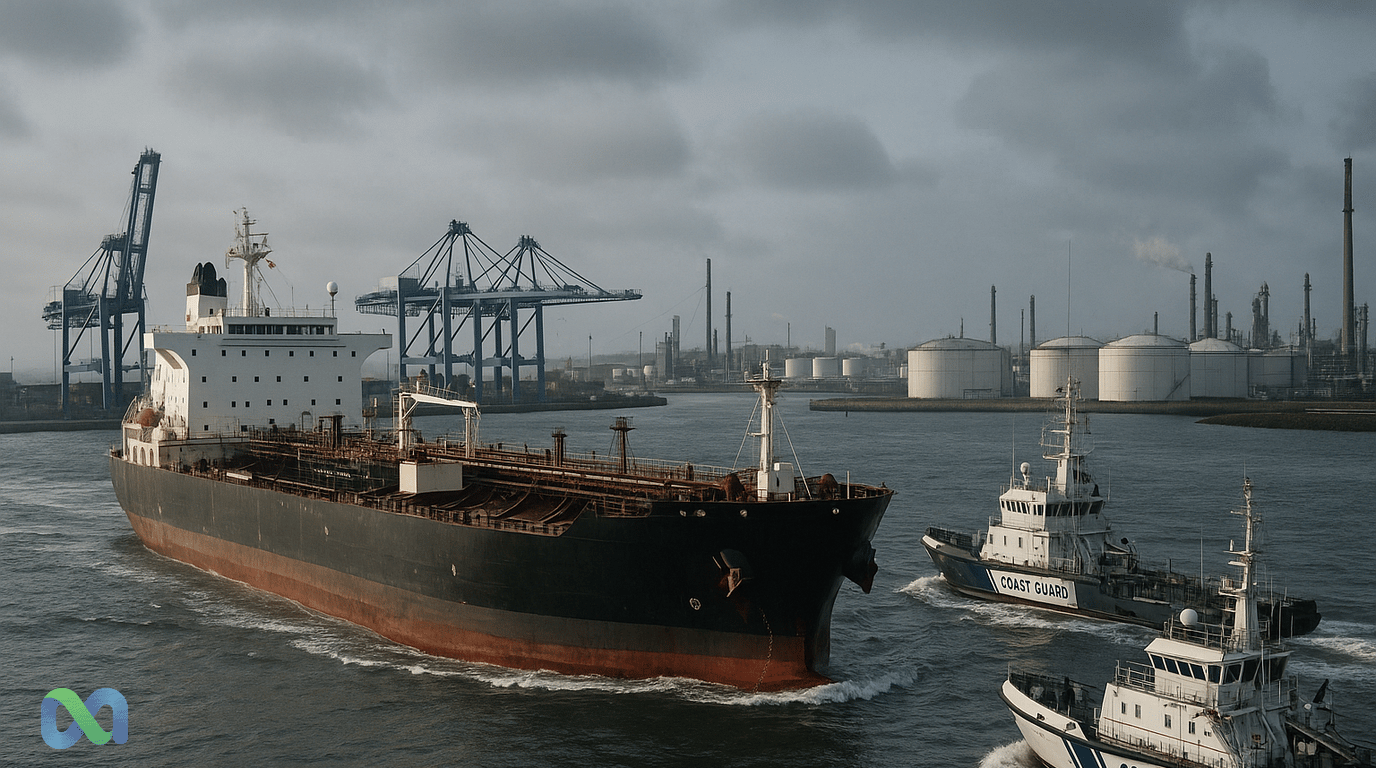
Russia shadow fleet sanctions moved from a legal fight into a maritime-risk story. The shift came after Vladimir Putin threatened to seize European vessels in response to moves against Russian-linked ships. The warning matters because it targets the logistics layer behind Russia's oil exports, not just the politics of the Ukraine war.
According to Radio Free Europe/Radio Liberty, Putin said Russia would respond in kind to Russian cargo seizures. That is the core trigger. Europe is trying to make shadow-fleet enforcement more costly for Moscow. Meanwhile, Moscow is trying to make that enforcement more costly for Europe.
For markets, the question is not whether every threat becomes action. The question is what events would confirm a shift from rhetoric to enforceable maritime pressure. Oil flows, tanker insurance, port access, and sanctions credibility all sit inside that question.
This article explains what Putin threatened, how Russia's shadow fleet works, and why the next escalation signals matter for traders who track geopolitical risk.
What Putin Threatened
Putin's message was direct: if European countries seize Russian-linked ships or cargo, Russia can seize European vessels in response. The threat followed European moves aimed at vessels used to move Russian oil around sanctions.
The framing was also political. Moscow described European enforcement as theft or piracy. That language tries to shift the debate away from sanctions law and toward retaliation. It also signals that Russia wants ship owners, insurers, and port operators to price in legal uncertainty.
The setting made the threat sharper. Al Jazeera reported the warning in the context of Russia's Pacific Fleet and wider naval messaging. That does not mean naval conflict is the base case. However, traders should still separate three layers of risk. The layers are legal seizure, commercial disruption, and military escalation.
The most immediate layer is legal and commercial. A state can detain ships, challenge ownership structures, or target cargo tied to sanctioned entities. The more serious layer is reciprocal action against vessels with European owners, flags, insurers, or cargo interests. The highest-risk layer is a naval incident near crowded shipping lanes.
Markets usually react first to the middle layer. Freight rates can move before oil barrels stop flowing. Insurance premiums can rise before a port closes. Therefore, the early signals may appear in shipping behavior before they appear in headline oil prices.
What Russia's Shadow Fleet Does
Russia's shadow fleet is a network of tankers used to move oil while reducing exposure to Western sanctions, price caps, and insurance controls. These ships often use opaque ownership, older vessels, complex flag arrangements, and non-Western service providers.
The goal is simple. Russia wants to keep oil revenue flowing while making enforcement harder. The shadow fleet helps move crude and refined products even when standard shipping, insurance, and finance channels become restricted.
This is why Russia shadow fleet sanctions focus on more than the ship itself. A tanker can be detained, but the cargo may carry the real economic value. If authorities can sell seized oil or other cargo, enforcement changes from a delay tactic into a revenue-denial tool.
That shift raises the stakes. A detained vessel is inconvenient. A sold cargo is a direct hit to cash flow. It also creates a stronger example for future enforcement, which can change the behavior of traders, brokers, insurers, and port agents.
The Moscow Times reported that European countries have already detained vessels linked to the shadow fleet. Each case helps define the boundary between symbolic enforcement and a repeatable sanctions mechanism.
For prediction-market thinking, the important point is observability. A vague threat is hard to price. A detained vessel, a court-approved cargo sale, or a Russian counter-seizure is easier to price because it changes the state of the world.
Why Russia Shadow Fleet Sanctions Change The Risk
Europe's new enforcement logic is important because it can move from detention to monetization. Detention stops a ship or cargo for a period. Monetization turns the seized asset into proceeds that Moscow cannot access.
That is why Putin reacted so strongly. If European states can sell cargo from sanctioned or detained ships, they do not merely block a shipment. They turn enforcement into a financial penalty. That threatens the economic purpose of the shadow fleet.
The legal details will matter. Traders should watch whether member states can execute sales quickly, whether courts slow the process, and whether buyers are willing to touch contested cargo. A policy that exists on paper is different from a policy that clears a sale.
The credibility test has three parts. First, can Europe identify the relevant ownership and cargo links? Second, can it detain vessels without creating major legal exposure? Third, can it sell cargo in a way that survives challenge?
If those answers improve, Russia's shipping workaround becomes more fragile. If the answers remain uncertain, Moscow may treat the new tool as political signaling rather than a binding constraint.
This is also why the story matters beyond Russia. Sanctions enforcement depends on other market actors. Flag registries, ship managers, insurers, ports, and commodity traders all decide how much risk they will tolerate. Therefore, their decisions can tighten enforcement before governments announce new measures.
Market Implications: Oil, Freight, And Sanctions Credibility
The first market question is whether the threat changes oil flows. A single detention may not remove much supply. A pattern of detentions can matter more because it raises the cost of moving each barrel.
Oil markets often distinguish between physical disruption and risk premium. Physical disruption means barrels are delayed or removed from supply. Risk premium means traders pay more for uncertainty, even before supply changes.
Russia shadow fleet sanctions can affect both channels. Strong enforcement can delay ships and cargo. It can also raise insurance costs and reduce port access. In addition, it can make some counterparties avoid Russian-linked barrels.
Freight markets may show stress earlier than crude benchmarks. Older vessels that rely on uncertain insurance can become harder to place. Some ports may demand more documentation. Some buyers may require wider discounts to accept legal risk.
Sanctions credibility is the second channel. If Europe detains ships but cannot sell cargo, Russia can absorb the disruption. If Europe detains ships and sells cargo, the enforcement threat becomes more credible. That could reduce the shadow fleet's value as a sanctions workaround.
Russia's war financing is the third channel. Oil export revenue remains central to Moscow's ability to fund the war in Ukraine. Enforcement can raise transport costs or reduce realized revenue. As a result, it can matter even without a dramatic supply shock.
However, the impact should not be overstated. Russia has spent years adapting to sanctions. It can reroute cargo, use intermediaries, shift insurance sources, and offer discounts. Therefore, the base case is usually friction, not instant collapse.
For markets, friction still matters. Small changes in freight, insurance, and buyer behavior can compound across many shipments. Over time, that can change fiscal pressure and geopolitical bargaining power.
Three Scenarios Traders Should Track
The cleanest way to analyze Putin's threat is through scenarios. Each scenario has different confirmation signals and market effects.
Scenario 1: rhetoric stays ahead of action. Russia denounces Europe, but no major counter-seizures follow. Watch for more speeches, diplomatic notes, and limited operational change. In this path, headline risk fades unless Europe executes cargo sales.
Scenario 2: legal and commercial counter-seizures. Russia targets European-linked vessels through courts, ports, or administrative action. Watch for named ship detentions, cargo claims, and insurance disputes. In this path, freight and insurance risk rise first.
Scenario 3: naval confrontation risk rises. Warships, coast guards, or drones become involved near active shipping routes. Watch for military escorts, port warnings, and incidents at sea. In this path, risk premium can rise quickly.
Scenario one is the least disruptive. It treats the threat as deterrence. Moscow wants Europe to hesitate, but it avoids direct action that could damage trade channels or trigger broader retaliation.
Scenario two is more important for markets. It converts the threat into legal and commercial friction. That is where vessel ownership, cargo claims, insurance coverage, and port jurisdiction become price-relevant.
Scenario three is the tail risk. It is not the default outcome, but it carries the highest market sensitivity. Any incident involving naval forces, drones, or escorted tankers would move the story from sanctions enforcement into security risk.
Prediction-market traders should avoid treating these scenarios as fixed forecasts. Instead, they should update when observable triggers appear. A court order, a named cargo sale, or a Russian counter-seizure is stronger evidence than another speech.
What To Watch Next
The first signal is whether Europe actually sells seized cargo. That would show the enforcement tool is operational, not symbolic. It would also explain why Moscow is trying to raise the cost of using it.
The second signal is whether Russia names a target. General threats are easier to walk back. A specific vessel, owner, cargo, or port action is harder to dismiss.
The third signal is insurance behavior. If insurers raise premiums, sanctions pressure can spread through the shipping system. The same applies if they withdraw coverage or demand stronger documents. This can happen without a dramatic public confrontation.
The fourth signal is EU unity. Russia benefits when enforcement differs across member states. Europe gains leverage when rules, detentions, and cargo-sale procedures look coordinated.
The fifth signal is oil-price sensitivity. If crude prices ignore the story, markets may see it as political noise. If freight and insurance move first, the risk may be building below the headline level.
For Macro Markets readers, the broader lesson is clear. Geopolitical events become tradable information when they produce measurable triggers. In this case, those triggers are vessel detentions, cargo sales, counter-seizures, insurance changes, and any sign of naval involvement.
A Plain-English Signal Checklist
This story can sound complex, but the key signs are simple. First, watch the ship. Did a state stop it, search it, or hold it in port? A ship that keeps moving is a lower-risk sign. A ship that stays stuck in port is a stronger sign.
Second, watch the cargo. Oil is the cash prize in this fight. If the cargo is only delayed, Moscow may absorb the cost. If the cargo is sold, the loss becomes clearer. That would make the policy much harder for Russia to ignore.
Third, watch the buyer. A sale needs someone willing to buy the oil. If buyers stay away, the tool may look weak. If buyers show up, Europe gains proof that the process can work.
Fourth, watch the insurer. Ships need cover to move through ports and narrow routes. If cover gets more costly, the trade slows down. If cover is pulled, some ships may have to wait.
Finally, watch the navy. Most of this fight can stay in courts and ports. That is still serious, but it is not the same as a sea clash. The risk changes if armed ships, drones, or escorts enter the story.
The best rule is to rank facts by action. A speech is weak proof. A ship held in port is stronger proof. A cargo sale is stronger still. A clash at sea would be the clearest break from the old pattern. This order helps traders avoid noise.
FAQ: Russia's Shadow Fleet And Ship Seizures
What is Russia's shadow fleet?
Russia's shadow fleet is a network of tankers used to move Russian oil while avoiding parts of the Western sanctions system. These vessels often rely on opaque ownership, older ships, alternative insurance, and complex flag arrangements.
Why did Putin threaten to seize European ships?
Putin threatened retaliation because Europe is moving against Russian-linked vessels and cargo. The key issue is the possible sale of seized cargo. That would turn enforcement into a direct financial penalty for Moscow.
Can Russia legally seize European ships?
The legal answer depends on location, vessel status, ownership, cargo, and domestic law. Russia can create legal claims or administrative actions, but broad retaliation would face legal and diplomatic risks. That is why specific cases matter more than general threats.
How could shadow-fleet sanctions affect oil markets?
They can affect oil markets through delays, higher freight costs, insurance pressure, reduced port access, and wider discounts for Russian-linked cargo. The largest effects would come from repeated enforcement or a security incident.
What should markets watch next?
Markets should watch for executed cargo sales, named counter-seizures, insurance changes, EU coordination, and naval involvement. These signals would show whether the threat is staying rhetorical or becoming operational.
Is this mainly an oil story or a sanctions story?
It is both, but the timing differs. Sanctions signals may appear first in courts, ports, and insurance rules. Oil-price signals may come later if those frictions slow cargo movement or change discounts.
Bottom Line
Putin's ship threat matters because it tests whether Russia shadow fleet sanctions can become a real constraint on oil logistics. Europe is trying to turn enforcement into a financial cost. Russia is trying to make that cost reciprocal.
The near-term market impact may appear first in freight, insurance, and port behavior, not in headline crude prices. That makes this a story about logistics and credibility as much as energy supply.
For prediction markets, the useful approach is not to predict escalation from one quote. It is to track confirmation signals. Seized cargo, Russian counter-seizures, insurance stress, and naval involvement would all change the trading operation map.
Political threats move markets when they become measurable. This one becomes measurable at sea, in court filings, and in the commercial decisions of the shipping network that still carries Russian oil.
Russia shadow fleet sanctions are now a 2026 test of enforcement, not just a headline risk. Our review uses 3 scenarios and 5 practical signals to separate noise from action.
Last reviewed: 2026-08-13. Macro Markets editorial review: we treat this as geopolitical risk analysis, not a trade recommendation.
Sources: RFE/RL, Al Jazeera, and The Moscow Times. The article does not claim a specific oil-price impact because the cited reports do not provide hard price data.
Risk note: Prediction-market probabilities are market expectations, not certainties. They can move when new facts appear, and they can also move on noise.
