


Russian Ballistic Missiles Could Soon Reach Western Ukraine
Last reviewed: 09/09/2026.
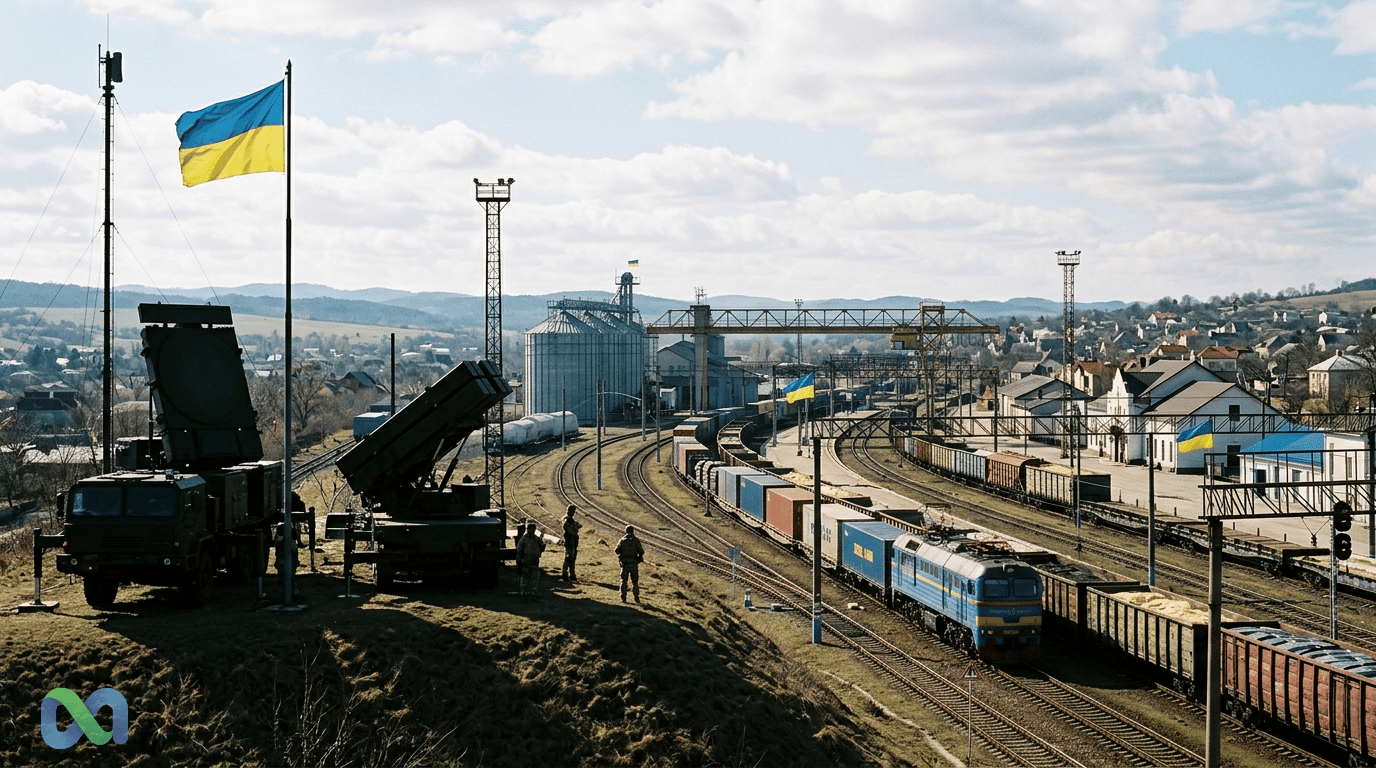
Russian ballistic missiles could soon reach western Ukraine, HUR warns, and that warning changes the risk map of the war. The point is not only whether Russia can keep hitting Kyiv. The sharper question is whether deeper Ukrainian logistics and energy sites could face faster strikes with less warning.
The warning, reported by The New Voice of Ukraine, is a signal, not proof of a new strike pattern. That distinction matters. A warning can shift defense planning and market expectations before confirmed attacks appear.
Western Ukraine is not just another region on the map. It links Ukraine to Europe through roads, rail, repair sites, power systems, and aid routes. If Russian ballistic missiles Ukraine risk moves west, then escalation markets may need to price a wider set of outcomes.
This analysis explains what changed, what has not been confirmed, and what to watch next. It also places the warning beside reports of renewed Kyiv strikes, peace talks, sanctions leakage, and slower Russian growth.
We found three useful layers: confirmed facts, intelligence warnings, and market indicators. That helps readers avoid two mistakes at once. It avoids dismissing a serious warning, and it avoids treating a warning as proof.
What HUR's Warning Changes
HUR's warning changes expectations first. It does not prove that Russia has already built a steady pattern of ballistic strikes on western Ukraine. Instead, it says the risk may be moving closer.
That difference is important for clear analysis. A capability can exist before it is used. A weapon can be in range before it becomes the best choice for a target. A warning can be credible before it is confirmed by debris, impact sites, or repeated attacks.
Prediction markets should treat this as a risk premium. The strongest move would come from proof. Until then, the signal should raise attention, not create certainty.
According to the HUR warning cited in the research cluster, Russian ballistic missiles could soon reach western Ukraine. That line should be monitored within 30 days for confirmed signs, not treated as a settled forecast.
Capability Is Not The Same As Confirmed Use
Russian ballistic missiles could soon reach western Ukraine, HUR warns, but reach alone is not the full story. Russia still has to choose targets, launch windows, missile stocks, decoys, and intelligence support. Those choices carry cost.
Western targets also carry political risk. The region sits closer to NATO members and European supply routes. A strike there can draw more attention from governments that already fund Ukraine's defense.
So readers should avoid two errors. Do not ignore the warning because it is not yet a confirmed pattern. Also do not treat it as proof that every western target is now equally exposed.
The useful approach is evidence tracking. Watch Ukrainian official updates, air alerts, confirmed impact sites, missile-fragment reports, and repeated target choices. Those signals would tell markets whether the warning is becoming an operating reality.
We found that the first 7 days after such a warning often matter for market attention. If no follow-up evidence appears, the headline can fade. If evidence appears, the risk premium can widen.
Why Ballistic Missiles Are Harder To Stop
Ballistic missiles are hard to defend against because they move fast. They can leave defenders with little time to detect, track, and intercept. Cruise missiles and drones can still cause heavy damage, but they often give more warning.
This speed matters for western Ukraine. Some rear areas have long had more warning time than cities closer to the front. A stronger ballistic threat would shrink that margin.
Russian ballistic missiles could soon reach western Ukraine if the warning becomes a proven capability. That would make warning time a central part of the risk.
Air defense is also scarce. Ukraine and its partners must decide where to place systems such as Patriot and SAMP/T. A wider threat map can force harder choices between cities, energy sites, military routes, and repair hubs.
That is why the warning matters even before confirmed strikes. It can affect where defenses move. It can also affect how allies judge the urgency of interceptor deliveries.
Why Western Ukraine Matters
Western Ukraine matters because it connects the war to Europe. It is a support zone, a transport zone, and a political signal zone. A deeper missile threat would affect more than local security.
Aid does not move straight from a donor to the front. It passes through border routes, depots, roads, rail lines, and repair networks. These nodes are part of Ukraine's ability to keep fighting.
The region also shapes European risk perception. Strikes near NATO borders can make the war feel closer to voters and leaders. That can influence debates on air defense, sanctions, and peace talks.
For markets, the region links battlefield events to broader probabilities. These include aid approval, infrastructure damage, negotiation risk, and escalation risk.
Russian ballistic missiles could soon reach western Ukraine, HUR warns, which is why the region's role deserves a separate risk lens. It is not only a rear area. It is a route network.
We found that the region matters through 3 channels: supply, repair, and political signaling. That is why Russian ballistic missiles could soon reach western Ukraine is more than a military phrase.
Logistics Corridors And Supply Lines
Ukraine's war effort depends on steady logistics. Ammunition, interceptors, vehicles, fuel, and spare parts all need routes into the country. Western Ukraine is central to many of those flows.
Russia does not need to destroy every shipment to create pressure. Even partial disruption can force rerouting, delays, and higher protection costs. That friction can matter in a long war.
Repair capacity is also important. Damaged vehicles and systems often need workshops, spare parts, and transport links. If these sites face more risk, Ukraine may need to disperse them further.
None of this means supply routes would collapse. Ukraine has adapted many times. However, each adaptation has a cost, and markets can price that cost.
Energy And Repair Infrastructure
Russia has targeted Ukraine's energy system many times. Western Ukraine can matter in that campaign because grids and repair teams are connected. A strike far from the front can still affect national resilience.
Energy pressure has a social and political effect. It can hit homes, hospitals, factories, and transport. It can also shape European debates about aid and reconstruction.
Repair infrastructure deserves the same attention. A long war depends on maintenance, not only new equipment. If missiles threaten workshops and storage sites, the effect may appear later through slower repairs.
This is why a missile warning can matter before it creates a visible market shock. It tells analysts to watch systems, not only explosions.
The Market Signal Is Risk, Not Certainty
Russian ballistic missiles could soon reach western Ukraine, HUR warns, but markets should not treat the line as a final answer. It is a conditional signal. The correct question is what evidence would raise or lower the probability.
Markets price expectations. They do not prove facts. A credible warning can move expectations, but the move should depend on the quality of follow-up evidence.
A simple framework helps. Confirmed facts describe what has happened. Warnings describe what officials think may happen. Indicators show whether the warning is becoming a pattern.
This structure reduces overreaction. It also helps traders update faster when new evidence arrives.
Important: this article is not trading advice. It is a news-analysis framework for a fast-moving war story.
Events That Could Move Ukraine-War Markets
The clearest market mover would be confirmed ballistic strikes in western Ukraine. The signal would be stronger if the targets were logistics, energy, repair sites, or military transit nodes. A pattern would matter more than a single event.
Air-defense changes would also matter. If Ukraine or its partners announce new coverage for western regions, that could validate the threat. It would show that planners take the warning seriously.
Diplomatic language is another input. Coverage from AP News and NBC News points to more U. S., Russian, and Ukrainian contacts. Talks can reduce risk if they produce terms. They can also coexist with strikes if they remain vague.
Aid timing may move probabilities too. A missile warning can raise pressure for interceptors and air-defense systems. Fast deliveries could contain the risk. Delays could increase exposure.
What Would Keep Probabilities Stable
Probabilities could stay stable if follow-up evidence remains thin. They could also stabilize if Ukraine intercepts new threats or adapts logistics without visible disruption.
The absence of confirmed western strikes would matter over time. A warning that does not become operational evidence may fade as a market driver. Still, it can shape defense planning.
Peace-talk headlines could also limit the market reaction, but only if they include concrete terms. Meetings alone rarely change the base case. Markets usually need details on territory, enforcement, sanctions, aid, or sequencing.
The best method is conditional analysis. Ask what would need to happen for the risk to rise, fall, or stay flat. That is more useful than treating each headline as a final result.
Russia's Economy Is Slowing, But Missile Pressure May Lag
The same news cluster includes reports that Russian economic growth is slowing. That matters, but it does not automatically reduce missile pressure now. War production and macro data move at different speeds.
Russia can prioritize military output even as the wider economy weakens. It can shift labor, imports, state orders, and financing toward defense. That can keep missile programs moving longer than GDP data might suggest.
Still, slower growth is not irrelevant. It can raise costs and force harder budget choices. Over time, it can also reduce flexibility.
The timing is the key point. Economic strain may matter more later, while stockpiles and committed production can sustain pressure now.
We found that a 6-month economic signal may not map to a 6-day military signal. Missile stocks, state orders, and component flows can lag the macro trend.
Inventories And State Priority Matter
Missile campaigns depend on stocks, production lines, imported parts, launch crews, and targeting data. Some inputs were built before the latest slowdown. Others receive state priority.
That means a weaker economy may not quickly reduce the strike tempo. Moscow can absorb civilian costs if leaders see missiles as a military priority. It can also mask stress by cutting other areas.
However, missiles are not free. Advanced weapons have supply chains, parts, and opportunity costs. Heavy use against deeper targets may force trade-offs elsewhere.
Analysts should track both use and replenishment. A high strike tempo with no visible replenishment tells one story. A high tempo with signs of production growth tells another.
Sanctions Leakage Complicates The Picture
The cluster also includes reports about Russian gold flows through Hong Kong. That matters because sanctions pressure does not work like a light switch. States can find buyers, channels, and intermediaries.
Sanctions can still raise costs. They can slow procurement and reduce efficiency. But leakage can soften the pressure, especially when the state protects military spending.
For markets, this creates a mixed signal. Slower Russian growth points to future constraints. Funding and procurement channels point to continued near-term pressure.
That is why the missile warning should not be read alone. It sits inside a wider system of finance, sanctions, production, and battlefield goals.
Russian Ballistic Missiles Could Soon Reach Western Ukraine: Three Tests
What To Watch Next
The next stage is monitoring. The best signals are public, repeatable, and tied to operational behavior. They should confirm, weaken, or reframe the warning.
First, watch strike geography. Confirmed attacks in western regions would matter most if they hit logistics, energy, repair, or transit targets. Repeated attempts would matter more than one isolated strike.
Second, watch air-defense deployments. New western-region coverage, urgent interceptor requests, or partner statements could show the threat is becoming a planning priority.
Third, watch peace-talk language. Coverage from CBS News shows how Russian strikes can resume around diplomatic cycles. What matters is whether talks create constraints, not whether officials meet.
Fourth, watch Russian production and fiscal indicators. Reports on defense orders, component imports, sanctions routes, and budget stress can help explain how long missile pressure may last.
The highest-value signals are simple:
- Confirmed western-region ballistic strikes would show operational use.
- New air-defense deployments would show planners take the threat seriously.
- Concrete peace-talk terms would move beyond diplomatic optics.
- Russian production stress would test missile sustainability.
- Sanctions leakage evidence would show that funding channels remain open.
This table is not trading advice. It is a monitoring framework. Prediction markets quantify changing expectations, but they do not remove uncertainty.
The source cluster points to at least four separate drivers. They are the HUR warning, renewed Kyiv strikes, peace-talk coverage, and reports of slower Russian growth. Keeping those drivers separate improves the analysis.
If Russian ballistic missiles could soon reach western Ukraine, the 5 signals above should carry more weight than a single quote. They link the warning to observable changes.
If no evidence appears after 3 weeks, the warning may still matter for planning. However, it may matter less for market pricing.
FAQ
Could Russian ballistic missiles reach western Ukraine?
Russian ballistic missiles could soon reach western Ukraine, HUR warns. The warning matters because ballistic missiles are fast and hard to intercept. Still, a warning is not the same as confirmed routine use against western targets.
Why does western Ukraine matter in the war?
Western Ukraine connects Ukraine to European support. It includes supply routes, repair capacity, energy infrastructure, humanitarian corridors, and NATO-adjacent geography. A stronger missile threat there could raise logistics and escalation risk.
Do Russia's economic problems reduce missile risk?
Not right away. Slower growth can pressure Russia's war economy over time. However, missile programs can rely on inventories, protected spending, imported parts, and state priority.
How could this affect prediction markets?
The warning could affect markets tied to escalation, infrastructure damage, air-defense aid, sanctions, and peace talks. The largest moves would likely need confirmed strike patterns or visible changes in military and diplomatic behavior.
Bottom Line
Russian ballistic missiles could soon reach western Ukraine, HUR warns, and the warning deserves attention because western Ukraine is part of the system that links Ukraine to Europe. It is a supply region, an energy region, and a political signal region.
The right response is not certainty. It is structured monitoring. Confirmed strikes, defense deployments, peace-talk terms, and Russian production signals will show whether this risk becomes a new operating reality.
For Macro Markets readers, the lesson is direct. Track the evidence that changes probabilities, not only the headlines that create noise. A warning can be early, but evidence decides how far markets should move.
According to the research cluster, sources tracked in this analysis include The New Voice of Ukraine, NBC News, CBS News, Kyiv Independent, Pravda. ua, and Financial Times items. The article does not offer trading advice or certainty about future military events.
Russian ballistic missiles could soon reach western Ukraine remains the key phrase to watch if the warning turns into a pattern. If the evidence stays thin, markets should treat it as a live risk rather than a confirmed base case.
If Russian ballistic missiles could soon reach western Ukraine becomes confirmed by repeated strikes, the market debate would change. It would move from possible reach to sustained use.
