


São Paulo Voting Location: How to Find Where to Vote
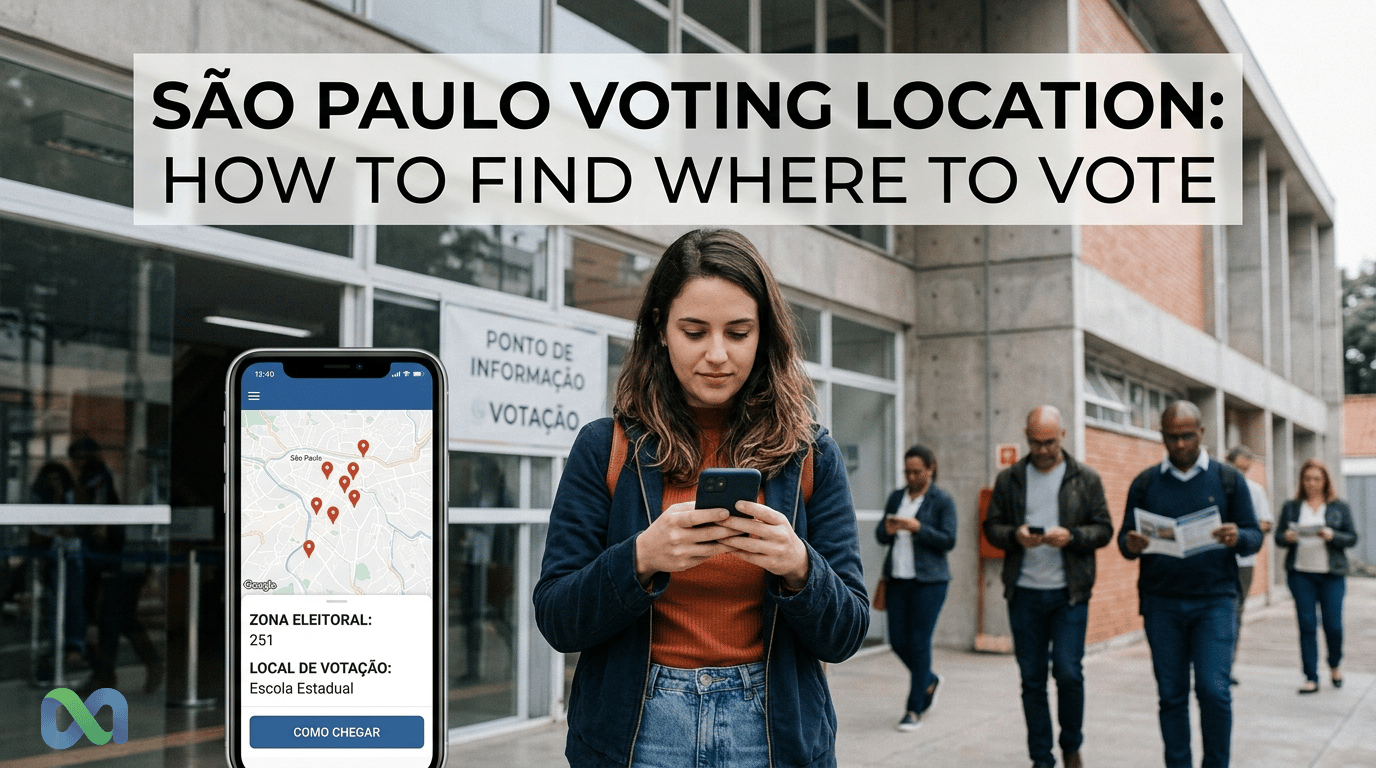
If you searched for “São Paulo voting location,” the short answer is simple: check your polling place through official Justiça Eleitoral channels. Use the Tribunal Superior Eleitoral website, the TRE-SP website, or the e-Título app. Your electoral zone helps organize the voter registry. The address where you vote may be a school, university, public building, or another site assigned by the Justiça Eleitoral.
You should check before election day. In São Paulo, address changes, rezoning, access adjustments, or route changes can affect your polling place. That is why remembering where you voted in the last election is not enough.
This guide explains how to check your electoral zone in São Paulo. It also shows how to confirm where to vote, the difference between zone, section, and polling place, and what to do if the search returns an error. The tips are practical, but the final source should always be the Justiça Eleitoral.
Quick summary:
- Check your polling place on the TSE website, the TRE-SP website, or the e-Título app.
- Save your zone, section, building name, street, number, and neighborhood.
- Bring an official photo ID.
- Do not use websites without an official domain.
- Check everything again close to voting day.
Think of it this way: the zone is an area. The section is a room or table. The polling place is the building. In the end, the most useful information before leaving home is the address. Still, keep every detail. They help you find your line, room, and table.
If something looks wrong, stop and check again. It may be a similar name, a similar neighborhood, an outdated app, or old information saved on your phone. Do not send your personal data in groups. Do not ask third parties to search for you. Use official channels only.
This simple step avoids wasted time. It also reduces the risk of arriving at the wrong place. In a large city, a similar street name can be far away. On election day, traffic, lines, and heat can make the mistake worse. Check early and leave calmly.
Do the search at a quiet time of day. Open the official site. Read each field. Check whether your name is correct. Check whether the city is correct. Check whether the neighborhood makes sense. Then copy the address into a map. If the route looks strange, verify the data again.
On voting day, take a charged phone. If possible, also take the details on paper. Paper does not run out of battery. If the internet drops, you will still have the address. This simple habit helps a lot.
If you are going with someone else, each person should run their own search. Living in the same house does not guarantee the same polling place. Two people may have different zones or sections. That is common in large cities.
If you moved, be extra careful. Changing neighborhoods does not change your voter registration automatically. Only the Justiça Eleitoral can change the record after a request made within the official deadline. The final official lookup is always the one that matters.
A two-minute checklist helps:
- Open the official website.
- Enter your data carefully.
- Read the full screen.
- Copy the address.
- Check the route on a map.
- Save a screenshot.
- Repeat the search close to voting day.
Keep the result in more than one place. It can be in notes, email, or on paper. If you do not want to save personal data on your phone, write down only the street, number, zone, and section. Do not write your CPF somewhere exposed.
Also remind people who live with you to check their own location. Parents, grandparents, and first-time voters can get confused. A household check avoids last-minute rushing. It also prevents everyone from going together to the wrong building.
If the search does not open, try again later. Official sites may slow down during peak periods. Do not use shortcuts sent by people you do not know. Type the official address in the browser or search directly for the public body.
Rule of thumb: if the information did not come from the TSE, TRE-SP, or the app, check again. If it came from a screenshot, audio message, post, or group chat, treat it as a tip, not proof. The proof is the official screen.
Go early if you can. Bring water. Bring an ID. Leave with extra time. If you choose the wrong entrance or room, ask the local election staff for help. Voting is simple when the details are at hand.
There is no reason to guess. The site shows the right data. The app helps. Paper helps. The map helps. With everything saved, you leave home with less doubt and less hurry. Read carefully. Check the name. Check the street. Go with confidence.
How to Know Where to Vote in São Paulo
To know where to vote in São Paulo, use the TSE polling place and electoral zones page, the TRE-SP voter title and polling place service, or the e-Título app. Enter your information only on official pages. Before leaving to vote, confirm the municipality, electoral zone, section, polling place name, and full address.
This order prevents the most common mistake: thinking the electoral zone is the physical voting address. It is not. The zone is an administrative unit. The polling place is the building where the voter goes.
Checking through the TSE website
The national path is the TSE page for polling places and electoral zones. It gathers official Justiça Eleitoral services and directs voters to the appropriate lookup tool.
When using the service, make sure the site is on the tse. jus. br domain. Do not enter your CPF, date of birth, mother’s name, or voter title number on strange pages. Fake services can copy the look of public websites.
After the search, save or write down four details: municipality, electoral zone, electoral section, and polling place address. If the system shows a complement, room, block, gate, or reference point, record that too.
Checking through TRE-SP
Voters in the state of São Paulo can also use the services of the Tribunal Regional Eleitoral de São Paulo. TRE-SP maintains pages for voter title and polling place information. It also has pages for electoral zone lookup and zone-by-neighborhood search.
These pages are useful when you want to understand the electoral map in São Paulo. They also help when a voter knows the neighborhood but does not know which zone serves that area.
The TRE-SP search does not replace checking your individual registration. Use neighborhood information as support. For election day, confirm your own polling place through the official voter title and location service.
Checking through the e-Título app
The e-Título app is a practical option for checking by phone. It usually shows voter title data, zone, section, and polling place. It may also help with electoral services, depending on the version available in the current election cycle.
Even so, do not leave the download or update until the last minute. Install it, log in with your data, and check whether the information loads correctly. If the service becomes unstable on voting day, you will already have the essential details written down.
If the app and the website show different information, treat the difference as a warning sign. Run the search again through an official source and contact the cartório eleitoral if the doubt remains.
Electoral Zone, Section, and Polling Place: What Is the Difference?
The question behind “São Paulo voting location” usually mixes three concepts. They appear together in the search result, but they mean different things.
The electoral zone is the area that organizes your registration. It helps identify which cartório handles your case.
The electoral section is a smaller group of voters within the zone. It points to the room, table, or voting area.
The polling place is the physical address. It is the building you must go to on election day.
Understanding this difference prevents wrong routes. It also helps when a voter needs to speak with the cartório of the electoral zone.
What an electoral zone is
An electoral zone organizes voters in a region. Each zone is linked to a cartório eleitoral or responsible unit for services such as regularization, transfer, registration review, and voter assistance.
In a large city like São Paulo, several zones can exist within the same municipality. That is why two people who live in nearby neighborhoods may vote in different zones.
The zone itself is not the address where you must vote. It is an administrative reference. The address appears in the polling place field.
What an electoral section is
The electoral section is a smaller division within the zone. It brings together a group of voters who vote at a specific table.
In practice, the section helps election staff locate your record inside the building. In large schools, for example, several sections may operate in the same location.
On voting day, look for signs, lists, or guidance from local staff to reach the correct section. Keep the number written down to speed up assistance.
What a polling place is
The polling place is the physical address. It may be a school, university, community center, public building, or another space assigned by the Justiça Eleitoral.
This is the information that answers “where to vote.” The zone and section organize the process, but the voter needs the full address.
Before the election, also check the map, travel time, and possible traffic changes. In São Paulo city, leaving without planning can turn a simple lookup into a delay.
Neighborhood Search and Cartório Eleitoral in São Paulo
A neighborhood search is useful when you want to understand which electoral zone covers a region of São Paulo. It also helps journalists, researchers, and voters who want to locate the nearest cartório.
However, it should not be used as the only confirmation of your polling place. Your individual registration may contain details that a neighborhood search does not show.
When to use zone and neighborhood search
Use zone and neighborhood search when you want to find the zone that serves a neighborhood. It also helps locate cartórios eleitorais in São Paulo.
The search helps confirm the area of an electoral zone. It can also answer questions about in-person assistance and the electoral map of a region.
This lookup is especially useful for people who moved within the city or state. Even so, changing your residence does not automatically change your polling place. The voter must have requested a transfer or update within official deadlines.
How to find the cartório for your electoral zone
After identifying the zone, look for the corresponding cartório eleitoral on the TRE-SP website. The TRE-SP electoral zone lookup page helps find service information.
The cartório can provide guidance on registration, transfer, data review, assistance for people with disabilities, and other electoral needs. Still, confirm opening hours and channels before going in person.
If you need to resolve a pending issue, avoid waiting until the period closest to the election. Electoral services often have legal deadlines. Outside those deadlines, some changes may be unavailable until after the vote.
What to Check Before Election Day
The best way to avoid problems is to do a quick review a few days before voting. The process takes only a few minutes and reduces the risk of going to the wrong address.
Use this checklist:
- Check your polling place through an official source.
- Write down zone, section, municipality, location, and address.
- Check whether your voter title is regular.
- Separate an official photo ID.
- Review the route to the location.
- Confirm whether the building changed.
- Update or test the e-Título app.
- Check the official rules in effect for that election.
This care is simple but important. The Justiça Eleitoral may change locations because of construction, safety, accessibility, or section reorganization.
Accepted documents
The practical rule is to bring an official photo ID. An identity card, driver’s license, passport, work card, or another official document accepted by the Justiça Eleitoral may be used, according to the rules in force.
The voter title helps, but the photo ID is usually the decisive item for identification. The e-Título app can also help, especially when it displays a photo and updated data.
Because rules can be updated, check the official guidance before the vote. This article does not replace Justiça Eleitoral notices.
Polling place changes
A polling place can change. This may happen because of rezoning, a building replacement, closure, accessibility adjustment, or voter redistribution.
For that reason, do not rely only on memory. A school used in one election may not be used in the next. In addition, the voter may have been moved to another location within the same zone.
If you notice a change, save the new address. Also check whether the municipality is still correct, especially if you moved city or neighborhood in recent years.
Accessibility and assistance
Voters with disabilities, reduced mobility, or specific needs should check TRE-SP accessibility channels. In many cases, the Justiça Eleitoral provides guidance on temporary transfer, accessible locations, or appropriate assistance.
If your section is in a location that is difficult to access, seek official information in advance. On voting day, there may be less room for adjustment.
It is also worth checking whether there are lines, busier times, and local recommendations. Planning reduces friction and improves the voting experience.
Common Problems When Checking a Polling Place
Not every search returns a simple answer. Sometimes the voter finds incomplete data, an irregular registration, or conflicting information between channels.
In those cases, the safest response is not to improvise. Use official sources, repeat the search, and contact the cartório eleitoral when needed.
Canceled or irregular voter title
If the lookup indicates that the voter title is canceled, suspended, or irregular, check your electoral status through an official service. The problem may involve absence from previous elections, missing justification, a registration issue, or another reason provided by the Justiça Eleitoral.
Regularization depends on deadlines and the type of pending issue. Therefore, consult the TSE or TRE-SP and follow the indicated procedure.
Do not leave this for election day. If the registration is not valid, the voter may not be able to vote.
Different data in the app and on the website
If the e-Título app shows one result and the website shows another, update the app and search again. Then confirm through the most complete official channel.
If the discrepancy continues, contact the cartório eleitoral of your zone. Have the data shown in each channel available. That helps staff identify the problem.
Avoid sharing screenshots with personal data in groups or on social media. Electoral information may contain sensitive data.
Voter outside the electoral domicile
The electoral domicile is the municipality where the voter is registered to vote. If you are outside it on election day, you may need to justify your absence, according to the rule in force.
In some elections, there may be specific mechanisms such as voto em trânsito, but that depends on the calendar, type of election, and an application made within the deadline. Do not assume you can vote in any electoral zone.
The safe path is to confirm your registration and the services available in the current election cycle. Use the TSE and TRE-SP as references.
Why Official Data Matters for Election Analysis
Checking where to vote is a public service. Election analysis uses a different set of data: turnout, abstention, vote counting, polls, calendar, and political events.
Even so, the common foundation is the same: official sources. Anyone who follows elections seriously needs to separate confirmed data, hypotheses, and scenario interpretation.
Turnout, abstention, and scenario reading
Turnout and abstention change how an election is read. In close races, regional variation can alter interpretations about party strength, mobilization, and surprise risk.
Voting data also helps compare polls, previous results, and campaign narratives. But that analysis only makes sense when it starts from reliable numbers.
Use official information to understand what happened. Then use market analysis to interpret what the public expects to happen.
How to use official sources without confusing voter lookup with forecasting
The São Paulo electoral zone lookup answers a practical question: where the voter must vote. It does not indicate voting trends, likely winners, or the political scenario.
Prediction markets work with probabilities about future events. They can help monitor expectations around elections, but they do not replace official data or electoral services.
The right reading is simple: use TSE and TRE-SP for electoral services. Use probability analysis to interpret scenarios, always with attention to risk and uncertainty. For a related market lens, see our guide to the Brazil presidential candidates 2026.
FAQ: São Paulo Voting Location
How do I find my electoral zone in São Paulo?
Check your status through the official channels of the TSE, TRE-SP, or the e-Título app. The search should show electoral zone, section, municipality, and polling place when the data is available.
Is an electoral zone the same as a polling place?
No. An electoral zone is an administrative division of the Justiça Eleitoral. A polling place is the physical address where you go to vote.
Can I check my polling place with my CPF?
Official services may offer lookup by personal data, according to the current system. Enter your CPF and other data only on official Justiça Eleitoral pages.
Can I vote with only a photo ID?
As a rule, an official photo ID is essential for identification. The voter title or e-Título app helps, but confirm the official guidance for the election before voting day.
Can I vote in another electoral zone?
Normally, voters must vote at the location indicated in their registration. Special situations, such as voto em trânsito, depend on specific rules and deadlines.
Can the polling place change?
Yes. The location can change because of construction, rezoning, logistics, accessibility, or section reorganization. Check again before the election.
Where can I check electoral justification rules?
Justification should be checked through official Justiça Eleitoral channels, such as TSE, TRE-SP, and the e-Título app. Rules, deadlines, and formats may change by election.
Conclusion
The search for “São Paulo voting location” should end at an official source. Check the TSE, TRE-SP, or e-Título, confirm your zone, section, municipality, polling place, and full address, and write everything down before election day.
The core difference is this: the electoral zone organizes the registry; the section identifies your voting group; the polling place is the address where you must go. If there is conflicting information, a pending issue, or an unexpected change, contact the cartório eleitoral of your zone.
After handling the practical side, follow official turnout and vote-counting data to interpret the scenario more clearly. If you track election-market infrastructure, our explainer on Polymarket Brazil election adds context. Elections are high-uncertainty events. The better the source quality, the better the probability reading.
