


Senate College Sports Bill: Athlete Pay, NCAA Transfers and What the Protect College Sports Act Means
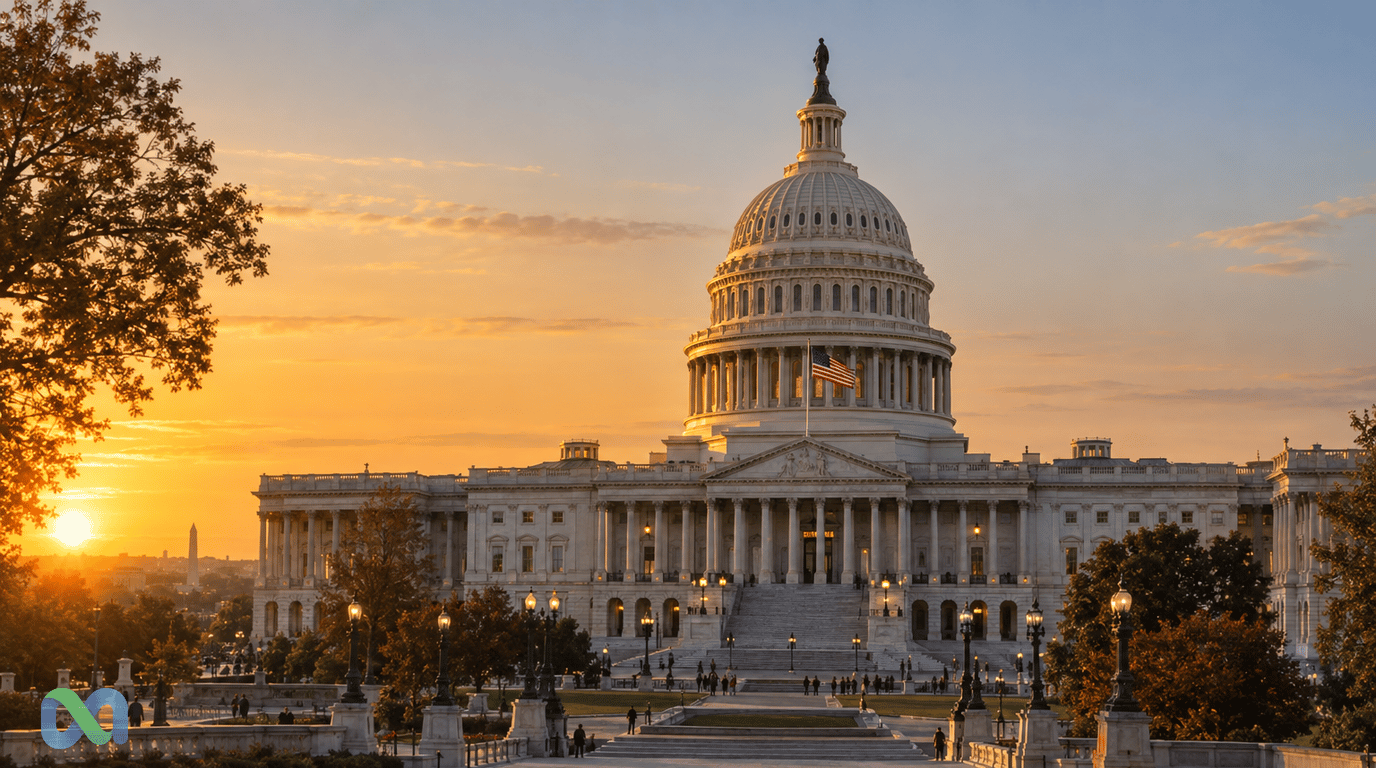
The Senate college sports bill athlete pay NCAA transfers legislation, the Protect College Sports Act (S. 4668), passed 77-22 on September 28, 2026. It is the biggest change to college sports in U. S. history. The bill sets federal rules for NIL deals, athlete revenue sharing, transfer limits, and NCAA antitrust power. The vote drew coverage from major international outlets including BBC and Al Jazeera, who noted the bill's broad bipartisan coalition.
Now the bill moves to the House. Whether it becomes law in 2026, and when, is the key question for prediction market traders right now.
Here is what this Senate college sports bill on athlete pay, transfers, and NCAA rules actually does. Here is who wins, who loses, and what prediction markets are pricing for House passage odds.
What Is the Protect College Sports Act?
The Protect College Sports Act creates the first federal framework for college sports. Before this bill, each state had its own NIL laws. Athletes in California had different rights than athletes in Texas. The bill replaces that state-by-state system with one national standard.
The law has five main parts.
NIL Rights: Athletes can earn money from their name, image, and likeness. This already happened under state laws since 2021. The bill makes NIL a federal right for all college athletes. It also lets schools help arrange NIL deals directly, something that was legally unclear before.
Revenue Sharing: Schools can now share revenue directly with athletes. For the first time, colleges can pay athletes from TV contracts, ticket sales, and other income. Power 4 schools, the SEC, Big Ten, ACC, and Big 12, will share the most. Schools with smaller budgets have less to share.
Transfer Limits: The open transfer portal is ending. Since 2018, athletes could move between schools freely. This Senate college sports bill brings back transfer limits. Athletes face new rules on how often they can transfer and under what conditions. Coaches pushed hard for this provision.
Five-Year Eligibility: The bill restores the NCAA's five-year eligibility rule. After COVID, some athletes played six or more seasons. This law ends that. The NCAA gets a limited antitrust exemption to enforce the five-year rule. Sports law expert Sam Ehrlich of Boise State University called the exemption "narrowly drawn", but still a major shift of power back to the NCAA.
Conference Stability Rules: The law creates limits on conference realignment. The SEC and Big Ten had been expanding aggressively since the early 2020s. The bill aims to slow that process and protect smaller conferences.
These five rules give college sports its first real federal structure. Whether they help athletes more than they help the NCAA is a matter of real debate, and a market signal worth tracking.
The 77-22 Vote: Bipartisan but Not Unanimous
The Senate college sports bill vote of 77-22 reflects strong bipartisan support. Sen. Ted Cruz (R-TX) and Sen. Maria Cantwell (D-WA) led the effort together. President Trump endorsed the bill on Truth Social in September 2026, asking Congress to pass it quickly.
This combination matters for prediction markets. Bills with 77 Senate votes have cleared the toughest Senate hurdle. The 77-vote total is well above the 60 needed to block a filibuster. That eliminates one major risk in the path to law.
However, 22 senators voted no. Their objections reveal real fault lines beneath the bipartisan surface.
The NAACP and AFL-CIO coalition said the bill protects NCAA power more than athlete rights. They called it "the Protect the NCAA Act." Their argument: Black athletes make up the majority of players in football and basketball, the sports that generate most of the revenue. Yet the bill denies athlete employee status, leaving most financial power with schools and coaches.
Labor unions fought hard against the non-employee rule. The bill explicitly says athletes are not employees. This blocks union organizing, collective bargaining, and workplace protections for athletes as a class. The AFL-CIO had pushed for employee status for years. The bill closes that door.
Athlete advocates said transfer limits hurt the players with the least power. Under the old rules, a player stuck on a losing team or in a bad situation could transfer freely. The new law restores restrictions. Critics noted that coaches can still move to better jobs freely. Athletes cannot.
Even co-sponsor Sen. Cantwell tried to add protections for fans. She proposed capping ticket price increases for college sports events. The Senate rejected her amendment 61-38. That vote tells you where real power sits in college sports, not with athletes or fans.
What Athletes Actually Gain Under This Bill
The athlete pay changes in the Senate college sports bill are real, but they are concentrated at the top.
Revenue sharing creates major income for star players. A starting quarterback at a Power 4 school could earn $500,000 or more per year. That combines direct revenue sharing with NIL deals. Women's basketball stars at programs like South Carolina or LSU could also see meaningful revenue sharing payments.
NIL clarity helps planning. Before federal law, athletes in different states had different rights. A recruit choosing between schools had to compare state NIL laws along with everything else. Federal rules end that confusion. Athletes can now negotiate long-term national brand deals without worrying about state-by-state rules changing their rights.
Eligibility stability helps some players. The five-year rule gives athletes a clear window. Before, eligibility decisions were handled case-by-case or through court orders. Now there is a set framework.
The bill also benefits schools, coaches, and the NCAA.
Conference stability rules help established power conferences protect their membership. Transfer limits give coaches more control over rosters. The NCAA gets antitrust protection it has sought for years. These institutional gains came at the direct expense of athlete mobility and bargaining power.
What Athletes Lose Under the Protect College Sports Act
The losses for athletes are real too. They depend on what sport you play and where you play it.
Transfer limits are the biggest immediate loss. Under the old portal system, athletes who were not playing could move to a school where they would. The new rules cut back that freedom. For athletes trapped in bad situations, with coaches who do not use them, in programs that fail, the new rules are a problem.
Non-employee status blocks long-term power. Without employee classification, athletes cannot unionize. They cannot strike. They cannot negotiate as a group for better revenue shares. Each athlete deals with their school alone. Schools set the revenue sharing terms. Athletes accept or leave.
Most athletes see little direct money. About 500,000 athletes compete in NCAA sports. Revenue sharing will mostly flow to football and men's basketball players at Power 4 schools. Women's sports generate less revenue and will receive less. Division II and Division III athletes will see minimal impact.
By most estimates, fewer than 5,000 athletes will earn six figures per year from revenue sharing and NIL combined. That is roughly 1% of all NCAA athletes. The remaining 99% gain some NIL clarity but minimal direct income from this Senate college sports bill on athlete pay.
Will the House Pass the College Sports Bill Before 2027?
The House is on recess until after the November 2026 midterms. That creates a tight window for the Senate college sports bill on NCAA transfers and athlete pay to become law.
The critical dates:
The House returns around November 4. The lame-duck session runs through November and December. On January 3, 2027, a new Congress is seated. Any bill that does not pass before January 3 must start over entirely in the new Congress, new committee hearings, new negotiations, and a much longer timeline.
That is why the next 12-14 weeks are the key window.
Forces that make House passage harder:
The House has a crowded schedule. Budget fights, trade legislation, and midterm politics eat up floor time. College sports reform is not Speaker Johnson's stated priority. If House Republicans want changes, stronger anti-labor language, different revenue sharing rules for smaller schools, the bill goes back to the Senate. That costs time the calendar does not allow.
Midterm results also matter. If Democrats gain seats, the lame-duck dynamic shifts. Outgoing members focus on must-pass spending bills, not major reform legislation.
Forces that make House passage easier:
The 77-22 Senate vote is a powerful signal. President Trump wants a signing ceremony. Republican House leaders want to give Trump a win before the new year. The bill has broad support from coaches, athletic directors, and most fans, a politically safe coalition.
If Speaker Johnson brings a clean bill to the floor, no amendments, the Senate can send it to Trump within days. The speed question is about political priority, not vote counts.
Prediction market probability:
Three steps must happen: House passage, Senate acceptance of any House changes, then presidential signature. The probability of all three completing before January 2027 sits around 35-45%. Markets may price lower given the compressed timeline and competing priorities.
Track the live odds on Macro Markets as the midterm results come in and the House schedule becomes clearer.
What This Means for Prediction Markets in the Fall of 2026
The Senate college sports bill creates multiple market opportunities. Several key outcomes are now quantifiable.
House passage before January 2027: This is the main market. Strong factors in favor: 77-22 Senate vote, bipartisan co-sponsors, presidential backing. Factors against: short timeline, House recess, amendment risk, midterm disruption. Estimated range: 35-45%.
Trump signature, conditional on House passage: Near-certain if the House passes an unchanged bill. Trump has already endorsed it publicly. Executive risk is minimal. The risk is entirely legislative.
Constitutional challenge within 12 months of enactment: Legal scholars expect challenges to the antitrust exemption and the non-employee classification. These are legally novel provisions that courts have not evaluated before. Probability of a legal challenge: 70-80%.
What gives informed traders an edge:
Political prediction markets aggregate information from congressional insiders, lobbyists, and informed observers. They price information that polling and media analysis often miss. The 77-22 Senate vote is visible to everyone. What is harder to see is whether Speaker Johnson will schedule the bill, whether amendments are likely, and how midterm results shift House priorities.
Traders who track these dynamics correctly can find real edges in the market pricing.
The Money Behind College Sports That This Bill Ignores
Sen. Cantwell released a report on college athletic spending between 2005 and 2023. The numbers reveal a stark gap.
Coaching salaries went up 370% over that period. Recruiting budgets rose 322%. Travel costs went up 200%. All of this growth happened while athletes earned zero directly from their schools.
The revenue that funded those coaching salary increases came from the same TV deals and ticket sales that athletes made possible. The economic gap between coaching pay and athlete pay is structural and built over decades.
The Senate college sports bill on athlete pay introduces revenue sharing. But the amounts reflect political compromise, not economic fairness.
A Power 4 head football coach earns $10 million per year. That same school might share $3-5 million among all athletes combined. Individual players receive a small fraction of what the coaches above them earn.
Why this context matters for markets:
The non-employee rule is the key variable. Without employee status, athletes cannot collectively bargain for higher revenue shares. Schools set the sharing formulas, and athletes have no group power to push back.
Compare this to the NFL. Players there negotiated 48.5% of all league revenue through their union. NBA players got 49-51%. College athletes under this bill have no such mechanism. They share what the school decides, nothing more.
If courts ever rule that college athletes are employees, which is a real legal scenario, everything changes. Schools would have to negotiate revenue shares collectively. The amounts in this bill would be just a starting point for bargaining. That legal scenario is a real market signal for anyone tracking college sports over the next five years.
How College Sports NIL Deals Work Under the New Law
The NIL rules in the Senate college sports bill are a major change from the pre-2021 system. Before 2021, the NCAA banned all athlete pay for name, image, and likeness. That era is now fully over.
Under the new law, athletes can sign deals with businesses, brands, and media companies. A quarterback with a big social media following can sign with a regional restaurant chain. A gymnast can become a brand ambassador for a sportswear company. A basketball player can charge for autographs at events.
The federal bill creates three key rules for NIL deals.
Schools can now help. Before, schools had to stay out of NIL arrangements to avoid violating NCAA rules. The bill ends that restriction. Athletic departments can now connect athletes with NIL partners. This levels a playing field where some programs had an underground advantage already.
Deals must be legitimate. The bill requires NIL deals to be for real services, actual appearances, real content creation, genuine endorsements. This is meant to stop schools from using fake NIL deals as hidden recruiting payments. Enforcement will be the hard part.
Third-party collectives face new rules. Since 2021, booster-funded NIL collectives had emerged as a way to pay athletes outside official channels. The bill creates oversight rules for these collectives. The exact regulatory structure will develop over time through NCAA guidelines.
For athletes, the NIL changes under the bill are largely positive. Federal law beats state law, athletes in any state now have clear rights. The ability to sign national brand deals without navigating 50 different state rules is a real improvement.
The biggest unanswered question: how will the NCAA enforce the "real service" requirement? That enforcement challenge will define how the NIL market develops after the bill becomes law.
Revenue Sharing: What the Numbers Look Like in Practice
The revenue sharing rules in the Senate college sports bill are new territory for college sports. No federal law has ever allowed direct athlete payments from schools before.
Here is how the money is expected to flow.
Power 4 schools: The SEC, Big Ten, ACC, and Big 12 generate billions in annual revenue. A typical major program brings in $150-200 million per year from TV deals, ticket sales, and bowl game payouts. Under the bill, these schools can share a portion of that revenue directly with athletes.
Early estimates suggest top Power 4 programs will distribute $15-25 million annually among athletes. For a football roster of 85 scholarship players, that could mean average payments of $175,000-$300,000 per player, before NIL deals.
Mid-major schools: Programs in conferences like the AAC, Mountain West, and Sun Belt generate much less. A mid-major school might bring in $20-30 million in athletic revenue. Revenue sharing at these schools will be significantly smaller, potentially $1-3 million total for all athletes.
Division II and III: These schools are largely exempt from the bill's revenue sharing requirements. They have little to no broadcast revenue to share. Athletes at these schools benefit from NIL clarity but will see minimal direct revenue sharing.
Women's sports: The bill does not require equal revenue sharing across sports. It allows schools to distribute based on revenue generated. Since women's basketball, volleyball, and other women's sports generate less revenue than men's football and basketball, women athletes will receive less. Critics have flagged this as a built-in inequity.
The revenue sharing model creates winners at the top of college sports and leaves most athletes behind. That is not a bug of the bill, it is the intended design, reflecting the political realities of passing legislation that major athletic programs would accept.
PAA: Common Questions About the Protect College Sports Act
What are the changes to the NCAA Transfer Portal in 2026?
The Senate college sports bill restores transfer limits that the NCAA had before 2018. Athletes will have fewer chances to transfer freely. The exact limits will be set by NCAA rules under the new law. The open portal era of unrestricted transfers is ending.
Is the NCAA going to allow 5 years of eligibility?
Yes. The bill restores the five-year eligibility window. The NCAA gets a narrow antitrust exemption to enforce it. Players can still compete for five seasons, the COVID-era extensions that pushed some players to six or more years are ending.
What is the Protect College Sports Act and what does it do?
It is the first federal law governing college sports. It codifies NIL rights, allows revenue sharing between schools and athletes, limits transfers, restores five-year eligibility, and gives the NCAA limited antitrust protection. It passed the Senate 77-22 on September 28, 2026.
Will the college sports bill pass the House?
That is the key prediction market question. The House must act before January 3, 2027, or the bill restarts from zero. The odds sit around 35-45% based on timeline, midterm uncertainty, and amendment risk.
What did the 22 senators who voted against the bill oppose?
They opposed the non-employee classification, the transfer limits, and the overall framing that protected NCAA institutional power over athletes. Critics from the NAACP, AFL-CIO, and athlete advocacy groups made the "Protect the NCAA Act" argument, that the bill's benefits flow more to schools and coaches than to athletes.
Conclusion: Historic Senate Vote, Uncertain House Path
The Senate passed the Protect College Sports Act 77-22. That is a landmark result. It creates the first federal framework for college sports, covering NIL, athlete pay, transfers, eligibility, and conference rules.
The bill makes real changes. Revenue sharing will pay top athletes at major programs significant money. NIL rules get federal clarity. The eligibility framework becomes stable.
But the bill also has real flaws. Athletes do not gain employee status or collective bargaining rights. Transfer limits reduce athlete mobility. The financial benefits flow mostly to the top 1% of NCAA athletes. Critics from the left and right have valid points.
For prediction market traders, the debate over the bill's merits is secondary. The question is whether the House passes the Senate college sports bill on athlete pay and NCAA transfers before January 3, 2027.
That binary outcome, pass or fail, is exactly what prediction markets price efficiently. The timeline is compressed. The political forces are real. The uncertainty is the opportunity.
Track House passage odds, constitutional challenge markets, and amendment risk on Macro Markets this fall. These are among the most actively traded legislative markets heading into the 2026 midterms and lame-duck session.
The Senate made history. Now the House decides what happens next.
