


Tarcisio vs Haddad: Full Comparison Guide
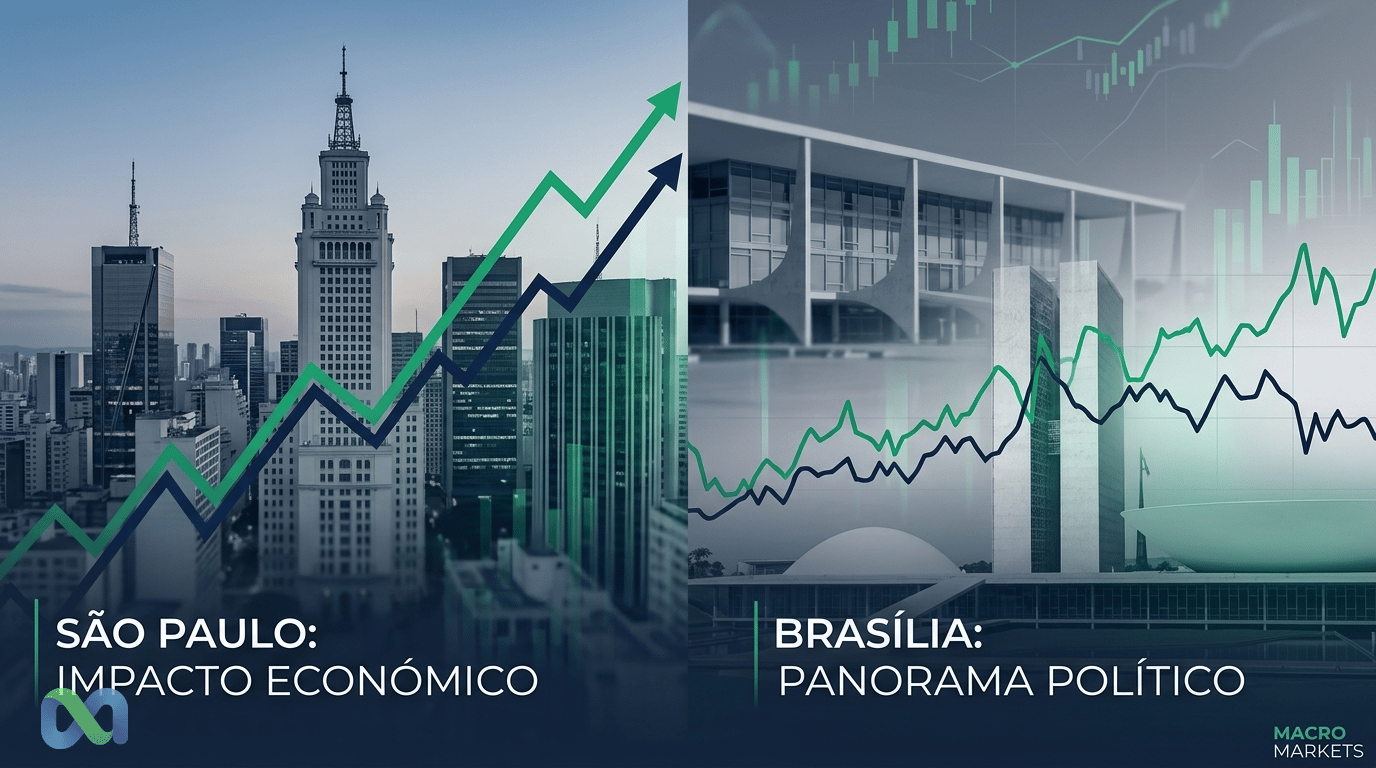
Updated in May 2026. Last reviewed: May 22, 2026. The main difference in the Tarcisio vs Haddad comparison is the mix of career path, political camp, and economic agenda. Tarcisio de Freitas is the governor of São Paulo, a former infrastructure minister, and a right-wing name associated with management, concessions, and public security. Fernando Haddad is Brazil’s finance minister, a former mayor of São Paulo, and a national Workers’ Party figure tied to President Lula’s government.
This comparison matters because the two names carry different political narratives. Tarcisio is often read as a signal of continuity for the São Paulo right and a more pro-concession agenda. Haddad represents the center of federal fiscal policy and the economic strategy of the PT-led government.
Our editorial view is simple: compare incentives, not slogans. This guide keeps the comparison focused on market-relevant signals. It focuses on career background, economics, parties, polling, perceived risks, and the impact on prediction markets.
This content is informational. It is not voting, investment, or trading advice. Political scenarios change with polls, alliances, fiscal decisions, and new facts.
Last reviewed: May 22, 2026. Our editorial review checks 5 market variables: current office, party alignment, fiscal role, state-level approval signals, and election calendar risk. We use official institutions such as the Central Bank of Brazil and the Superior Electoral Court as source anchors. However, this page does not call a winner.
Quick Answer: What Is the Difference Between Tarcisio and Haddad?
Tarcisio de Freitas is a right-wing politician, governor of São Paulo, and former infrastructure minister. Fernando Haddad is a Workers’ Party politician, Brazil’s finance minister, and former mayor of São Paulo. Tarcisio is more associated with infrastructure, privatizations, concessions, and public security. Haddad is more associated with fiscal policy, education, and the social-development agenda of Lula’s government.
In simple terms, Tarcisio represents an executive-style right with a Bolsonaro-linked base and a technical management pitch. Haddad represents institutional Lula politics, with a focus on federal economic policy and fiscal coordination.
The difference is not only partisan. It appears in their public experience, their relationship with the private sector, the way each communicates economic risk, and how political analysts price each name. That is why the Tarcisio vs Haddad comparison is useful for voters, investors, and prediction-market traders.
Comparison Table: Tarcisio vs Haddad
| Factor | Tarcisio de Freitas | Fernando Haddad |
|---|---|---|
| Current role | Governor of São Paulo | Finance minister of Brazil |
| Previous roles | Infrastructure minister; DNIT director | Education minister; mayor of São Paulo; presidential candidate |
| Political camp | Right; linked to pragmatic Bolsonarism | Left; national PT and Lula-aligned figure |
| Party | Republicans | Workers’ Party, or PT |
| Public brand | Management, infrastructure, concessions, and security | Education, fiscal policy, federal negotiation, and social policy |
| Perceived economic agenda | More favorable to privatizations, concessions, and a smaller direct state role | More focused on balancing revenue, social spending, and fiscal rules |
| Electoral base | São Paulo right, Bolsonaro voters, conservatives, and parts of the center | PT voters, the left, center-left, and Lula’s base |
| Main strength | Technical manager image with control of a major state machine | National experience and a central role at the Finance Ministry |
| Main perceived risk | Dependence on right-wing coalitions and the Bolsonaro relationship | Fiscal-policy wear and PT rejection among part of São Paulo’s electorate |
The table shows why the comparison is bigger than “one is right wing and the other is left wing.” That sentence helps, but it does not explain everything.
For markets, the central Tarcisio vs Haddad point is different. Each name can change expectations about taxes, public spending, concessions, political stability, and coalition formation.
Tarcisio de Freitas: Career and Political Profile
Tarcisio de Freitas gained national visibility as infrastructure minister under Jair Bolsonaro. Before that, he built a technical career tied to public works, logistics, and transport planning. That background explains much of his public image in the comparison.
He presents himself as an operational manager. His political brand combines technical language, support for concessions, dialogue with business leaders, and proximity to the right. In São Paulo, that profile moved into issues such as security, transport, privatizations, and infrastructure investment.
From Infrastructure Minister to Governor of São Paulo
As minister, Tarcisio tried to connect his administration with auctions, concessions, and infrastructure delivery. That agenda gave him a reputation among sectors that prefer private participation in infrastructure.
He then won the race for governor of São Paulo. That move mattered. He stopped being only a technical figure inside the federal government and became the chief executive of Brazil’s most important state.
São Paulo has fiscal, electoral, and symbolic weight. For that reason, Tarcisio’s performance in the state affects how analysts read his national potential. If his approval remains strong, he tends to gain strength in 2026 scenarios. If his government faces major crises, his ability to expand nationally can fall.
Relationship With Bolsonaro and Technical-Political Style
Tarcisio was elected with Jair Bolsonaro’s support. Even so, he tries to keep an image that is more administrative than ideological. That combination is part of his appeal.
He can speak to Bolsonaro voters, but he also tries to talk to business leaders, mayors, and centrist groups. This positioning can broaden his base. However, it also creates tension. The more moderate he looks, the more he must manage expectations from the right’s most loyal Bolsonaro supporters.
For anyone following politics through probabilities, this tension matters. Tarcisio’s strength depends on three variables: approval in São Paulo, support from the national right, and his ability to reduce rejection outside the Bolsonaro camp.
Infrastructure, Privatizations, and Security
In state-level economics, Tarcisio tends to defend concessions and privatizations as management tools. The logic is to reduce pressure on public finances and attract private capital into services and infrastructure projects.
That often pleases part of the market. However, it can also generate union, legal, and political resistance. Privatizations in sensitive areas can become campaign issues. Public security also matters. A serious crisis in that area can change the reading of administrative competence.
For this reason, Tarcisio is seen as an execution candidate. His political asset is delivery. His risk is turning a technical agenda into a political conflict that becomes difficult to control.
Fernando Haddad: Career and Political Profile
Fernando Haddad has a trajectory more closely tied to the Workers’ Party, education, and federal politics. He served as education minister, mayor of São Paulo, presidential candidate, and then finance minister.
That sequence created a profile that makes the Tarcisio vs Haddad contrast very clear. Haddad is read as a party figure, a public-policy designer, and a negotiator inside Lula’s government.
From Education Minister to São Paulo Mayor
Haddad gained visibility at the Education Ministry. His name became associated with federal programs, university expansion, and national education policy.
He later governed the city of São Paulo. The mayoralty gave him local executive experience, but it also left political wear. São Paulo is a difficult electorate for the PT. Municipal and state disputes often expose meaningful rejection of the party.
This history helps explain why people search for the Tarcisio vs Haddad comparison and why the Tarcisio vs Haddad question keeps returning in São Paulo politics. Both have a direct connection to São Paulo, but through different routes. Tarcisio governs the state. Haddad governed the capital and now sits at the center of federal economic policy.
Finance Ministry and the Fiscal Framework
As finance minister, Haddad became the face of Lula’s fiscal policy. This includes debates about the primary balance, tax revenue, spending, interest rates, the relationship with Congress, and the credibility of Brazil’s fiscal framework.
For investors, this is the most sensitive point. The question is not only whether Haddad is on the left. The question is whether he can deliver fiscal predictability inside a government with strong pressure for social spending.
The Central Bank of Brazil matters in this debate because interest rates, inflation, and fiscal expectations move together. When fiscal policy looks looser, the yield curve can react. When there is a signal of control, markets tend to reduce the risk premium.
Relationship With Lula, the PT, and Social-Development Policy
Haddad is a national PT figure. That gives him strength inside the government, but it also ties his image to Lula’s political project.
He must balance two demands. On one side, markets demand fiscal discipline and predictability. On the other, the governing base demands social spending, public investment, and protection for federal programs.
That position is hard. If Haddad tightens the fiscal agenda too much, he faces internal resistance. If he gives too much ground on spending, he loses credibility with investors. Therefore, his difference from Tarcisio appears in the type of political constraint. Tarcisio manages a state coalition and the national right. Haddad manages Congress, the PT base, the Finance Ministry, and macroeconomic expectations.
Economic and Fiscal Differences Between Tarcisio and Haddad
The Tarcisio vs Haddad difference becomes clearer when the topic is economics. Tarcisio tends to be linked to concessions, privatizations, and state-level management. Haddad is linked to tax revenue, the fiscal framework, and federal economic policy.
In the Tarcisio vs Haddad debate, this does not mean one is simply “market-friendly” and the other is “anti-market.” That reading is too simple. What changes is each person’s role and the incentives around them.
Taxes, Public Spending, and Fiscal Adjustment
Haddad is at the center of the debate over federal taxes and spending. As finance minister, his role involves revenue proposals, target negotiations, and communication with economic agents.
Tarcisio deals with a state budget. His discourse tends to prioritize efficiency, concessions, and spending control. The macro impact is smaller than the Finance Ministry’s impact, but São Paulo is large enough to influence political expectations.
In a national election, this difference grows. A potential Tarcisio candidacy would be judged by promises of adjustment, privatizations, and coalition-building with Congress. A potential Haddad candidacy would be judged by his Finance Ministry record and by continuity with the PT’s economic project.
Privatizations, Concessions, and the Role of the State
Tarcisio usually defends a larger private-sector role in infrastructure. That agenda includes concessions, public-private partnerships, and asset sales.
Haddad tends to defend a more active state, but with an attempt to maintain credible fiscal rules. The difference is emphasis. Tarcisio starts from market-based efficiency and management. Haddad starts from public coordination with negotiated fiscal responsibility.
For political traders, this contrast helps map sensitive sectors. Energy, sanitation, transport, public banks, education, and social programs can react differently to each name.
How Investors Tend to Interpret Each Name
Investor readings in the Tarcisio vs Haddad debate are usually pragmatic. Tarcisio tends to receive a positive premium when he signals moderation, institutional stability, and a pro-concession agenda. However, he can lose that premium if he becomes trapped in right-wing crises or ideological conflicts.
Haddad tends to gain confidence when he delivers fiscal targets, controls internal noise, and keeps dialogue open with Congress and the Central Bank. However, he loses strength when markets interpret higher spending or weak revenue as a structural risk.
Therefore, the practical difference is in the triggers. Tarcisio moves with state approval, alliances, and electoral viability. Haddad moves with fiscal policy, inflation, Congress, and confidence in the federal government.
What Polls Show About Tarcisio and Haddad
Polls between Tarcisio and Haddad show scenarios, not destiny. They measure a moment in time. Every poll also depends on field dates, sample design, methodology, tested scenarios, and margin of error.
The current Tarcisio vs Haddad search landscape is heavily shaped by polling news. Brazilian outlets have covered Quaest polls and other surveys about a potential São Paulo race, including first-round and second-round scenarios. These headlines can move the public narrative, but they should not be read as final forecasts.
Why Different Polls Can Show Different Margins
Different Tarcisio vs Haddad polls can show different results without one being automatically wrong. There are several reasons:
- different field dates;
- samples with different demographic composition;
- scenarios with or without other candidates;
- prompted versus spontaneous questions;
- variation within the margin of error;
- changes in the political environment between surveys.
That is why readers should avoid drawing a conclusion from one isolated headline. It is better to watch trends, polling averages, rejection levels, government approval, and vote-transfer capacity.
How to Read Lead, Rejection, and Runoff Scenarios
A lead in a Tarcisio vs Haddad poll is not the same as a guaranteed victory. In a runoff scenario, rejection can be as important as voting intention.
Tarcisio can start strong if he consolidates the right and reduces resistance in the center. Haddad can grow if the PT unifies its base and the federal government improves its economic approval.
It also matters who stays out of the race. A centrist candidate can take votes from both sides. A harder-right Bolsonaro-aligned name can pressure Tarcisio. An alternative left-wing candidate can affect Haddad.
The Superior Electoral Court is the institutional source for election calendars, candidacies, and rules. Polls, however, should be read by institute, date, sample, and tested scenario.
What Changes for Prediction Markets
Prediction markets turn political events, including the Tarcisio vs Haddad race narrative, into tradable probabilities. That does not mean predicting the future with certainty. It means updating expectations as new information arrives.
In the Tarcisio vs Haddad comparison, the market watches signals that can change each name’s probability. Polls are one signal. Alliances are another. Government approval, inflation, fiscal decisions, and management crises also enter the price.
Events That Can Move Probabilities
Some Tarcisio vs Haddad events tend to move probabilities more than others:
- a new poll with a shift outside the margin of error;
- an endorsement from Lula, Bolsonaro, or key centrist leaders;
- a clear change in São Paulo government approval;
- a surprise in inflation or interest-rate data;
- a relevant fiscal defeat in Congress;
- a crisis in security, transport, or state services;
- a formal ticket definition, running mate choice, or regional alliance.
The point is to separate noise from signal. A harsh statement can dominate social media for a day. But a sequence of polls, a fiscal shift, or a national alliance tends to have more durable impact.
Indicators to Watch: Polls, Alliances, Approval, and Fiscal Signals
In the Tarcisio vs Haddad framework, to evaluate Tarcisio, watch state approval, infrastructure delivery, public security, privatizations, and his relationship with Bolsonaro. Also watch whether he can keep centrist support without losing the right.
In the same Tarcisio vs Haddad framework, to evaluate Haddad, watch fiscal results, his relationship with Congress, inflation, interest rates, and Lula government approval. Also watch his rejection in São Paulo and his strength inside the PT.
In prediction markets, the right reading is not “who do I prefer?” The right reading is: which facts change the implied probability? That discipline helps avoid confusing political preference with analysis.
Main Differences in Proposals and Management Style
Formal Tarcisio vs Haddad proposals depend on the campaign. Still, each leader’s record allows a comparison of tendencies.
Tarcisio tends to prioritize infrastructure, security, concessions, private partnerships, and administrative efficiency. His style is more executive and delivery-oriented. The risk is relying too heavily on the management narrative and then suffering from concrete crises.
Haddad tends to prioritize fiscal policy, education, social programs, institutional negotiation, and coordination with the federal government. His style is more programmatic and party-based. The risk is carrying national economic wear and PT rejection.
This Tarcisio vs Haddad difference affects communication. Tarcisio usually sells execution capacity. Haddad usually defends policy design. For voters, one useful question is: does the central problem of the moment require a state manager, a fiscal-policy designer, or a national political leader?
Who Is More Pro-Market: Tarcisio or Haddad?
In the comparison, the short answer is that Tarcisio is usually perceived as more pro-market. The complete answer needs more nuance.
Tarcisio has a record and discourse closer to privatizations, concessions, and private investment. That tends to please financial sectors.
Haddad, however, cannot be judged only by an ideological label. As finance minister, he is responsible for fiscal rules, tax revenue, and dialogue with investors. When he delivers predictability, he can gain confidence. When fiscal noise rises, he loses premium.
So, in Tarcisio vs Haddad terms, “more pro-market” depends on the criterion. On concessions and the role of the state, Tarcisio tends to sit to Haddad’s right. On fiscal negotiation inside the current federal government, Haddad is the actor directly responsible.
FAQ: Quick Questions About Tarcisio vs Haddad
Have Tarcisio and Haddad Run Directly Against Each Other?
They appear in Tarcisio vs Haddad comparative scenarios, especially for São Paulo and national political discussions. A direct race depends on the electoral calendar, registered candidacies, and party decisions.
Are Tarcisio and Haddad Right Wing or Left Wing?
Tarcisio is in the right-wing camp and was elected with Bolsonaro support. Haddad is in the left-wing camp, belongs to the PT, and is part of Lula’s government.
Who Has More Administrative Experience?
In Tarcisio vs Haddad terms, both have executive experience, but in different areas. Tarcisio has a strong brand in infrastructure and state government. Haddad has experience in ministries, city government, and federal economic policy.
Is Haddad a Candidate for São Paulo Governor?
Haddad may appear in polling scenarios, but a candidacy depends on party decisions. The same applies to any national scenario. Polls test hypotheses; they do not confirm candidacies.
Could Tarcisio Run for President?
He may be considered because of his role in São Paulo and his position on the right. However, a presidential candidacy depends on alliances, party decisions, and Bolsonaro’s role in the conservative camp.
How Should Polls Between Tarcisio and Haddad Be Compared?
Compare the institute, field date, sample, margin of error, tested scenario, and trend. Do not treat one poll as a final prediction. In prediction markets, the most important point is whether the information changes the implied probability.
Conclusion: The Core Difference Between Tarcisio and Haddad
The core Tarcisio vs Haddad difference is political, economic, and biographical. Tarcisio represents São Paulo’s executive right, with a brand built around infrastructure, concessions, and management. Haddad represents the PT at the center of federal fiscal policy, with a background in education, city government, and the Finance Ministry.
For voters, the comparison helps clarify styles of government. For investors, it helps map fiscal risk, privatization agendas, and political stability. For prediction markets, it helps separate headlines from relevant signals.
The best way to follow the comparison is not through political fandom. It is through new facts: polls, alliances, approval ratings, economic indicators, and fiscal decisions. That is how probabilities change. And that is how the Tarcisio vs Haddad comparison becomes useful analysis, not just partisan dispute.
