


Treasury 30-Year Bond Auction Highest Yield Since 2001 at 5.058%
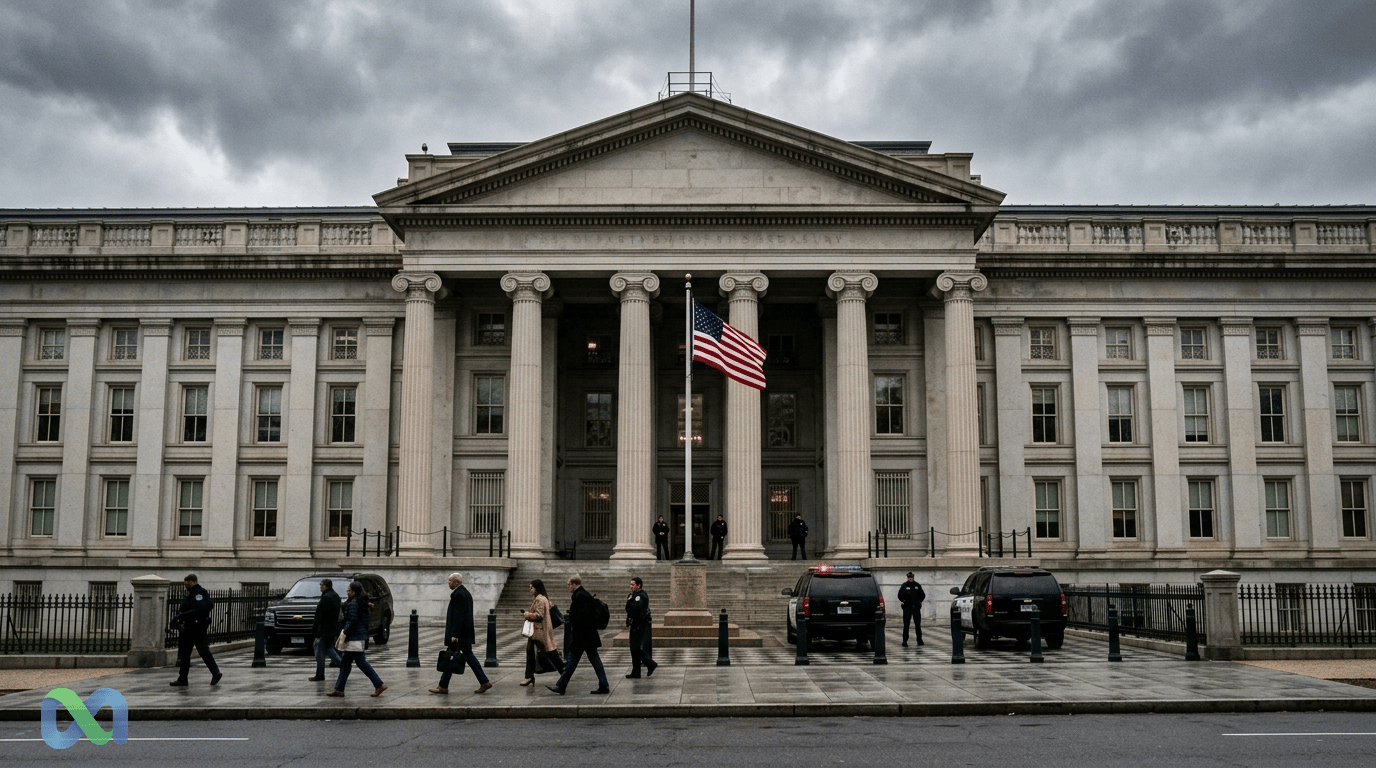
The US Treasury just sold $22 billion in 30-year bonds at a yield of 5.058%. This treasury 30-year bond auction highest yield since 2001 is a clear market signal. Investors are demanding more pay to hold US long-term debt. That shift has real costs for the government, the economy, and every market tied to interest rates.
The bid-cover ratio came in at 2.33, on the weak end for this type of auction. Buyers showed up, but they did not compete hard for the bonds. That forced the yield up to a level not seen in 24 years. Meanwhile, experts who once dismissed these concerns are now calling this an "all-hands-on-deck" situation.
This article breaks down what the auction data means, why 2001 matters as a reference point, and how prediction markets are already pricing the downstream effects.
Breaking Down the Treasury 30-Year Bond Auction Highest Yield Since 2001
The core data is simple. The yield was 5.058%. The bid-cover was 2.33. The auction cleared $22 billion.
A yield is the return investors get for holding a bond. When demand is low, the government must raise the yield to attract buyers. A yield of 5.058% means the US pays about $5 in annual interest for every $100 borrowed over 30 years. That math matters enormously at the scale of US debt.
A bid-cover ratio measures demand. For every $1 in bonds sold, buyers offered $2.33 in bids. That sounds solid, but for 30-year Treasury auctions, the historical average runs closer to 2.4 to 2.5. A 2.33 reading is weak. It means big buyers, pension funds, foreign central banks, insurance companies, were not competing aggressively.
The 10-year note auction that ran around the same time showed a stronger result: yield of 4.834% and a bid-cover of 2.71. Buyers prefer shorter-duration debt right now. They are willing to lend to the US government for 10 years. However, they want a higher premium to commit for 30 years. That gap reveals growing concern about long-term US fiscal risk.
Why 2001 Is a Key Reference Point
The last time a 30-year Treasury auction cleared above 5% was 2001. However, 2001 looked nothing like today.
In 2001, the US government was running budget surpluses. The dot-com boom had pushed tax revenues higher than spending. The national debt was a fraction of what it is today. High yields then reflected a strong economy and competition for capital.
Today's picture is the opposite. The US carries over $36 trillion in national debt. The federal budget runs a structural deficit, the government spends more than it collects every year. Under current policy, that gap is expected to grow.
So the treasury 30-year bond auction highest yield since 2001 carries a very different meaning now. In 2001, a 5% yield was normal and sustainable. In 2025, it means the bond market is pricing in serious fiscal risk. Investors need a higher return to justify holding US debt for three decades.
The core issue is not the number itself; it is the context. A treasury 30-year bond auction highest yield since 2001 in a deficit environment tells a fundamentally different story than the same number in a surplus year.
The 10-year/10-year forward yield, a gauge of where long-term rates are expected to be in the future, has risen to its highest level in recent history. This measure tells us the market does not expect rates to come down soon. It is a long-horizon signal, and it is flashing caution.
The Fiscal Forces Driving Yields Higher
Three key forces are pushing long-term Treasury yields up.
One: The deficit and debt trajectory. The Congressional Budget Office sets baseline forecasts for US debt. However, actual yields are now running well above those projections. Every time yields rise, the government pays more in interest. Higher interest costs widen the deficit. A wider deficit means more borrowing. More borrowing pushes yields higher again. This loop is hard to break without a major policy shift.
Two: Policy and tariff uncertainty. The Trump administration's tariff policy has added unpredictability to economic models. Bond buyers pricing 30-year risk must think about the economy across many different scenarios. When the future is unclear, investors demand a risk premium. That premium pushes yields up.
Three: Supply is not shrinking. Treasury Secretary Scott Bessent confirmed the government will stick to its current auction schedule. That means the supply of long-dated US debt stays high. High supply plus uncertain demand equals upward pressure on yields.
There is also a structural composition issue. The Treasury has leaned more on short-term T-bills for financing. While bills are cheaper now, they must be rolled over constantly. Analysts warn this creates rollover risk, the need to refinance at whatever rates exist in the future. A shift toward more long-term issuance would require steady demand for 20- and 30-year bonds. That demand looks shaky right now.
What Weak Demand Signals
A bid-cover of 2.33 is not a crisis. However, it is worth understanding what drove it, and what it signals going forward.
Primary dealers must bid by regulation. Large banks serve as market makers for Treasury auctions. They are required to bid, but they want to pass bonds to end investors quickly. When end-buyer demand is soft, dealers absorb more of the supply. That increases their balance sheet risk. They then sell bonds into the secondary market, which pushes yields even higher.
Foreign central bank demand has shifted. For years, China, Japan, and European institutions were steady buyers of US long-term debt. That has changed. Currency concerns, political tensions, and the rise of alternative reserve assets have reduced some structural demand. The bid-cover reflects this shift.
Duration risk is the real issue. Holding a 30-year bond means locking in a return for three decades. If inflation runs hot, or if fiscal policy worsens, that locked-in return looks bad. Buyers are rational to demand a premium for this risk. A bid-cover at the low end of the historical range means the premium was not quite enough to get buyers excited.
Auction tails matter. When an auction clears at a higher yield than the pre-auction market rate, it is called a "tailed" auction. This means the government had to pay more than expected to sell all the bonds. A persistent tail across multiple auctions is a warning sign. It suggests systematic weakness in demand, not just a one-off disruption.
How This Moves Markets
A 5.058% 30-year Treasury yield does not stay in the bond market. It spreads across the entire financial system.
Mortgage rates rise. The 30-year fixed mortgage rate tracks the 30-year Treasury yield closely. When the government's borrowing cost goes up, homeowner borrowing costs follow. Sustained high long-term yields mean higher mortgage rates, which slow the housing market and reduce refinancing activity.
Corporate borrowing costs increase. Companies borrow by issuing bonds priced as a spread above Treasury rates. When the risk-free rate rises, corporate borrowing becomes more expensive. That squeezes profit margins and slows business investment.
Stock valuations feel the pressure. Higher discount rates reduce the present value of future earnings. Growth stocks, whose value relies heavily on cash flows far in the future, are most sensitive to this. A sustained move above 5% on the 30-year changes the math for equity valuations broadly.
Prediction markets respond in real time. On Macro Markets, markets tied to Federal Reserve decisions, fiscal policy outcomes, and debt ceiling negotiations move based on Treasury yield signals. The treasury 30-year bond auction highest yield since 2001 shifted probability-weighted outcomes on rate cuts. Before this auction, markets gave more weight to near-term cuts. After it, the "higher for longer" scenario gained ground.
Treasury auction results are live data. Prediction markets process that data instantly. Traders on Macro Markets can position on the downstream effects, Fed decisions, fiscal legislation, debt ceiling outcomes, using the same signals that move professional bond desks.
What Experts Are Saying
The expert reaction to this auction has shifted noticeably from prior yield spikes.
In previous years, analysts argued that high yields were temporary. They said the US economy was strong enough to handle the debt load. Fiscal concern was "overblown."
That tone has changed. Multiple analysts now describe the situation as urgent. The "all-hands-on-deck" phrase appeared in mainstream financial coverage, used by economists who previously downplayed debt risks. BBC News Business coverage has documented how sustained high yields threaten to spill into equities, credit markets, and mortgage rates.
The CBO forecast gap is growing. When the CBO projects debt costs, it assumes certain yield levels. Those assumptions are now too low. Every revision forces a worse debt trajectory. At 5%+ rates, debt service costs grow faster than GDP. That changes what is sustainable.
Mary Childs at NPR wrote a 4,000-word analysis on systemic risks in the Treasury market. That level of long-form journalism signals the issue has moved from specialist concern to mainstream financial news. When mainstream outlets dedicate 4,000 words to bond auction mechanics, something has shifted.
Robin Brooks, an economist who tracks US yield data, noted that the 10-year/10-year forward yield has risen to its highest level in recent history. Long-horizon rate expectations are moving in one direction: up.
The consistency of these signals, across auction data, expert commentary, and market pricing, is what makes this auction result more than a one-day story.
What Comes Next
Several key events will shape whether 30-year yields hold above 5% or pull back.
The next CBO baseline update will incorporate current yield data. If the office must revise upward its yield assumptions, the debt sustainability projections worsen. That revision becomes a market catalyst on its own.
Budget negotiations determine fiscal direction. Any deal that reduces the deficit, through spending cuts, revenue increases, or a combination, would ease pressure on long-term yields. A deal that adds to the deficit does the opposite. The market is watching closely.
Future auction performance provides real-time feedback. The next 20-year and 30-year auctions will show whether the 2.33 bid-cover was a signal or a one-off. Deteriorating bid-covers or wider tails would confirm that demand is structurally weakening. A rebound would suggest the current result was an outlier.
The Federal Reserve remains central. The Fed does not directly set long-term Treasury yields. However, its rate decisions and balance sheet policy shape the environment. If inflation stays elevated, the Fed holds short-term rates high. The long end of the yield curve then reflects fiscal risk above the short-rate anchor. Under those conditions, a bear steepener, where long rates rise faster than short rates, is the most likely path.
Understanding why the treasury 30-year bond auction highest yield since 2001 happened is only half the task. The other half is watching what follows in the next auctions, the next CBO update, and the next Fed decision.
FAQ: Treasury Bond Auctions Explained
What does a low bid-cover ratio mean in a Treasury auction?
A bid-cover ratio below 2.3 for a 30-year Treasury auction signals weak demand from large institutional buyers. Foreign central banks, pension funds, and insurance companies are not competing aggressively for the bonds. The government must offer a higher yield to clear the auction.
Why did the 30-year Treasury auction draw the highest yield since 2001?
Fiscal deficit concerns, tariff-driven policy uncertainty, and reduced institutional demand all pushed the yield up. The treasury 30-year bond auction highest yield since 2001 reflects a market that is asking harder questions about long-term US fiscal sustainability.
Is a 5% Treasury yield dangerous for the economy?
It raises borrowing costs throughout the economy, for mortgages, corporate bonds, and government debt service. At the current level of national debt, sustained 5%+ rates significantly worsen the US fiscal outlook. Analysts who previously dismissed this concern are now treating it as urgent.
How do prediction markets track Treasury yield risk?
Prediction markets price the probability of specific outcomes: Fed rate cuts, debt ceiling resolutions, fiscal policy changes. Treasury auction results, like this 5.058% clearing yield, shift those probabilities in real time. Traders can use Macro Markets to position on these downstream effects.
Conclusion
The treasury 30-year bond auction highest yield since 2001 is a structural signal, not a one-day anomaly. The US government now pays 5.058% to borrow for 30 years. Weak institutional demand confirmed that this is not just noise.
The 2001 comparison is critical to understand correctly. Identical yield numbers carry very different meanings across different fiscal contexts. In 2001, 5%+ yields reflected a surplus era. In 2025, they reflect a $36T+ debt load, a structural deficit, and growing investor skepticism about the long-term trajectory.
Prediction markets are already pricing the downstream consequences. On Macro Markets, you can trade the outcomes that flow from this signal, Fed decisions, fiscal legislation, rate path scenarios, with real liquidity and transparent odds.
The data is clear. The question now is how the policy response, or the absence of one, shapes what comes next.
