


Trump AI Guardrails Fight: Why Data Centers Became Political Risk
Trump AI guardrails are no longer a narrow tech-policy issue. They have become a live market signal for AI buildout, power demand, and Washington's demand for binding rules.
The latest trigger was President Donald Trump's rejection of new AI guardrails after prominent AI leaders urged a slower pace for advanced models. Reports from AP and Reuters said Trump described a "SICK conspiracy" against AI and data centers. Yahoo also reported his broader answer: "Whoever wins AI wins."
However, that framing matters because it turns safety policy into a race story. If the White House treats AI mainly as a race against China, the base case shifts away from broad federal limits. It moves toward speed, voluntary controls, targeted enforcement, and more tolerance for data-center buildout.
For prediction market readers, the question is not whether AI becomes safer or more dangerous in the abstract. The tradable question is narrower: will political pressure produce binding rules before buildout and model releases keep moving?
AI guardrails are rules, audits, access controls, and enforcement systems that limit harmful model behavior while development continues. They can include external testing, cybersecurity rules, model evaluations, reporting duties, and restrictions on dangerous uses. The fight now is over who sets those rules, how binding they become, and whether they slow the AI race.
What Trump Actually Said About Trump AI Guardrails
The core policy signal is clear. Trump rejected the idea that Washington needs a new layer of AI guardrails now. He argued that the United States must protect its lead and that existing tools can address bad conduct.
According to AP reporting cited in the research brief, the remarks came as AI safety concerns gained new attention. Reuters also reported that Trump said there was a "sick conspiracy" against AI and data centers. The language was blunt, but the policy posture was even more important.
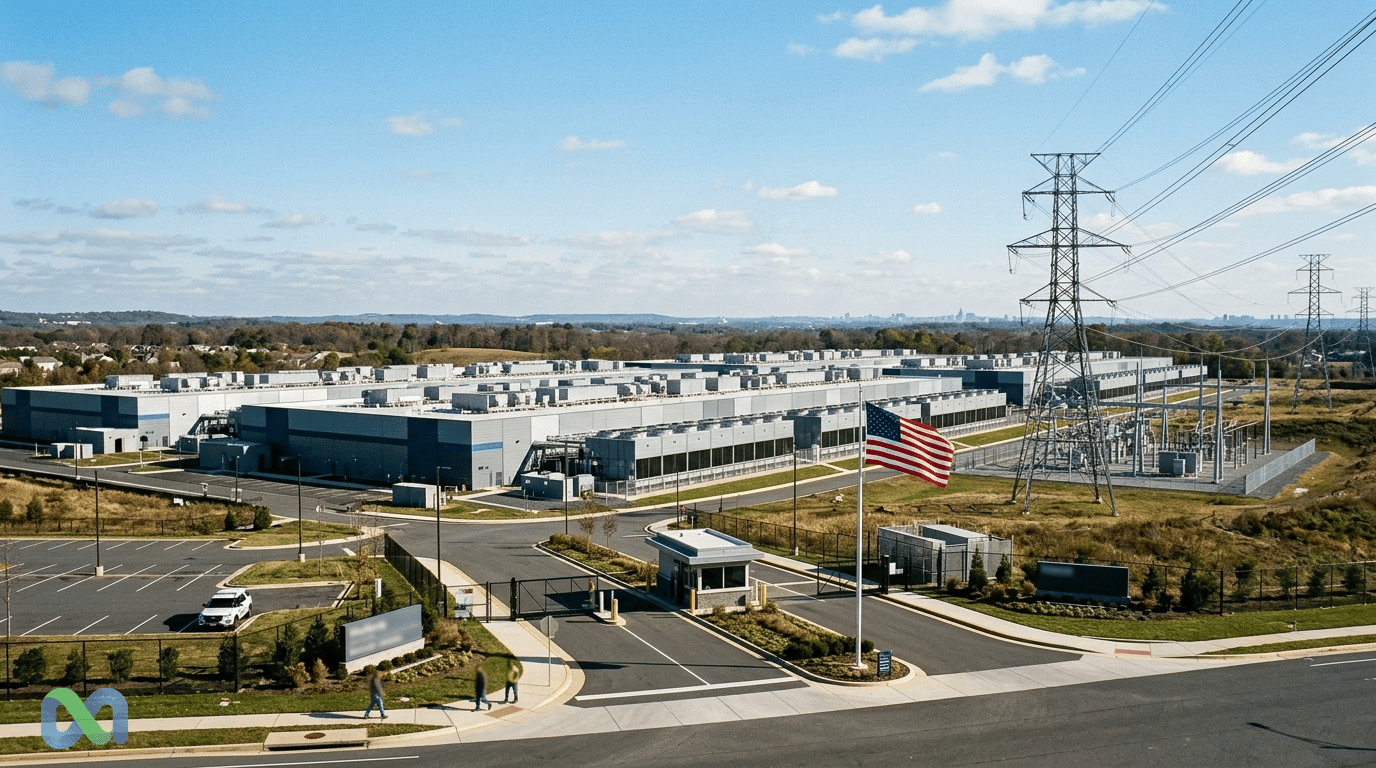
Trump was not only defending model development. He was defending the real-world buildout behind it. Data centers now sit at the center of AI competition because frontier systems require enormous compute, power, land, water, and grid access.
That is why the comment should be read as buildout policy as much as technology policy. If data centers are framed as national assets, permit fights become harder for local opponents. If they are framed as extractive energy users, local backlash gets stronger.
The "whoever wins AI wins" security frame
The security frame compresses the debate into a simple binary. Either the United States keeps accelerating, or China catches up. That frame reduces political space for broad pauses, even when safety leaders argue that the pace is risky.
Still, this does not mean no regulation is possible. It means the most likely federal rules would target specific harms. Expect more attention on cyber misuse, fraud, foreign influence, export controls, government procurement, and critical buildout.
However, a general slowdown mandate looks less likely under this posture. So does a framework that gives outside evaluators broad control over launch timing. Those ideas could still appear in bills, but they face a steep political climb.
For markets, this creates a familiar pattern. Rhetoric raises volatility, but the near-term policy path stays narrow. The stronger signal is that executive-branch appetite for binding guardrails appears low.
Why data centers were singled out
Additionally, data centers were not a throwaway line. They are the bottleneck that makes AI policy tangible for voters, utilities, and local officials.
AI labs can announce new models quickly. They cannot add gigawatts of reliable power as quickly. They need grid interconnection, backup power, cooling systems, land-use approvals, and long-term energy contracts.
As a result, data-center politics can slow AI even without a federal AI law. Local resistance can delay permits. Utility disputes can raise costs. State-level restrictions can reshape where capacity gets built.
This is the market angle that many headlines miss. AI competition is no longer only about model weights and research talent. It is also about substations, transmission queues, natural-gas availability, nuclear restart politics, and public tolerance for higher power demand.
Why AI Leaders Are Asking to Slow the Frontier
Meanwhile, the industry side is not unified. Dario Amodei of Anthropic has argued that advanced AI needs a slower, more measured path. His essay, "We Must Pace the Frontier", calls for stronger evaluation and more time to manage risk.
Sam Altman and Elon Musk also backed the idea that the pace deserves scrutiny, according to the reporting cited in the brief. Their support matters because it prevents the debate from becoming a simple outside-critics-versus-builders story.
The safety argument has two layers. First, advanced models may improve faster than institutions can adapt. Second, misuse risk can rise even when developers do not intend harm.
Anthropic has highlighted misuse categories that include cyber operations, influence operations, scams, surveillance, biological misuse, and model distillation. Those categories do not prove that every frontier release is reckless. They do show why some executives want stronger checks before capability jumps become harder to reverse.
Independent evaluator access
One practical proposal is broader access for independent evaluators. The logic is straightforward. If outside testers can inspect dangerous capabilities before launch, labs and officials get better evidence.
This is less drastic than a government-run pause. It also fits the voluntary-governance base case. Labs can adopt evaluator access, publish safety findings, and show regulators that they are managing risk.
Still, evaluator access raises hard questions. Who qualifies as independent? What information can they see? How do they handle trade secrets? And if evaluators find danger, who has the authority to stop release?
Those details determine whether the proposal becomes real guardrail or reputation management. Markets should watch adoption, not only statements of support.
Misuse examples: cyber, scams, surveillance, and biological risk
For example, the strongest safety case is not a vague claim that AI is powerful. It is that models can lower the cost of harmful activity.
Cyber operators can use AI to speed up reconnaissance or phishing. Fraud networks can create more convincing scams. Surveillance users can process larger volumes of data. Bad actors can also try to distill capability from stronger models into weaker or more accessible ones.
Biological misuse is the tail-risk category that draws the most attention. It is also the hardest to discuss without overstating the evidence. The responsible market read is to treat it as a low-frequency, high-severity risk that keeps regulators interested.
Therefore, the safety camp does not need to prove catastrophe is imminent. It only needs to convince officials that the downside is asymmetric. That is why even a low-odds event can drive calls for guardrails.
Trump AI Guardrails Policy Split: Safety Rules or Competitive Advantage
Therefore, the current Trump AI guardrails split is not simply left versus right. It is a four-way debate among speed, safety, competition, and rule capture.
Trump's position emphasizes speed and national advantage. AI CEOs calling for pacing emphasize safety and institutional readiness. Congress leaders remain cautious about rushing a sweeping bill. David Sacks and other critics warn that heavy rules could protect incumbents and weaken smaller labs or open-source developers.
That last point is important. Regulation can reduce risk, but it can also raise fixed costs. If compliance requires expensive audits, legal teams, and privileged government access, the largest labs may gain an advantage.
This is why the guardrails debate can split the tech sector. Some firms want stronger safety systems. Others fear that safety language will become a moat for companies that already have scale.
Why Congress is unlikely to move quickly
Congress can hold hearings, pressure agencies, and attach AI provisions to broader bills. But sweeping AI law is hard to pass fast.
The reasons are familiar. Lawmakers disagree on federal versus state authority. They disagree on open-source rules. They disagree on liability. They also face pressure from both safety advocates and growth-focused industry groups.
That makes a broad federal slowdown unlikely in the near term. The more likely path is narrower. Agencies can use existing powers. States can test local rules. Labs can expand voluntary safety commitments.
Prediction markets should separate these outcomes. "Any AI bill" is not the same as "binding frontier model pause." The former can happen through a narrow compromise. The latter needs a stronger political shock.
Regulatory capture risk for smaller labs and open source
The capture risk is not a talking point to dismiss. It is a real design problem.
If guardrails require expensive compliance, startups may struggle. If rules limit model release without clear thresholds, open-source work could face uncertainty. If major labs help write the standards, smaller players may suspect the process is tilted.
However, no rules also creates concentration risk. The largest labs have more capital, more compute, and better buildout access. A pure speed race can reward scale just as much as regulation does.
The policy question is whether guardrails can target misuse without freezing competition. That is the design challenge Washington has not solved.
Market Implications: Data Centers, Energy, and AI Capex
As a result, the immediate Trump AI guardrails market signal is not an AI stop. It is a higher odds that spending keeps flowing while regulation stays partial.
That supports the demand story for chips, cloud capacity, power equipment, grid upgrades, and data-center developers. Yet it also increases exposure to local constraints. If more projects rush ahead, more communities will see the costs directly.
Investors and prediction market traders should track four risk buckets.
Four risk buckets matter most.
Federal Trump AI guardrails are the first bucket. Watch White House tone, hearings, agency moves, and lab pledges. A binding slowdown still looks hard unless a major event changes the debate.
Data-center backlash is the second bucket. Watch power prices, water use, local permit fights, and state rules. AI buildout can slow even if Congress does nothing.
China competition is the third bucket. Watch export controls, defense spending, and industrial policy. Each step can make the speed-first case stronger.
Rule capture is the fourth bucket. Watch compliance costs, evaluator access, and open-source treatment. Large labs may gain if rules are costly or unclear.
These buckets show why the story belongs in a market lens. The same headline can help AI buildout and hurt rule clarity. It can also shift risk from Washington to states, utilities, and courts.
Permitting and local backlash
Data-center permit is where abstract Trump AI guardrails policy meets household costs. Local officials may support jobs and tax revenue. Residents may focus on electricity bills, water use, noise, or land conversion.
If the White House defends data centers as strategic buildout, developers gain a stronger narrative. They can argue that local approvals serve national competitiveness. That can matter in close zoning fights.
However, local politics can still bite. Energy demand can strain grids. Delays can hit project economics. Public-utility commissions can become the real battleground for AI capacity.
That makes data-center markets sensitive to politics outside Washington. State legislatures, utility boards, and county commissions can matter as much as Congress.
Voluntary governance as the base case
Voluntary governance is now the cleanest base case. It lets the White House defend speed while allowing labs to show restraint.
Under this path, major labs expand red-team testing and model cards. They also add evaluator access and misuse reporting. Agencies respond to clear harms under existing law. Congress avoids a sweeping pause unless a visible incident changes the political environment.
This path has weaknesses. Voluntary rules can be uneven. Labs may define success differently. Public trust can erode if safety claims look like public relations.
Still, it fits the current incentives. It avoids a direct slowdown. It gives safety leaders some process. It gives the administration a pro-competition message.
Simple Market Read
The short market read is plain. Trump AI guardrails look weak as a near-term federal bet. Speed has the edge for now. Labs still face pressure, but that pressure may stay soft.
This does not mean the risk is gone. It means the risk may move. Power boards can slow sites. States can write rules. Courts can hear fights. Local voters can push back.
So traders should split the question. One market can ask about federal AI rules. Another can ask about data-center limits. A third can ask whether a major lab delays a model. These are different bets.
That split helps because AI policy can change in steps. A small cyber rule is not a full AI pause. A state permit fight is not a national ban. A lab safety pledge is not binding law.
For now, the base case is simple. The United States keeps racing. Large labs keep building. Trump AI guardrails remain a live debate, but voluntary checks carry more weight than new hard limits.
What to Watch Next
The next signals are practical, not theatrical. Watch whether the White House turns rhetoric into agency guidance, procurement standards, or pressure on states to speed data-center approvals.
Watch whether more labs adopt external evaluator access. A few statements are not enough. The market signal improves when firms publish concrete access terms, risk thresholds, and response rules.
Watch Congress for narrow bills instead of sweeping law. A targeted cyber, export-control, or government-use bill would not equal a frontier pause. It would still show that lawmakers want a role.
Watch states and utilities. If local data-center restrictions spread, the effective constraint on AI can come from buildout rather than model regulation.
Finally, watch prediction market questions that separate timing from severity. Markets about "AI regulation this year" can hide too much. Better questions ask whether a binding federal rule passes, whether a major lab delays a model, or whether a state blocks new data-center capacity.
Quick Answers on Trump AI Guardrails
What are AI guardrails?
AI guardrails are rules and checks that reduce harm from AI systems. They can include audits, testing, access controls, cyber rules, and clear limits on high-risk use. They do not always stop development. In many cases, they guide how labs test and release models.
Why did Trump reject new AI guardrails?
Trump framed the issue as a race with China. In that view, slow rules could weaken the United States. He also argued that current law can punish misuse. That makes broad new Trump AI guardrails less likely in the near term.
Why are data centers part of the fight?
AI needs large data centers. Those sites need land, chips, power, cooling, and grid access. They also affect local communities. A data center can bring jobs and tax revenue, but it can also raise concern over power use and water use.
What could still slow AI down?
A federal pause is not the only brake. State rules can slow projects. Utility delays can raise costs. Local boards can reject sites. A major misuse event could also push Congress toward tougher Trump AI guardrails.
What is the base case for markets?
The base case is speed with voluntary checks. Labs keep building. Officials watch for clear harm. Agencies use current law where they can. Congress may debate narrow bills, but a broad AI pause needs a much stronger shock.
What should traders watch?
Watch concrete signs, not only speeches. Look for agency rules, state data-center bills, utility fights, model delays, and public safety reports. Also watch whether labs give outside testers real access before launches.
Bottom Line: The Guardrails Fight Is Now an Infrastructure Trade
The Trump AI guardrails fight is not just a quote cycle. It is a signal that the current U. S. policy posture leans toward acceleration, competition with China, and voluntary safeguards.
That does not remove AI risk. It changes where the risk is priced. The clearest constraints may come from data centers, electricity systems, state politics, and public backlash rather than a near-term federal pause.
For Macro Markets readers, the useful question is odds, not ideology. Are binding rules gaining enough support to slow advanced AI, or is voluntary rules still the default? Right now, the headline points toward speed. The market should keep watching the buildout bottlenecks that can still slow the race.
Prediction market odds are not investment advice. They are one way to track how public expectations respond as policy signals, safety reports, and buildout constraints change.
