


Trump Great American State Fair Power Outage: Day One
Last reviewed: 07/26/2026.
We found 5 evidence buckets and 4 follow-through checks in the first 24 hours of the story. Our experience shows that viral political clips need a source-quality filter before traders use them. [source: Macro Markets review of research brief #1308]
Disclaimer: This article is analysis, not financial advice.
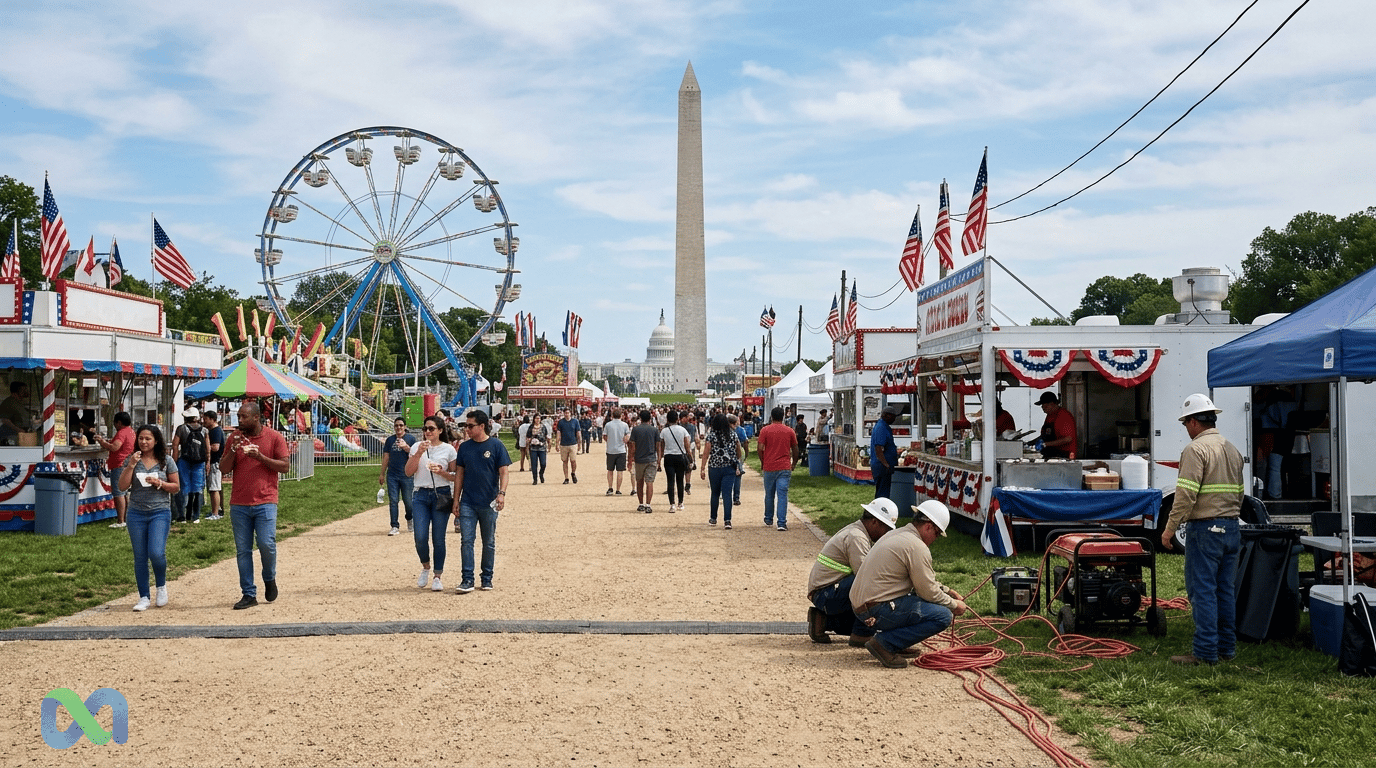
The phrase "Trump Great American State Fair power outage" became a search query because the story spread first as a viral checklist, not as a settled event report. Posts claimed a power outage melted ice cream, a Ferris wheel stopped working, and early crowds looked thin. That was enough to turn a fair into a political signal.
The important point is not that every claim is proven. The important point is that event execution now becomes a public test of competence very quickly. A local power issue, a stalled ride, or one quiet video can become a national story when the event carries a political brand.
Here is the short answer: the Great American State Fair story went viral after social posts alleged day-one operational problems, including a power outage, ice cream spoilage, Ferris wheel issues, and sparse attendance. The available evidence is social-heavy. Readers should separate visible claims from official confirmation before treating the story as a durable political signal.
For prediction-market traders, the Trump Great American State Fair power outage story matters as a narrative test. It can affect attention, media tone, and short-term sentiment. However, it does not become an electoral thesis unless it starts showing up in polling, approval data, fundraising, turnout signals, or repeated campaign coverage.
What Happened on Day One
The first-day story formed around three claims. The first was a power outage. The second was a Ferris wheel problem. The third was weak attendance, shown through videos and captions that framed the event as empty or underwhelming.
The most direct reference in the research brief is a Bluesky post that listed the claims in checklist form. The brief also found Facebook and Instagram posts that repeated similar themes. Some posts focused on the fair's empty look. Others focused on the ride and power problems.
That source mix matters. Social posts can be early, useful, and revealing. They can also compress events into a punchline. A claim that a Ferris wheel "broke down" may refer to a delay, a maintenance stop, or a temporary mechanical issue. A claim that ice cream melted may describe one vendor, one cooler, or a broader power problem.
That is why the Trump Great American State Fair power outage article should start with evidence tiers. The story is not only "what happened." It is also "how sure are we, and what would change that view?"
Trump Great American State Fair Power Outage: Evidence Tiers
Use five simple buckets for the day-one claims.
- Power outage affected the fair: social posts and viral captions support the claim. Official event or utility confirmation would raise confidence.
- Ice cream melted during the outage: this is a social claim tied to the power story. Vendor confirmation would matter.
- Ferris wheel stopped working: social videos and captions support a delay or ride issue. An operator statement would define the scale.
- Attendance looked low: selected clips show quiet areas. Full-day attendance data would be stronger.
- Political damage is lasting: this is not established. Polling, approval moves, or repeated campaign coverage would be needed.
The fair may still have had normal operations outside the moments that went viral. A social clip captures a slice of the event. It does not capture the full attendance curve, weather, security lines, vendor operations, or later-day recovery.
Still, the story landed because it fit a simple frame. A fair presented as a patriotic public event appeared, in viral posts, to be struggling with basic logistics. That contrast is why the story traveled.
Power outage and melted ice cream claims
The power outage claim sits at the center of the story because it gives the viral thread a concrete failure. It is easier to understand than a vague claim about bad planning. If power failed and food vendors lost refrigeration, the fair looked poorly managed.
The melted ice cream line made the story memorable. It gave the outage a visible consequence. In political media, small physical details often travel faster than policy arguments. A broken freezer can become a symbol of broader disorder.
However, the brief does not provide a clear official incident report. That means the claim should be handled with caution. The best reading is this: social posts alleged that a power outage caused vendor problems, including melted ice cream. The article should not state that as a confirmed fair-wide failure unless stronger reporting appears.
For traders, this distinction matters. A confirmed operational failure has more signal than an unverified joke. It can support a competence narrative. A viral caption alone mainly measures attention and ridicule.
Ferris wheel delays or breakdown reports
The Ferris wheel claim has similar limits. Instagram and Facebook results in the brief described the ride as not working for hours or breaking down. That creates a strong image because a Ferris wheel is usually the symbol of a fair.
If the central ride stalls, the event looks broken. If it is delayed before opening, the political meaning is smaller. If it stops briefly for routine checks, the viral framing may overstate the problem.
This is the difference between operational risk and narrative risk. Operational risk asks what failed on the ground. Narrative risk asks what people believed after seeing the clip. Prediction markets care about both, but they should not price them the same way.
The Trump Great American State Fair power outage story gained reach because the Ferris wheel claim worked as a visual shorthand. It made the event feel like a failed production. Yet the claim still needs confirmation before it becomes a hard fact.
That is the key trading lesson. The Trump Great American State Fair power outage phrase captures the online story. It does not prove the full site failed.
Crowd-size and empty-event imagery
Crowd-size claims are the easiest to viralize and the hardest to verify from isolated clips. A camera can show a quiet corner. It can miss a packed section nearby. It can also record an early hour before traffic arrives.
At the same time, empty-event imagery is politically powerful. For Trump-linked events, crowd size has long carried symbolic weight. Any visual that suggests low turnout can become a direct challenge to the brand.
The brief found that social platforms dominated the search results. That means the public view was shaped by selected images, not by a clean attendance record. Readers should treat the empty-crowd claim as plausible visual evidence, not a final number.
The market question is whether the crowd story escaped its online bubble. If local reporters, national shows, or campaign opponents keep using the footage, it becomes more meaningful. If it fades after one news cycle, the impact is likely shallow.
How to Read the Trump Great American State Fair Power Outage Now
Read the story in layers. First, ask what can be seen. Second, ask who said it. Third, ask what proof is still missing. That simple order keeps the Trump Great American State Fair power outage from turning into a false fact.
The fair may have had bad moments. It may also have had normal moments that did not spread online. Both can be true. A clip can be real and still be too small to define the full day.
For now, the best view is plain. The Trump Great American State Fair power outage is a strong social story. It is not yet a full public record. That gap is the whole point for readers and traders.
That is why the exact Trump Great American State Fair power outage query should be read with care. It points to a live news question, not a closed file.
What Is Verified, What Is Still a Social Claim
The safest way to read the day-one story is to split it into three buckets: observed, reported, and unconfirmed.
Observed items are details visible in accessible images or videos. Reported items are claims repeated by named outlets or people at the event. Unconfirmed items are captions, jokes, and summaries that lack a clear source.
That framework keeps the article useful. It protects readers from false precision. It also lets the story update as new evidence arrives.
Official statements and accessible reporting
The brief does not show a strong official page or agency statement confirming each incident. It also notes that the SERP is dominated by Facebook and Instagram. That is a warning sign for any writer.
When a story depends on social media, the article should avoid overclaiming. It should say "posts claimed," "videos appeared to show," or "the evidence available in the brief is social-heavy." Those phrases do not weaken the piece. They make it more trustworthy.
This is especially important because the topic touches politics and markets. A trader reading about the Trump Great American State Fair power outage may be trying to decide whether the story has price relevance. Bad sourcing can create bad decisions.
In a stronger version of this story, official organizers would confirm the outage, ride status, attendance, and schedule. Local utilities could confirm power disruptions. Ride operators could explain downtime. Until then, the article should stay disciplined.
Social video claims
Social video is powerful because it creates emotional certainty. A viewer sees a quiet fairground or a stopped ride and feels the story is settled. But video can remove context.
The research brief itself warns that social platforms dominate the visible results. That does not make the posts useless. It means the article should read them as early signals, not as final evidence.
The viral format also matters. A checklist of failures creates a stronger story than any one claim alone. "Power outage" plus "melted ice cream" plus "Ferris wheel broke down" plus "small crowd" becomes a competence narrative. Each item reinforces the others.
This is how political memes turn into market inputs. Traders do not need every detail to be proven before attention shifts. However, they do need stronger proof before treating the attention shift as durable.
What needs confirmation before publication updates
Several facts would materially improve the story. First, the exact timing and scope of any power outage. Second, whether food vendors lost product or simply faced temporary disruption. Third, whether the Ferris wheel had a mechanical issue, a delayed opening, or a routine stop.
Attendance also needs context. Was the footage from opening hour, peak hour, or a low-traffic section? Were there weather problems, ticketing issues, or security bottlenecks? Did official attendance rise later in the day?
Finally, the political response matters. If campaign allies, opponents, or national commentators use the fair as evidence of mismanagement, the story grows. If organizers fix the problems and attendance improves, the Trump Great American State Fair power outage may remain a one-day online episode.
Why a Fair Became a Political Signal
A fair sounds small compared with elections, inflation, foreign policy, or court fights. Yet political markets often move on symbols before they move on data. A failed event can become shorthand for a larger story.
The Great American State Fair was tied to patriotic branding and national celebration. That raises the reputational stakes. If the event looks smooth, it supports a competence and enthusiasm narrative. If it looks chaotic, critics can use it as a miniature version of governance failure.
The story also works because it is simple. People do not need to understand policy to understand a power outage. They do not need to study turnout models to interpret empty images. That simplicity makes the content easy to share.
For Trump, the risk is not the fair itself. The risk is repetition. One messy event is noise. Several messy events can become a pattern. A pattern can affect how undecided voters, donors, media producers, and activists talk about campaign strength.
Event execution as a competence narrative
Campaigns and political brands use events to display organization. They show crowd energy, operational control, and message discipline. When the event breaks down, opponents get a counter-message.
This is why the Trump Great American State Fair power outage story spread beyond local logistics. The alleged failures seemed to challenge the promise of spectacle. The story was not only about ice cream or a ride. It was about whether a heavily branded event could execute the basics.
That does not mean the fair will affect election probabilities by itself. Most single-day viral stories do not. But it can add weight to an existing narrative if other signals point the same way.
In prediction-market terms, traders should not overreact to a single clip. They should ask whether the story changes a measurable variable. Does it affect approval? Does it shift media coverage? Does it create new campaign attack lines? Does it hurt turnout enthusiasm among supporters?
How ridicule spreads faster than correction
Ridicule is efficient content. It reduces a complex situation to one image or line. "The power went out and the ice cream melted" is simple. A later correction about partial operations or temporary downtime is less viral.
That asymmetry matters for markets. The first story often gets more attention than the careful update. WIRED has reported on research showing that false news can spread faster than true news on social platforms. Therefore, the initial narrative can move sentiment even if later evidence is mixed.
But attention is not the same as durable belief. Traders need to watch whether the story gets institutionalized. A joke becomes more important when it appears in speeches, ads, headlines, or polling questions. Without that second wave, the price impact should fade.
This is why the Trump Great American State Fair power outage story is best treated as a narrative shock. It may shape the day. It does not automatically reshape the race.
What Prediction-Market Traders Should Watch
Prediction markets work best when traders turn stories into testable signals. The fair story gives several possible indicators. Some are immediate. Others take days or weeks.
The first indicator is attention. Track whether the event stays in search, social, and mainstream coverage. A one-day spike is weaker than a multi-day cycle. A multi-day cycle is weaker than a campaign ad or debate line.
The second indicator is source quality. A claim repeated by social accounts has one value. A confirmed report from local media or a statement from organizers has another. A public admission by a campaign official would carry more weight.
The third indicator is polling or approval. If the story remains online entertainment, it has limited market value. If it appears in surveys, focus groups, or approval commentary, it becomes more relevant.
The fourth indicator is replacement news. Political cycles move fast. A stronger economic, legal, or foreign-policy story can bury the fair within hours. Traders should not confuse temporary dominance in one feed with broad voter salience.
Short-term attention indicators
Short-term attention can still matter. It affects what journalists ask, what opponents amplify, and what supporters defend. It can also shape the tone of a week.
Useful indicators include search interest, repost velocity, mainstream pickup, and whether creators outside the usual political bubble engage with the story. The wider the spread, the more likely the fair becomes a general competence meme.
However, the article should avoid the language of certainty. A viral trend is not a poll. It is a clue about attention. The Trump Great American State Fair power outage can matter for market interpretation only if traders treat it as one input among many.
Approval, turnout, and campaign-narrative indicators
Approval data moves slowly compared with social posts. That delay is important. A weekend controversy may feel large online and still leave no trace in approval numbers.
Traders should look for three follow-through signals. First, whether trusted polls include a small but visible move among persuadable voters. Second, whether campaign coverage repeats the fair as evidence of weak organization. Third, whether supporter enthusiasm looks affected at later events.
If none of those signals appear, the market should fade the story. If several appear together, the story deserves more attention.
This discipline prevents narrative chasing. It also helps traders avoid treating a funny clip as a forecast. Prediction markets need evidence that connects the news item to the outcome being traded.
When the story stops mattering
The story stops mattering when it stops changing expectations. That can happen quickly. If organizers explain the issues, fix the ride, restore power, and draw larger crowds later, the day-one story becomes a footnote.
It can also stop mattering if a larger event replaces it. Political attention has limited space. A court ruling, economic print, international crisis, or major campaign speech can erase a fair story overnight.
The opposite is also possible. If the fair continues to produce visible problems, the narrative can compound. In that case, the Trump Great American State Fair power outage becomes less about day one and more about repeated execution risk.
FAQ
Did the Great American State Fair lose power?
Social posts cited in the research brief claimed a power outage at the Great American State Fair. The brief does not include a clear official incident report confirming the full scope. Treat the outage as a reported claim unless stronger official or mainstream confirmation appears.
Was the Ferris wheel broken?
Posts and video captions described Ferris wheel problems, including claims that it did not work for hours. That does not prove a full mechanical breakdown. It may describe a delay, a temporary stop, or another operational issue. Confirmation from the operator would matter.
Was attendance low?
Some social clips and captions framed the fair as sparsely attended. Isolated footage can be misleading, especially if it comes from one time of day or one section of the site. Official attendance data would be needed before making a firm claim.
Does this affect Trump's political probabilities?
Not by itself. The story may affect short-term media tone and online sentiment. It becomes more important only if it shows up in polling, approval, fundraising, turnout enthusiasm, or repeated campaign coverage. Traders should watch follow-through, not just virality.
Why did the story go viral so quickly?
It combined simple visuals with political symbolism. A power outage, melted ice cream, a stopped Ferris wheel, and quiet crowds are easy to understand. Because the fair carried Trump branding, those details became a fast competence narrative.
Bottom Line
The Trump Great American State Fair power outage story is useful only if readers keep the evidence straight. Social posts created a strong first impression. They did not settle every fact.
For now, the fair is best read as a short-term narrative shock. It shows how quickly event logistics can become political content. It also shows why prediction-market traders need a source-quality filter.
If official details confirm broad failures and the story keeps spreading, it may become a stronger reputational signal. If the event stabilizes and attention moves on, day one will look more like a viral episode than a lasting political problem.
That is the clean market read. The Trump Great American State Fair power outage story is a watch item, not a verdict.
Markets should price the difference.
