


UEFA Champions League Winner: Favorites, Format, and Key Scenarios
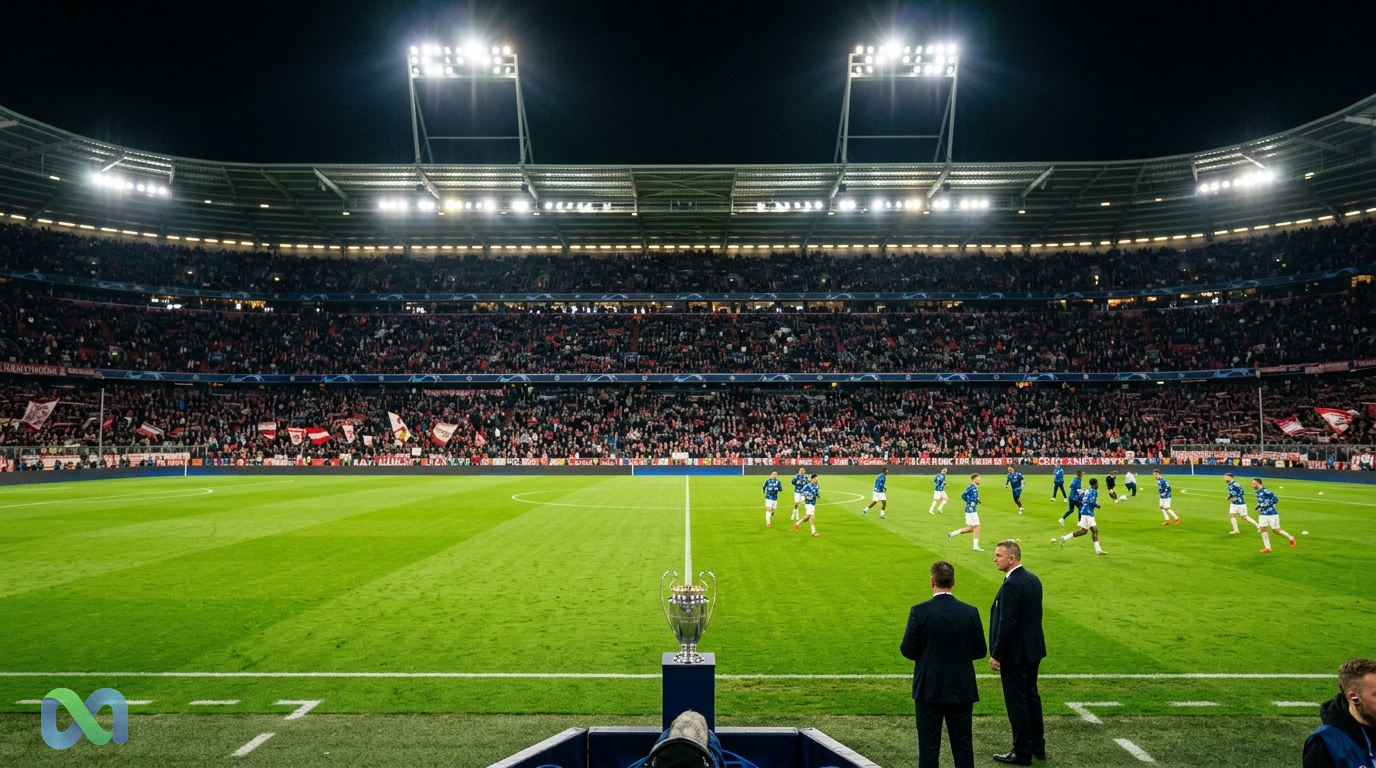
Every season starts with the same question: who will be the UEFA Champions League winner? The answer is never as simple as naming the richest club or the one with the loudest hype. In this competition, elite quality matters, but so do depth, injuries, tactical flexibility, and the path through the bracket.
That is even more true under the new format. The league phase changes how teams qualify, how much room they have for mistakes, and how much schedule pressure top squads must absorb before the knockout rounds. So if you want to project the UEFA Champions League winner well, you need more than a power ranking. You need a framework.
This guide breaks down the favorites, the dark horses, and the conditions that usually separate a quarterfinalist from a real title winner. It also explains how to think about Champions League winner odds without getting trapped by reputation alone. Additionally, if you want a broader view of tournament structures, our guide to the 2026 World Cup format shows how format changes can reshape title paths across major competitions.
Who Is Most Likely to Win the UEFA Champions League Winner Race?
The short answer is that the most likely UEFA Champions League winner is usually one of the small group of clubs that combine elite chance creation, defensive control, squad depth, and recent knockout-level experience. In most seasons, that top tier includes the strongest versions of Real Madrid, Manchester City, Bayern Munich, Paris Saint-Germain, or another club with a complete squad and a stable tactical identity.
That does not mean the best league-phase team will win the trophy. Instead, it means the eventual UEFA Champions League winner usually checks several boxes at once. The team must be able to dominate weaker opponents, survive two-leg tactical battles, and solve problems when the first plan fails. That is why pure form can mislead. A side may look unstoppable in domestic play but still have flaws that become obvious in Europe.
A true Champions League favorite usually has five traits:
- A reliable source of goals, even against top defenses.
- Midfield control under pressure.
- Defensive depth, not just a good first-choice back line.
- High-end match winners who can decide tight knockout games.
- Enough rotation options to handle fixture congestion.
In other words, the UEFA Champions League winner is often the team that looks hardest to eliminate four times in a row, not the team that looks best in one headline result.
How the New Champions League Format Changes the UEFA Champions League Winner Outlook
The new Champions League format matters because it changes both the volume and the shape of the journey. Instead of a traditional group stage, teams now play a league phase against a wider variety of opponents. That creates a broader sample of results, but it also adds complexity to the qualification picture.
In simple terms, the format works like this:
- Teams play multiple league-phase matches instead of sitting in a four-team group.
- The best-performing teams advance directly, while others may need extra playoff steps.
- The knockout stage still decides the champion, where margins stay thin and randomness rises.
This system rewards depth more than before. Therefore, a club with a strong starting XI but weak bench coverage can struggle when the calendar gets heavier. That matters when discussing the UEFA Champions League winner because top contenders are not just trying to be brilliant. They are trying to stay fresh enough for March, April, and May.
The format also changes the outlook for outsiders. In one sense, more matches can help strong underdogs prove they belong. In another, the longer path can expose shallow squads. That is why the new structure tends to favor clubs with both talent and resilience. It raises the value of rotation, tactical adaptability, and injury management.
If you follow tournament forecasting more broadly, the same logic appears in our analysis of who will win the 2026 World Cup. Format does not decide the champion on its own, but it changes which strengths matter most.
Top Contenders to Become the UEFA Champions League Winner
The exact list shifts every season, but the profile of the main contenders stays familiar. The market usually clusters around a few clubs for good reason. These teams combine talent, coaching, and institutional experience.
Real Madrid: Why Experience Still Carries Weight
Real Madrid remain the reference point because their Champions League history is not just tradition. It reflects a pattern. They rarely panic, they carry elite individual talent, and they know how to survive unstable matches. Even when their performances are not perfect, they tend to stay alive long enough for quality to decide the tie.
That matters in a competition where one half can flip the entire tournament. Madrid often have players who can absorb pressure, punish defensive mistakes, and change the emotional temperature of a knockout match. However, their risk is the same as it has been in recent years: if the midfield loses control or the defense becomes stretched in transition, even great finishing may not save them.
Still, when projecting the UEFA Champions League winner, experience is not a soft factor. It is a practical edge. Teams that have already navigated quarterfinals and semifinals under extreme pressure usually make fewer emotional errors.
Manchester City: The Most Complete Structural Favorite
Manchester City often enter as the most complete favorite on paper. Their best version controls possession, territory, and game tempo better than almost anyone. They can suffocate opponents for long stretches, and that kind of control is a major asset in two-leg ties.
City’s path to the trophy is clear. If they maintain fitness in key areas and keep their pressing structure intact, they can create the highest floor of any contender. They are less dependent on chaos than many rivals. Additionally, they can win through volume, patience, and tactical precision.
The main risk is that the margins at this level are still brutal. One injury, one red card, or one underwhelming first leg can turn control into frustration. But if you want the club that often looks most sustainable over a full campaign, City usually belong at or near the top.
Bayern Munich or Paris Saint-Germain: Talent With Different Risk Profiles
Bayern Munich and Paris Saint-Germain often sit in the next tier, though the reasons differ. Bayern usually offer attacking threat, physicality, and a high baseline of European expectation. If the structure around the ball is strong, they look like real title material. If the defensive transitions become loose, they become vulnerable to faster and more balanced teams.
Paris Saint-Germain can be harder to model because their ceiling depends so much on chemistry and game-state discipline. Their talent level is rarely the issue. The question is whether the team can stay compact, trust its structure, and avoid turning knockout ties into emotional chaos. When PSG do that well, they can beat anyone. When they do not, even smaller tactical issues become season-defining.
This is where probability thinking matters. A contender does not need to be perfect to become the UEFA Champions League winner. It just needs a path where its strengths show up more often than its weaknesses.
Dark Horses and Upset Scenarios in the UEFA Champions League Winner Market
Every season also brings a few clubs that are strong enough to challenge the favorite tier without being priced like it. These dark horses are not random picks. Usually, they share three features: tactical clarity, defensive discipline, and one or two elite players who can swing a knockout tie.
Arsenal, Inter, Atlético Madrid, or another well-coached side can fit this profile depending on the year. These teams may not have the same depth as the top two or three favorites, but they can still become legitimate threats if the bracket opens up or the matchups line up well.
A dark horse becomes more dangerous when:
- The favorite on its side of the bracket has injuries.
- The underdog can defend deep without losing counterattacking threat.
- The coach has a clear two-leg plan rather than a generic attacking identity.
- Set pieces and goalkeeper quality can steal high-leverage moments.
For an upset winner to emerge, several things usually need to happen at once. The underdog must avoid the worst possible draw early, reach the latter rounds with its core players healthy, and face at least one favorite that underperforms in finishing or defensive execution. That is a narrow path, but not an impossible one.
The lesson is simple. Therefore, a long shot should not be dismissed just because it lacks star power. It should be judged by whether its style can travel into knockout football.
How to Evaluate UEFA Champions League Winner Odds Like an Analyst
If you want to think clearly about the UEFA Champions League winner, start by separating narrative from evidence. Big clubs generate headlines. That does not always mean they offer the strongest title case.
Form Versus Underlying Quality
Recent form matters, but it needs context. A team on a six-match winning run may have played weak opposition or benefited from unsustainably hot finishing. Another team may have dropped points while still controlling matches well.
That is why analysts look beyond results. Chance creation, shot suppression, and territorial control are often more predictive than the last scoreline alone. Surface momentum can fade quickly in a knockout setting.
Squad Depth, Injuries, and Rotation
The UEFA Champions League winner almost always survives scheduling stress. That means depth matters. If a team relies too heavily on a few stars, its probability drops sharply once fatigue or injuries arrive.
This is also where futures logic overlaps with broader tournament analysis. In our piece on Brazil World Cup 2026 odds, the same principle appears clearly: top-end quality matters, but depth and path matter almost as much when titles are on the line.
Draw Difficulty and Knockout Path
Not all semifinal routes are equal. Sometimes the betting favorite is on the brutal side of the bracket, while another contender gets a much cleaner road. Those path differences can matter more than small differences in raw team quality.
A strong projection asks simple questions. Who is likely to face two elite opponents before the final? Which club can avoid bad stylistic matchups? Which favorite is most exposed to transition-heavy underdogs? The answers often reveal where market prices are too confident or too conservative.
Implied Probability Versus Hype
Champions League winner odds tell you what the market implies. They do not tell you whether the price is smart. To evaluate value, compare the implied probability with your own estimate of the team’s real path.
If a club is being priced as though its reputation guarantees a semifinal run, there may be less value there than fans think. Conversely, if another team has elite defensive numbers, a favorable draw, and less public hype, it may offer the stronger analytical case.
That same market-reading mindset is central to understanding how prediction markets work. Price is a signal, not a verdict.
FAQ About the UEFA Champions League Winner Race
How does the new format work?
The new format replaces the old group-stage structure with a league phase. Teams play multiple opponents across the competition, and the best performers advance toward the knockout rounds. The exact path depends on league-phase results, which makes consistency and squad depth more important than before.
Who has already qualified?
Qualification changes every season and depends on domestic league performance, coefficient slots, and late playoff outcomes. For the most reliable update, readers should check official UEFA competition pages because the field evolves throughout the calendar.
Where can fans watch key matches?
Broadcast rights depend on country and round. In many markets, Champions League coverage is split across broadcasters and streaming services. The safest approach is to check official UEFA listings or local rights holders before each matchday.
So who will be the UEFA Champions League winner?
The best answer is that the UEFA Champions League winner will probably come from the small top tier of clubs with elite talent, strong depth, and a manageable knockout path. In most seasons, the safest projection starts with clubs like Real Madrid or Manchester City, then adjusts as injuries, form, and the bracket evolve.
Final Take on the UEFA Champions League Winner
Projecting the UEFA Champions League winner is not about guessing who feels biggest. It is about identifying which club is best built for this specific competition. That means balancing quality, depth, format impact, path difficulty, and the ability to handle high-pressure knockout moments.
The strongest favorite today may not be the strongest favorite in six weeks. That is why the smartest approach is to update the view as the draw, injuries, and performances change. If you want to follow tournament probabilities with a market mindset, keep comparing reputation against real evidence, and keep treating every title call as probabilistic, not certain.
For readers who like comparing major tournament futures, you can also explore our broader Macro Markets coverage and related football forecasting pieces.
