


UFO Whistleblowers Allowed to Disclose Classified Data: What Changed
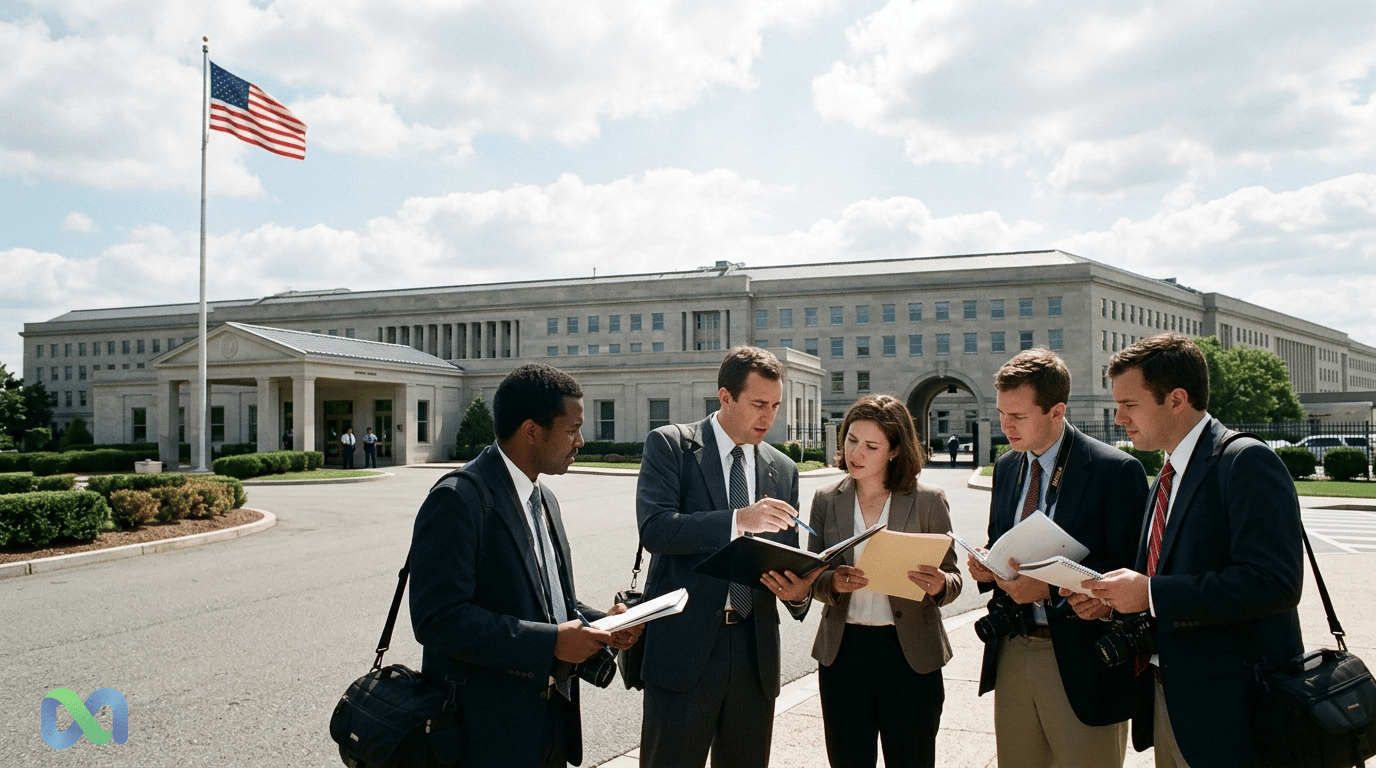
UFO whistleblowers allowed to disclose classified data sounds like a dramatic shift. It is more precise to call it a controlled information channel. The core change is not that every classified UFO or UAP file is suddenly public. It is that some people may be able to share specified information with authorized officials under protected procedures.
That distinction matters. A disclosure pathway can raise the quality of oversight without proving every claim attached to the story. It can also move public expectations before new evidence is released.
FOX 10 Phoenix highlighted the issue in a segment on new federal UFO disclosure rules. Other coverage has focused on former Pentagon officials, declassified files, and claims about hidden programs. Those stories attract attention because they sit at the edge of secrecy, science, defense spending, and public trust.
For prediction-market users, the useful question is not whether a headline feels explosive. The useful question is what the headline changes in the evidence stack. A protected disclosure can change who can speak, who can receive information, and what Congress can review. It does not automatically turn allegations into verified facts.
Last reviewed: 07/24/2026. This article separates legal authorization, declassification, testimony, media claims, and social amplification. It also explains how to update probabilities when evidence arrives in partial form. Disclaimer: This is market analysis and media-literacy guidance, not legal advice or investment advice.
What UFO Whistleblowers Allowed to Disclose Classified Data Actually Means
UFO whistleblowers may be allowed to share specified classified information through protected official channels. That does not mean they can release classified files to the public. It also does not mean the underlying claims are automatically verified. The key issue is where the information goes, who is authorized to receive it, and what evidence supports it.
The phrase "classified data" can create confusion. In national-security systems, classification controls access. It does not decide whether a claim is true or false. A document can be classified because it concerns sensors, sources, methods, locations, or defense programs. The same rules can apply even when the public interest is high.
That is why disclosure rules focus on process. They can let people report information to inspectors general, Congress, or other cleared officials. Those channels can protect whistleblowers from retaliation. They can also protect sensitive details from public release.
The public often hears a simpler version. Someone says whistleblowers can now disclose classified UFO information. The market then reacts as if a major public release is imminent. However, the actual policy signal is narrower. It is about protected routing, not unlimited publication.
This matters for evidence quality. A protected complaint may be important because it creates an official record. Yet it may still be an allegation until documents, witnesses, budgets, or physical evidence support it. The right reaction is measured attention, not instant certainty.
Protected Disclosure vs. Public Declassification
Protected disclosure and public declassification are different events. Protected disclosure lets an authorized person report sensitive information to an authorized receiver. Public declassification changes the status of the material itself, which can make documents available outside classified channels.
A whistleblower may tell Congress something that the general public still cannot see. A declassified document may be public, but it may be narrow, redacted, or hard to interpret. A media interview may describe claims, but it may not include the underlying record.
Those categories should not be mixed. Each has a different legal status and a different signal value.
The same rule applies to UAP terminology. UAP means unidentified anomalous phenomena. It does not mean alien craft. It means an event or object was not identified under the available data. That leaves a wide range of possible explanations, from sensor error to experimental aircraft to rare natural events.
A serious reader should separate the legal permission to report from the scientific conclusion being suggested. They are not the same variable.
Why Authorization Channels Matter for National-Security Claims
Authorization channels matter because many UFO claims involve military sensors, pilots, contractors, or intelligence programs. If people speak outside approved channels, they can expose sensitive systems. If they stay silent, oversight may fail.
A protected channel is an attempt to balance those risks. It can let Congress ask whether agencies are following the law. It can also let investigators compare testimony against documents and budgets.
That process is slow by design. It should be. Claims about hidden national-security programs require a higher bar than ordinary political claims. They need records, corroboration, and a clear chain of custody.
The market angle is simple. A stronger channel can increase the chance that new evidence reaches decision-makers. It does not guarantee that the public will see decisive proof. Therefore, the probability update should be positive for oversight, but limited for extraordinary conclusions.
The Evidence Ladder: Files, Testimony, Claims, and Signals
UFO disclosure stories mix several kinds of information. They often appear together in one feed, but they should not carry the same weight.
A useful approach is an evidence ladder. Put the strongest, most verifiable material at the top. Put viral claims and commentary lower down. Then decide whether a new headline deserves a small update or a major one.
| Source type | Legal status | Evidence value | Main limit |
|---|---|---|---|
| Official declassified documents | Public or partly public | Strong for what the document says | May be redacted or narrow |
| Protected whistleblower disclosure | Shared through authorized channels | Stronger than rumor if logged and reviewable | Often not public in full |
| Congressional testimony | Public statement under oversight context | Useful for claims and accountability | Testimony still needs corroboration |
| Media interview | Public reporting or commentary | Useful for leads and context | Depends on sourcing and documents |
| Social-media claim | Public amplification | Useful for attention signals | Weak evidence without source material |
This ladder helps reduce overreaction. It also helps traders think in probabilities. Not every headline has the same weight.
Official Declassified Documents
Declassified UFO files can be important. They show what agencies documented, when they documented it, and how they described uncertainty. They may also show patterns in reporting, sensor limits, or internal debate.
However, declassified does not mean complete. Many releases are redacted. Some documents describe old incidents, not new evidence. Others show that officials discussed unidentified cases without proving what caused them.
The recent wave of coverage around declassified files should be read this way. A document release can be a real transparency event. It can still fall short of proving the most dramatic public claims.
Readers should ask basic questions. Who released the file? What date does it cover? Is it primary material or a summary? Are key names, locations, or methods redacted? Does it confirm a claim, or only show that officials investigated one?
Those questions sound dry. They are useful because disclosure headlines often reward emotion over precision.
Congressional Testimony and Whistleblower Complaints
Congressional testimony matters because it places claims inside an oversight system. Lawmakers can request records, call witnesses, and compare statements against agency responses. That makes testimony more important than a casual interview.
Still, testimony has limits. A witness can be credible and still be wrong about parts of a story. A witness can describe what they were told, but not what they personally saw. A claim can be worth investigating without being confirmed.
That distinction is central to the Pentagon UFO whistleblower debate. Some claims involve alleged hidden spending or secret retrieval programs. As Fox News reported, those allegations can involve claims about secret spending, which raises the bar for documentary support.
A market-minded reader should not dismiss testimony. They also should not treat testimony as the final step. The next update should come from corroboration.
Media Interviews and Social Amplification
Media interviews can help surface new claims. FOX 10 Phoenix, CNN, NewsNation, Anadolu, and other outlets have all carried pieces of the UFO disclosure debate. CNN's interview coverage shows how former officials can push the topic into broader public debate.
However, the problem is that attention is not evidence. Social platforms can make the weakest version of a claim travel the fastest. A short clip about monoliths, moon photos, or secret programs may reach millions before anyone reviews the source material.
That creates a classic information-market problem. The narrative moves first. The evidence follows later, if it follows at all.
Prediction markets are useful here because they force a question: what would have to be true for the probability to move? A viral clip alone should not move it much. A verified document, sworn testimony, and agency confirmation should move it more.
Why the Pentagon and Congress Are Central to the Story
The Pentagon and Congress sit at the center of this story because UFO disclosure is also an oversight story. It is not only about unusual sightings. It is about who controls classified information, who reviews defense programs, and how officials handle claims from insiders.
Defense agencies classify information for many reasons. Some are obvious, such as weapons systems or sensor capabilities. Others are procedural, such as protecting sources or methods. A UAP case may touch those areas even when the object itself remains unidentified.
Congress has a different role. It controls funding and has oversight authority. If lawmakers believe agencies withheld information, they can press for briefings, reports, or statutory changes. That is why disclosure advocates focus so heavily on Capitol Hill.
The public debate often turns this into a proof question. Did officials hide something extraordinary? The institutional question is broader. Did the system create enough accountability for unusual claims inside classified programs?
Those are related, but not identical. A failure of oversight could be real even if the most extreme claims are not confirmed.
Oversight Incentives
Lawmakers have incentives to push for transparency. Voters distrust opaque institutions. Committee members also want to know whether agencies are following reporting rules. In defense policy, even small failures can matter because budgets are large and information is controlled.
Agencies have different incentives. They may want to protect classified methods. They may also want to avoid public panic, political embarrassment, or disclosure of experimental programs. Some caution may be legitimate. Some may be excessive.
This tension makes the disclosure process messy. It also makes it durable. Even when one headline fades, the institutional fight can continue through hearings, amendments, reports, and inspector-general reviews.
For readers, the oversight signal is stronger than the alien signal. More protected channels can make hidden claims easier to investigate. They do not decide what investigators will find.
The Difference Between Secrecy and Proof
Secrecy can increase suspicion. It should not be treated as proof by itself. Classified systems often hide ordinary things for serious reasons. They can also hide mistakes, waste, or misconduct.
That ambiguity is why UFO disclosure is hard to price. A classified program could involve advanced drones, foreign surveillance, sensor artifacts, compartmentalized research, or something stranger. The public may not know which explanation is right for years.
A good analyst resists one-step reasoning. "The government kept it secret" is not enough. "A whistleblower said it" is not enough. "A document exists" is not enough. The question is what the document says, how it was verified, and what alternative explanations remain.
That standard may frustrate people who want a clean answer. However, it is still the standard that keeps analysis useful. Our analysis treats UAP disclosure whistleblower protections as an oversight signal first and a scientific signal only after public evidence improves.
What This Means for Prediction Markets and Public Expectations
UFO disclosure is a clear example of how public expectations move under uncertainty. A headline can change attention. A document can change evidence. A hearing can change oversight pressure. Each one should move probabilities by a different amount.
Prediction markets work best when traders define the event clearly. That is hard in UFO stories because the claim can shift. Are traders pricing a new hearing? A document release? Agency confirmation? Proof of non-human intelligence? A public statement from NASA or the Pentagon?
Those are separate markets. They should not be blurred.
A market on "Will Congress hold another UAP hearing this year?" is different from a market on "Will the Pentagon release new declassified UAP files?" Both are different from a market on "Will a U. S. agency confirm non-human technology?" The evidence needed for each outcome is not the same.
That is why language matters. A vague market can become a narrative contest. A precise market becomes a testable claim.
High-Attention Narratives Can Move Faster Than Verified Information
High-attention narratives often front-run verification. This happens in politics, macroeconomic data, sports injuries, and national-security stories. UFO disclosure adds extra fuel because the topic is emotionally loaded and historically opaque.
The first wave of attention may be rational. Traders notice that a protected channel increases the odds of future disclosures. Reporters notice that lawmakers are engaged. Viewers notice that former officials are speaking publicly.
However, the second wave can become unstable. A claim mutates across clips. A narrow legal rule becomes a public-release rumor. A declassified file becomes "proof" in headlines even when the file is more limited.
The way to manage this is to size the update. New protected channels may justify a small to moderate change in expectations about more hearings or document releases. They do not justify a large change in extraordinary conclusions without stronger evidence.
How to Update Probabilities When Evidence Is Partial
Start with the base rate. Governments often classify defense information. Whistleblowers often make claims that deserve review. Some claims prove important. Many prove narrower than the first headline.
Then identify the new fact. Was a rule changed? Was a document released? Did a cleared witness testify? Did an agency confirm a program? Each fact has a different weight.
Next, ask what changed from the prior state. If lawmakers already had authority to request briefings, a new interview may add little. If a new law creates clearer protection for witnesses, it may add more. If officials release primary documents that confirm a specific program, it adds much more.
Finally, define the outcome. A probability update should attach to a specific event. "More disclosure activity" is not the same as "proof of a specific claim." The first can rise while the second remains low.
That is the discipline Macro Markets is built around. Markets force claims into clear conditions, timelines, and settlement rules. That does not remove uncertainty. It makes uncertainty easier to analyze.
How to Read the Next UFO Disclosure Headline
The next UFO disclosure headline will probably sound bigger than the evidence behind it. That does not make it false. It means readers need a repeatable filter.
Use this checklist before treating any claim as a major signal:
- Who is the source? A named official, a cleared witness, an anonymous source, or a social account?
- What exactly changed? A law, a hearing, a document release, a complaint, or an interview?
- Is the material public? If not, who has reviewed it under authorized channels?
- Does the claim include documents, budgets, dates, or named programs?
- What would falsify or weaken the claim?
The last question is the most important. A claim that cannot be tested is hard to price. It may still be culturally important, but it is weak as a market signal.
Five Questions to Ask Before Treating a Claim as Evidence
First, ask whether the claim is primary or secondhand. A witness describing direct knowledge carries more weight than a person repeating what they heard.
Second, ask whether the claim has a document trail. National-security programs leave procurement, staffing, budget, and reporting traces. Some may be classified, but oversight bodies can still review them.
Third, ask whether officials have responded. A denial is not always decisive. Still, an agency response can narrow the disputed facts.
Fourth, ask whether independent reporting confirms the same details. Multiple outlets repeating the same viral clip is not the same as independent corroboration.
Fifth, ask whether the claim changes a defined probability. If it does not, it may be interesting but not tradeable.
Red Flags in Viral Disclosure Content
Be careful when a clip jumps from "unidentified" to "confirmed alien." That is a conclusion leap. Unidentified means the available data did not produce a clear explanation.
Be careful when a source claims total certainty but provides no records. Confidence is not evidence. The more extraordinary the claim, the more important the paper trail becomes.
Be careful when the headline hides the channel. "Allowed to disclose classified data" can mean a protected route to Congress. It does not necessarily mean a public file dump.
Be careful when old documents are presented as fresh proof. A new release date may make a document newly accessible. It does not always make the underlying event new.
Finally, be careful when commentary outruns the official record. Some advocates may be sincere. Some skeptics may be too dismissive. The useful position is evidence-first.
What Could Actually Move the Market
If prediction markets were tracking UFO disclosure, our analysis would focus on five signals over the next 90 days. Those signals would matter more than viral attention.
The first would be a clear statutory change. Stronger whistleblower protections or disclosure mandates could raise the probability of more testimony and document review.
The second would be an official release with new primary documents. The release would matter more if the documents were specific, recent, and lightly redacted.
The third would be corroborated testimony from multiple named insiders. The value would rise if witnesses described the same program, dates, and chain of command.
The fourth would be agency confirmation of a specific hidden program. That would be a major update, even if the program's purpose turned out to be conventional.
The fifth would be physical or technical evidence reviewed by independent experts. This is the highest bar because it moves the story from oversight into scientific verification.
Until then, the strongest near-term markets would likely be procedural. Will there be another hearing? Will Congress request more records? Will an agency release another batch of files? Will named officials testify under oath?
Those outcomes are narrower, but they are easier to define. That makes them more useful for serious forecasting.
FAQ
Are UFO whistleblowers allowed to reveal classified information publicly?
Usually, no. Protected disclosure means information can be shared through authorized channels, such as cleared oversight officials. It does not mean a person can post classified material online or give every detail to the press.
Do declassified UFO files prove non-human intelligence?
Not by themselves. Declassified files can show what officials recorded or investigated. They do not automatically prove non-human intelligence unless the documents clearly support that conclusion and withstand expert review.
Why are lawmakers involved in UFO disclosure?
Lawmakers oversee agencies, budgets, and classified programs. If whistleblowers claim information was withheld from Congress, lawmakers may seek hearings, reports, or protected testimony to test those claims.
What is the difference between declassified files and whistleblower testimony?
Declassified files are documents made public or partly public. Whistleblower testimony is a statement from a person. Both can matter, but testimony still needs corroboration and documents still need context.
How should prediction-market users evaluate UFO disclosure headlines?
They should define the event, rank the evidence, and update gradually. A protected disclosure rule can raise expectations for more oversight. It should not be treated as proof of extraordinary claims without stronger evidence.
Bottom Line
The practical UFO disclosure story is about process before proof. In our view, UFO whistleblowers allowed to disclose classified data should raise attention on oversight, not certainty about the most dramatic claims. Protected channels can make it easier for whistleblowers to bring claims to people who can review classified material. That is meaningful. It can increase oversight and raise the odds of future public releases.
However, the same headline has clear limits. It does not make every classified file public. It does not confirm every claim from a former official. It does not turn social-media speculation into evidence.
For markets, that is the key lesson. Update when the evidence changes. Size the update based on the source. Keep the outcome precise. UFO whistleblowers allowed to disclose classified data is a real information event, but the strongest conclusion is still disciplined uncertainty.
