


Ukraine War Briefing: Patriots and Missile Aid
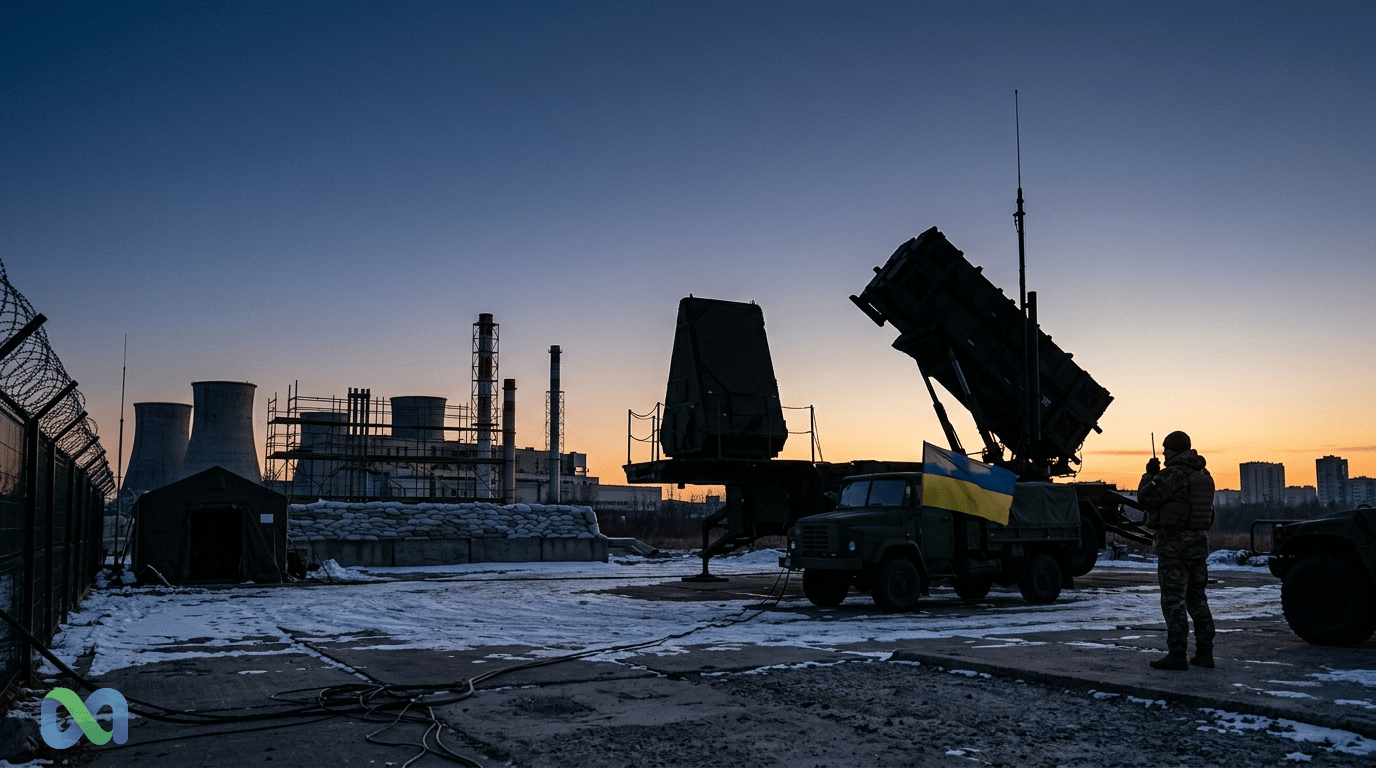
Kyiv's latest Ukraine war briefing points to one hard constraint: air defence capacity. The headline about Ukraine booking in roughly 1,000 Patriot-related missiles is not only an arms story. It is a signal that Kyiv and its allies are planning for a long fight over skies, cities, power plants, supply hubs and leverage.
The reported push comes as the UK and EU open wider missile-aid channels. NATO allies are also preparing for the Ukraine Defence Contact Group process. US envoys keep exploring whether another diplomatic track can restart. Those stories can look separate in a news feed. In practice, they describe the same probability path.
Ukraine is trying to keep enough interceptors in stock to survive Russia's strike campaign. Europe is trying to turn emergency aid into a steady supply chain. Diplomats are testing talks, but officials are also warning allies to prepare for a prolonged war. For markets, that mix matters. It affects defence budgets, energy-grid risk, rebuilding timelines and the chance that negotiation headlines outrun battlefield facts.
Here is the plain read. Ukraine needs more missiles because Russia keeps firing. Allies are offering help because the stockpile problem is real. Talks may restart, but talks do not guard a power plant. Until attacks slow, air defence remains the key measure of Ukraine's staying power.
What This Ukraine War Briefing Says Kyiv Wants
The central claim in this Ukraine war briefing is simple: Kyiv wants a much larger pipeline of Patriot-related air-defence ammunition. The number often travels through headlines as "1,000 Patriots." That phrase needs care. A Patriot is not just one object. It can refer to the broader air-defence system, the launcher, the radar, command equipment, or the interceptor missiles fired by the battery.
For Ukraine, the binding need is usually the interceptor. Launchers matter, but a launcher without enough missiles cannot protect a city for long. Russia can keep testing Ukrainian stockpiles with waves of drones, cruise missiles and ballistic missiles. Each successful interception protects lives and infrastructure. Each interception also consumes a scarce round.
That is why a request for hundreds or thousands of interceptors says more than a normal aid headline. It shows Kyiv is not preparing for a short pause. It is trying to build staying power for a war in which missile defence becomes a daily cost.
The reported aid push also comes before another Ukraine Defence Contact Group meeting, often associated with the Ramstein format. That forum lets allies coordinate military support, compare urgent requests and decide which countries can contribute equipment, ammunition, financing or production capacity. Air defence has moved to the top of that agenda because Russia's strike campaign is continuous.
Why Interceptors Decide Endurance
Patriot systems are valuable because they can target high-end threats, including ballistic missiles. Ukraine also uses other Western and Soviet-era systems, but Patriot batteries sit near the top of the air-defence stack. They are expensive, difficult to produce and politically sensitive to transfer.
That creates a classic scarcity problem. Ukraine needs to decide what to defend, when to fire and how much inventory to preserve. A missile aimed at Kyiv may force a different decision than a drone aimed at a regional energy site. The more interceptors Ukraine has, the less often commanders face that trade-off.
This matters beyond the battlefield. Air defence shapes public trust, electricity supply and factory output. It also helps the state keep basic services running. A country that can protect its capital, grid and supply nodes has more room to negotiate. A country whose infrastructure can be hit at will has less room.
The air-defence story is therefore a macro story. It affects how long Ukraine can sustain the war. It also affects how much money Europe must commit and how exposed regional energy systems remain.
Why Air Defence Is the War's Binding Constraint
Russia does not need to win every strike for the pressure to work. It can force Ukraine to spend interceptors, repair damaged infrastructure and disperse scarce equipment. Even failed attacks can impose costs when they drain missile stocks or reveal where batteries are positioned.
Ukraine's problem is not only whether allies announce new aid. It is whether aid arrives fast enough. A pledge is useful, but an interceptor in inventory changes the next decision. That gap between announcement and delivery is where much of the risk sits.
This is why the Patriot pipeline matters for probability markets and event-risk analysis. Traders should separate headline support from real capacity. A new package may move sentiment for a day. A steady flow of interceptors changes the odds of Ukraine protecting cities, keeping exports moving and preserving leverage for months.
Civilian infrastructure is the clearest macro channel. Power stations, grid nodes, ports and rail links are not side issues. They shape budget stress, migration pressure, inflation risk and rebuilding cost. When air defence thins out, those risks rise. When it strengthens, the tail risk around grid failure falls.
The UK, EU and Ramstein Signal
The UK and EU missile-aid moves matter because they show Europe is trying to widen the supply base. This is not only charity or alliance messaging. It is also industrial policy under pressure. Europe needs to help Ukraine now while rebuilding its own defence inventories after years of lower readiness.
That creates a hard equation. Governments want to send enough ammunition to change the battlefield. They also need voters and parliaments to accept larger defence budgets. At the same time, manufacturers need long contracts before they expand output. Short aid bursts do not solve a long-war supply problem.
The Ramstein process is where those choices become more concrete. Allies can identify which systems Ukraine needs most. They can also decide which countries can release stocks and which purchases can be funded jointly. The strongest signal would be a move from one-off transfers toward predictable production and financing.
For Ukraine, predictability may be as important as headline size. If Kyiv can expect a steady interceptor pipeline, it can plan defence coverage with more confidence. If aid arrives in bursts, commanders must keep conserving ammunition, and Russia can keep probing for gaps.
Diplomacy Is Moving, but the War Still Prices Long
Reports about US envoys and possible Ukraine-Russia talks should not be ignored. Diplomacy can change the probability path quickly, especially if both capitals agree on a structure for talks. However, talks do not automatically reduce the need for air defence.
Negotiations and rearmament often happen at the same time. In fact, rearmament can be part of the negotiation. Ukraine has stronger leverage if it can defend its territory and population during talks. Russia has less incentive to compromise if missile pressure can keep raising Ukraine's costs.
That is why allied warnings about a prolonged war carry weight. If officials are telling partners to prepare for a long conflict, then the market should not price every diplomatic headline as a clean off-ramp. The more realistic base case is a mixed environment: talks, pressure, aid decisions and battlefield adaptation at once.
For probability watchers, the key is to ask what would actually change the path. A durable ceasefire mechanism would matter. Verified limits on missile strikes would matter. A clear funding plan for large interceptor flows would matter. A photo opportunity or a vague statement about talks should carry less weight.
Market Implications to Watch
The first market implication is European defence spending. Air-defence demand is becoming structural, not episodic. If Ukraine needs a larger Patriot and missile-defence pipeline, European governments face more pressure to fund production, rebuild inventories and buy systems for their own forces.
That can support defence firms, missile suppliers and electronics producers tied to radar, command systems and interceptors. It can also pressure budgets. Governments must decide whether to fund defence through borrowing, tax changes or cuts elsewhere. The political cost will vary by country.
The second implication is energy and rebuilding risk. Missile attacks on the grid can change fuel demand, electricity imports, repair costs and winter resilience. They can also delay private capital. Investors need confidence that rebuilt assets will survive. Stronger air defence lowers that risk, but it does not remove it.
The third implication is headline volatility. Markets often react first to diplomacy, then reassess when military facts remain unchanged. A report about new talks can soften perceived escalation risk. A new missile strike can reverse that move. A confirmed long-term aid package can reduce one kind of risk while raising expectations for a longer fiscal commitment.
That is why a prediction-market lens helps. The question is not whether one headline is good or bad. The question is how new information shifts the distribution of outcomes. Does it increase the chance of a sustained defence pipeline? Does it reduce the chance of grid disruption? Does it make a ceasefire more credible, or only more visible?
Source Signals in This Ukraine War Briefing
Last reviewed: September 9, 2026. This article is a market-risk briefing, not investment advice. It separates reported aid and diplomacy signals from Macro Markets analysis. For wider wire context, cross-check Ukraine updates with AP News.
The source mix points in several directions at once. The Guardian headline centers on Kyiv's Patriot-related push and the opening of UK and EU missile aid. Euractiv coverage adds the warning that allies should prepare for a prolonged war. It also notes Ukraine's pressure for faster NATO air-defence support. Ukrainian Pravda adds detail around Kyiv's urgent list before the Ukraine Defence Contact Group meeting.
Reuters reporting on US envoys adds the diplomatic track. That matters, but it does not cancel the aid story. If talks were already close to a stable end state, Kyiv would have less reason to seek a very large interceptor pipeline. The two signals together suggest caution. Diplomacy is active, but military planning still assumes sustained pressure.
There is also a secondary signal from Belarus and Russia's wider orbit. Reports of economic slowdown in Belarus, linked to Russia's troubles, do not decide the air-defence story. They do show that the war keeps creating pressure beyond the front line. Economic strain can shape military support, sanction resilience and political room for Moscow's partners.
The clean read is this: aid, diplomacy and economic pressure are moving together. None is decisive alone. The probability path depends on one question. Can Ukraine's allies turn emergency support into reliable capacity before Russia's strike campaign creates another grid shock?
What Could Change the Probability Path
Three developments would matter most. First, a confirmed multi-country financing plan for Patriot interceptors would make the aid signal more durable. It would suggest that Europe is not only donating from existing stocks but funding a longer production cycle.
Second, verified delivery timing would matter. A large number over an unclear horizon is weaker than a smaller number arriving soon. Ukraine's immediate risk depends on what is available before the next heavy strike period, not only on what is promised for future years.
Third, any credible negotiation framework would need enforcement details. A ceasefire without monitoring, penalties or clear territorial terms may not reduce missile risk much. A framework with verification could change expectations, especially around infrastructure protection.
Until those details appear, the market should treat the current Ukraine war briefing as a long-war signal. The air-defence pipeline is becoming one of the most important indicators for Ukraine's resilience and Europe's fiscal commitment.
Ukraine War Briefing Checklist for Readers
Use this Ukraine war briefing as a checklist, not as a single headline. First, ask what Ukraine needs now. In this case, the answer is air defence. Kyiv needs enough missiles to protect cities, ports, rail lines and power sites.
Second, ask what allies can send soon. A large promise helps, but timing matters more. A missile that arrives next year does not stop a strike next week. This is why delivery dates can move risk more than the size of a package.
Third, ask whether talks change the facts on the ground. Talks can lower risk if they lead to a real pause in attacks. They do less if Russia keeps firing while both sides meet. Ukraine still needs air defence during that period.
Finally, ask what markets should watch. The key items are simple: missile stocks, production plans, grid damage, winter power supply and signs of a real ceasefire path. Those inputs will say more than most daily headlines or broad politics markets.
This is also a timing story. Aid that lands fast can change risk fast. Aid that waits in a queue has less near-term value. The same rule applies to talks. A meeting can help only if it changes what armies do.
For now, the war is still active. Russia can keep firing. Ukraine can keep asking for more air defence. Europe can keep trying to fund the gap. That is why the Ukraine war briefing should be read as a live risk map.
The short version is easy to test. If missiles arrive, Ukraine has more room. If missiles are delayed, risk rises. If talks stop strikes, risk falls. If talks do not stop strikes, the need for air defence stays high. This is the core signal.
That is the frame for this Ukraine war briefing. Watch the facts that change firepower. Watch the dates. Watch the stockpiles. Watch what each side can still do.
FAQ
What is a Patriot missile system?
A Patriot system is a high-end air-defence platform built around radar, command equipment, launchers and interceptor missiles. Ukraine values it because it can help defend against advanced missile threats. The system matters, but the missiles it fires are the recurring constraint.
Why does Ukraine need Patriot missiles?
Ukraine needs Patriot interceptors to defend cities, power infrastructure and key military nodes from Russian missile attacks. Each interception can protect lives and critical assets. It also consumes a scarce round, so Kyiv needs a steady pipeline rather than isolated aid announcements.
What is the Ukraine Defence Contact Group?
The Ukraine Defence Contact Group is the allied coordination forum for military support to Ukraine. It is often linked to meetings at Ramstein. Governments use it to compare Ukraine's urgent needs, coordinate donations, discuss procurement and align longer-term support.
Could talks with Russia change the aid calculus?
Talks could change the aid calculus if they produce a credible and enforceable reduction in attacks. Until then, diplomacy and rearmament can coexist. Ukraine still needs air defence while negotiations are explored, because leverage depends on survival and battlefield capacity.
What does a prolonged war warning mean for markets?
A prolonged war warning points to sustained defence demand, higher fiscal commitments in Europe and continued infrastructure risk in Ukraine. It can support defence-sector expectations while raising questions about budgets, energy resilience and reconstruction timelines.
Bottom Line
The main signal from this Ukraine war briefing is not only that allies may send more missiles. It is that Ukraine and its partners are planning around a war in which air-defence supply remains decisive.
Diplomacy may still matter. So can pressure on Russia and its partners. But until talks produce enforceable results, the Patriot pipeline remains one of the clearest indicators for Ukraine. It shows whether the country can protect its cities, preserve leverage and limit the risk of a worse macro shock.
For Macro Markets readers, the lesson is to track capacity, not only headlines. Aid announcements, delivery timing, missile production and negotiation structure are the inputs that can move geopolitical probabilities in a measurable way.
