


Viral Ole Miss Fan Relationship Status: What We Know
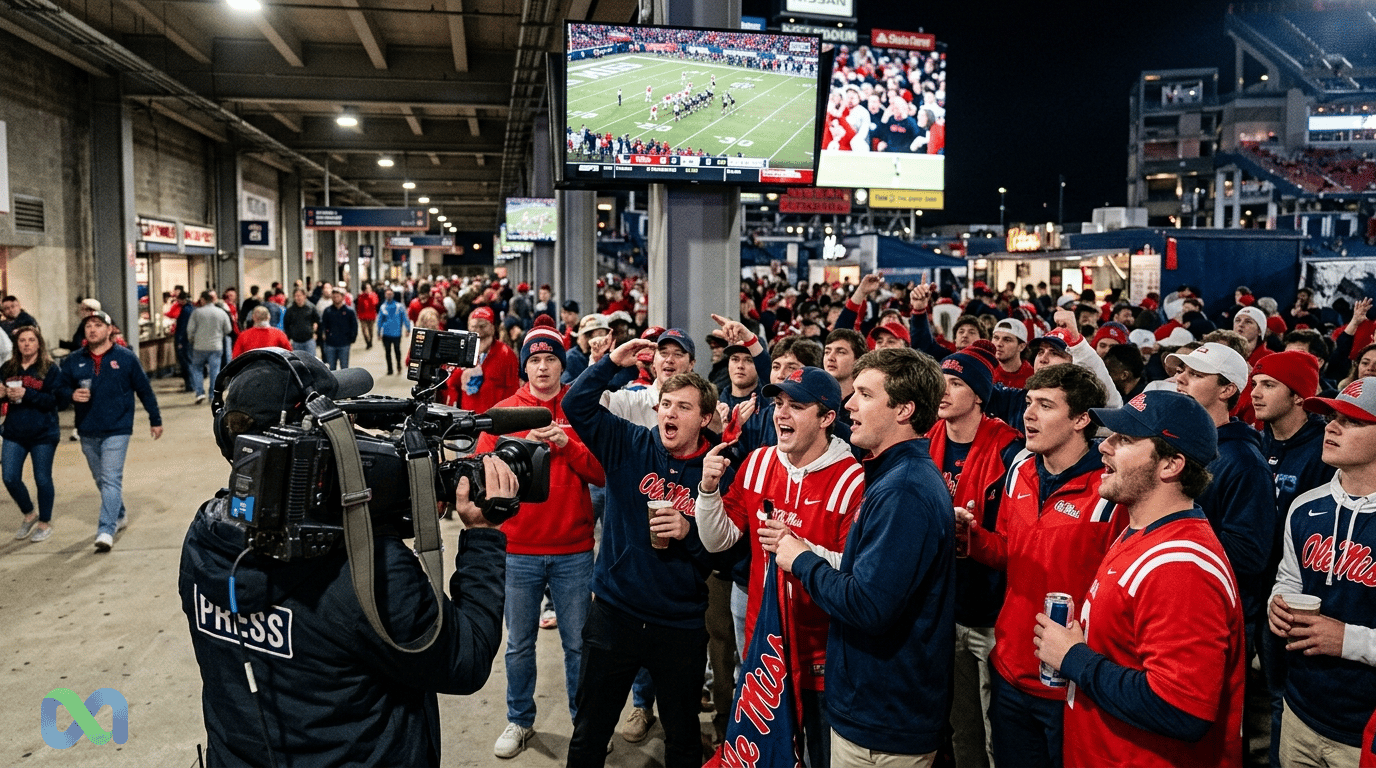
The viral Ole Miss fan relationship status story moved fast because it had every ingredient sports media likes. There was a national broadcast, a close college football game, a clear visual moment, and then a social-media search for the person on screen.
The fan has been identified in reporting as Sara Smith, an Ole Miss alum who was shown during the Rebels' season opener against Louisville in Nashville. Fox News and OutKick reported that Smith later posted on TikTok about the messages she received after the clip spread.
The relationship-status angle came from The Spun, which framed the story around Smith's public clarification after the attention hit. That detail matters, but it should not swallow the larger point. This was not only a personal-interest story. It was a case study in how college football broadcasts create instant attention markets around people who did not ask to become national characters.
Last reviewed: 09/09/2026. We found the clearest verified details in the Fox News and OutKick article published on 09/08/2026, the blocked The Spun headline surfaced by search, and the research brief attached to this write task. According to Fox News and OutKick, Smith reviewed DMs that arrived over the last 24 hours after the broadcast clip spread.
Important: this article does not treat private messages or private-life speculation as market data. It uses public reporting to explain the attention cycle.
Here is what is known, what remains unverified, and why a few seconds on camera can become a full media cycle.
Who Is The Viral Ole Miss Fan?
Sara Smith became the "viral Ole Miss fan" after cameras found her during Ole Miss' game against Louisville at Nissan Stadium. The matchup was part of the Liberty Mutual Music City Kickoff, and Ole Miss held off Louisville in one of the first high-profile games of the college football season.
Fox News and OutKick reported that the internet identified Smith soon after the clip aired. Their article described her as an Ole Miss alum who later went private on Instagram, but still responded to the attention through TikTok.
That sequence is now common in sports culture. A broadcast camera cuts to a fan. Social platforms clip the moment. Viewers search for the person's name. Aggregators package the identity, the reaction, and the funniest replies into short articles.
In this case, the first searchable answer is simple. Smith was an Ole Miss supporter shown during the Louisville game. The more important answer is about the machinery around her. She became viral because live sports turns unscripted reactions into shareable images.
College football is especially strong at this. The product is not only the score. It is the crowd, the uniforms, the school identity, and the emotion around every drive. A concerned look during a tight game can travel because it feels authentic. It also gives fans a face for the tension.
That is why this story spread beyond Ole Miss circles. It had a clear label, a visual hook, and enough curiosity for people to search for follow-up details.
Viral Ole Miss Fan Relationship Status: What She Said
The viral Ole Miss fan relationship status question became the main search hook because it gave the moment a personal angle. The Spun reported that the Ole Miss fan addressed her relationship status after the clip made her a topic online, though its article page returned anti-bot blocking during review.
That is the point where careful language matters. The available public record supports the fact that relationship-status coverage existed. It does not support turning private life into a broader claim beyond what was publicly reported. Readers searching for the answer should get a direct summary, but they should also know where the line is.
Smith's broader public response is easier to verify. Fox News and OutKick reported that she acknowledged the viral attention on TikTok and reviewed some of the messages she had received. The article said those DMs included over-the-top introductions, offers, and jokes from people who discovered her after the broadcast moment.
That tells us more about the media cycle than about Smith herself. Once a fan becomes a named person online, the audience often shifts from "who was that?" to "is she available?" That shift is common in viral sports coverage, but it is also invasive.
For readers, the right frame is this: the viral Ole Miss fan relationship status angle became part of the story because social attention often turns visual recognition into parasocial curiosity. It is not the core sports story. It is a signal of how quickly the audience tries to personalize a broadcast moment.
That distinction keeps the article useful. It answers the viral Ole Miss fan relationship status search intent without treating personal speculation as analysis.
How The Story Spread Across Social Media
The spread followed a familiar path. ESPN cameras showed the fan. Viewers reacted online. Sports accounts and aggregators reposted the image. Then reporters and entertainment-style sports sites looked for identity, quotes, social posts, and the viral Ole Miss fan relationship status answer.
Fox News and OutKick reported that Smith used TikTok to go through some of her favorite DMs after the clip spread. That made the feedback loop stronger. The original attention created messages. The messages then became content. That new content created another reason for outlets to cover the story.
This is how a short clip becomes durable for more than one news cycle. The first post is the spark. The reaction post is the second asset. The relationship-status clarification is a third asset. Each asset gives search engines and social feeds a new headline.
The Louisville game context also helped. This was not a random camera shot in a low-interest event. It came during a major college football weekend, with Ole Miss and Louisville in a national spotlight. Early-season games carry extra attention because fans are hungry for signals. They want to know which teams look real, which coaches are under pressure, and which moments define Week 1.
However, viral fan stories do not need deep sporting stakes to move. They need a clear image and a simple narrative. "Ole Miss fan goes viral" is easy to understand. "She responds to DMs" adds novelty. "She clarifies relationship status" adds search demand.
That combination is powerful because it works across platforms. TikTok rewards reaction and personality. X rewards screenshots and fast jokes. Google rewards direct answers to rising queries. Sports sites reward anything that can connect a game to a wider audience.
The result is a small attention market. Every platform gives the story a different price. A TikTok view, a search click, a headline, and a repost all measure demand in their own way.
Our editorial test is simple: compare this moment with sports topics that already have a measurable forward market. A related Louisville vs Ole Miss prediction markets: Kalshi and Polymarket prices article has a clear event at the end. So does a 2026 college football odds: Group of Six CFP rankings market. A viral fan story does not. That difference tells readers when attention is only attention, and when it starts to connect with a tradable public question.
The legal category also matters. Prediction markets and sports betting can look similar in headlines, but they are not the same product. A viral fan article measures curiosity, while an event market needs rules that define what can settle.
Why Viral Sports Fans Become Attention Markets
Macro Markets usually looks at public events through probability, incentives, and measurable expectations. A viral fan moment is not a formal prediction market, but it has a similar logic. Attention gets priced by behavior.
When a person appears on a live sports broadcast, the audience starts assigning value to the moment. Some viewers repost it because it is funny. Some search for the person. Some send messages. Some outlets write articles because search demand is rising.
Each action is a small signal. None of them is perfect. Together, they show whether the moment has depth or only a short burst of curiosity.
The Ole Miss fan story had several signals at once. There was broadcast exposure. There was quick identification. There was TikTok follow-up. There were DMs that could be summarized. There was a relationship-status hook. That stack made it easier for the story to survive past the game itself.
Still, most viral sports moments decay quickly. They spike when the clip is fresh, then fade when the next game, controversy, or celebrity moment arrives. Durable attention needs a second reason to care. In this case, the viral Ole Miss fan relationship status hook became that second reason for many readers. It can also be a recurring public persona, a direct role in sports media, or a larger debate about privacy and fan culture.
Smith's case shows both sides. She had enough momentum to become a national sports-media item. Yet the event also depends on a fragile source of demand. If she does not keep posting, the story may remain a Week 1 curiosity.
That does not make it meaningless. It makes it measurable. The attention cycle shows how sports media now turns crowd shots into content pipelines. Broadcasters create the raw asset. Social platforms distribute it. Search demand organizes it. Publishers monetize the curiosity.
The subject can either ignore it, push back, or take control of the narrative. Smith's TikTok response was a form of control. It allowed her to comment on the attention rather than only be described by others.
That is also why marketplace virality in prediction markets is a useful comparison. A market needs enough attention to form liquidity, but attention alone is not enough. It also needs clear rules, a defined outcome, and trusted resolution.
What This Says About College Football Media
College football has always produced characters around the game. Bands, mascots, students, parents, and alumni all add texture to the product. What changed is the speed of discovery.
In the past, a fan shown on TV might be remembered by viewers for a few minutes. Today, the same image can become a searchable identity before the final whistle. That creates opportunity for publishers, but it also raises a basic editorial question. How much should outlets extract from a person who appeared briefly in a public crowd?
The answer depends on consent, public posting, and relevance. A public TikTok response is fair to summarize. A viral Ole Miss fan relationship status statement reported by a media outlet can be acknowledged. Private speculation should stay out.
This matters because sports audiences are huge and emotional. A fan who becomes the face of a moment may receive praise, jokes, and unwanted messages at the same time. The DMs in the Fox News and OutKick piece made that dynamic visible. Some were framed as funny, but the scale of sudden attention can be intense.
For media companies, the incentive is clear. Viral fan articles are cheap to produce and easy to package. They catch search traffic from people who want a name, a status, or a social handle. They also connect sports coverage to entertainment coverage.
For readers, the better question is not only "who is she?" The better question is "why did this become valuable content?" The answer is that modern sports coverage rewards identifiable moments. A player highlight, a coach reaction, a celebrity sighting, or a fan shot can all become mini-markets for attention.
The same incentive explains why someone check Polymarket? why these viral posts point to a bigger trust problem became a useful market story. Viral language can bring reach, but the durable value comes from whether the audience can verify what is being claimed.
Ole Miss gave the story a strong brand. Louisville gave it a real game. Nashville gave it a neutral-site stage. ESPN gave it distribution. TikTok gave it personality. Search gave it staying power.
That is the full chain.
What To Watch Next
The next signal is whether the story lasts beyond the first wave of coverage. If Smith keeps posting, the audience may follow her as a new sports-adjacent personality. If she steps back, the story will likely fade into the large pile of one-week viral moments.
Another signal is whether mainstream outlets continue to frame the story around her response or around her private life. The first frame is cleaner. It treats her as a person reacting to sudden attention. The second frame risks turning the viral Ole Miss fan relationship status topic into gossip.
The broader sports-media signal is more durable. Expect more of these stories during the season. College football has weekly national windows, emotional crowds, and camera operators trained to find reaction shots. Every big game can create a new person for the internet to identify.
That creates a practical lesson for readers. Viral sports attention is not random. It follows a pattern:
- A clear visual moment appears on a large broadcast.
- Social accounts clip it quickly.
- Viewers search for identity and context.
- The subject responds or goes private.
- Publishers turn each new detail into a headline.
- The story either finds a second act or fades.
Those six steps are the core comparison. In event markets, traders keep asking whether new information changes the final outcome. In viral sports media, editors keep asking whether new information creates one more headline. The mechanism differs, but the signal discipline is similar.
Smith's story checks most of those boxes. The only open question is the final one. Does it become a lasting public profile, or does it remain a compact example of Week 1 attention?
For now, the facts are enough. A viral Ole Miss fan was identified as Sara Smith. She was shown during Ole Miss vs Louisville in Nashville. Fox News and OutKick reported that she responded on TikTok and shared some of the DMs that followed. The Spun reported the relationship-status angle. The rest should be treated with caution unless Smith says more publicly.
FAQ
Who is the viral Ole Miss fan?
The viral Ole Miss fan has been identified in reporting as Sara Smith, an Ole Miss alum. She drew attention after cameras showed her during Ole Miss' game against Louisville at Nissan Stadium in Nashville.
What is the viral Ole Miss fan relationship status story?
The relationship-status story refers to coverage from The Spun saying Smith addressed her status after the clip went viral. The safest reading is to rely on that public reporting and avoid adding unsourced claims.
Why did the Ole Miss fan go viral?
She went viral because a national broadcast gave viewers a clear fan reaction during a major college football game. Social platforms then turned that brief camera shot into a searchable story.
What DMs did Sara Smith receive?
Fox News and OutKick reported that Smith shared several unusual DMs on TikTok, including jokes, introductions, and offers from people who found her after the broadcast clip spread.
Where was the Ole Miss vs Louisville game played?
The game was played at Nissan Stadium in Nashville as part of the Liberty Mutual Music City Kickoff.
The Bottom Line
The viral Ole Miss fan relationship status story is less about one private detail and more about the speed of modern sports attention. A few seconds on camera can become a name, a search trend, a DM flood, and a series of headlines.
That does not mean every detail deserves equal weight. The verified facts should lead. The personal speculation should stay narrow. The media pattern is the real story.
For Macro Markets readers, the lesson is clear. Attention behaves like a market, even when no formal contract exists. Viewers reveal interest through searches, shares, posts, and clicks. Publishers respond to those signals. The person at the center then decides whether to feed the cycle or step away.
Smith's Week 1 moment shows that process in miniature. It started with a college football camera shot. It became a TikTok story. Then it became a broader example of how sports culture prices curiosity in real time.
