


WatchGuard OpenAI Anthropic Cybersecurity: The Multimodel Bet
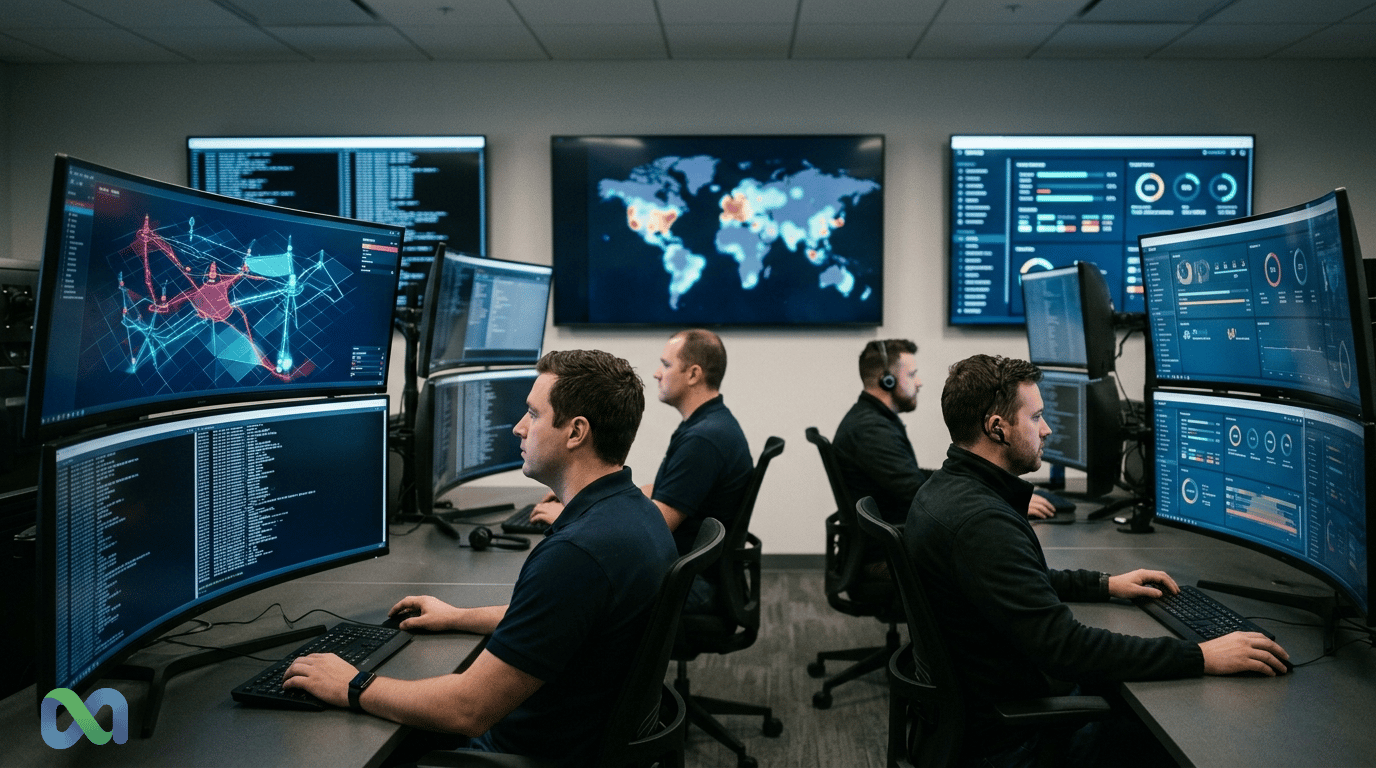
WatchGuard OpenAI Anthropic cybersecurity is becoming a useful test case for how security vendors want to use frontier AI. The announcement is not just about adding an AI feature to a console. It points to a deeper shift in how cybersecurity platforms want to research vulnerabilities, test defenses, and anticipate attacks.
The company says it is expanding access to frontier AI capabilities through initiatives linked to OpenAI and Anthropic. WatchGuard's stated goal is to strengthen protection for managed service providers, or MSPs, that run security for many customers at the same time. For that audience, better triage, prioritization, and response can have direct operational impact.
However, the central point is not only the names of the labs. The real point is the multimodel strategy. WatchGuard wants to combine capabilities from different models instead of relying on one AI provider. That can improve flexibility, but it also raises the bar for technical control.
This analysis separates the facts, the implications, and the open questions. It also explains why the move matters for cybersecurity, for MSPs, and for any company evaluating defensive tools with generative AI.
What WatchGuard Announced and Why It Matters
WatchGuard announced a frontier AI strategy supported by capabilities from OpenAI and Anthropic. According to the company's material and coverage from IT User, the approach aims to strengthen vulnerability research, security testing, and proactive defense for managed service providers. The core thesis is clear: use advanced models to accelerate defensive tasks that already pressure security teams.
The announcement also fits a broader trend. Attackers already use automation for reconnaissance, phishing, variant generation, and weak-point discovery. Therefore, defenders are looking for tools that reduce analysis time without removing control from skilled teams.
WatchGuard is not starting from zero. The company serves MSPs and enterprises that need security at scale. That market values automation, but it also punishes noise. One extra alert may look useful in a demo. In production, it can consume analyst time and distract from real risk.
So the relevant question is not whether AI can help. The question is where AI helps in a verifiable way. In cybersecurity, a fast but inaccurate answer can make the process worse. A useful recommendation must be traceable, repeatable, and easy to audit.
The approach also sends a competitive signal. Security vendors no longer present AI as a decorative layer. They are treating it as strategic infrastructure. That distinction matters because it can change budgets, integrations, and buying criteria.
OpenAI Daybreak and Anthropic Cyber Verification Program
The research brief identifies two programs at the center of the story: OpenAI's Daybreak and Anthropic's Cyber Verification Program. Available industry coverage links these programs to vulnerability research, security testing, and validation of defensive capabilities. WatchGuard is trying to use that access to improve its protection stack.
There is a technical logic behind that choice. OpenAI and Anthropic have models with different strengths in reasoning, language analysis, and code evaluation. A security vendor can compare outputs, adapt tasks, and select the most useful model for each workflow.
That does not make any model a final authority. In security, AI output must enter a verification process. A vulnerability finding needs technical evidence. A mitigation suggestion needs testing. A risk classification needs context from the affected environment.
The potential advantage is time. A model can summarize reports, propose hypotheses, and organize scattered signals. It can also help an analyst avoid starting every investigation from a blank screen.
The Focus on MSPs and Application Security
MSPs face a specific kind of pressure. They manage networks, endpoints, firewalls, and services for several customers. They also receive alerts from environments with uneven levels of maturity. That creates a constant scale problem.
An AI layer can help if it reduces repetitive work. For example, it can group similar alerts, explain a technical finding, or suggest an investigation path. It can also help translate a vulnerability into business priority.
But the real value depends on integration. An isolated answer in a chatbot does not solve an MSP workflow. The benefit appears when AI connects with signals, policies, inventory, and remediation processes.
Application security has a similar pattern. Teams need to identify flaws, test controls, and prioritize fixes. AI can speed review and help generate test scenarios. However, final validation still needs human and technical judgment.
The Multimodel Thesis: Advantage or New Complexity
The key word in the announcement is multimodel. In cybersecurity, a multimodel AI strategy means using more than one model or AI provider for defensive tasks. That can include vulnerability analysis, alert classification, hypothesis generation, security testing, and response-team support.
The advantage is easy to understand. No model dominates every use case. Some systems reason better about code. Others are stronger at natural language, synthesis, or cautious evaluation. Combining models lets a vendor choose the right tool for each task.
Additionally, a multimodel approach reduces dependency. If one lab changes pricing, limits, policies, or availability, the security provider is not fully exposed. That flexibility can be valuable for products that need to operate continuously.
However, complexity increases. Each model has biases, limits, and error patterns. Each provider also has different rules for data, retention, and use. A vendor that uses several models needs a strong governance layer.
The multimodel strategy is not a guarantee of better security. It is an architecture that can improve outcomes if it is measured well. Without metrics, it can become a list of integrations that buyers struggle to evaluate.
Less Dependence on a Single AI Lab
Relying on one AI lab creates operational risk. If the provider changes a model, an API, or a use policy, the security product may suffer. There can also be commercial risk because inference costs can change.
A multimodel approach distributes that risk. It allows the vendor to compare results across models and shift workloads based on performance. It also makes it easier to use different models for different stages of the process.
For example, one model may summarize a threat report. Another may review code or explain an exploit chain. A third may help convert a finding into instructions for a support analyst.
That logic resembles infrastructure diversification. It does not remove risk, but it avoids concentrating it. For an MSP, that difference can matter when the security of many customers depends on one common platform.
More Demand for Evaluation, Governance, and Control
Diversification also creates debt. If several models contribute to a defensive decision, someone needs to audit how they reached that output. Without that layer, the team only replaces one black box with several black boxes.
Governance must answer basic questions. What data enters the model. What data leaves the customer environment. Which output can trigger an action. Which output can only recommend. What evidence remains available for audit.
There also needs to be an evaluation policy. Models should be tested against real cases, not only against marketing examples. An organization needs to measure accuracy, false positives, false negatives, and time saved.
Each model can also behave differently when a case is ambiguous. In security, ambiguity is normal. The system should know when to request human review instead of generating artificial confidence.
What Could Change in MSP Defense
For MSPs, WatchGuard's promise has three fronts. The first is vulnerability research with more context. The second is better security testing and prioritization. The third is anticipation of automated attacks before they overload analysts.
These fronts are connected. A misunderstood vulnerability affects prioritization. Poor prioritization affects remediation. Slow remediation increases the exposure window.
AI can help connect those stages. It can read technical descriptions, associate them with affected assets, and suggest what to review first. It can also convert a long report into clearer actions.
But the technology must respect the operating workflow. An MSP does not need a brilliant explanation that cannot be applied. It needs output that reduces queues, improves precision, and leaves evidence.
Vulnerability Research
Vulnerability research often combines text, code, versions, configurations, and external signals. That is natural terrain for language models. They can summarize CVEs, explain impact, and compare exploitation conditions.
In an MSP environment, that capability can save time. An analyst may receive an initial list of affected assets, exposure assumptions, and verification steps. The analyst then validates the critical points with traditional tools.
The risk appears when AI confuses possibility with probability. Not every published vulnerability affects every environment. Also, not every proof of concept means practical exploitation. Useful output must distinguish those levels.
WatchGuard can create value if it integrates AI with its own telemetry. A model that understands inventory, policies, and active controls can prioritize better. Without that context, it produces generic analysis.
Security Testing and Prioritization
Security testing can also benefit. A model can suggest test scenarios, review configurations, and explain why a control failed. It can also help document evidence for customers.
Prioritization is even more important. Many teams already know more issues than they can fix. Therefore, an AI layer should help order work, not only discover more findings.
Good prioritization combines technical severity, real exposure, and asset value. It also considers compensating controls. If AI misses those factors, it can push a team toward low-impact tasks.
For buyers, this is a central question. The tool should explain why it recommends an action. If it cannot show evidence, the recommendation should not enter a critical workflow.
Proactive Defense Against Automated Attacks
Proactive defense is the most ambitious part of the announcement. It means detecting patterns before they become larger incidents. It also means adjusting controls based on early signals.
AI can accelerate this work because it processes large volumes of text and events. It can find relationships between alerts, campaigns, and configuration changes. It can also suggest hypotheses that an analyst evaluates later.
The challenge is to avoid excessive automation. In cybersecurity, acting too fast can also damage operations. A mistaken block can affect legitimate users. A poorly applied remediation can break systems.
That is why the best initial use is usually copilot, not autopilot. AI proposes, summarizes, and prioritizes. The human team decides which actions to execute and under what conditions.
OpenAI and Anthropic Inside One Strategy
The comparison between OpenAI and Anthropic should be practical. An MSP does not need a list of logos. It needs to know which task each model performs, which risk it introduces, and which control exists.
OpenAI and Daybreak can support research, analysis, and defensive automation. The expected benefit is more speed in summarizing signals and exploring hypotheses. The risk is receiving plausible but unproven answers. The key question is what evidence gets recorded.
Anthropic and its Cyber Verification Program point toward validation, testing, and evaluation of security capabilities. The expected benefit is more rigor in controlled testing. The risk is too much trust in unaudited output. The key question is how real improvement is measured.
In both cases, the required control is similar. There should be human validation, reproducible tests, and data governance. There should also be a clear plan if a model changes behavior or becomes unavailable.
This comparison shows the main point. The value is not in saying that two major names are involved. The value is in designing a layer that assigns tasks, compares results, and preserves traceability.
An MSP should demand transparency in that layer. It should know when a model helps classify, when a model helps explain, and when a model does not participate in a decision. That separation reduces operational risk.
It is also useful to measure results by workflow. Examples include mean triage time, false-positive rate, time to remediation, and analyst satisfaction. Without those indicators, the conversation remains a promise.
Risks the Announcement Does Not Resolve
The announcement has a plausible direction, but it does not resolve every question. AI in cybersecurity introduces risks of its own. Some are technical. Others are legal, operational, and commercial.
The first risk is accuracy. Models can generate convincing but wrong answers. In a security report, that error can lead a team to prioritize poorly or ignore a real issue.
The second risk is privacy. Security workflows handle sensitive data. They can include user names, IP addresses, configurations, logs, internal routes, and vulnerability details. Each external integration must define clear limits.
The third risk is responsibility. If an AI recommendation fails, the customer will not complain to the model. The customer will complain to the vendor and the MSP. That is why the decision chain must be documented.
Finally, there is dependency risk. A vendor can promise multimodel freedom while still depending on external APIs. Real resilience depends on contracts, architecture, and continuity testing.
False Positives and Human Validation
False positives consume time. They also reduce trust in the tool. If an AI layer increases alerts without increasing precision, the result can be negative.
Human validation remains necessary. An analyst must review evidence, reproduce findings, and confirm impact. AI can accelerate the path, but it should not replace technical judgment.
This is even more important for MSPs. A repeated error can affect many customers. Therefore, workflows need permissions, approvals, and automation limits.
Sensitive Data and Shared Responsibility
The data question is direct. What information leaves the customer environment. How it is anonymized. Where it is processed. How long it is retained. Who can access it.
These answers are not administrative details. They define adoption risk. An MSP that manages regulated sectors needs more clarity than a small company without strict requirements.
Shared responsibility also matters. WatchGuard may provide the platform. The MSP configures processes. The customer defines risk tolerance. AI cuts across those layers, so governance must be explicit.
Dependence on External Models
External dependency does not disappear with a multimodel strategy. It only changes shape. Instead of relying on one provider, the vendor relies on an architecture that coordinates several providers.
That can be better. It can also be harder to operate. The difference lies in the ability to measure, replace, and audit models without breaking the product.
A buyer should ask whether critical capabilities have fallback. The buyer should also ask what happens if a model changes behavior. In security, continuity is part of the product.
Questions an MSP Should Ask Before Adopting This AI Layer
AI adoption in cybersecurity should start with concrete questions. It is not enough to ask which models the vendor uses. Buyers need to ask how those models are governed.
First, what exact tasks does AI perform. Summarizing alerts is not the same as recommending a block. Explaining a vulnerability is not the same as changing a firewall policy.
Second, what data does each task require. Some functions can operate with anonymized data. Others need sensitive context. That difference should appear in contracts, documentation, and controls.
Third, how is the benefit measured. A real improvement should show up as lower triage time, better prioritization, or less operational noise. If the vendor does not measure that, the buyer is evaluating a story.
Fourth, what record remains for audit. A team should be able to reconstruct what AI recommended, which evidence it used, and who approved the action. Without that record, adoption increases risk.
Fifth, how are models updated. Model changes can alter answers. An MSP needs to know whether testing happens before each change and whether results can be reviewed.
How Are AI Recommendations Audited?
Auditability is the line between useful automation and blind delegation. A recommendation should include the signal that triggered it, the evidence that supports it, and the control that limits action.
For example, an AI layer might recommend prioritizing a vulnerability because an exposed asset matches a known pattern. That recommendation should show the asset, the exposure path, and the confidence limits. It should also show whether a human approved the next step.
If the vendor cannot explain that chain, the MSP should treat the feature as advisory. Advisory output can still be useful, but it should not drive critical action without review.
What Data Leaves the Customer Environment?
Data movement is a security issue, not just a procurement detail. Logs, configurations, hostnames, and vulnerability findings may reveal sensitive information. A buyer should understand exactly which data enters an external model.
The strongest answer is specific. It should cover minimization, masking, retention, region, access control, and deletion. It should also explain whether customer data trains any model.
When the answer is vague, adoption risk increases. This is especially true for MSPs that serve regulated clients or customers with strict contractual requirements.
How Is Real Improvement Measured Against Operational Noise?
An AI feature should reduce work or improve decisions. That means the vendor should measure more than usage. It should measure whether the tool reduces triage time, false positives, and time to remediation.
It should also measure analyst trust. If analysts ignore the recommendations, the feature is not working. If they rely on recommendations without checking evidence, the process may become fragile.
The right metric depends on the workflow. Vulnerability research, alert triage, and security testing need different scorecards. A serious multimodel strategy should make those scorecards visible.
Why This News Is Also a Market Signal
For Macro Markets, this news matters because it shows how the market interprets technology risk. AI applied to cybersecurity is not only a product story. It is a signal about investment, competition, and enterprise confidence.
When a provider such as WatchGuard adds capabilities from OpenAI and Anthropic, it communicates a thesis. Modern defense needs advanced models, operational integration, and governance. That thesis can influence enterprise buying and competitive valuation in the sector.
Prediction markets exist to quantify expectations about future events. In technology, those expectations can involve AI adoption, security incidents, regulation, and corporate spending. The WatchGuard announcement belongs in that category of signals.
The point is not to turn every announcement into an immediate forecast. The point is to observe what changes in incentives. If more vendors adopt multimodel AI, buyers will demand evidence. If automated attacks grow, pressure for AI-assisted defense will also grow.
Moreover, enterprise AI adoption often advances through specific use cases. Cybersecurity may be one of them because the operational pain is visible. There are alerts, queues, incidents, and measurable costs.
What to Watch After the Announcement
The next phase will not be the press release. It will be execution. WatchGuard will need to show that the integration improves real workflows for MSPs. That proof requires metrics, use cases, and clear limits.
The most useful indicators will be practical. Reduced triage time. Better prioritization. Fewer false positives. Faster validation of vulnerabilities. Better documentation for customers.
It will also be important to watch how the company communicates governance. Buyers will want to know which data is sent to external models. They will want to know how sensitive environments are protected. They will also want to understand which decisions remain under human control.
Another signal will be the response from competitors. If other vendors copy multimodel strategies, the market will confirm that this architecture is gaining weight. If they choose proprietary models or a single provider, the comparison will become clearer.
For now, the cautious conclusion is this: WatchGuard is making a credible strategic bet, but final value will depend on execution. OpenAI and Anthropic provide capability. Real security will depend on design, measurement, and control.
Conclusion
WatchGuard OpenAI Anthropic cybersecurity places multimodel AI at the center of WatchGuard's defensive narrative. The move makes sense in a market where MSPs need scale, speed, and better analysis tools.
However, the promise should not be confused with a guarantee. AI can accelerate vulnerability research, security testing, and proactive defense. It can also increase complexity, dependency, and data risk if implemented without governance.
The most useful reading is to treat the announcement as a signal. Security providers are competing to turn frontier models into auditable processes. Buyers should demand evidence. MSPs should measure real impact before delegating critical decisions.
In an environment where attackers and defenders automate more tasks, the advantage will not come from using AI by itself. The advantage will come from using it with clear controls, demanding metrics, and technical responsibility.
