


WatchGuard OpenAI Anthropic MSP: Security Impact
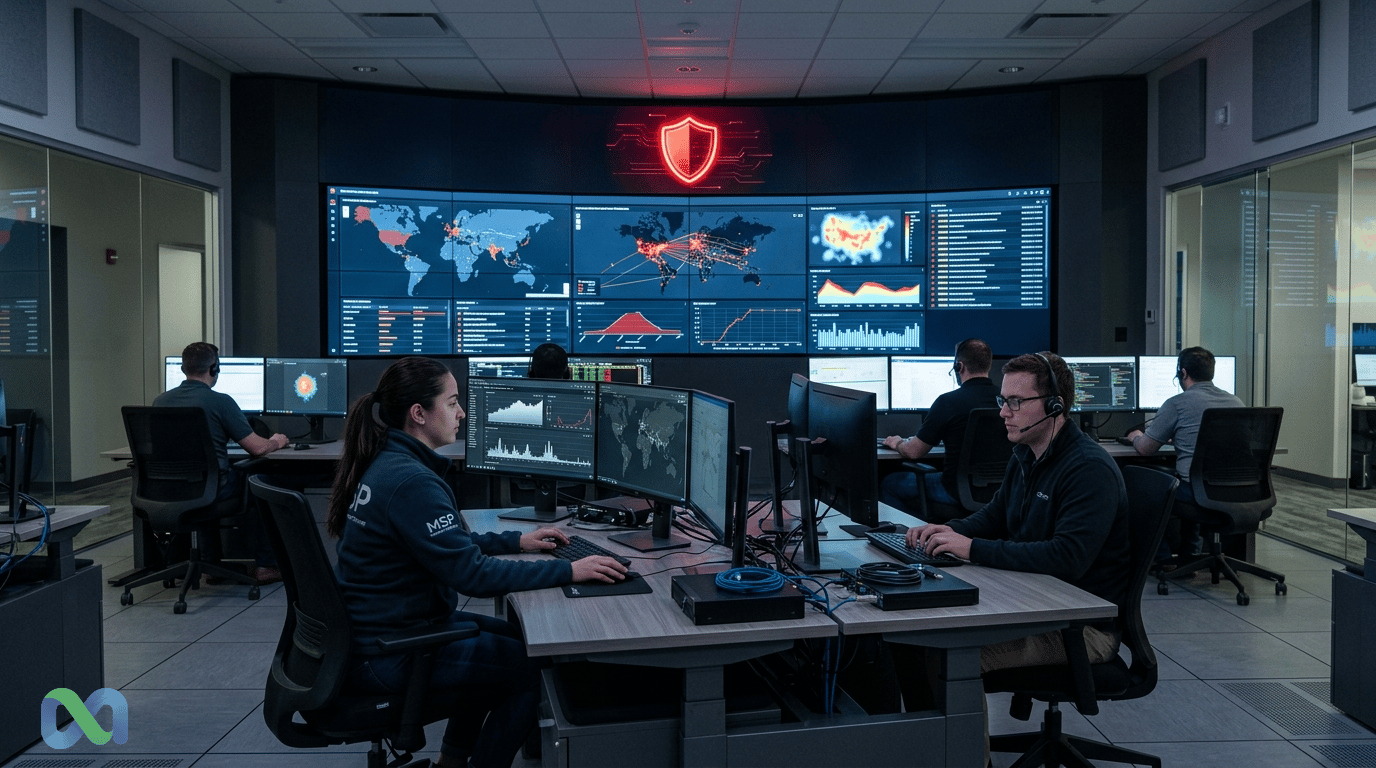
WatchGuard OpenAI Anthropic MSP is now a practical cybersecurity thesis. The news arrives at an important moment for digital defense. This is not just another AI announcement. It shows how large models are moving into the daily work of companies and managed service providers.
The company points to two concrete programs. One is OpenAI's Daybreak. The other is Anthropic's Cyber Verification Program. WatchGuard wants to use this access to improve security testing, vulnerability discovery, threat analysis, and response.
Scale matters here. According to WatchGuard, more than 25,000 MSPs and partners use its solutions. Those partners help protect more than 1.5 million businesses. So even a small operational gain could have a wide effect.
There is also risk. A bad signal can spread quickly. A weak alert can flood the work queue. A poorly prioritized flaw can stay open. The central question is not whether WatchGuard uses AI. The question is whether it can turn AI into measurable defense. That distinction matters for executives, security teams, and clients reviewing vendor claims in live operating environments today.
Review date: 07/23/2026.
Important note: this analysis does not promise automatic improvement. WatchGuard has a broad MSP base, but each team must validate the impact. AI only helps when it reduces noise and leaves evidence. A 24-hour test can change a risk queue. Gains of 3%, 8%, or 12% matter only when they appear in real issue closure. Over the next 6 months, MSPs should measure these changes.
For SEO, the thesis is direct: WatchGuard OpenAI Anthropic MSP should be judged by execution, not announcement value. The value depends on workflow, evidence quality, and the ability to reduce risk without creating new noise.
What Changes With WatchGuard OpenAI Anthropic MSP
WatchGuard announced new investments in frontier AI for application security. The company also expanded access to OpenAI and Anthropic capabilities. Coverage from Silicon frames the move as a push to strengthen MSP defense against increasingly automated attacks.
The practical reading is clear. WatchGuard wants its teams to work faster. AI can review signals, sort data, and support testing. It can also help find attack paths before attackers use them.
That does not make AI a magic defense layer. A model can suggest a lead. Then the team must test it. The team must measure impact. It must decide whether the flaw deserves urgent attention.
The news points to a broader shift. AI is no longer only a tool for writing reports. It is entering product tasks and security team workflows. That changes competition among providers.
For wider context, Macro Markets has already analyzed OpenAI AI models and Claude Managed Projects. That frame helps place WatchGuard's announcement inside a broader race for enterprise AI capability.
OpenAI Daybreak and Anthropic's Cyber Verification Program
WatchGuard's own announcement cites OpenAI Daybreak and Anthropic's Cyber Verification Program. WatchGuard presents them as access to advanced capabilities for security use cases. The focus is software flaws, testing, proactive defense, and product improvement.
The program name is not enough. What matters is real use. A model can help read code. It can generate test cases. It can summarize alerts. It can also compare a new flaw with patterns already seen.
However, the team should not accept an answer without proof. In security, a convincing sentence is not evidence. The finding must be repeatable. The priority must have a basis. The action must be clear.
That is why the best use is assisted. The model proposes. The analyst verifies. The system records the reason. That chain lowers risk while preserving speed.
The Scale of 25,000 MSPs
The figure of more than 25,000 MSPs changes the reading. A managed provider operates many accounts with lean teams. It needs to see the most important issues first. It also needs to explain risk to clients with little noise.
AI can help with that work. It can group similar signals. It can turn a technical detail into a simple action. It can show which alert deserves human time.
The rule for an MSP is simple. Seeing more is not enough. Seeing better is what matters. Acting late costs money. Acting without evidence also costs money. So every signal needs a clear purpose. It must say what happened. It must say where it happened. It must say what to do today.
That kind of order is worth more than a long list. It helps the team lead. It helps the client. It helps the new analyst. It also helps everyone keep the real risk in view.
Still, scale can amplify mistakes. If a model marks a serious flaw as minor, that error can repeat. If it creates too many alerts, the team loses focus. If it cannot explain its reasoning, the MSP cannot defend the decision to the client.
That is why numbers must follow the announcement. Time to detection. False positives. Vulnerability closure. Report quality. These signals will say more than access to a model.
The Multi-Model Bet: Less Dependence, More Control
WatchGuard is not presenting itself as a company tied to one AI provider. Its thesis is multi-model. In practice, it wants to test several models and use the best option for each task.
The approach makes sense. One model may be strong with code. Another may be better at summarizing alerts. Another may be useful for reviewing report text. In security, each task carries a different risk.
The advantage is lower dependence. If a provider changes prices, limits, or quality, the team has options. It can also compare results. That creates pressure for better quality.
But complexity rises. More models mean more rules. They also mean more tests, more contracts, and more data controls. A multi-model strategy does not remove risk. It spreads it.
How to Compare Models in Security
Comparing models requires tests close to real use. A general ranking is not enough. A team should measure how a model performs against its own code, real alerts, and known flaws.
Four questions are useful. Does it detect the right problem? Does it help the analyst decide? How much does it cost per useful case? What data does it touch during the process?
Consistency also matters. A brilliant but uneven model can create extra work. A less impressive but stable model can serve repeated tasks better.
For an MSP, that stability carries a lot of weight. The team does not need a perfect demo. It needs a cleaner work queue. It needs less noise. It needs more clarity.
Sensitive Data and Traceability
Data is the most delicate part. Application security may include code, logs, secrets, internal routes, and network details. That material cannot leave controlled systems without strict rules.
So WatchGuard will need to show clear policies. What data is sent. Which model receives it. What limits apply. How long data stays available. And what review process governs the use.
Traceability also matters. If AI changes the priority of a flaw, the team must know why. If it recommends an action, it must show the basis. Without that, the analyst is left facing an opaque box.
Trust comes from that record. It does not come only from using OpenAI or Anthropic. It comes from knowing what the system did and why it did it.
Which Defenses AI Can Reinforce
AI creates value when it enters a clear flow. Connecting it to a console is not enough. It must reduce time, noise, or risk. If it cannot do that, it only adds another layer.
WatchGuard cites specific areas. Product testing. Penetration testing. Red teaming. Threat analysis. Vulnerability remediation. Revista Byte also highlights the need to respond to attackers that already use AI to accelerate attacks.
The logic is direct. If attackers use AI to move faster, defenders need similar support. But speed without control does not help. Defense must be fast and verifiable.
Vulnerability Discovery
Vulnerability discovery can improve with models that read a large volume of material. An analyst can ask for help reviewing code changes. The analyst can also look for risk patterns across long reports.
The model can suggest tests. It can point to a weak route. It can summarize a finding for another team. That saves time when volume is high.
But the final proof remains human and technical. The team must reproduce the flaw. It must measure impact. It must know whether the client is exposed.
That point prevents overconfidence. AI helps search. It should not close the case by itself.
Testing and Priority
Security testing produces long lists. An MSP cannot treat every finding the same way. It needs to know what to fix first.
AI can sort the list. It can join signals that point to the same problem. It can explain why a flaw moves up or down in priority.
However, priority depends on context. A critical flaw in an isolated system may be less urgent than a medium flaw on a public asset. The model must know exposure, asset value, and existing controls.
Without that context, the list is weak. It may sound good, but it does not guide action. That is why the best flows combine technical data with human judgment.
Proactive Defense Against Automated Attacks
Automated attacks search for flaws with speed. They review paths. They test vectors. They repeat patterns. Defensive AI can help detect those signals earlier.
A useful system does not only alert. It also explains. It should say what it saw, why it matters, and what should happen next. That clarity lowers the load on the team.
The risk is new noise. If every signal looks urgent, none of them is urgent. AI should filter the queue, not inflate it.
For MSPs, that difference is vital. The value is protecting more clients without lowering quality. If AI only adds tasks, the benefit disappears.
What MSPs and Analysts Should Watch
WatchGuard's announcement is a signal, not final proof. Execution will show whether access to OpenAI and Anthropic improves real defense. That is why MSPs and analysts should watch metrics.
The first metric is time to detection. If the team finds flaws earlier, there is value. The second is precision. If false positives decline, there is value. The third is remediation. If flaws close faster, there is value.
Product adoption also matters. An access program can stay in the lab. Impact arrives when it shows up in the console, in reports, in alerts, and in workflows.
Metrics That Actually Matter
The metrics should connect technology with outcomes. Lower mean analysis time. Fewer useless alerts. More critical flaws closed on time. More test coverage.
The acceptance rate is also useful. If analysts use the suggestions, the system helps. If they ignore them, the model does not fit the workflow.
The goal is not to have more AI. The goal is to gain useful hours. The goal is to see earlier. The goal is to close well. If the team works with more calm and better data, the change has value.
Less noise. More focus. More order. That is the point.
That helps. That can be measured. That can be seen today, with clear data and better order. This is how the work improves.
Another signal is follow-up correction. If the team must redo too much work, AI does not save much time. If recommendations arrive clean, the value rises.
For MSPs, the final metric is efficiency per client. The team must protect more without losing control. That is the promise. That will be the test.
Adoption in WatchGuard Products
Real adoption can appear in several layers. Application security. Endpoint. Identity. XDR. Client reports. It can also appear in internal testing that improves the product before client use.
The market should watch future documentation. It should also watch audit controls. A mature integration lets teams configure limits, review decisions, and explain actions.
In a multi-model strategy, another question is key. Which model performs which task? Not every model should touch every data set. Not every task requires the same review level.
Good design appears in basic details. One click should open the key data. A report should be clear. An alert should have an owner. An action should have a deadline. If that fails, AI will not fix the workflow.
Transparency will be part of the product. An MSP needs to know how a decision was made. Its client may ask the same question.
False Signals and Human Review
Human review remains central. WatchGuard can use advanced models, but defense requires judgment. A model can fail. It can see a false relationship. It can propose a partial action.
A healthy flow is simple. AI orders and suggests. The team confirms and acts. Then the system stores the evidence.
This keeps speed without losing responsibility. It also prevents the team from depending on an opaque answer.
One practical rule helps. If uncertainty is high, pause. If proof is strong, act. If data is missing, ask for more data. That rule is not new. AI should only make it easier to follow.
There is a market risk. If the announcement does not bring visible improvement, it will look like marketing. If it brings clear metrics, it can create an edge. Execution will decide the difference.
FAQ: WatchGuard, OpenAI, and Anthropic
What Did WatchGuard Announce?
WatchGuard announced frontier AI investments and broader access to OpenAI and Anthropic capabilities. The focus is application security, testing, vulnerability discovery, threat analysis, and proactive defense.
Does This Replace Human Analysts?
No. The announcement points to stronger teams, not replacement. AI can accelerate analysis and organize data. But sensitive decisions still need proof, review, and human judgment.
Why Use More Than One Model?
Using more than one model reduces dependence. It also lets teams choose the best tool for each task. In exchange, it requires more control, more testing, and more data rules.
What Changes for MSP Clients?
The potential change is faster and better organized defense. The client could receive less noise, better reports, and faster closure. But that depends on real product integration.
Conclusion: The Value Will Be Measured
WatchGuard OpenAI Anthropic MSP access is important, but the headline is not enough. The real signal is that frontier AI is now entering enterprise defense.
The multi-model strategy looks reasonable. It reduces dependence and allows capability comparisons. It also requires governance, data control, and constant testing.
For MSPs, the key is practical. Detect earlier. Prioritize better. Close faster. Explain every decision. If WatchGuard achieves that, access to OpenAI and Anthropic will be more than a technical partnership.
For analysts, the focus should stay on measurable signals. Time to detection. False positives. Product usage. Remediation quality. In AI applied to security, the real advantage is not announcing models. It is converting them into operational capability.
