


Wisconsin Democratic primary odds: How Crowley Beat the Market
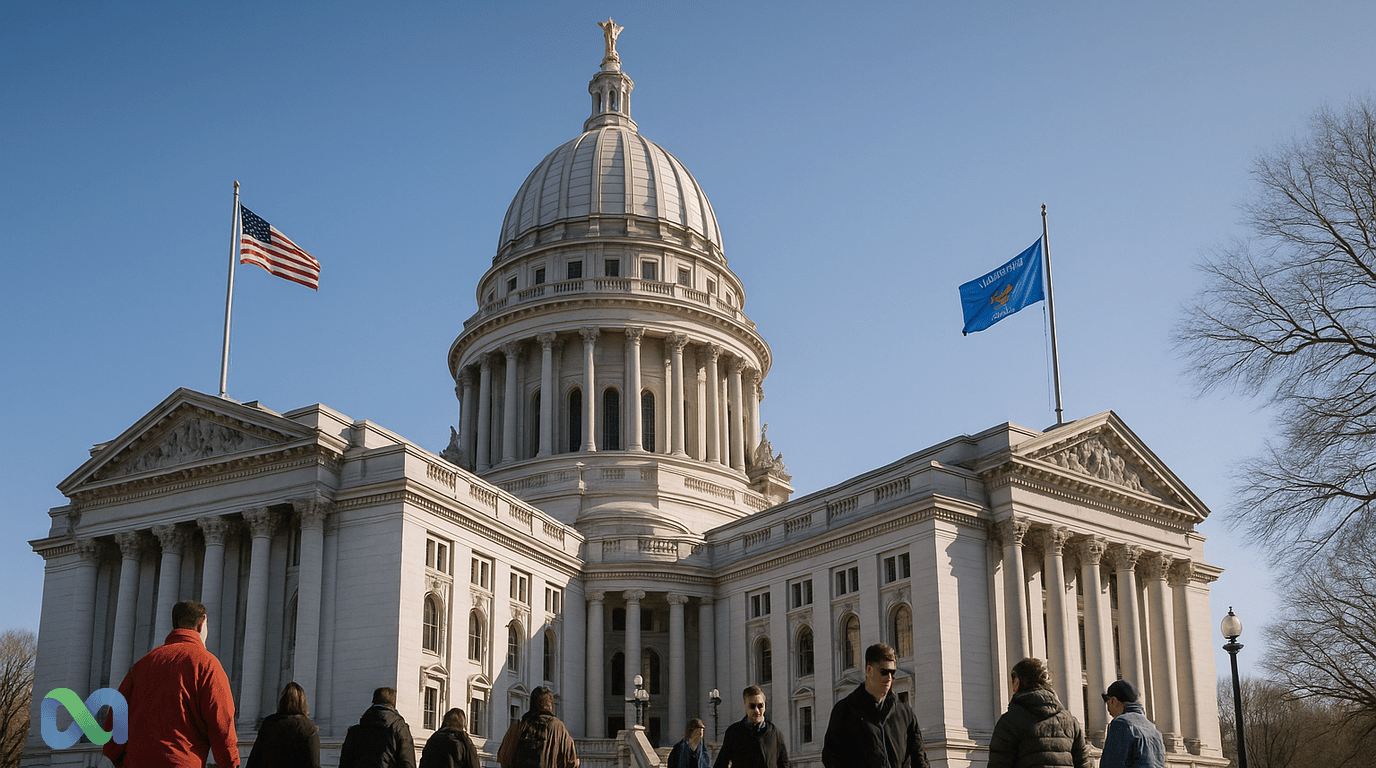
Wisconsin Democratic primary odds looked almost settled before David Crowley won the nomination.
That is what makes the race useful. It was not just another upset headline. It was a live case study in how political markets can miss late coordination, weak liquidity, and a field that changes faster than traders update.
Crowley, the Milwaukee County executive, beat state Rep. Francesca Hong after a strange sequence. He left the race, returned with Gov. Tony Evers behind him, and then consolidated the moderate lane. Hong had momentum, national attention, and a strong polling headline. However, she also faced questions about whether she could hold Wisconsin in a general election.
The market signal looked far more certain than the politics. The research brief cites a fetched PredictionEdge snapshot sourced to Kalshi that showed Hong at 99% and Crowley at 1%. It also showed about $135,200 in total volume and $24,200 in 24-hour volume. That is a sharp number for a race that still had many moving parts.
The lesson is simple. A price can look exact and still be weak.
This article breaks down why Crowley won, what the market missed, and how to read similar primary markets with more care. It also treats Wisconsin Democratic primary odds as a signal, not as a guarantee.
Last reviewed: August 13, 2026. Disclaimer: Market prices are not guarantees. They can move fast when few traders are active.
The core point is plain. Crowley won because voters moved late. The price missed that move. A poll lead was not a lock. A market lead was not a lock either.
Wisconsin Democratic primary odds and the 1% Candidate
The headline version is clean: a candidate priced near 1% won a Democratic primary in a swing state. But the deeper story is more useful for anyone reading election markets.
Crowley was not an unknown protest candidate. He was a Milwaukee County executive with a base in the state’s largest metro area. He also had a powerful late validator in Evers, the sitting Democratic governor. That mattered because Wisconsin Democrats were not choosing only an ideological preference. They were also choosing a nominee for a hard general election.
The market snapshot made the race look settled. PredictionEdge listed Hong near 99% and Crowley near 1%, according to the research brief. Wisconsin Watch later noted how election markets moved after the result, with Crowley becoming the general-election favorite against Republican Rep. Tom Tiffany. The shift was large enough to show that traders did not simply miss a small polling adjustment. They missed the race structure.
Polling also looked unstable. Wisconsin Watch reported that a Marquette Law School poll had Hong at 38%, former Lt. Gov. Mandela Barnes at 16%, Crowley at 7%, and 34% undecided. That is not a stable forecast. It is a crowded primary with a large pool of voters still available. Wisconsin Democratic primary odds looked cleaner than the voter data underneath them.
Markets can overread the first number in a poll and underread the undecided share. In a fragmented primary, that is dangerous. The candidate with the lead may be visible, but the voters outside that lane still need somewhere to go.
Crowley became that destination.
Why Wisconsin Democratic Primary Odds Missed the Polling Risk
It is tempting to say the polls were wrong and stop there. That misses the point.
The same polling environment that made Hong look strong also showed instability. A 34% undecided share is not a detail. It is a warning that late cues can move the race. It also means a candidate polling at 7% can still win if the field moves toward him. Wisconsin Democratic primary odds needed to price that doubt more carefully.
Prediction markets are supposed to digest this kind of uncertainty. In stronger markets, traders may price undecided voters, turnout risk, endorsements, and candidate exits. In thin primary markets, that process can break. Traders may anchor on a visible leader and then treat that lead as if it were a final result.
That is how false precision enters the price.
The Crowley result also shows why low-liquidity markets need extra caution. A market with six figures of total volume can still be thin if few informed traders are active. A small amount of money can hold a price far from the true risk if there is not enough opposing capital. This is especially true in state-level primaries.
The issue is not that prediction markets are useless. It is that market readers must understand the political system below the chart.
How Evers Turned an Endorsement Into a Coordination Signal
Evers was the central figure in the race. He did not merely endorse Crowley. He helped create a coordination signal for Democrats who wanted a nominee they viewed as safer for November.
The original CNN wire story republished by Madison365 described the establishment push around Crowley and the late campaign travel by Evers. That matters because endorsements do not all carry the same weight. A routine endorsement from a low-salience official is one thing. A sitting governor entering a primary to shape his party’s succession is different.
Evers supplied three signals at once.
First, he told donors and local leaders that Crowley was viable. Second, he gave moderate voters permission to move together. Third, he framed the primary as a choice about the general election, not only about ideology.
That is why the endorsement was more than a headline. It changed the coordination problem.
Many voters may have liked Hong’s message. But Wisconsin is not a safe blue state. It is a presidential battleground that can punish weak nominees. In that context, electability becomes a real input. Traders who treated the primary as a simple enthusiasm race missed that layer.
The Evers intervention also mattered because Crowley had already left the race and returned. In normal campaign logic, that can look like weakness. Yet it also created a clear event for voters to process. Crowley was not drifting back in alone. He was returning with the governor’s support.
That reset the race.
Why Moderate Democrats Were Waiting for a Cue
Crowded primaries create a common problem. Many voters may prefer a mainstream candidate, but they do not know which one can actually win. Until they get a cue, their support remains scattered or undecided.
That is why endorsements can carry more value in primaries than in general elections. They do not just persuade voters. They help voters move together.
In Wisconsin, Crowley benefited from that dynamic. Barnes had name recognition. Hong had energy and a polling lead. Other candidates had pockets of support. But once Evers moved, the race gained a new focal point. Wisconsin Democratic primary odds did not adjust fast enough to that focal point.
Prediction markets often handle binary general elections better than crowded primaries. A two-party race has clearer coalitions and stronger data. A primary has more tactical behavior. Voters ask different questions. Which candidate can win the nomination? Which candidate can win the general election? Which candidate can unite the party afterward?
Those questions can shift fast when a trusted actor points to one answer.
That is what happened here. Crowley became the answer for establishment Democrats, many moderates, and voters worried about the fall campaign.
Why Hong’s Momentum Stalled
Hong’s position was real. She had a strong base, a clear profile, and a message that fit the progressive wing of the party. She also benefited from a race that initially looked fragmented around her.
However, momentum is not the same as closure. The closer the race moved to Election Day, the more general-election risk entered the conversation.
CBS framed the result as an upset by a moderate Democrat over a democratic socialist. That national framing matters because Wisconsin is a battleground. A governor’s race there can carry consequences for abortion policy, labor rules, redistricting fights, voting access, and state-level resistance to federal pressure.
For many Democrats, the primary was not only a statement of values. It was a risk decision.
Hong faced scrutiny that changed that risk calculation. The brief notes that coverage raised questions about general-election viability. Those questions do not need to persuade every voter. They only need to make enough undecided and soft supporters hesitate.
That is often how late primary shifts work. Voters do not all switch because they reject a candidate. Some switch because they decide another candidate is more likely to survive November.
Markets can miss that if they read polling support as firm support. A voter can tell a pollster she prefers Hong and still move to Crowley after a governor, donors, local leaders, and negative coverage create a new risk frame. That is exactly where Wisconsin Democratic primary odds looked too rigid.
Electability Became the Trade
The race was often described as establishment versus progressive. That is true, but incomplete. Wisconsin Democratic primary odds were also pricing, or failing to price, November risk.
The better market frame is electability risk. Democratic voters were pricing the cost of nominating Hong in a state where small swings decide statewide races. Evers gave them a vehicle for that trade. Crowley became the lower-volatility option.
This does not mean voters were right or wrong. It means the market needed to account for their incentives.
Prediction markets can become too focused on what insiders say is happening. They can also become too focused on online momentum. But most primary voters are not trading all day. They respond to simpler cues: the governor supports this person, the party is consolidating, the other candidate may face attacks in November.
That does not show up cleanly in a chart. It shows up in late turnout, undecided movement, and candidate coalitions.
For analysts, the key is to separate ideology from risk. A progressive candidate can be strong in a primary. A moderate candidate can still win if enough voters decide the general election is the higher priority.
Crowley’s win was that trade made visible.
The Primary Mechanics Markets Underpriced
The race also had mechanical features that weakened the market signal.
First, early voting mattered. The CNN/Madison365 account noted that more than 165,000 voters had already cast ballots by Wednesday afternoon, and roughly 20% of the electorate backed candidates other than Crowley or Hong. That means some votes were locked before the final two-candidate narrative fully formed. Wisconsin Democratic primary odds had to deal with ballots that markets could no longer move.
Second, the field changed. Candidate exits and re-entries can distort both polling and market pricing. A snapshot taken before voters finish reallocating support may look more certain than it is.
Third, geography mattered. Crowley had a Milwaukee base. Hong had strength in Dane County and among progressive voters. A statewide Democratic primary is not one single electorate. It is a map of local coalitions, turnout patterns, and candidate networks.
Fourth, turnout changed the denominator. If voters who care most about electability turn out at higher rates, the race shifts. If late deciders break hard in one direction, the final result can detach from earlier polling.
These are not edge details. They are the race.
When a market prices one candidate near 99%, it is saying these factors are nearly irrelevant. In Wisconsin, they were decisive. That is why Wisconsin Democratic primary odds became a cleaner lesson after the result than before it.
Early Votes Locked In Before the Field Stabilized
Early voting adds a special problem for political markets.
Markets update continuously. Ballots do not. Once a voter casts a ballot, later information cannot change that vote. This creates a lag between political news and the actual electorate.
That lag cuts both ways. If Hong banked early support, late Crowley momentum had less room to work. If other candidates banked early votes, the late two-person framing became less complete. Either way, a clean final-week market price could not fully capture when voters made their decisions.
This is why primary markets need a timeline, not only a price chart. Traders should ask when ballots were cast, when endorsements landed, when candidates exited, and when negative stories hit. A late signal is powerful only if enough voters still have time to act on it.
In this case, enough voters did.
The Prediction-Market Lesson
The Wisconsin Democratic primary odds miss does not prove that election markets are broken. It proves that some markets are fragile.
Fragile markets often share four traits.
First, they have limited liquidity. The price can look clean, but the order book may not contain enough informed disagreement. Second, they depend on local facts. State primaries reward people who know county groups, local endorsements, and turnout patterns. Third, they have unstable fields. Exits and re-entries can change coalitions quickly. Fourth, they involve voters who may decide late based on electability.
Those traits were all present in Wisconsin.
The right lesson is not to ignore markets. The right lesson is to interrogate them. Ask what the market knows, what it may be missing, and how much money has actually tested the price.
Hong at 99% was a strong claim. The available facts did not justify that level of certainty. A large undecided share, an active governor, a fragmented field, and a swing-state electability debate all pointed to wider error bars. Wisconsin Democratic primary odds should have reflected those wider error bars.
That is the difference between probability and overconfidence.
A Checklist for Reading Fragile Primary Odds
Use a simple checklist before treating primary odds as reliable.
- Check liquidity, not just the displayed probability. A thin market can quote a false price.
- Look for late endorsements from high-trust figures. They can move voters and donors at once.
- Separate polling leader from coalition leader. A lead with many undecided voters is not control.
- Track field changes. Candidate exits can redirect voters faster than markets react.
- Study early voting. Late news matters less if many ballots are already locked.
- Ask whether voters are making an electability decision. In battleground states, that can dominate ideology.
- Watch the general-election market after the primary. A sharp flip can reveal what traders missed before the result.
This checklist would not have guaranteed a Crowley call. It would have made a 99% Hong price look too sure.
That is the point. Good market reading is not about finding certainty. It is about knowing when certainty is fake.
What to Watch Against Tom Tiffany
Crowley now moves from a primary shaped by Democratic coordination to a general election against Republican Rep. Tom Tiffany.
That creates a new test. The same voters who consolidated around Crowley must now unite with Hong supporters and other progressives. If that coalition repair fails, the electability argument weakens. If it succeeds, Evers and the establishment will look like they identified the stronger nominee.
Wisconsin Watch reported that markets moved sharply after the primary, from Tiffany near 60% to Crowley near 78% as Crowley’s path became clear. That is a major repricing. It also shows how quickly traders can move once uncertainty resolves.
However, the general election is a different market. It will have more national attention, clearer party lines, and stronger data. It may still be volatile, but it is less likely to behave like a low-information primary.
The signals to watch are practical. Can Crowley keep Milwaukee turnout high? Can he repair the progressive lane? Can Tiffany define him before he defines himself statewide? Can Evers transfer enough trust without making the race look like a closed establishment project?
Those questions will matter more than the primary upset itself.
What the Wisconsin Result Says About Political Markets
Prediction markets work best when they aggregate diverse information. They work worst when they become a scoreboard for a narrow group of traders.
Wisconsin exposed that gap. The market appeared to price the visible story: Hong led, Hong had momentum, Hong looked likely. It underpriced the less visible story: Evers was coordinating the establishment, undecided voters were still available, and electability anxiety was rising.
That gap matters for anyone who uses markets as analysis tools. Odds are not polls. They are not endorsements. They are not models. They are prices formed by traders under specific liquidity, legal, and information conditions.
There is also a legal detail readers should not miss. Wisconsin Watch reported that Wisconsin voters cannot legally participate in election betting markets. That limitation matters because local voters may hold the best information, yet they may not be active in the market. When local information cannot easily enter the price, the market can look sharper than it is.
The Macro Markets view is disciplined: use prediction markets as live signals, then test those signals against the political structure. If the structure points to hidden risk, widen the range.
Conclusion
Crowley’s win was not random. It was a late convergence of establishment trust, electability anxiety, field mechanics, and voter coordination.
The Wisconsin Democratic primary odds missed that convergence. They did not miss it because all markets fail. They missed it because this was a fragile primary with thin information flow and fast political movement.
For Wisconsin Democratic primary odds, the durable lesson is humility. A displayed price can be useful and still be incomplete.
That is the useful lesson. A 99% price can still be wrong when the underlying race is unstable. A 1% candidate can still win when a governor supplies a coordination signal and undecided voters have not settled.
For political traders and analysts, the answer is not doubt for its own sake. It is discipline. Read the odds, but read the race beneath them. In low-liquidity primaries, the chart is only one input. The coalition is the real market.
