


World Cup 2026 Table: groups, matches, and dates
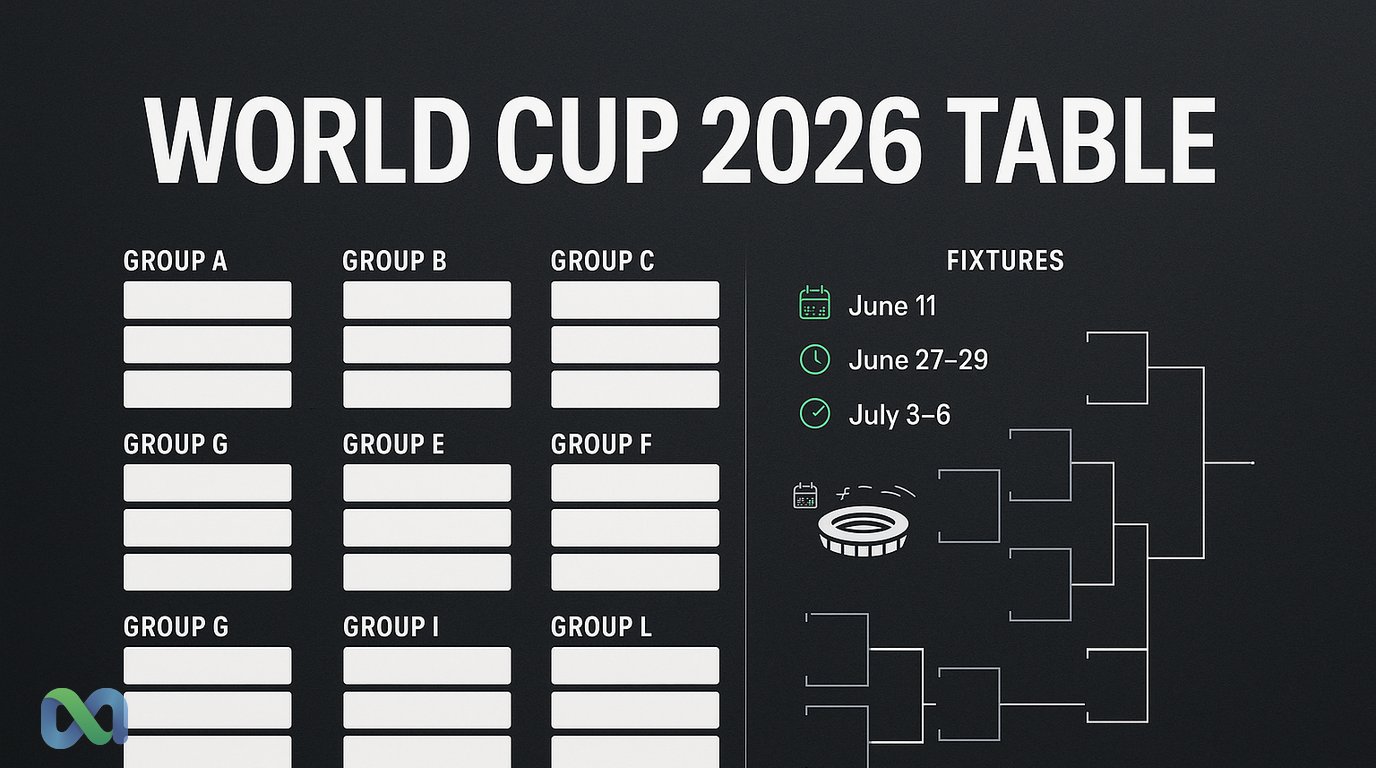
Search interest for the World Cup 2026 table has grown because this edition will use a new format, more national teams, more matches, and a longer calendar. Instead of 32 teams, the tournament will feature 48 national teams split into 12 groups. That changes how readers should follow the group stage, the knockout bracket, and the path to the final.
In this article, you will find a practical view of the World Cup 2026 table. The focus is not a broad guide to the tournament, but the table structure, the groups, the main dates, the qualification format, and the most efficient way to track matches. For official updates, the best starting point remains FIFA.
How the World Cup 2026 table will work
The World Cup 2026 table will be larger than in any previous edition. The tournament will have 48 national teams, 12 groups of four teams, and a total of 104 matches. In practice, that creates a longer group stage and a knockout bracket with an extra round before the round of 16.
The core logic is still simple. Each team plays three matches inside its own group. At the end of that stage, the top two teams in each group advance automatically. In addition, the eight best third-placed teams also move on.
That format gives the World Cup 2026 table more layers. It is not enough to look only at who finished first or second. It will also be necessary to compare third-placed teams across different groups. Because of that, goal difference, goals scored, and tiebreak criteria will matter even more.
In short, the World Cup 2026 table will be organized like this:
- 12 groups with four national teams each
- Three matches per team in the group stage
- 24 direct qualifiers, two from each group
- Eight third-placed teams also advance
- A round of 32 before the round of 16
- 104 matches from the opener to the final
World Cup 2026 groups: what is confirmed so far
Reading the table starts with the groups. Because the World Cup will include more teams, the distribution of the 48 places matters more than before. Even so, not every group is fully confirmed yet. The final World Cup 2026 groups will only be defined after the draw, once qualification paths are complete.
What is already clear is the tournament structure. There will be 12 groups, identified from Group A to Group L. Host nations are expected to occupy predefined positions, while the remaining teams will be allocated according to the draw and FIFA seeding rules.
So far, the most useful way to read the World Cup 2026 table is this:
- Groups A to L will each have four teams
- The United States, Mexico, and Canada are already in the tournament as hosts
- Other teams will fill the groups after the qualification process and the final draw
- The full group list depends on which teams qualify from each confederation
This point matters because many searches for world cup 2026 groups expect a fixed table that does not exist yet. The structure is confirmed, but the final composition of every group still depends on the closing stage of qualification.
Key dates in the World Cup 2026 schedule
Another reason people search for the World Cup 2026 schedule is the longer timeline. With more teams and more matches, the tournament calendar gains extra weight. It is no longer enough to track only the opening match and the final. Fans, media, and traders will need to watch group-stage sequences, rest windows, and the extra knockout round.
The most practical timeline is:
- Opening match: June 11, 2026
- Group stage: starts in June and runs across the first part of the tournament
- Round of 32: the new knockout round added to the format
- Round of 16, quarter-finals, semi-finals, and final: follow the expanded bracket
- Final: July 19, 2026
Because the calendar is longer, the World Cup 2026 table will evolve more gradually than in past tournaments. That makes daily tracking more important, especially for anyone following qualification scenarios, rest differences, or match density.
For official fixture updates and host-city information, FIFA's English schedule page remains the most reliable live reference.
How qualification affects the World Cup 2026 table
One of the most important changes is qualification volume. The 48-team format opens more places for each confederation, which directly shapes the final World Cup 2026 table. In practical terms, more teams reach the tournament, more groups remain competitive, and more third-placed scenarios become relevant.
That is why many readers also search for who has qualified for the 2026 World Cup. The answer changes over time, because qualification is still being completed. Host countries are already confirmed, while other spots depend on each confederation's qualifiers and the intercontinental playoff.
This has three direct effects on the table:
- The list of teams in each group stays provisional until the final draw.
- Qualification pace affects how early fans can project group balance.
- The new format increases the value of comparing third-placed teams, not only group winners.
In other words, the World Cup 2026 groups are tied to qualification much more tightly than casual readers may expect. A useful table must separate confirmed information from projections.
Brazil in the World Cup 2026 table
For Brazilian readers, one of the first practical questions is where Brazil will appear in the World Cup 2026 table. The short answer is that Brazil's exact group position will only be known after qualification is complete and the official draw takes place.
Until then, the best approach is to track three layers of information:
- Brazil's qualification path in CONMEBOL
- The likely seeding pot based on rankings and qualification timing
- The future group-stage schedule once the draw is finalized
This avoids a common mistake. Many articles try to anticipate Brazil's full route too early. A more useful structure is to separate confirmed dates, confirmed format rules, and scenarios that depend on the draw.
How to follow the World Cup 2026 table efficiently
If your goal is to follow the tournament without wasting time, the smartest method is to focus on the practical layers of the World Cup 2026 table rather than only on isolated match lists.
A simple workflow looks like this:
- Track confirmed groups once the draw is official
- Watch the standings of each group after every matchday
- Compare third-placed teams across groups during the final group-stage window
- Use FIFA updates for official schedule changes and stadium information
- Keep one reference page for dates, groups, and knockout progression
This is also why utility pages rank well for searches like world cup 2026 table and world cup 2026 schedule. Users usually want one practical resource that combines structure, dates, and navigation, rather than a broad historical article.
If you also want a tournament-by-tournament reference format, check how the World Cup table works in major competitions.
FAQ about the World Cup 2026 table
Who has qualified for the World Cup in 2026?
The host countries, the United States, Mexico, and Canada, are already qualified. Other national teams will be added as the qualification cycle ends across each confederation.
When and where is the World Cup 2026?
The tournament will be played in the United States, Mexico, and Canada. The opening match is scheduled for June 11, 2026, and the final is scheduled for July 19, 2026.
Is Group D already confirmed in the World Cup 2026?
No. The group structure is confirmed, but the final composition of each group, including Group D, depends on qualification results and the official draw.
Final view of the World Cup 2026 table
The World Cup 2026 table will be more complex than in previous editions, but the structure is still manageable if you break it into groups, dates, qualification status, and knockout progression. The key point is to separate what is already confirmed from what will only be defined after the draw.
For now, the most important confirmed facts are clear: the tournament will have 48 teams, 12 groups, 104 matches, and a final on July 19, 2026. As more teams qualify, the full World Cup 2026 groups and the complete World Cup 2026 schedule will become easier to track in one practical table.
