


2026 World Cup complete guide
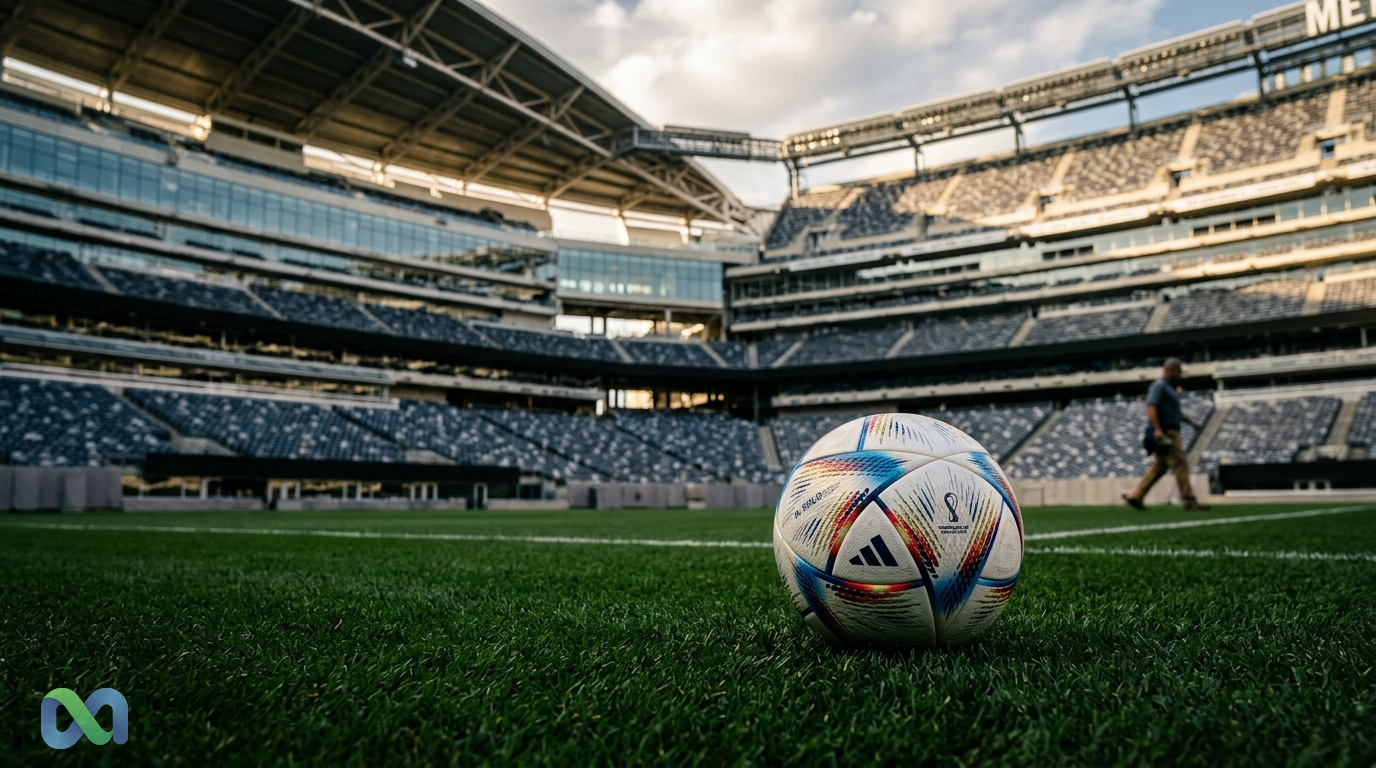
The 2026 World Cup will be the biggest edition in the history of the men's tournament. FIFA scheduled the opening match for June 11, 2026 at the Estadio Azteca in Mexico City and the final for July 19 in New York New Jersey. The competition will also be played across three countries: Canada, Mexico and the United States.
The most important point is simple. The 2026 edition will feature 48 national teams and 104 matches. That changes the scale of the tournament, the knockout format and the way fans and traders should track probabilities across the month. In this guide, you will find the key dates, host cities, groups, schedule, Brazil's route and the best way to read World Cup-related markets.
When and where will the 2026 World Cup be played?
The 2026 World Cup will be hosted by Canada, Mexico and the United States. It will be the first time the men's tournament is shared by three host countries at once. In practical terms, that expands the logistics of the event and spreads matches across 16 host cities.
According to FIFA, the opening match is scheduled for June 11, 2026 at the Estadio Azteca, also listed as Mexico City Stadium. The final is set for July 19, 2026 at New York New Jersey Stadium. Between those two anchors, the tournament will feature 104 matches.
That matters because host geography affects travel, climate, recovery routines and crowd environment. In a longer, more spread-out World Cup, those details matter more than usual. That is why it makes sense to keep following FIFA's official calendar for any final adjustments.
How the 2026 World Cup format works
The 2026 edition expands the men's tournament to 48 teams. The new structure has 12 groups of four. After the group stage, the top two teams in each group advance, along with the eight best third-place teams.
That means the World Cup adds a round of 32 before the more traditional knockout path. In practical terms, more national teams stay alive for longer. It also means qualification analysis becomes more sensitive to goal difference, head-to-head outcomes and cross-group performance.
For anyone tracking probabilities, that change is highly relevant. A strong team may face a longer road to the final, while a mid-tier team gains a better chance of surviving the opening stage. Understanding the format is now essential for reading favorite status, risk and market value correctly.
What are the groups at the 2026 World Cup?
The groups define the first competitive layer of the tournament. They organize the opening matches and directly affect qualification odds and possible knockout paths.
The research brief used for this article highlights that Group C includes Brazil, Morocco, Haiti and Scotland. That point was rechecked against official sources and remains the most relevant hook for a Brazilian audience. At the same time, the composition of the other groups should still be tracked through FIFA's final draw results page, since the federation keeps the official reference for the event.
If you want to compare groups, the best approach is to separate three questions. First, which favorites landed in lighter groups. Second, which groups look balanced enough to create volatility. Third, which third-place teams have the clearest route to advancing. That reading often explains major price moves before and during the tournament.
Schedule and calendar for the 2026 World Cup
The 2026 World Cup schedule is longer than in previous editions. With 104 matches on the board, the calendar deserves close attention from opening day to the final. It is not enough to know the date of Brazil's first match. You need to understand the structure of the tournament as a whole.
According to FIFA and AP, the competition begins on June 11 and ends on July 19, 2026. The final detailed calendar is expected to be confirmed in March 2026 after the remaining playoffs. That means times and fine scheduling details should be treated as live information rather than frozen facts months in advance.
In practice, the calendar affects rest, travel sequence and preparation time between matches. Those factors matter most once the competition enters the knockout rounds. The calendar is not just logistics. It is also competitive context.
Brazil's group, matches and key pressure points
Brazil is in Group C with Morocco, Haiti and Scotland. Among the most specific points in the brief is Brazil versus Morocco, scheduled for June 13, 2026 at New York New Jersey Stadium, at 6 pm local time and 7 pm in Brasília.
Morocco is likely to be the most technically demanding opponent in the group. Haiti and Scotland also require careful reading, because the new format gives extra value to goal difference, tiebreakers and consistent performance across all three group-stage rounds. In a four-team group, one unexpected draw can reshape the entire qualification route.
For Brazilian fans and market participants, the right question is not only whether Brazil will advance. The more useful questions are different. Does Brazil win the group. Who does Brazil face in the round of 32. Does the team reach the knockout stage with a cleaner route or a more exhausting one. Those answers will change with lineups, injuries and the match results inside the group itself.
Who are the main favorites to win the 2026 World Cup?
Favorite status for the 2026 World Cup will continue to shift throughout the cycle. Even so, the brief points to an external market consensus cited by AP, with Spain, France, England, Brazil, Argentina and Portugal among the leading favorites. That works as editorial context, not as direct betting advice.
The useful part is understanding why those teams sit near the top. They combine deep squads, strong recent history and a better ability to survive a long tournament. In a World Cup with 48 teams, squad depth and tactical flexibility may matter even more than in earlier editions.
It is also worth remembering that favorite does not mean certainty. In a short tournament, the price of a title candidate reacts quickly to injuries, bracket path, extra-time load and underperformance. A good reading of favorites always combines team strength with schedule context and tournament route.
How to follow the 2026 World Cup through prediction markets
The World Cup is one of the richest events for probability analysis. That applies to champion markets, finalists, top scorer, group winner, knockout qualification and individual matches. The advantage comes from following how new information changes the implied chance of each scenario.
In Macro Markets-style prediction markets, the core logic is to watch probability rather than pure opinion. When a team wins convincingly in its opener, for example, the perception of qualification and title chances can move immediately. Even so, the best analysis avoids overreacting to one isolated result and continues to weigh group strength, schedule pressure and upcoming matchups.
That is also what makes these markets useful. They turn news into comparable probabilities. You can watch price, context and market movement in one place. For the 2026 World Cup, that becomes far more useful when format, schedule and probability are read together.
Natural angles to follow during the tournament include:
- 2026 World Cup winner
- Brazil to win the 2026 FIFA World Cup
- finalists
- group winners and qualification by group
- top scorer markets
- surprise team markets
- match-specific contracts, such as Brazil versus Morocco
That reading works because it converts news, schedule and performance into comparable probability. Anyone already familiar with the Macro Markets approach will usually read those price moves with more discipline across the tournament.
FAQ about the 2026 World Cup
When does the 2026 World Cup start?
The opening match is scheduled for June 11, 2026 at the Estadio Azteca in Mexico City.
When is the 2026 World Cup final?
The final is expected to be played on July 19, 2026 at New York New Jersey Stadium.
How many teams will play in the 2026 World Cup?
There will be 48 teams. This will be the first men's edition of the tournament with that number of participants.
How many matches will the 2026 World Cup include?
FIFA announced 104 matches across 16 host cities in Canada, Mexico and the United States.
What is Brazil's group at the 2026 World Cup?
Group C includes Brazil, Morocco, Haiti and Scotland.
Where should I track the official 2026 World Cup calendar?
The best source remains FIFA's official page for fixtures, dates and stadiums.
Conclusion
The 2026 World Cup will be different in scale, format and competitive interpretation. The tournament will feature 48 teams, 104 matches, three host countries and a calendar that demands close attention. For a Brazilian audience, Group C and the match against Morocco already provide a concrete starting point.
If your goal is only to know dates and format, this guide covers the essentials. But if you want to read favorite status and probability with more precision, it makes sense to track the official schedule, groups and markets together. That is how the World Cup stops being just a calendar and becomes an event you can read through chance, risk and opportunity.
Related reading: see more Macro Markets analysis on World Cup predictions.
Read also: World Cup 2026 favorites
