


2026 World Cup Halftime Show: Date, Venue and Artists
Updated on May 7, 2026.
The 2026 World Cup halftime show has already changed the way fans, broadcasters, brands and markets will read the tournament final. For the first time, the FIFA World Cup final will include a global-scale halftime show. That makes the last match of the tournament more than a football event. It also makes it a media, music and attention event.
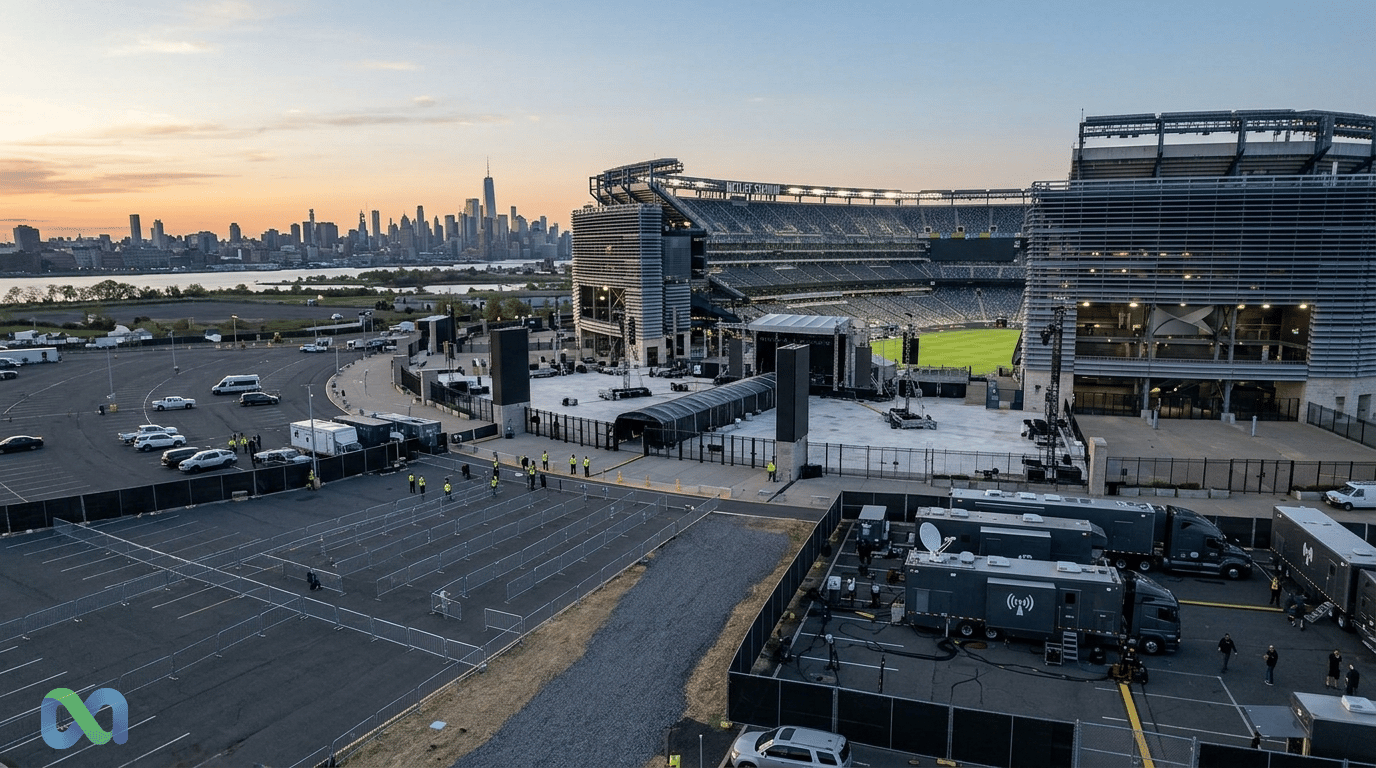
The core fact is simple. The final is scheduled for July 19, 2026, at MetLife Stadium in the New York New Jersey host region. FIFA has confirmed a halftime show, with Global Citizen involved in production. The artists have not been officially announced.
That gap creates noise. Some coverage calls the event a closing ceremony. Social media often treats rumors as confirmation. Many fans also confuse the halftime show, the pre-match ceremony and the post-match trophy celebration.
This guide separates confirmed facts from speculation. It also explains how to track new announcements without falling for weak sources.
Quick Summary: What Is Already Confirmed
The 2026 World Cup halftime show does not yet have an official artist lineup. What is confirmed is the final date, the MetLife Stadium venue and a halftime show produced with Global Citizen. FIFA has framed this as a new format for the final.
- Final date: confirmed for July 19, 2026.
- Venue: confirmed at MetLife Stadium in New York New Jersey.
- Halftime show: confirmed as the first World Cup final with this format.
- Production: Global Citizen is involved in production.
- Chris Martin: confirmed in a creative support role. That does not confirm Coldplay on stage.
- Artist lineup: still pending. No singer has been officially announced.
- Broadcast in Brazil and other markets: still depends on final local schedules and rights.
Date and Venue of the Final
The 2026 World Cup final will take place on July 19, 2026. The match will be played at MetLife Stadium in East Rutherford, New Jersey. The official host region is New York New Jersey.
That choice is logical for FIFA. The stadium is large. It sits near one of the world’s biggest media markets. It can also support an entertainment event that is bigger than a traditional football final ceremony.
Halftime Show vs. Closing Ceremony
The key point is the format. A closing ceremony usually happens around the final and can include music, host-country symbols and the handoff to the next cycle. A halftime show happens during the break in the match.
In 2026, the major confirmed change is the halftime show during the final. That is why many headlines use “closing ceremony” as shorthand. However, the correct term depends on the exact moment of the event.
Who Is Producing the Show
Global Citizen is linked to the production of the show. The organization has experience with global music broadcasts and social impact campaigns. Its official page for the FIFA World Cup 2026 Final Half-Time Show says the project will combine music, football and global action.
FIFA has also presented the change as part of the expanded World Cup. The 2026 tournament will have 48 teams, three host countries and a final designed for a worldwide audience.
Where Will the 2026 World Cup Closing Event Take Place?
The 2026 World Cup closing event is tied to the final at MetLife Stadium. The stadium is in East Rutherford, New Jersey, while the commercial host name is New York New Jersey. Official materials use that regional label because the final is being staged as a joint host-market event.
The venue should host the match, the trophy presentation and the new halftime show. So anyone searching for the World Cup 2026 closing ceremony should follow updates about the final itself.
MetLife Stadium and the New York New Jersey Host Region
MetLife Stadium is a major venue. It hosts American football, international football matches, concerts and mass events. For FIFA, that lowers operational risk for a final that needs a stage, broadcast logistics, security and crowd control.
The choice also turns the final into a global media product. New York brings media scale. New Jersey provides the stadium. Together, they create a strong platform for sponsors, broadcasters, artists and digital platforms.
Final Kickoff Time and Time Zones
The official match time should be checked through FIFA and licensed broadcasters. Since the game will be on the U. S. East Coast, the time difference for Brazil should be small. For Europe, Africa and Asia, the local viewing window will depend on the final kickoff time.
Fans should still confirm the schedule close to the tournament. Broadcast slots, commercial details and platform packages can change the viewing experience.
Which Artists Are Confirmed for the Final?
No artist has been officially announced for the 2026 World Cup final. This is the point that needs the most discipline. So far, the format is confirmed. The production role is confirmed. Creative support has been reported. The artist lineup is not confirmed.
The confusion happens because an event this large attracts plausible names. Global pop stars, artists from the host countries and Latin music stars will all appear in speculative lists. Plausible is not the same as confirmed.
Confirmed: Global Citizen in Production
Global Citizen is the clearest part of the announcement. The organization works on large broadcasts and cultural campaigns. Its role suggests the show may include a social impact narrative, international guests and appeal beyond football fans.
That does not define the musical genre. It does not define the nationality of the performers. It only shows that the show is built for global reach.
Confirmed: Chris Martin Supports Curation and Production
Chris Martin, the lead singer of Coldplay, has been associated with creative support for the show. That detail quickly created social media interpretations. Many users started treating Coldplay as a likely act.
That reading is still risky. Chris Martin helping with curation is not the same thing as Coldplay performing at the final. Until FIFA or Global Citizen names artists, the right approach is to separate a production role from an on-stage performance.
Not Yet Confirmed: The Singer Lineup
The question “who will sing at the 2026 World Cup final?” still has no final answer. The best way to follow it is to watch three sources: FIFA announcements, Global Citizen updates and official broadcasters.
Journalistic coverage can add context. Global Citizen’s own event page states that the lineup has not been announced. It also says Chris Martin is assisting Global Citizen in its producer role. That is useful evidence, but it is not a performer list.
Rumors and Possible Acts: How to Read Them Without Misinformation
Rumors about the 2026 World Cup halftime show will grow as the tournament gets closer. That is normal. Global events create leaks, predictions, fan campaigns and narrative tests.
The problem starts when a list with no source becomes “confirmation.” To avoid that, classify every new claim before sharing it.
Official Sources vs. Press vs. Social Media
Use a simple hierarchy. First come FIFA, Global Citizen, the stadium and broadcasters with rights. Then come news outlets with a record of verification. Last come social platforms, fan pages and entertainment accounts.
That order reduces mistakes. A viral post can occasionally point to a real name. It can also start from fan desire, an edited image or a bad translation.
What Would Be Plausible for a Global Event
A show of this size should aim for international reach. It is plausible to expect a mix of artists from the United States, Canada, Mexico, Latin America and global pop. It is also plausible that FIFA will want balance between music, social message and television appeal.
But plausibility is not enough. In prediction markets, the difference between “this makes sense” and “this was confirmed” changes the quality of the analysis. The same rule applies to fans who just want reliable information.
Recent World Cup Ceremony History
The new 2026 format becomes clearer when we look at recent World Cups. FIFA has long treated music and ceremony as part of the tournament experience. However, a final with a halftime show moves the World Cup closer to the format of major U. S. media events.
South Africa 2010: Shakira and Freshlyground
The 2010 World Cup had a strong music identity. “Waka Waka,” by Shakira and Freshlyground, became one of the most remembered songs in recent tournament history. It showed how a song can shape the memory of a World Cup.
Brazil 2014: Shakira, Santana and Brazilian Artists
In 2014, Brazil combined international pop with local names. Shakira, Santana, Wyclef Jean, Alexandre Pires and Carlinhos Brown appeared across the ceremony and tournament music cycle. The result connected football, celebration and Brazilian cultural identity.
Russia 2018: Nicky Jam, Will Smith, Era Istrefi and Ronaldinho
The 2018 final included artists with international appeal. Nicky Jam, Will Smith and Era Istrefi were tied to the official song, while Ronaldinho appeared in the ceremony context. The goal was to create a recognizable moment for global television.
Qatar 2022: Gims, Ozuna, Davido and Others
In 2022, FIFA expanded the musical mix. Gims, Ozuna, Davido, Aisha, Nora Fatehi and Balqees were part of the tournament’s music ecosystem. Qatar also showed how a ceremony can carry the image of the host country.
The 2026 difference is the placement inside the final. A halftime show creates a concentrated showcase. That raises the pressure on artist selection, stage timing and broadcast execution.
How to Watch the 2026 World Cup Final and Show
To watch the final and the show, follow FIFA channels and licensed broadcasters in your country. The final TV, pay TV and streaming schedule should be confirmed closer to the tournament.
The safe point is this: the show is part of the final. So the broadcaster showing the match is likely to show the halftime event too. Still, details around pregame coverage, postgame coverage, replays and digital clips depend on each contract.
Global FIFA Broadcast Rights
FIFA sells rights by territory. That means the broadcast path changes from country to country. In some markets, the match will be on free-to-air TV. In others, the complete package may be on streaming, pay TV or digital bundles.
For Brazilian viewers, the best path is to check the schedule near the final. That avoids relying on old lists or rights from previous World Cups.
What to Check Before the Tournament
Before the final, check four things. First, which broadcaster carries the match. Second, which platform has the official stream. Third, whether there will be a separate pre-show. Fourth, whether the halftime show will be available on demand.
These details matter for fans who want the full show. They also matter for brands, creators and analysts watching real-time audience behavior.
Streaming, Free TV and Pay TV: Still to Be Confirmed
Until the final schedule is confirmed, any broadcast list should be treated as provisional. Sports rights change. Platforms make sublicensing deals. Digital packages can split the match, behind-the-scenes content and extra programming.
The practical recommendation is simple. Save the date. Follow official channels. Confirm the schedule in the weeks before the final.
Why This Show Matters for Audience, Sponsorship and Prediction Markets
The 2026 World Cup halftime show matters because it combines three forces. The first is football, which already delivers a massive audience. The second is music, which expands reach beyond sports fans. The third is expectations analysis, where rumors and confirmations can change public attention.
That mix creates observable signals. When an artist is confirmed, searches can rise. When a broadcaster announces a special package, attention shifts. When a strong rumor appears, social networks react before confirmation.
Signals of Global Demand
The World Cup final is already one of the biggest events on the planet. With a halftime show, FIFA is also trying to capture the logic of global spectacle. That can increase casual viewing, social video clips and sponsor interest.
For analysts, the relevant data is not only “who performs.” It is how the announcement changes attention, expectations and public conversation.
How Rumors Can Move Expectations
Rumors influence searches and narratives. A major artist can lift interest before being confirmed. However, that reaction can fade if the source is weak.
In prediction markets, this kind of noise demands discipline. Prices should reflect verified information, probability and error risk. They should not reflect viral excitement alone.
Confirm Data Before Trading Narratives
Macro Markets works from the idea that real-world events can be analyzed through probabilities. But good analysis starts with reliable sources. Before interpreting market moves around the World Cup, audience or artists, separate fact from speculation.
That rule applies to traders, journalists, fans and creators. Fast information is useful. Confirmed information is more valuable.
How to Read the 2026 World Cup Closing Event Without Noise
Use a simple rule. If the news comes from FIFA, Global Citizen, the stadium or an official broadcaster, treat it as strong data. If it comes from social media, treat it as a weak clue. If it comes from a fan page, treat it as desire.
The show is already planned. The date is known. The venue is known. The names are still missing. Until then, any artist list should be read carefully.
It also helps to separate three moments. Before the match, there may be celebration and protocol. At halftime, there is the new show. After the match, there are medals, the trophy, the winner’s celebration and the global replay cycle.
That order matters. It prevents the idea that everything is one event. In practice, the final has parts. Each part has its own owner, timing, rules and TV rights.
For Brazilian viewers, the next step is short. Save the date. Check the time zone. Confirm the schedule during the week of the match. Do not trust an old screenshot. Do not trust a list with no link.
For market watchers, the discipline is the same. A rumor can move the conversation. Only a strong source changes the base case. Price without source is noise. A good source creates signal.
Finally, remember the basics. The World Cup is football. The show helps bring more people to the final. But the match still drives the day. The artist can attract search demand. The trophy decides the memory.
Simple Checklist to Avoid Mistakes
Use this block as a short guide for every new report about the final.
- Check whether there is a FIFA link. If not, pause and check again.
- Check whether there is a Global Citizen link. If not, treat the claim carefully.
- Check whether the official broadcaster in your country confirmed the schedule. If not, do not finalize plans.
- Check whether the artist name appears in a real announcement. If it only appears in a post, it is a rumor.
- Check whether the date is July 19, 2026. If the date is different, it may be another event.
- Check whether the venue is MetLife Stadium. If the report names another host city, it may be the opening match.
- Check whether the report says halftime show. If it refers to a party before the game, it is another part of the final.
- Check whether the local time is stated. If not, wait for the final broadcast schedule.
The rule is short. Good facts have sources. Bad facts have screenshots. Rumors rush. Good analysis is calm.
That applies to football fans. It applies to music fans. It applies to anyone looking at price and probability. The same data point can become news, search demand, a meme and a market signal. But it should become a decision only when the source is strong.
If a big name appears, ask three questions. Who said it? When did they say it? Where is the link? If all three answers are strong, the signal improves. If one fails, the risk rises.
Also watch the timing. Before the World Cup, there will be heavy noise. During final week, there will be more real data. On match day, the schedule becomes clearer. After the match, the only job is measuring impact.
For Brazil, the plan is easy. Save the date. Check the time. Choose official TV or streaming. Open the broadcast before halftime. Avoid pirate links. Avoid unsourced clips.
For brands, the plan is not very different. Watch reach, artist, timing and network. A halftime show creates a short attention spike. That spike can turn into search, sales and conversation, but only if the right name reaches the right audience.
For traders, the plan is even clearer. Do not buy a narrative without a source. Do not sell a fact because of a meme. Read the data, weigh the risk and only then change your view.
In the end, the final will have many layers. There will be a match, a show, a trophy, a celebration, announcements, clips and debate. Anyone who separates each layer understands the event better. Anyone who mixes everything loses the signal.
Short Guide in Simple Sentences
Facts come with sources. Rumors come in a hurry. If the link is not clear, wait.
The match has a date. The match has a venue. The show has a plan. The singers do not yet have a final announcement.
To watch well, join early. Watch the final. Stay for halftime. Then watch the trophy.
To read well, cut the noise. Look for FIFA. Look for Global Citizen. Look for the official broadcaster.
To act well, do not follow hype alone. Hype rises quickly. Good data lasts longer.
In Brazil, save the date. Check the time zone. Confirm the schedule. Use an official channel.
At the World Cup, everything becomes a story. A name becomes a meme. A meme becomes a search. A search becomes a signal.
But signal is not proof. Proof comes from strong sources. That is why patience matters.
Facts come with sources. Rumors come in a hurry. If the link is not clear, wait.
The match has a date. The match has a venue. The show has a plan. The singers do not yet have a final announcement.
To watch well, join early. Watch the final. Stay for halftime. Then watch the trophy.
To read well, cut the noise. Look for FIFA. Look for Global Citizen. Look for the official broadcaster.
Quick Verification Note
The show has a plan. The match has a date. The venue has been named. The artist list has not been released. Check the source. Read carefully. Do not rush. Do not get it wrong.
The show has a plan. The match has a date. The venue has been named. The artist list has not been released. Check the source. Read carefully. Do not rush. Do not get it wrong.
The show has a plan. The match has a date. The venue has been named. The artist list has not been released. Check the source. Read carefully. Do not rush. Do not get it wrong.
The show has a plan. The match has a date. The venue has been named. The artist list has not been released. Check the source. Read carefully. Do not rush. Do not get it wrong.
The show has a plan. The match has a date. The venue has been named. The artist list has not been released. Check the source. Read carefully. Do not rush. Do not get it wrong.
The show has a plan. The match has a date. The venue has been named. The artist list has not been released. Check the source. Read carefully. Do not rush. Do not get it wrong.
The show has a plan. The match has a date. The venue has been named. The artist list has not been released. Check the source. Read carefully. Do not rush. Do not get it wrong.
The show has a plan. The match has a date. The venue has been named. The artist list has not been released. Check the source. Read carefully. Do not rush. Do not get it wrong.
FAQ: Questions About the 2026 World Cup Closing Event
Who will sing at the 2026 World Cup final?
FIFA has not announced the artists for the final. The halftime show is confirmed, with Global Citizen involved in production. Chris Martin supports the creative side, but that does not confirm a Coldplay performance.
Where will the 2026 World Cup closing event take place?
The closing event tied to the final will be at MetLife Stadium in East Rutherford, within the New York New Jersey host region. The 2026 World Cup final is scheduled for July 19, 2026.
Will the ceremony be before, during or after the final?
The confirmed new element is a halftime show during the final. Other ceremonial moments may happen before or after the match, but the first-of-its-kind feature is the show during the break.
Will Chris Martin or Coldplay perform?
Chris Martin has been associated with creative support for the show. That does not confirm Coldplay as a musical act. Until FIFA or Global Citizen announces the lineup, any name should be treated as rumor.
How can fans in Brazil watch the show?
Follow the broadcaster and platform with official rights in Brazil. The detailed schedule should be confirmed closer to the tournament. Whoever broadcasts the final is expected to show the halftime event as part of the match.
What is the difference between a halftime show and a closing ceremony?
The halftime show happens during the match break. A closing ceremony is a broader set of rituals, music, symbols and celebrations around the end of the tournament.
Conclusion: What to Watch Until July 2026
The 2026 World Cup halftime show already has a date, a venue and a first-of-its-kind format. The final will be played on July 19, 2026, at MetLife Stadium. The halftime show is confirmed and will involve Global Citizen.
What is still missing is the most anticipated part: artists, running order, detailed broadcast plans and possible events before or after the final. Until then, the best read is to separate facts from rumors.
For anyone following football, entertainment or prediction markets, this is a clean case of signal versus noise. With every new announcement, ask one question: is the source official, journalistic or merely viral? That answer will define the quality of the analysis until the final whistle.
External source notes: Global Citizen’s official event page says the lineup has not been announced and confirms the producer role. FIFA and local broadcasters remain the key sources for final schedule and rights updates.
Source Discipline for Every New Claim
The 2026 World Cup halftime show will attract many fast claims. Treat each one as a source test. If a report names an artist, look for the original announcement. If a post names a broadcaster, look for the rights holder. If a clip claims to show rehearsals, look for the venue, date and credentialed source.
This matters because the 2026 World Cup halftime show sits at the crossing point of football, music, television and social platforms. Each group has a reason to amplify rumors. Fans want their favorite artist. Media accounts want traffic. Brands want early association. Markets want a tradable signal.
A strong signal usually has three traits. It comes from FIFA, Global Citizen, MetLife Stadium or an official broadcaster. It uses clear language instead of vague hints. It can be checked from the original link, not only from a screenshot.
A weak signal has the opposite traits. It appears first on fan pages. It uses phrases such as “sources say” without naming a source. It turns Chris Martin’s production support into a Coldplay booking without evidence. It also treats a playlist, rehearsal rumor or artist tour gap as confirmation.
For readers, the right behavior is boring but effective. Keep the date. Keep the venue. Keep the confirmed format. Then wait for names. The 2026 World Cup halftime show is already important without inventing a lineup.
What Could Change Before the Final
Several details can still change before match day. FIFA can announce the running order. Global Citizen can name performers. Broadcasters can publish special coverage plans. Local platforms can clarify whether the full show, pregame content and postgame trophy ceremony will be available live or on demand.
Those updates will matter for different groups. Fans need the viewing path. Journalists need exact language. Brands need timing and expected reach. Prediction market traders need to know whether a new item is confirmed information or recycled speculation.
The 2026 World Cup halftime show will probably move in stages. First comes broad confirmation of the format. That has already happened. Then comes artist speculation. That is already happening. The next useful stage is official artist confirmation. After that, the most useful information will be timing, broadcast details and performance structure.
Until that sequence is complete, the best position is flexible. Do not ignore rumors, because rumors can reveal where attention is moving. Do not overrate rumors either, because a viral claim without a source can reverse quickly. The point is to track probability, not excitement.
For Macro Markets readers, that is the useful angle. The 2026 World Cup halftime show is not only entertainment. It is an attention market. Confirmed artists can change search behavior. Broadcast details can change audience expectations. A weak rumor can create noise. A strong official update can create signal.
That is why every update should be read in layers. First ask whether the date, venue and format match the known facts. Then ask whether the source is strong. Then ask whether the information changes audience, sponsorship or market expectations. If it does not change those variables, it may be interesting, but it is not decisive.
The final rule stays the same. The 2026 World Cup halftime show has a confirmed stage. It does not yet have a confirmed artist list. Keep those two facts separate and most mistakes disappear.
