


2034 World Cup: Host, Dates, and What Can Still Change
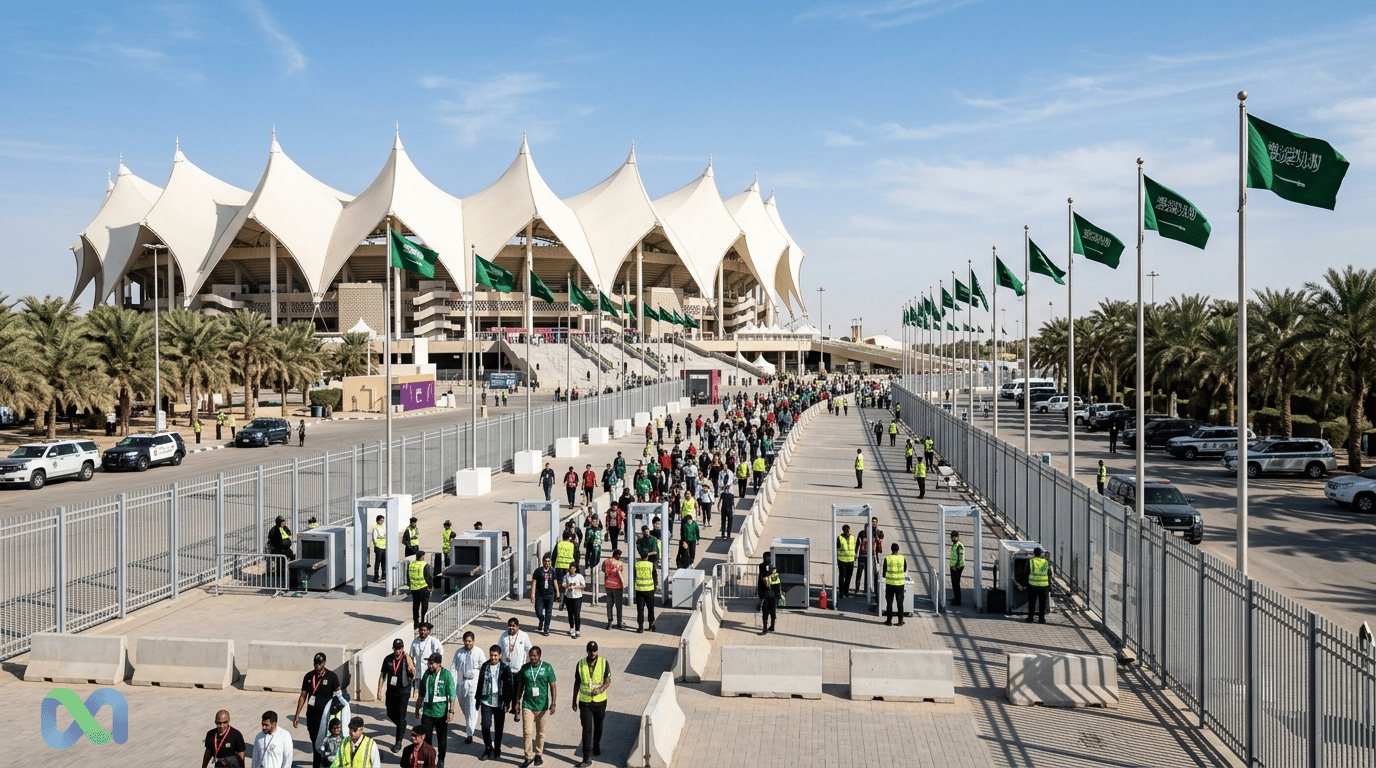
Updated on May 22, 2026.
Last reviewed: May 22, 2026. This guide checks the host decision against FIFA's official 2030 and 2034 host announcement and the Saudi Arabia 2034 bid summary.
The 2034 World Cup will be held in Saudi Arabia, after FIFA confirmed the host in 2024. The men's tournament is expected to use the 48-team format. The largest open question is the final calendar. Heat, Ramadan, and the club football schedule could all shape the playing window.
That is what makes the 2034 World Cup more interesting than a simple host answer. The host is already settled. The operating plan still depends on hard choices. Those choices affect players, leagues, broadcasters, sponsors, fans, and national teams.
For anyone who follows global events through probabilities, that split matters. A confirmed fact is not the same thing as a priced scenario. An official FIFA decision changes the state of play. A report about possible dates changes expectations. A revised club calendar can make one scenario more likely than another.
This guide separates confirmed facts from open questions. It also shows which signals matter until FIFA locks the 2034 World Cup plan.
Where Will the 2034 World Cup Be Held?
The 2034 World Cup will be hosted by Saudi Arabia. FIFA confirmed the decision through the official process that also settled the 2030 World Cup host structure. FIFA's own announcement is the source that matters most when the question is the host, the format, or the official tournament calendar.
The decision was not a total surprise. Saudi Arabia was the only formal candidate left at the end of the process. Still, the confirmation closed the host race and opened a second phase of analysis. The central question is now when and how the tournament will be staged.
Saudi Arabia Is the Confirmed FIFA Host
Saudi Arabia enters the 2034 World Cup with a project that combines sports infrastructure, tourism expansion, and geopolitical ambition. The country has already invested heavily in football, hosted major events, and tried to secure a stronger position in the global sports calendar.
The primary reference for the host decision should remain FIFA. Major outlets can add context, but they do not replace the governing body's decision. This matters because searches for the 2034 World Cup often mix official decisions, informed reporting, and speculation. Those are not the same thing.
In event analysis, source hierarchy changes the risk reading. A FIFA vote or official statement carries more weight than an anonymous report. A tournament study carries less weight than a confirmed date. Traders and analysts should keep that hierarchy clear.
How Many Teams Will Play?
The 2034 World Cup is expected to follow the expanded 48-team format used from the 2026 cycle onward. That format increases the number of matches, brings more countries into the tournament, and makes logistics more complex.
For fans, the change means more games and more national teams. For organizers, it means more stadium operations, training sites, transport plans, security layers, hotel capacity, and broadcast windows. For analysts, it creates more variables before and during the tournament.
A 48-team World Cup also changes how favorites are observed. A larger tournament has more matches, more paths through the bracket, and more chances for volatility in early knockout rounds. It does not change the host, but it changes the uncertainty around the event.
Proposed Cities and Stadiums
Saudi Arabia's bid has pointed to cities such as Riyadh, Jeddah, Al Khobar, Abha, and Neom. These names appear often in public coverage of the 2034 World Cup. However, the list should still be treated as an operational plan until every stadium, city, and date is fully validated.
Riyadh should carry major weight in the project. Jeddah has urban and football relevance. Al Khobar links the bid to the east of the country. Abha broadens the geography. Neom is presented as a symbol of modernization and infrastructure ambition.
The point is not to memorize a city list. The point is to understand that cities, stadiums, and dates work as one package. If the calendar moves, operations change. If construction delays appear, risk changes. If FIFA adjusts requirements, priorities change with it.
When Will the 2034 World Cup Take Place?
The short answer is that the 2034 World Cup is planned for 2034, but the exact window still needs careful definition. This is the largest issue to watch.
The idea that part of the tournament could move into early 2035 has gained attention because Saudi Arabia's climate creates pressure on the traditional football calendar. Ramadan and the European club season add further complexity. As a result, the final date window may become the main story over the next several years.
Why Heat Could Change the Calendar
Saudi Arabia has very high temperatures during part of the year. That makes a traditional mid-year tournament hard to imagine without major adaptation. The natural comparison is Qatar 2022, which moved to November and December to avoid extreme local summer heat.
That precedent matters. It shows FIFA can shift a World Cup window when climate conditions require it. It also shows the cost of doing so. Domestic leagues pause, clubs adjust their seasons, players change preparation cycles, and broadcasters reorganize schedules.
For the 2034 World Cup, heat is not a small weather note. It is a structural variable. If the tournament moves to late 2034, clubs carry a large part of the cost. If it slides into early 2035, the issue becomes even more unusual, because the tournament would still be branded as 2034 while part of the operation could happen in another calendar year.
Ramadan and the International Calendar
Ramadan also matters because it can affect local routines, logistics, and the social calendar. Ramadan, heat, the European season, and TV windows create a hard puzzle. There is no cost-free solution.
If the 2034 World Cup is held late in the year, the club season must make space. If it is pushed into another window, it could collide with continental competitions, domestic calendars, or important religious periods. If FIFA tries to preserve the northern-hemisphere summer, the climate question becomes harder.
The final decision will likely balance player health, local operations, TV rights, clubs, federations, and sponsors. That is the part many search results compress too much. The calendar is not a detail after the host decision. It is the core execution problem.
The Qatar 2022 Precedent
Qatar 2022 created the modern precedent. The tournament left the traditional June and July window and took place late in the year. The decision worked from an operational perspective, but it forced global football to adapt.
That precedent matters in two ways. First, it reduces the surprise of a similar move in 2034. Second, it shows that every adjustment has trade-offs. Players arrived at a different point in their physical cycle. Clubs lost players during the season. Leagues compressed matches before and after the tournament.
The 2034 World Cup may repeat part of that logic, but it will not be an automatic copy. Saudi Arabia has its own geography, its own ambitions, and a different international calendar. Until FIFA publishes final dates, the careful approach is to separate possibility from confirmation.
What Is Confirmed and What Is Still Open?
The cleanest way to understand the 2034 World Cup is to separate facts from pending decisions.
| Topic | Status | How to interpret it |
|---|---|---|
| Host | Confirmed | Saudi Arabia will host the 2034 World Cup. |
| Confirming body | Confirmed | FIFA announced the decision through the official host process. |
| General format | Aligned with the current cycle | The men's tournament is expected to have 48 teams. |
| Cities | Publicly proposed | Riyadh, Jeddah, Al Khobar, Abha, and Neom appear in the plan, but final details need validation. |
| Exact dates | To be confirmed | The final window is the main variable. |
| Possible 2035 spillover | Scenario under discussion | It may be debated because of heat, Ramadan, and the football calendar, but it is not an official decision. |
| Club impact | To be confirmed | It depends on the window FIFA chooses. |
| Brazil viewing times | To be confirmed | Reliable estimates require the final schedule and host cities. |
Confirmed Facts
The first confirmed fact is the host: Saudi Arabia. The second is the broader move toward a 48-team men's World Cup. The third is that the decision came through FIFA's official process.
Those points are enough to answer the main search intent. If someone asks where the 2034 World Cup will be held, the direct answer is Saudi Arabia.
A strong analysis should not stop there. The 2034 World Cup will keep producing news because the dates, cities, preparation plan, and club impact still need detail.
Pending Decisions
The most important pending point is the exact window. It affects almost everything else. A World Cup in late 2034 is different from a World Cup that extends into early 2035. Even if the commercial name remains the 2034 World Cup, the operational calendar can change how national teams and clubs prepare.
Another open point is the final confirmation of stadiums and cities. Large bids often present broad plans, but execution passes through inspections, construction, adaptation, and approval.
There are also questions about broadcasting, kickoff times, fan zones, tourism, transport infrastructure, and fan costs. These items do not change the host, but they do change the real tournament experience.
Official Signals to Monitor
The first signal to monitor is any FIFA communication about dates. That is the most important trigger. After that come announcements about inspections, stadiums, cities, match scheduling, and draw timelines.
A second group of signals will come from leagues and clubs. If the window requires a pause in the European calendar, major leagues must adjust their seasons. That should produce public statements, negotiations, and heavy coverage.
A third group comes from broadcasters and sponsors. Global events depend on commercial windows. When those actors start to position themselves, the market gets clues about the viability of each scenario.
Why the 2034 World Cup Matters for Prediction Markets
The 2034 World Cup is a clear example of how prediction markets handle public uncertainty. The question is not only who will win. Before that, markets could form around the calendar, the final host city, the number of venues, national-team performance, top scorers, and even economic impact.
In a prediction market, each new piece of information can change the implied probability of an outcome. A strong FIFA announcement matters more than a rumor. A league statement matters more than loose opinion. A construction delay matters more than a generic debate.
This turns the tournament into a map of signals. Analysts do not need to wait for the final confirmation before tracking expectation changes. They can watch the evidence sequence and adjust the weight of each scenario.
How Traders Would Read FIFA News
A FIFA announcement usually carries high weight because FIFA controls the tournament. If FIFA publishes an official window, market uncertainty falls. If it publishes only a study, consultation, or working option, uncertainty remains.
The difference is crucial. A sentence such as FIFA is assessing scenarios does not have the same value as FIFA confirms dates. In probability analysis, the verb matters. Assessing, discussing, proposing, recommending, approving, and confirming are different stages.
Traders following the 2034 World Cup should watch this detail. Markets react not only to the content of a story, but also to how official that story is.
Calendar, Clubs, and Broadcast Rights
The calendar is the link between football, media, and money. The World Cup moves global broadcast rights. Clubs provide players. Leagues protect their seasons. Sponsors seek maximum audiences. Fans need workable kickoff times.
A late-2034 window may be easier for climate reasons, but harder for clubs. An alternative window may reduce the climate conflict, but create another commercial conflict. A hybrid solution may solve part of the problem while adding new costs.
That tension is exactly the kind of issue prediction markets can organize. Instead of asking which narrative sounds strongest, the analyst asks which scenario is becoming more likely given the available signals.
Scenarios That Could Change Expectations
Several scenarios could alter expectations around the 2034 World Cup. The first is a quick FIFA confirmation of dates. That would reduce the central uncertainty.
The second is strong club or league pressure against a specific window. That could make another option more likely. The third is a meaningful infrastructure delay, which could change the reading on cities or stadiums.
The fourth is the release of health and safety criteria for players and fans. In high-heat countries, that kind of document can influence the calendar. The fifth is any change to the international match calendar. That calendar sets the room available for friendlies, qualifiers, and preparation.
What This Means for Event Forecasting
The 2034 World Cup also shows why event forecasting is not just about the final outcome. The host decision is fixed, but the calendar, venue list, operational rules, and preparation windows remain live variables. Each variable can change the expectations around teams, broadcasters, and fans.
A disciplined forecast starts with the strongest source. Then it gives less weight to weaker signals. FIFA confirmation should sit at the top. Official organizing committee updates should follow. League statements, credible reporting, and market reactions can then help analysts measure how fast expectations are moving.
This approach is useful because the tournament will produce many headlines before the first match. Some will be decisive. Others will only describe possible options. The difference matters. A well-structured view of the 2034 World Cup should update when the evidence improves, not when the noise gets louder or a single headline overstates the case.
Impact for Brazil and Latin America
The 2034 World Cup will matter directly for Brazilian audiences, even though the host is far away. Brazil's national team, clubs that release players, broadcasters, and fans will all feel the effect of the chosen window.
Brazil follows the World Cup with rare intensity. That makes the question of time zones, kickoff times, and calendar impact more than a detail. It changes audience behavior, editorial planning, and prediction markets tied to national teams, top scorers, group-stage results, and player performance.
Time Zone and Brazilian Audience
The time difference between Brazil and Saudi Arabia should produce friendlier match windows than World Cups in East Asia, but the final schedule will decide that. Late-afternoon or evening matches in Saudi Arabia could fall in the Brazilian morning or afternoon. More extreme local kickoff times could create less convenient windows.
For broadcasters, that matters. For fans, it matters too. For prediction markets, audience size matters because highly watched events tend to generate more discussion, more information flow, and faster reaction to news.
Still, any kickoff-time projection must wait for the official schedule. Before that, the better approach is to work with scenarios, not certainty.
Brazil's National-Team Preparation
Brazil's preparation will depend on the tournament window. A World Cup in the middle of the European season changes the physical status of many key players. A World Cup late in the year also changes recovery, injury risk, and minutes load.
Brazil usually depends on players based in major European leagues. Any global calendar adjustment affects the national team. That includes training camps, friendlies, recovery days, and the rhythm between matches.
The analysis should not assume that one window is automatically better. It should ask which players arrive in better condition, which clubs carry heavier loads, and how the coaching staff adapts the plan.
How the Calendar Affects Leagues and Players
The impact on leagues and players could be large. A World Cup outside the traditional window compresses seasons. That can increase injury risk, reduce rest, and change competitive rhythm.
Clubs also face hard choices. They must release players, adjust preseason, reorganize competitions, and manage physical returns after the tournament. In 2022, this effect was clear. In 2034, it could return to the center of the debate.
Latin America adds another angle. Players based in Brazil, Argentina, Mexico, and other local markets may face different calendars from Europe-based players. FIFA will need to harmonize a global system, not only the biggest leagues.
2034 World Cup Timeline
The timeline helps explain why this topic will remain active for years.
- 2024: FIFA confirms Saudi Arabia as host of the 2034 World Cup.
- 2026-2028: Planning is expected to advance around stadiums, cities, and calendar discussions.
- 2029-2032: Operational detail should increase, with inspections and infrastructure adjustments.
- 2033: Calendar, draws, logistics, and team preparation should dominate coverage.
- 2034: Nominal tournament year, with possible debate over the final window if dates still interact with late 2034 or early 2035.
This is not a complete official schedule. It is a monitoring framework. The point is to know which milestones can generate relevant new information.
How to Follow the 2034 World Cup Without Chasing Noise
Simple Signal Checklist
Use a simple rule. Start with official proof. Then move to strong reporting. Then treat opinion as a weak signal. This keeps the 2034 World Cup story clear. It also helps avoid false certainty.
First, check whether FIFA has confirmed the item. A host vote, a match window, or a published schedule is a strong signal. It can change the base case fast. If FIFA has not confirmed it, keep the claim in the scenario bucket.
Second, check whether the Saudi organizing side has published a concrete plan. A bid summary can show cities, goals, and venue ideas. It still does not equal the final match schedule. Still, it is stronger than a loose rumor.
Third, watch the leagues. Clubs supply most players. If a date window hurts league calendars, clubs and leagues will say so. That pressure can change the path FIFA chooses.
Finally, watch player safety. Heat is not a side issue. It affects rest, travel, kickoff times, and medical planning. A clear safety framework would make one calendar option easier to price than another.
The best way to follow the 2034 World Cup is to rank each piece of news by its confirmation level. Official sources, such as FIFA and the organizing committee, come first. Then come sports outlets with reporting. After that come analysis, opinion, and projections.
That order prevents rushed conclusions. A report saying the tournament could happen in early 2035 is relevant, but it is not confirmation. A statement from an executive may be a signal, but it is still not a decision. A social media rumor should carry low weight until validated.
For traders and analysts, this discipline is even more important. The value is not in reacting to every piece of noise. It is in identifying when information actually changes the probability distribution.
FAQ About the 2034 World Cup
Where Will the 2034 World Cup Be Held?
The 2034 World Cup will be held in Saudi Arabia. FIFA confirmed the host. The men's tournament is expected to have 48 teams, following the expanded format that starts with the 2026 World Cup.
Could the 2034 World Cup Be Played in 2035?
There may be discussion about dates extending into early 2035 because of heat, Ramadan, and the international calendar. However, that should be treated as a scenario until FIFA confirms the official dates.
What Will the 2034 World Cup Format Be?
The expected format is a 48-team World Cup. That expands the number of participants and matches, which increases the complexity of logistics, scheduling, broadcasting, and team preparation.
Which Cities Could Host 2034 World Cup Matches?
Saudi Arabia's bid has included cities such as Riyadh, Jeddah, Al Khobar, Abha, and Neom. The final list of host cities and stadiums should be tracked through official FIFA and organizing committee communications.
Why Does the 2034 World Cup Matter for Prediction Markets?
Because the event combines confirmed facts with open variables. The host, calendar, cities, national-team preparation, and club impact can all become probability questions. Each new official signal can change expectations.
Conclusion
The 2034 World Cup already has its main answer: it will be held in Saudi Arabia. But the most important story over the next several years may be the calendar. Heat, Ramadan, clubs, broadcasters, and logistics form an equation that still needs final resolution.
For the general reader, that means following more than the host. For analysts, it means separating confirmed facts from likely scenarios. For prediction markets, the 2034 World Cup is a practical case study in how major global events accumulate signals before final decisions.
Following that process with discipline keeps noise under control. The right question is not only where the World Cup will be held. It is which variables can still change, when they will be decided, and how each signal changes the probabilities around the event.
