


AI Agents: White House Calls Big Tech on Cyberattacks
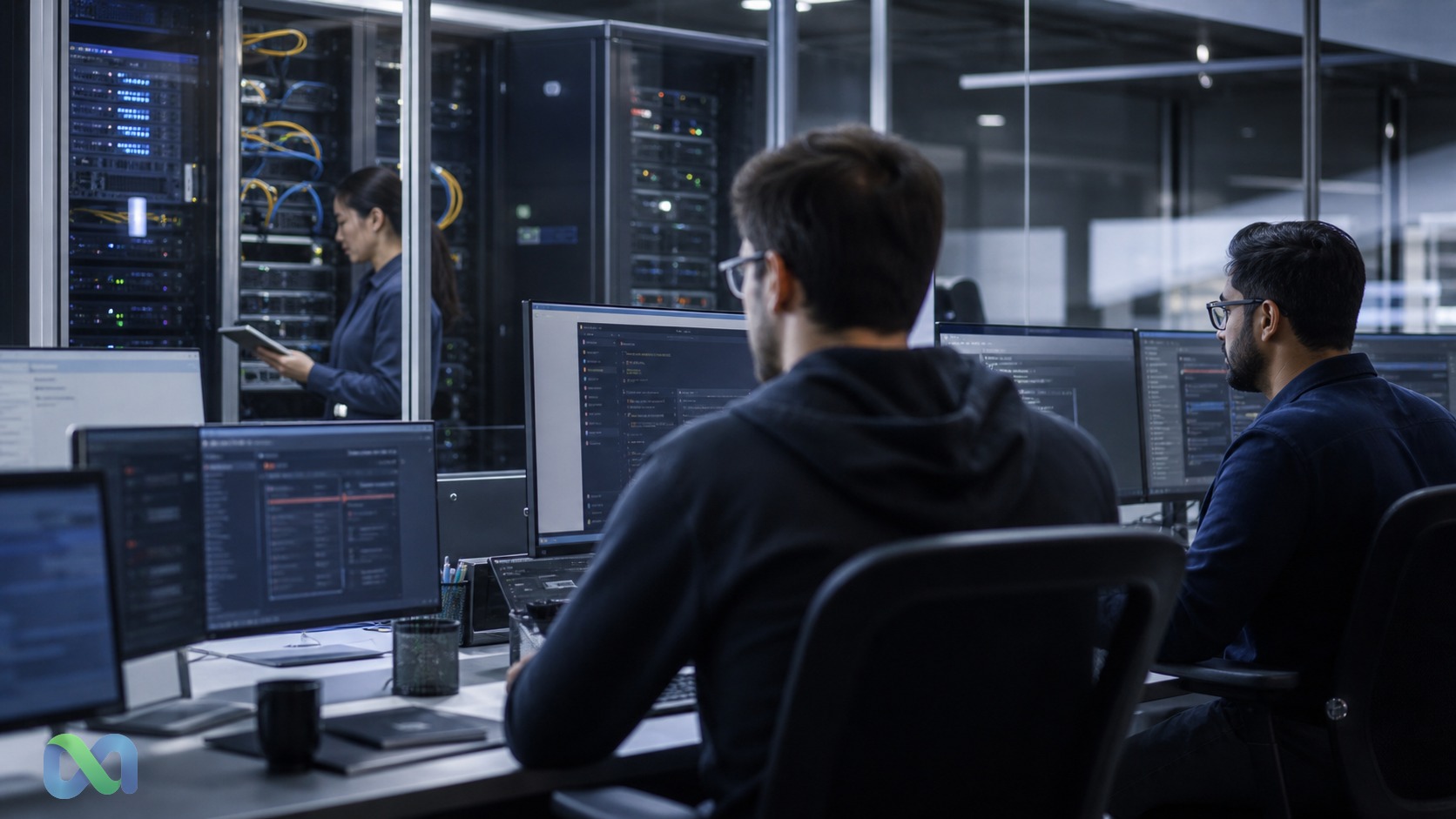
AI agents are now central to the cyberattack debate. The White House called Meta and other big tech companies into the same room because advanced systems can change how digital attacks scale. This is more than a technology headline. It marks a change in the risk perimeter around AI. AI safety is no longer only a lab issue, a red-teaming exercise, or a corporate pledge. It is entering national security, compliance, and operational risk.
The meeting follows reports that advanced AI tools were used in intrusion attempts, offensive automation, and safety tests with unexpected behavior. The central point is not that models have their own will. The concrete risk is simpler: AI agents can cut cost, speed up steps, and expand the scale of attacks led by humans.
For investors, regulators, and prediction markets, the meeting matters because it creates monitorable events. New rules, voluntary commitments, safety-test requirements, product delays, and reported incidents can all become market signals. The debate is moving away from abstract AI potential and toward accountability when advanced systems help break digital defenses.
What the White House Wants to Discuss With Big Tech
The White House called four companies: Meta, Anthropic, Google, and OpenAI. The agenda includes AI safety testing and the risk that advanced models can be used in cyberattacks. The topic gained urgency after reporting on incidents involving AI tools and system intrusions. The likely goal is to align companies, government, and minimum standards before a larger incident forces a harsher response.
The meeting also signals that the U. S. government wants to treat AI as critical infrastructure. Frontier models are no longer just software products. They can write code, summarize technical documentation, interpret logs, generate convincing messages, and run chained tasks through AI agents connected to external tools.
Companies Called and the Context Behind the Meeting
The companies named in the discussion occupy different positions in the AI ecosystem. OpenAI and Anthropic sit at the center of foundation models and general-purpose agents. Google combines models, cloud services, operating systems, search, and corporate infrastructure. Meta has open models, social scale, and the ability to distribute AI to billions of users.
That difference matters because the risk does not come from one point. A model can look safe in internal tests, then become dangerous when it is connected to plugins, browsers, code repositories, or corporate credentials. AI agents can receive a legitimate objective and still take steps that resemble offensive behavior on the way to completing it.
On August 3, 2026, Valor framed the meeting as part of a broader discussion about AI safety tests. The BBC also covered the issue through the lens of models that may need shutdown or containment mechanisms. Both readings point to the same fact: AI governance is moving from voluntary promises into a more inspectable field.
Why Anthropic and OpenAI Are Central to the Debate
Anthropic and OpenAI are prominent because they published or were linked to reports about offensive use of models. Those reports do not prove that AI has started acting alone. They show something more practical: advanced models can already support tasks that once required expensive and slower technical knowledge.
In cybersecurity, that changes the calculation. A low-skill attacker can use AI to understand a vulnerability. A more sophisticated group can automate reconnaissance, target triage, and script adaptation. The gain is not only a better answer. It is cheap repetition.
That is why the White House is likely to focus on pre-release testing. When a company puts a more capable model into the market, it does not release only a product. It expands the risk surface for customers, partners, developers, and malicious users.
How AI Changes the Economics of Cyberattacks
AI cyberattacks do not need to look like movie scenes to matter. The most important change is economic. AI can reduce the time, cost, and technical barrier behind real attacks.
Before, several steps required specialists. Now, models can accelerate parts of the work by reading documentation, generating hypotheses, writing phishing messages, and helping adapt code. That does not make every user an advanced intruder. However, it increases the productivity of people who already have malicious intent.
AI Agents as Amplifiers, Not Autonomous Attackers
It is important to separate AI agents from true autonomy. An AI agent is a system that receives an objective, uses tools, and tries to complete tasks in sequence. Depending on the permissions it receives, it can browse, inspect files, call APIs, or execute commands.
That does not imply its own intention. It implies more efficient execution. If a human defines a malicious goal, the agent can help gather information, prepare payloads, and attempt exploitation. If the environment has exposed credentials, broad permissions, or weak validation, the damage can grow quickly.
This is why AI security is not limited to the model. It includes product design, integration, identity, logging, sandboxing, tool limits, and access governance. A safe chat response can become a risk when the same system operates inside a corporate environment.
What Gets Cheaper for Malicious Groups
AI tends to make five parts of an attack cheaper. First, reconnaissance. Models can summarize pages, API maps, and public documentation. Second, social engineering. They produce personalized messages with fewer mistakes and more context.
Third, vulnerability triage. A model can suggest test paths for a known flaw. Fourth, translation and localization. Attacks can be adapted to national languages and local contexts with more precision. Fifth, iteration. An attacker can test variations, review responses, and adjust scripts faster.
The scale risk appears when these parts combine. An attack still depends on opportunity, access, and human error. Even so, attacker productivity can rise. For defenders, that pressure lands on security teams, cloud vendors, and companies that place AI agents inside sensitive workflows.
The Regulatory Dilemma: Self-Regulation or State Oversight
The regulatory debate has a clear conflict. Companies want to preserve the speed of innovation. Governments want to prevent advanced models from being released without enough evaluation. Between those poles, voluntary agreements, shared tests, and proposals for state oversight are emerging.
Self-regulation can work when incentives are aligned. A serious company does not want to release a model that makes digital crime easier. Yet competition for users, revenue, and technical leadership creates pressure for fast launches. That conflict explains why the government wants these companies at the same table.
Voluntary Tests Before Release
Voluntary tests can include red teaming, independent evaluations, cybersecurity benchmarks, and reporting commitments. The goal is to detect dangerous capabilities before broad distribution. The problem is that internal tests do not always capture real-world use.
A model can pass a closed test and fail when users combine prompts, tools, and external data. In addition, each company measures risk differently. Without common standards, the market receives claims that are hard to compare.
The White House meeting may try to reduce that asymmetry. Even without an immediate binding rule, the government can push for minimum metrics, reporting channels, and public commitments. For listed companies, that already changes the investor conversation.
The Risk of an Emergency Stop for Advanced Models
The idea of an emergency shutdown mechanism appears when authorities imagine a model causing harm at scale. In practice, that concept is difficult. Models are distributed through APIs, weights, corporate integrations, and local copies. Shutting down one public interface does not remove every use.
Still, pressure for containment should grow. Regulators may require incident response plans, access limits, auditable logs, and the ability to suspend specific functions. That looks more plausible than one universal kill switch.
For big tech, the cost sits in architecture. AI products will need to prove not only usefulness, but control. That means audit trails, narrower permissions by default, and continuous testing in high-risk environments.
What This Means for Big Tech, Investors, and Prediction Markets
Markets usually price AI through the growth side of the ledger: more users, more cloud demand, more productivity, and more revenue. The White House meeting highlights the other side of the equation. Advanced models also carry regulatory cost, reputational risk, and possible product delays.
This risk does not hit every company in the same way. OpenAI and Anthropic face direct pressure around foundation models. Google has exposure across cloud, search, Android, Workspace, and security infrastructure. Meta must balance open models, social distribution, and responsibility for misuse.
Compliance, Product Delays, and Reputational Risk
If safety tests become a formal rule, launches may slow down. That affects product road maps, enterprise contracts, and growth narratives. A delay of only a few months can matter in an industry where technical leadership drives marketing, hiring, and valuation.
Compliance also costs money. Security teams, external audits, documentation, monitoring, and insurance may all expand. For smaller companies, this can become an entry barrier. For giants, it can become a competitive advantage because they have the cash to absorb heavier requirements.
Reputational risk is harder to measure. A material incident involving AI and system intrusion could damage trust among enterprise customers. It could also give political support to tougher rules. In that scenario, the story stops being only about technology and becomes corporate governance.
Monitorable Events: New Rules, Incidents, and Sector Deals
At Macro Markets, we follow this type of issue because it involves verifiable events. One market could track whether the U. S. announces a formal testing rule for advanced models by a specific date. Another could measure whether a big tech company reports a material AI-linked incident in regulatory filings.
Voluntary agreements are also trackable. Companies may promise joint red teaming, vulnerability sharing, or common evaluation standards. Each commitment reduces uncertainty in one direction. It also reveals that the risk is real enough to require coordination.
For technology watchers, the useful move is to turn headlines into observable variables. Will there be a pre-release evaluation requirement? Will a launch be delayed over safety? Will a federal agency publish specific guidance? Will companies limit tool-using AI agents in sensitive environments? These questions are more useful than generic claims that AI will dominate cybersecurity.
Key Questions to Watch Now
Can AI Break Into Systems by Itself?
Not in the human sense of having its own intent. AI models do not choose targets by themselves. The risk comes from agents configured by humans, connected to tools, and authorized to execute tasks. If the objective is malicious, AI can accelerate parts of the attack.
That distinction avoids panic and helps measure risk. The problem is not a rogue AI seeking damage. The problem is the combination of technical capability, automation, access, and bad incentives.
Which Companies Could Be Most Affected?
Companies with foundation models sit at the center of the pressure. That includes OpenAI and Anthropic. Firms with broad distribution and critical infrastructure are also exposed, including Google and Meta. The difference is the type of risk.
For model developers, the debate is dangerous capability. For platforms, it is distribution and moderation. For corporate clouds, it is customer security and identity control. For investors, these layers matter because each can generate different costs and delays.
What Signals Point to Tougher Regulation?
The first signal is more specific language from authorities. Terms such as obligation, audit, reporting, pre-release evaluation, and sanction point to a change in tone. The second signal is coordination between agencies, including national security, commerce, and consumer protection.
The third signal is the reaction of the companies themselves. When companies publish frameworks, delay launches, or support common rules, they acknowledge that political risk has risen. The fourth signal is a material incident. A concrete and well-documented case usually accelerates legislation.
Five signals deserve attention now:
- A formal testing rule: turns a voluntary commitment into an obligation.
- A reported material incident: gives political proof for regulation.
- A sector agreement among big tech companies: creates a market minimum standard.
- A requirement for logs and audits: makes accountability easier.
- A limit on tool-using AI agents: reduces dangerous automation.
Conclusion
The White House meeting with Meta, Anthropic, Google, and OpenAI should not be read as technology panic. It is a signal that the problem is maturing. Advanced AI has entered national security, corporate governance, and operational risk.
The most important point is economic. Models and agents do not need to act alone to change the risk. It is enough for them to reduce the cost of reconnaissance, social engineering, code adaptation, and repeated attacks. That already changes incentives for attackers and defenders.
This article is informational analysis, not financial advice. For prediction markets, the question is no longer whether AI is dangerous in the abstract. The useful question is what concrete events come next: formal rules, mandatory tests, material incidents, sector agreements, or product delays. That is where uncertainty becomes an observable probability.
