


Alphabet AI CapEx: Is Google's Spending Spree Worth It?
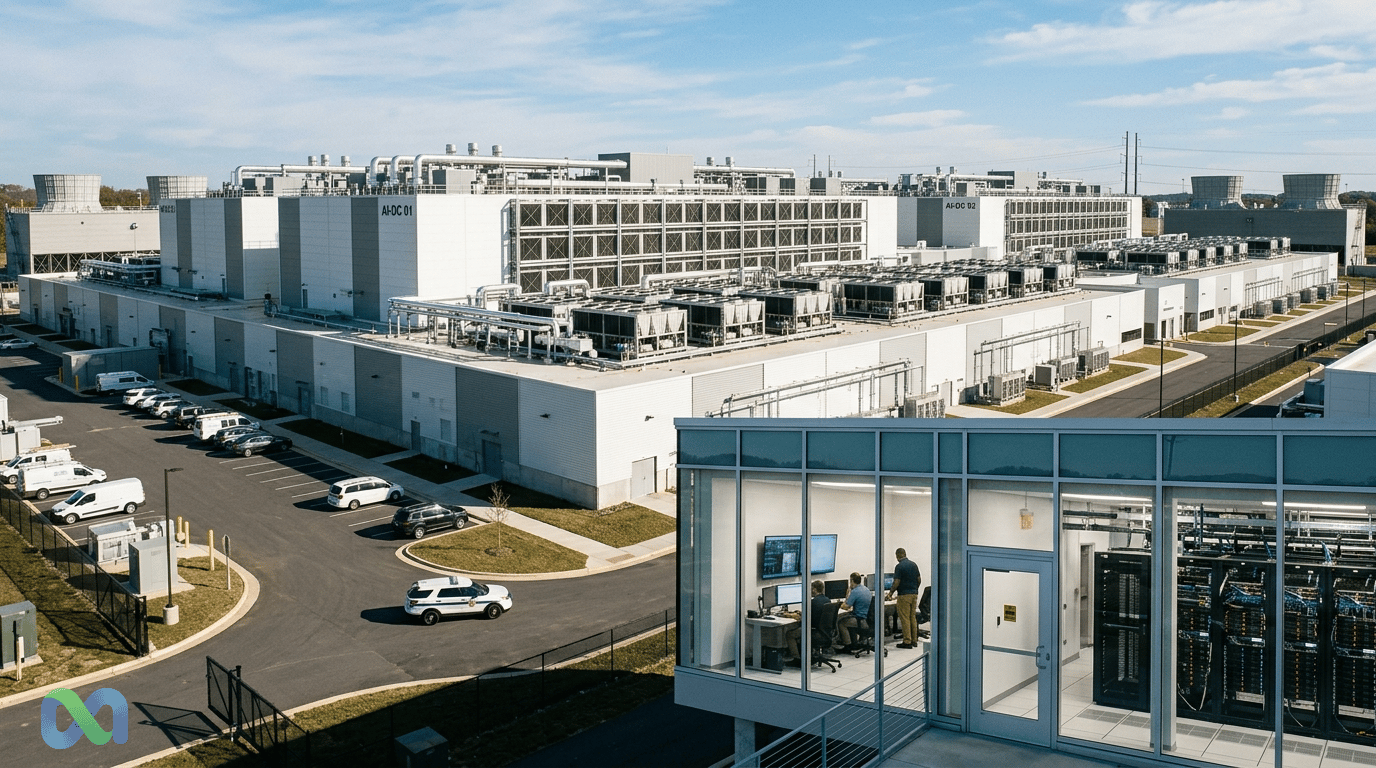
Alphabet AI CapEx has moved from an earnings footnote to the main question around Google parent Alphabet. Revenue is still growing. Google Cloud is still scaling. Search remains a cash engine. Yet investors are now asking a harder question: how much capital must Alphabet spend before AI starts producing enough cash to justify the bill?
That question matters because the spending is no longer small. The research brief cites Q2 revenue of $119.8 billion, Google Cloud growth of 82%, Q2 capital expenditures of $44.9 billion, a full-year CapEx plan near $205 billion, a cloud backlog of $514 billion, and the company's first quarterly negative free cash flow. Those numbers create a real tension.
Alphabet can be right to spend aggressively and still face a market reset. AI infrastructure has the logic of a land grab. Capacity can create future revenue, protect distribution, and make Google Cloud more credible. However, capital intensity changes the way investors value even the strongest technology companies.
The useful question is not whether AI is important. It is whether Alphabet's AI spending can pass a return test. Traders need to track backlog conversion, cloud margins, depreciation, and free cash flow. They also need to separate reported data from management optimism.
This is market analysis, not investment advice. The goal is to build a scorecard for Alphabet AI CapEx and the wider Big Tech spending cycle.
The CapEx Shock Behind Alphabet's Earnings
Alphabet's earnings debate changed because investors saw two stories at once. The first story was operating strength. The second was capital intensity. Strong revenue normally supports a bullish reading, but heavy CapEx can absorb cash before shareholders see the benefit.
The research brief points to Q2 revenue of $119.8 billion. It also cites Google Cloud growth of 82%. On their own, those numbers suggest momentum. They show that Alphabet is not spending into a demand vacuum.
The shock came from the investment side. Q2 CapEx of $44.9 billion and a full-year plan near $205 billion put Alphabet in a different capital regime. The company is building for AI at a pace that would have looked extreme only a few years ago.
That is why coverage from Yahoo Finance and related market reports focused on spending, not just growth. A separate Yahoo Finance AI market report also framed the issue as a return question. Investors can tolerate large CapEx when it creates a clear path to future cash flow. They become less patient when that path is still hard to measure.
Q2 CapEx versus Wall Street expectations
Wall Street usually models capital expenditures as part of a broader operating plan. Analysts estimate data center needs, server purchases, and depreciation. Then they compare those costs with revenue growth and margins.
Alphabet's AI build-out makes that process less stable. Demand for compute is rising quickly. The company needs chips, servers, data centers, networking equipment, power, cooling, and long-term cloud capacity. These investments arrive before the full revenue shows up.
That timing gap is the core issue. CapEx is paid now. Revenue from AI tools, cloud contracts, and enterprise adoption may arrive over years. If the lag is short, the spending looks strategic. If the lag is long, the market may treat it as a drag on valuation.
Why negative free cash flow matters
Free cash flow is the cash left after operating cash flow covers capital expenditures. It matters because it shows how much flexibility remains after the business funds growth.
The brief says Alphabet reported its first quarterly negative free cash flow. That does not mean the business is broken. It does mean the investment program is large enough to change the cash profile of one of the world's most profitable technology companies.
Negative free cash flow can be acceptable during a major build cycle. It becomes a problem if it persists without visible revenue acceleration. The market will ask whether Alphabet is building scarce infrastructure or buying assets that could become underused.
What Alphabet Is Buying With AI CapEx
Alphabet AI CapEx is not one single line item in economic terms. It is a bundle of long-lived assets that support AI products, cloud customers, and internal model development.
The most obvious assets are data centers. AI workloads require dense compute, high power availability, cooling systems, and fast networking. These sites are expensive, slow to build, and hard to resize quickly.
The second layer is chips and servers. Google uses its own TPUs, buys external accelerators, and deploys server capacity for training and inference. Training builds models. Inference serves those models to users and enterprise customers.
The third layer is cloud capacity. Google Cloud needs enough infrastructure to support customer workloads, AI services, and long-term contracts. If customers commit to AI workloads, Alphabet must be ready to deliver.
Google Cloud demand and backlog
The brief cites a $514 billion cloud backlog. Backlog is not the same as current revenue. It represents contracted future business that still needs to convert into recognized revenue over time.
This backlog is central to the bull case. If Alphabet can convert it into high-margin cloud revenue, today's CapEx may look rational. The company would be funding capacity before booked demand becomes reported sales.
However, backlog also requires discipline. Investors need to know how fast it converts, how profitable it is, and whether it depends on more capital spending. A large backlog is more valuable when it becomes revenue without constant new infrastructure surprises.
Infrastructure as an option on future AI demand
Alphabet is also buying optionality. In AI, capacity can be strategic because customers may choose providers that can deliver compute reliably. A company without enough infrastructure may lose enterprise demand even if its models are strong.
That makes some overbuilding rational. Cloud platforms cannot wait until every customer signs a contract before adding servers. They need capacity ahead of demand.
Still, optionality has a price. An option is valuable only if it can be exercised. If AI demand grows slower than expected, Alphabet may carry expensive assets that depress free cash flow and increase depreciation.
The Bull Case: Spending Now to Lock In AI Scale
The bull case starts with a simple claim: Alphabet is spending because demand is real. Search, YouTube, Cloud, and enterprise AI all need more compute. The company has the balance sheet to invest before smaller rivals can match its scale.
Under this view, Alphabet AI CapEx is defensive and offensive. It defends the core search franchise by keeping Google competitive in AI answers and assistants. It also supports Google Cloud as enterprises move more workloads to AI-enabled platforms.
The same logic applies across Big Tech. Meta, Microsoft, Amazon, and Alphabet are all treating AI infrastructure as a strategic asset. The risk of spending too little may be larger than the risk of spending too much, at least while demand signals remain strong.
Cloud revenue growth as validation
The brief cites Google Cloud growth of 82%. That kind of growth gives management a stronger case for investment. It suggests that customer demand is not theoretical.
If cloud revenue keeps compounding, the market may accept high CapEx for longer. Investors are more likely to reward spending when it produces visible growth in a business with improving scale economics.
The key is whether growth comes with margin expansion. Revenue alone is not enough. If Google Cloud grows quickly but requires even faster investment, the return profile stays uncertain.
Why hyperscale capacity can be strategic
Hyperscale infrastructure has winner-take-more characteristics. Large customers want reliability, security, global reach, and enough compute to run demanding workloads. Those requirements favor companies that can spend before demand is fully visible.
Alphabet also has technical advantages. Its AI research, TPU ecosystem, search data, and cloud platform give it several ways to use the same infrastructure. One data center build-out can support consumer products, enterprise services, ads tools, and developer platforms.
That shared use matters. CapEx is more attractive when assets serve many products. It is less attractive when it depends on one narrow revenue stream.
The Bear Case: CapEx Can Hide a Return Problem
The bear case is not that AI has no value. It is that AI infrastructure may become too expensive relative to the cash it produces.
High CapEx can flatter the growth narrative while weakening the cash story. Management can point to demand, backlog, and strategic urgency. Investors still need to see whether those claims become free cash flow.
This risk grows when every hyperscaler spends at once. If Alphabet, Meta, Microsoft, and Amazon all build aggressively, the industry may create more capacity than near-term demand can absorb. Prices could fall. Utilization could disappoint. Depreciation could rise.
Free cash flow and ROIC pressure
Return on invested capital matters because AI infrastructure is not free, even for Alphabet. Data centers and chips must earn returns above the company's cost of capital.
When CapEx rises faster than revenue, free cash flow falls. When depreciation catches up, reported margins can also face pressure. The market may then reduce the valuation multiple, even if revenue keeps growing.
That is the danger in a spending spree. Investors may stop valuing Alphabet like an asset-light software platform and start valuing parts of it like a capital-heavy infrastructure business.
Off-balance-sheet commitments
The brief also flags estimated off-balance-sheet obligations of about $250 billion. These commitments can include leases, purchase obligations, and long-term infrastructure arrangements.
They matter because they reduce flexibility. A company may not show every future cost as current CapEx, but the economic commitment can still be real. Traders should watch both reported capital expenditures and future obligations.
This is especially important in AI. Capacity planning often requires long lead times. Power, land, chips, and data center contracts can lock companies into spending before demand is fully proven.
Alphabet AI CapEx Scorecard
The right way to track Alphabet's spending is through measurable signals. A single quarter rarely proves the thesis. A scorecard helps separate noise from trend.
Track Google Cloud revenue growth. It shows demand for AI and cloud capacity. A bullish reading is high growth with better margins. A bearish reading is slower growth despite higher CapEx.
Track cloud backlog conversion. It tests whether booked demand becomes revenue. A bullish reading is steady conversion on schedule. A bearish reading is backlog growth without enough revenue flow.
Track free cash flow. It shows cash left after investment. A bullish reading is normalization after the build cycle. A bearish reading is repeated weak or negative free cash flow.
Track the CapEx-to-revenue ratio. It measures capital intensity. A bullish reading is a stable ratio as revenue scales. A bearish reading is a ratio that keeps rising.
Track depreciation expense. It shows the delayed cost of past CapEx. A bullish reading is margin resilience. A bearish reading is depreciation pressure that reduces profit quality.
Track guidance revisions. They reveal management confidence. A bullish reading is steady CapEx guidance with stronger revenue. A bearish reading is another spending hike without revenue upside.
This table is more useful than a fixed opinion. Alphabet's spending can be bullish in one data path and bearish in another.
How to Track Whether Alphabet's AI Spend Is Working
Investors should avoid treating AI CapEx as a one-quarter verdict. The build-out will take time. However, markets will reprice the story long before the full cycle is complete.
The most important evidence will appear in earnings releases, cash-flow statements, management guidance, and cloud metrics. Each one answers a different question.
Cloud backlog conversion
Backlog conversion tells investors whether contracted demand is turning into current revenue. A high backlog with slow conversion is less valuable than a smaller backlog that converts quickly and profitably.
Alphabet should show that customers are not just signing cloud commitments. They should be using the capacity. That usage should appear in revenue growth and improving operating leverage.
CapEx-to-revenue and CapEx-to-operating-cash-flow ratios
CapEx-to-revenue measures how much investment is needed to support each dollar of sales. CapEx-to-operating-cash-flow shows how much of the operating engine is being consumed by infrastructure.
Both ratios matter in this cycle. If revenue grows but CapEx grows faster, the cash return remains uncertain. If ratios stabilize, investors may regain confidence that the build-out is becoming self-funding.
Management guidance revisions
Guidance revisions are often the clearest market catalyst. If Alphabet raises CapEx guidance again, traders will ask whether demand is stronger than expected or costs are running ahead of plan.
The same is true in reverse. If management signals that spending can plateau while cloud growth remains strong, the stock may re-rate. A spending plateau would reduce the fear that AI infrastructure is an open-ended capital sink.
Stock reaction around earnings and guidance
The stock reaction is a real signal because it shows how expectations are changing. A company can beat revenue estimates and still sell off if investors dislike the CapEx path.
That is what makes this debate prediction-market friendly. The question is not just what Alphabet reports. It is how much of that outcome was already priced in.
What Prediction Markets Would Watch Next
Prediction markets translate narratives into observable events. That is useful for Alphabet AI CapEx because the debate has many moving parts.
Instead of asking whether AI spending is "good" or "bad," markets can track specific outcomes. Will Alphabet raise CapEx guidance again? Will Google Cloud growth stay above a threshold? Will free cash flow turn positive next quarter? Will management announce a spending plateau?
Those questions are cleaner than broad opinions. They also help traders update probabilities when new information arrives.
Markets on Big Tech CapEx cuts or guidance hikes
One natural market would track whether any major hyperscaler cuts or raises AI CapEx guidance. A guidance hike would suggest demand is strong or costs are rising. A cut would suggest discipline, constraint, or weaker demand.
The interpretation would depend on context. A cut paired with strong cloud revenue could be bullish. A cut paired with weak demand could be bearish. Prediction markets help make that distinction explicit.
Markets on cloud growth thresholds
Another useful market would focus on Google Cloud growth. Traders could price whether growth remains above a defined threshold in the next earnings period.
This is a better signal than generic AI commentary. Cloud growth connects directly to the revenue side of the CapEx equation. If growth stays strong, the spending case improves.
Markets on AI monetization milestones
AI monetization is harder to observe, but it can still be tracked through milestones. Examples include enterprise AI revenue disclosures, paid product adoption, or management commentary on AI contribution.
The key is to use observable rules. Markets work best when the outcome can be resolved from public filings, earnings calls, or company disclosures.
The Big Tech Comparison
Alphabet is not alone. Meta, Microsoft, Amazon, and other hyperscalers are also investing heavily in AI infrastructure. That broader cycle affects how investors judge Google's spending.
If the whole industry spends aggressively and demand keeps rising, Alphabet may look prudent. It would be building capacity for a market that is expanding faster than legacy cloud cycles.
If the whole industry spends aggressively and returns disappoint, investors may rotate away from companies with the largest cash-flow drag. In that scenario, the issue is not Alphabet's balance sheet. It is the industry's return on AI infrastructure.
This comparison is why the 2026 debate will not be solved by one company's earnings. The market will look across Big Tech for signs of a capex plateau, pricing pressure, and capacity utilization.
FAQ: Alphabet CapEx and AI Spending
What is Alphabet CapEx?
Alphabet CapEx is the money Google parent Alphabet spends on long-term assets such as data centers, servers, chips, office infrastructure, and network capacity. In the current cycle, the main investor debate is about AI infrastructure and whether that spending can convert into durable cloud and AI revenue.
How much will Alphabet spend on CapEx in 2026?
The research brief cites a full-year CapEx plan around $205 billion. That figure should be treated as guidance or reported market coverage, not a permanent number. Alphabet can revise spending plans as AI demand, data center availability, chip supply, and management priorities change.
How will Google spend its CapEx?
Google's CapEx goes mainly into data centers, servers, chips, networking equipment, and other infrastructure. For AI, that means capacity for model training, model inference, Google Cloud customers, and AI features across Search, Workspace, YouTube, and developer tools.
Is CapEx spending good or bad?
CapEx is good when it earns returns above the cost of capital. It is bad when it creates underused assets, weak free cash flow, and lower margins. For Alphabet, the answer depends on whether AI infrastructure produces durable revenue growth and future cash-flow recovery.
Plain English Takeaway for Investors
Alphabet is making a big bet. It is spending today so it can sell more AI and cloud services later. That can work. Google has cash, talent, customers, and global reach.
Still, a big bet is not the same as a sure win. The market needs proof. More data centers must lead to more sales. More chips must lead to better products. More cloud deals must lead to real cash.
The test is simple. Spend now. Earn more later. If that link is clear, the market can stay patient. If that link breaks, the market will push back.
The next few quarters will matter. If revenue grows and free cash flow improves, the story gets stronger. If spending rises again while cash stays weak, investors may ask for a lower price.
This is why Alphabet AI CapEx is now a live market question. The facts can change each quarter. Traders should update their view when guidance, cloud growth, and cash flow change.
Bottom Line
Alphabet's spending spree is not automatically bearish. A company with Google's balance sheet, cloud ambitions, AI research base, and distribution can rationally invest ahead of demand.
But the spending raises the evidentiary bar. Investors should not accept the AI story on narrative alone. Alphabet needs to show that cloud backlog converts, AI revenue scales, margins absorb depreciation, and free cash flow normalizes.
That is the clean market test. If those signals improve, Alphabet AI CapEx can look like a strategic build-out. If they do not, the same spending can look like a costly race for uncertain returns.
For Macro Markets readers, the opportunity is to track the events that shift expectations. Earnings guidance, cloud growth, free cash flow, and Big Tech CapEx revisions will tell the market whether Google's AI infrastructure bet is becoming an asset or a drag.
